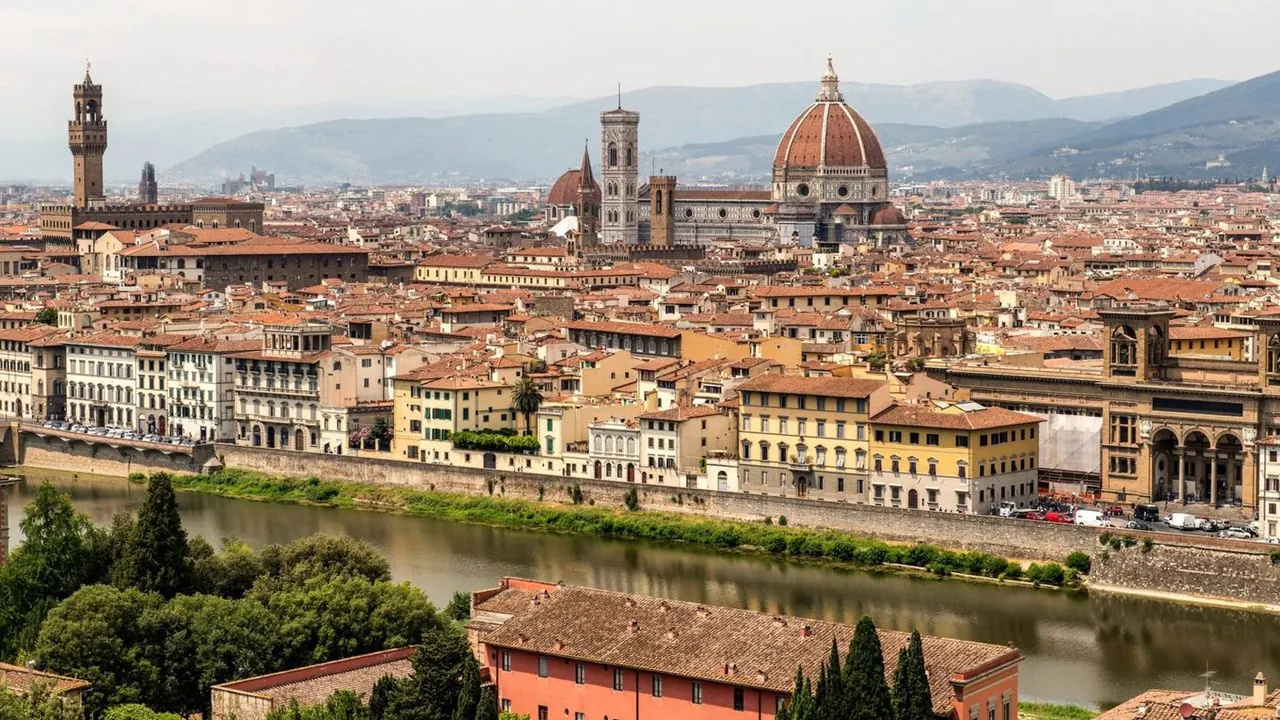
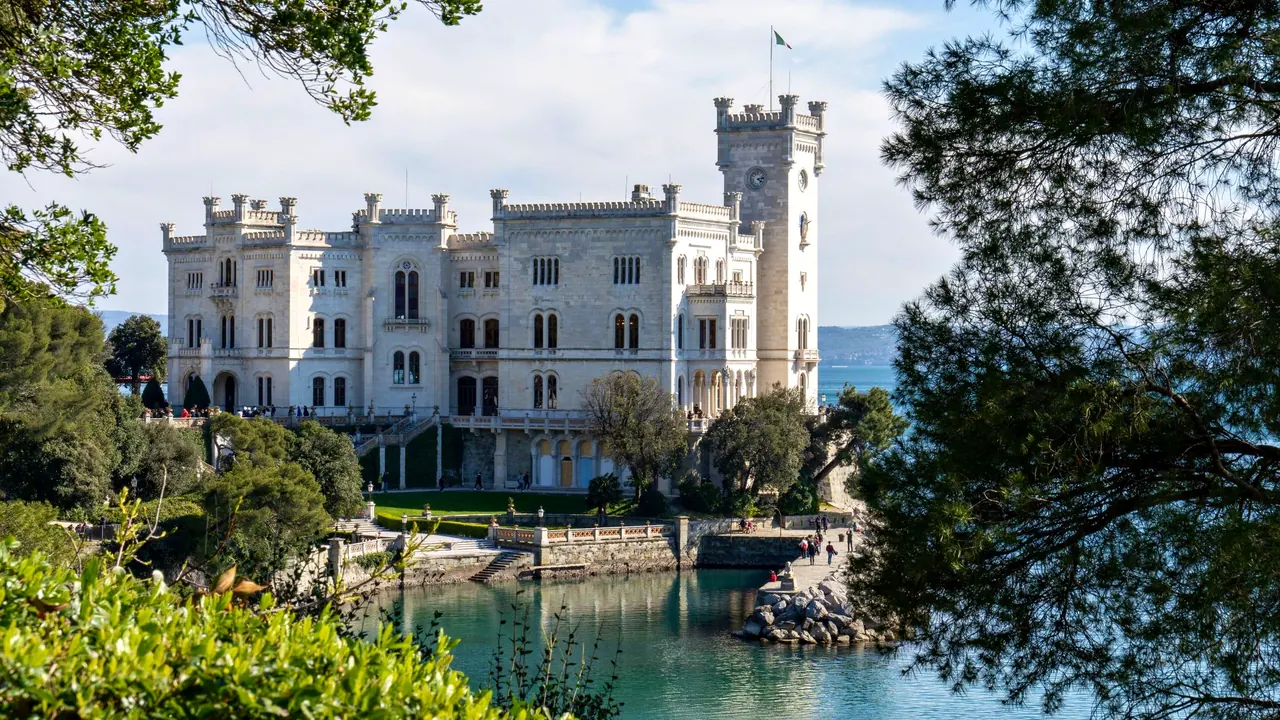
Photos: Florence by Wolfgang Weiser, Pexels License; Trieste by Tibor Szabo, Pexels License.
Florence or Trieste?
Our verdict in twelve categories, each scored against the same fixed benchmark cities, and the climate month by month, so you can choose for your trip.
Choose Florence for
- shopping
- culture and sights
- day trips
Florence is the choice if you're travelling for art and history. The Renaissance is packed into a centre you can walk across in twenty minutes, and Siena, Lucca, Pisa and the Chianti hills are all close enough for day trips. It also has the better trattorie and leather workshops. You pay for it in higher costs, summer crowds and no sea at all.
Choose Trieste for
- beaches
- prices
- nature and the outdoors
Trieste suits travellers who want an Italian city with the sea built into daily life. You can swim off the Barcola promenade before lunch, spend the afternoon in a Habsburg coffee house and walk on the Karst at sunset. It is cheaper, calmer and easier with older children. The trade-off is fewer famous sights and very little shopping.
Scoreboard
Twelve categories on one fixed scale from 0 to 100. The shaded stretch is the gap between the two.
Your match
Pick a travel style or drag the sliders, and both match scores follow your weighting.
Too close to call, 2 points apart
Wins on shopping and culture and sights with your weighting.
Wins on beaches and prices with your weighting.
What matters to you?
Category by category
What the scores mean for a trip.
Beaches & swimming
Swimming is part of a normal day in Trieste and plays no part in Florence. Trieste's residents climb down ladders into clear water from the Barcola promenade, and the pebble coves at Sistiana and Duino and the bay at Grignano are a short bus ride along the coast. There is almost no sand, though, so it suits confident swimmers more than toddlers.
Florence is inland, and the sandy Versilia beaches are about an hour and a half away by train, so they take a whole day. In a hot Florentine summer, a hotel pool is the realistic way to cool off.
Food & drink
Florence eats better, mostly because of its depth: bistecca, ribollita, lampredotto from the carts, two serious markets, and family trattorie in the Oltrarno and around Sant'Ambrogio, with Chianti grown just outside town. The catch is the set tourist menus around the Duomo, which you need to walk away from.
Trieste's cooking is different in kind, closer to Vienna than to Tuscany. You get boiled pork and horseradish at the buffet counters, jota, sardoni, strudel, and a coffee culture with its own words for ordering. The farmhouse osmize on the Karst are a real treat, but the city has fewer restaurants and less fine dining.
Culture & sights
Florence holds some of the most important art in Europe: Botticelli and Leonardo in the Uffizi, the David in the Accademia, Fra Angelico at San Marco and the Brancacci Chapel. There is enough to fill a week, and the big museums need booking ahead.
Trieste is more about atmosphere than masterpieces. You get Piazza Unità facing the sea, the Borgo Teresiano grid along the Canal Grande, the mosaics of San Giusto and the white Miramare Castle. Its most distinctive visit is the Risiera di San Sabba, the only Nazi camp on Italian soil to have had a crematorium, which is now a sobering memorial. Two or three days covers the city comfortably.
Nightlife
Neither city is for clubbing, but Florence has more going on after dark. Piazza Santo Spirito fills with drinkers on warm nights, a large student population keeps a few loud pubs busy, and outdoor bars open along the Arno in summer.
Trieste's evenings are quieter and older in mood. They start with a spritz on Piazza Unità or in Cavana, and in summer people move out to the kiosks along Barcola. On a winter weeknight the streets are mostly empty by midnight.
Nature & outdoors
Trieste gives you more variety on its doorstep. The Strada Napoleonica runs along the cliff edge high above the gulf, Val Rosandra is a gorge for hiking and climbing, and the Grotta Gigante and the Škocjan Caves lie under the Karst. The sea also offers sailing, plus snorkelling in the Miramare marine reserve.
Florence's outdoors is gentler and more cultivated: olive terraces at Fiesole, cypress-lined lanes and vineyards in Chianti for cycling, and the Casentino forests further out. There's no sea, and summer heat cuts long walks short.
Day trips
Florence is one of the best bases anywhere for day trips. Siena, Pisa, Lucca, San Gimignano and Bologna are all within easy reach, and the Val d'Orcia towns are further south, so a week of outings never repeats itself.
Trieste is also a good base, but a more scattered one. Its trips spread across three countries: Aquileia's mosaics and star-shaped Palmanova in Friuli, Piran and the Postojna cave in Slovenia, and Istria by car. Venice is a long day out at about two hours each way.
Good for families
Trieste is the easier city with children, mainly because it is calm. There is a small aquarium, a science centre, the Grotta Gigante and summer days by the sea at Barcola. The steep, stepped streets above the waterfront and the rocky swimming suit older children better than toddlers.
Florence's main sights are made for adults, and in summer the narrow pavements are crowded and the heat is fierce. Climbing the dome, the secret passages of Palazzo Vecchio and the Boboli Gardens are the best ways to get children interested.
Getting around
Both are walking cities without a metro, and Florence is slightly easier. Its major sights sit within about twenty minutes of each other on flat ground, and Santa Maria Novella station is in the centre for trains to other towns. Crowds and hard stone paving are the main irritations.
Trieste's waterfront and Borgo Teresiano are flat, but the climb to San Giusto is long and stepped. On the other hand, it has something Florence lacks: boats across the bay to Muggia and along the coast, as well as buses up onto the Karst.
Shopping & style
This is Florence by a long way. It has a living craft tradition: leather from the San Lorenzo stalls and small workshops, marbled paper, the goldsmiths of the Ponte Vecchio and the gilders and framers of the Oltrarno. Via de' Tornabuoni adds the big fashion names.
Trieste has ordinary chain clothing around Corso Italia and some atmospheric antique shops in the old town. Most of what's worth taking home is edible: freshly roasted coffee, Karst wine and presnitz.
Affordability
Trieste is noticeably easier on the budget. Rooms are reasonable for most of the year, a buffet plate and a coffee at the bar cost little, and swimming at Barcola and walks on the Karst cost nothing.
Florence charges more for central hotel rooms and for admission to every major museum, and those fees add up over a few days. Street food, market lunches and walking everywhere help, as do staying across the river and visiting in winter.
Live music & performing arts
The two are much alike: both are opera cities with a short list of venues and not much live music beyond them. Florence has more history, as the city where opera began, with the Teatro del Maggio and its long-running spring festival. The music most visitors actually hear, though, is the tourist concerts in its churches.
Trieste's Teatro Verdi has a full opera season, and the city keeps up a Habsburg taste for operetta that is rare in Italy. There is also Slovenian-language theatre, and open-air summer concerts in the San Giusto castle courtyard.
Wellness & relaxation
Neither city has a bathing tradition of its own, and both rely on hotel spas. The difference is what lies nearby and how each city feels. From Florence, Montecatini Terme is under an hour by train, and the hot springs of Bagno Vignoni and Saturnia are within reach on a longer trip, so real thermal baths are easier to get to.
Trieste offers calm rather than treatments. Its slow pace, long sittings in coffee houses and sunset walks on the Molo Audace are restful in a way crowded summer Florence rarely is.
When should you go?
Pick your month. The climate figures are measured averages, not a forecast.
Florence in July
Trieste in July
Daytime high, °C
Rainfall in the month, mm
Where the figures come from
Florence has no rain gauge within 25 km of the centre, so its rainfall comes from a gridded climate dataset read at the city rather than from a gauge further away.
Florence's sunshine is measured 71 km from the centre, at Pisa / S. Giusto.
Temperature and rainfall are climate normals, averaged over the years shown. Florence: 1995-2020 (sunshine 1991-2020, rainfall 1991-2020) normals, Firenze / Peretola (5.6 km from centre). Trieste: 1991-2020 normals, Trieste (1.6 km from centre).
Florence sits in a hot inland valley, and that shapes when to go. July and August reach about 33°C, which makes long days of queues and stone streets tiring. April, May and the first half of October are the best months for sightseeing: warm days, plenty of sunshine and the countryside green or harvested. Autumn is also when the rain arrives, building to about 124mm in November, and winter is cool and grey but quiet.
Trieste stays a few degrees milder all year, with summer highs nearer 29°C thanks to the sea breeze. From June to September the Adriatic is warm enough for swimming, at about 25°C in July and August. The city is wetter than Florence from late spring onward, and September to November are its rainiest months. Winter brings the cold Bora wind, so May, June and September are the most comfortable months.
Which traveller are you?
On a beach and sun trip, Trieste is the clear choice. The sea starts at the edge of town, with rock platforms at Barcola and pebble coves at Sistiana. From Florence, the nearest sand is a full day's outing to Viareggio.
For a culture and arts trip, Florence is far ahead. The Uffizi, the Accademia, the Bargello and Brunelleschi's dome are a short walk apart. Trieste's Habsburg squares and Miramare Castle make a pleasant weekend's sightseeing, not a week's.
On a shopping trip, plan around Florence. Leave room in your luggage and time to compare, because quality varies a lot between market stalls and workshops. In Trieste, shopping fills an afternoon at most, and there is little a keen shopper would travel for.
Before you go
| Measure | Florence | Trieste |
|---|---|---|
| Official language | Italian | Italian |
| Currency | Euro (EUR) | Euro (EUR) |
| Sockets | CFL230 V, 50 Hz | CFL230 V, 50 Hz |
| Driving side | Right | Right |
| Time zone | UTC+1, UTC+2 in summer | UTC+1, UTC+2 in summer |
| Emergency number | 112 | 112 |
| Elevation | 50 m | 2 m |
| Main airport | Florence Airport, Peretola (FLR)6 km from centre46 non-stop destinations | Trieste Airport (TRS)31 km from centre32 non-stop destinations |
| Public holidays this year | 13 days | 13 days |
By the numbers
| Measure | Florence | Trieste |
|---|---|---|
| City population | 360,930 | 198,417 |
| People per km² | 3,528 | 2,332 |
| Museums within 10 km | 141 | 33 |
| UNESCO World Heritage sites within 50 km | 6 | 5 |
| Swim season, months above 21 °C | - | 4 months |
Where else could you go?
Every comparison below shares a destination with this one, so you can follow Florence or Trieste somewhere new.
- Sienavs Florence
- Luccavs Florence
- Rovinjvs Trieste
- Pisavs Florence
- Ljubljanavs Trieste
- Bolognavs Florence