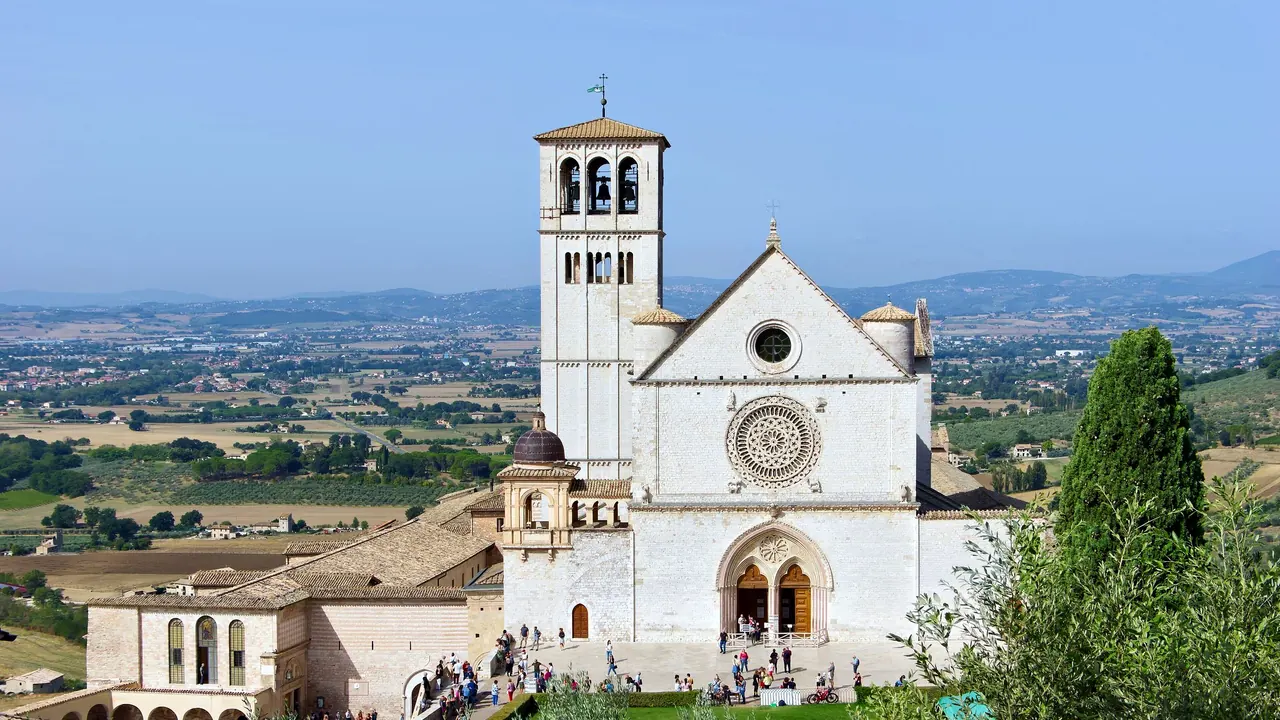
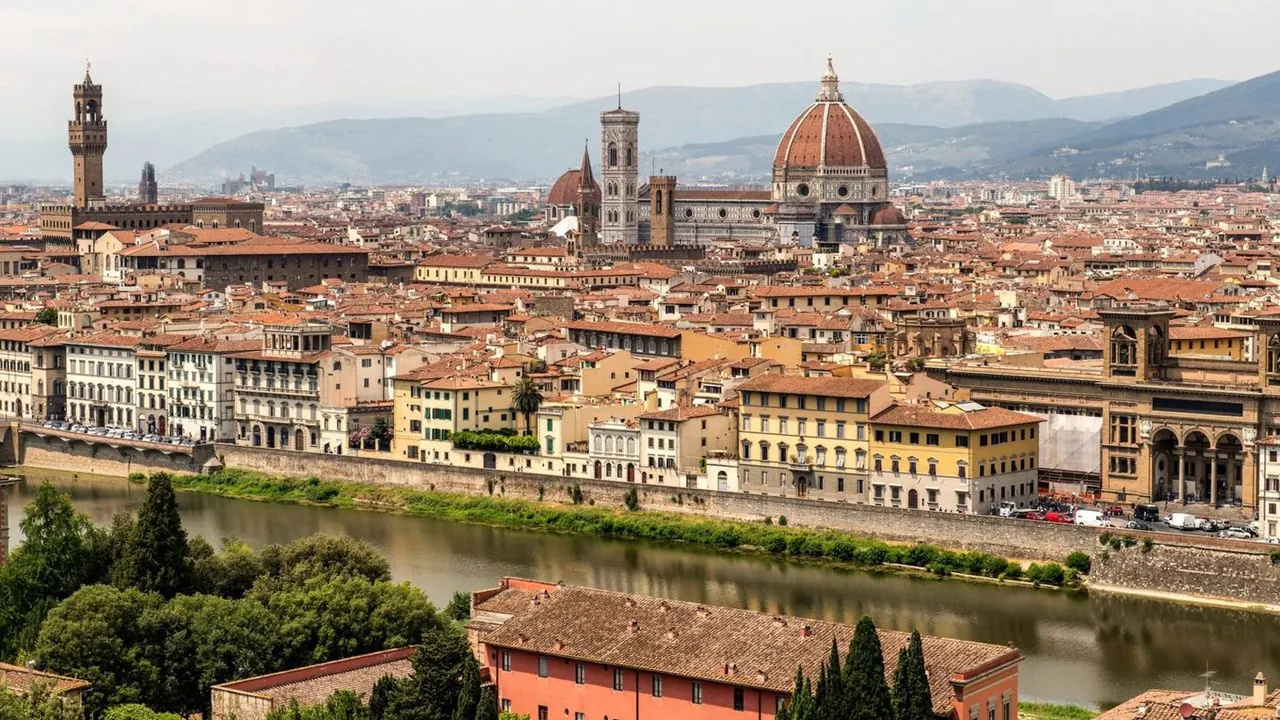
Photos: Assisi by Berthold Werner, CC BY-SA 4.0, cropped; Florence by Wolfgang Weiser, Pexels License.
Assisi or Florence?
Our verdict in twelve categories, each scored against the same fixed benchmark cities, and the climate month by month, so you can choose for your trip.
Choose Assisi for
- prices
- nature and the outdoors
Assisi is for travellers who want one great sanctuary and a slow pace. The Basilica of San Francesco and the stone lanes around it repay a calm couple of days, Monte Subasio starts at the town gates, and the quiet evenings, convent guesthouses and free churches make it easier on the budget. It also works well as a base for touring Umbria's hill towns, especially with a car.
Choose Florence for
- shopping
- nightlife
- live music and the arts
Florence suits travellers who want more of everything in a city: the Uffizi, the Accademia and the Bargello, trattorias and lampredotto stalls, wine bars in the Oltrarno, leather workshops and an opera house. Its flat centre and central station make it easy without a car, and Siena, Pisa, Lucca and Bologna are all within a day's reach. You pay more for it, and summers are hotter and more crowded.
Scoreboard
Twelve categories on one fixed scale from 0 to 100. The shaded stretch is the gap between the two.
Your match
Pick a travel style or drag the sliders, and both match scores follow your weighting.
Wins on prices and nature and the outdoors with your weighting.
Wins on shopping and nightlife with your weighting.
What matters to you?
Category by category
What the scores mean for a trip.
Beaches & swimming
Neither is a place to swim, and the difference is the kind of water within reach. From Assisi, the nearest is Lake Trasimeno, about 45 minutes by car, with small lidos and shallow, slightly murky water in high summer.
Florence has the edge because a proper sea is within reach. The long sandy beaches of the Versilia are about an hour and a half by train, which makes them a full day out. Otherwise, hotel pools are the answer in both places.
Food & drink
Florence offers far more choice. Lampredotto from the carts, the Mercato Centrale and Sant'Ambrogio market, bistecca in Oltrarno trattorias, serious gelato and a fine-dining tier give you something different at every meal. The Chianti vineyards also start at the edge of the city.
Assisi cooks honest Umbrian country food: strangozzi with black truffle, Castelluccio lentils, Monte Subasio olive oil and Sagrantino from Montefalco. However, it has no market hall or street food, and the best meals are in side-lane trattorias or valley agriturismi rather than near the basilica.
Culture & sights
Assisi has one of Europe's great monuments: the double Basilica of San Francesco, with its Giotto cycle and Cimabue frescoes. Santa Chiara, the Temple of Minerva and the Rocca complete a visit that fills two calm days.
Florence works on a different scale. The Duomo and Baptistery, the Uffizi, David at the Accademia, the Bargello's sculpture and the Pitti Palace are only the start. Smaller treasures such as San Marco and the Brancacci Chapel can fill a week.
Nightlife
Assisi has almost no nightlife. You can have a long dinner, a wine bar and a walk through the floodlit lanes, and many visitors come for exactly that stillness. Anyone who wants more has to go to Perugia.
Florence has real evenings out without being a party city. People drink outdoors around Piazza Santo Spirito, Sant'Ambrogio draws locals, student pubs cluster near the centre and summer bars line the Arno. Clubs are few, and most nights end at a wine bar.
Nature & outdoors
These are roughly level. In Assisi, a real mountain starts at the town walls: Monte Subasio's paths climb straight from the town past the Eremo delle Carceri to open summit meadows, and the Valnerina and Sibillini are within driving distance.
Florence's countryside is gentler and more cultivated. You take the bus to Fiesole's olive terraces or cycle the cypress lanes of Chianti, and the Casentino forests and Apuan Alps make longer days out.
Day trips
Both make excellent bases, but Florence has more major destinations and better rail links. Siena, Pisa and walled Lucca are about an hour away, and Bologna is a short high-speed train ride. San Gimignano, Volterra and the Chianti villages are easy by car or tour.
Assisi is in the middle of Umbria, with Spello, Perugia, Spoleto, Gubbio and Todi close by and Orvieto worth a full day. The trains cover only the valley towns, so you will rely more on a car here.
Good for families
Florence gives children more to do. They can climb the dome or the bell tower, take the family tours through Palazzo Vecchio's secret passages, look at the globes at the Museo Galileo and run around the Boboli Gardens, and Pinocchio's park at Collodi is about an hour away. The heat and summer crowds are the downside.
Assisi is safe and welcoming, but its sights call for silence and its stepped lanes are hard with a pushchair. Older children enjoy the Rocca and the walk up Subasio. Families usually stay at a valley agriturismo with a pool and visit the town in short trips.
Getting around
Florence is easier on foot. Its main sights are within about twenty minutes' walk of each other on level ground, Santa Maria Novella station is in the centre, and trams and small buses cover the rest. A car is only worth having for the countryside.
Assisi is just as compact but steep, with stairs between the basilica and Piazza del Comune. Its station is about 4km below in Santa Maria degli Angeli, and beyond the valley rail line buses are sparse, so most visitors hire a car.
Shopping & style
Shopping is a real reason to visit Florence. You can buy leather from the San Lorenzo stalls or from workshops, marbled paper and gold from the Ponte Vecchio, watch gilders and restorers at work in the Oltrarno, and browse the luxury houses on Via de' Tornabuoni and the antique dealers of Via Maggio.
In Assisi, the shops are mostly rosaries and Tau crosses. The things worth carrying home are Assisi-embroidered linens, Deruta ceramics, olive oil, truffle products and Sagrantino.
Affordability
Assisi is noticeably kinder to your wallet. The basilicas and most churches are free, convent guesthouses offer clean, simple rooms cheaply, and eating a lane or two away from the basilica saves money.
In Florence, the costs of centre hotels, museum tickets and the Duomo climbs add up over a few days. Street food, market lunches, cheap house wine and walking everywhere help, as do staying across the river or visiting in winter.
Live music & performing arts
Florence has a proper season. The Teatro del Maggio Musicale Fiorentino puts on opera, concerts and ballet, its spring festival is one of Europe's oldest, and the Pergola stages theatre, though almost always in Italian. Visitors more often catch chamber concerts in churches.
In Assisi, the music is mostly sacred: organ and choral concerts in the basilicas, plus the medieval song and processions of Calendimaggio in spring. For opera or jazz, people go to Perugia.
Wellness & relaxation
Neither has a real bathing culture, so the difference lies in where the calm comes from. Assisi offers stillness itself: quiet mornings once the tour groups have gone, retreats in convent guesthouses and silent walks to the Eremo delle Carceri.
Florence's crowded centre is not restful, but thermal water is within reach. Montecatini Terme is under an hour by train, and the outdoor sulphur pools at Bagno Vignoni and Saturnia make a longer outing.
When should you go?
Pick your month. The climate figures are measured averages, not a forecast.
Assisi in July
Florence in July
Daytime high, °C
Rainfall in the month, mm
Where the figures come from
Assisi's temperatures are measured 51 km from the centre, at Frontone.
Assisi has no rain gauge within 25 km of the centre, so its rainfall comes from a gridded climate dataset read at the city rather than from a gauge further away.
Florence has no rain gauge within 25 km of the centre, so its rainfall comes from a gridded climate dataset read at the city rather than from a gauge further away.
Florence's sunshine is measured 71 km from the centre, at Pisa / S. Giusto.
Temperature and rainfall are climate normals, averaged over the years shown. Assisi: 1991-2020 normals, Frontone (50.5 km from centre). Florence: 1995-2020 (sunshine 1991-2020, rainfall 1991-2020) normals, Firenze / Peretola (5.6 km from centre).
Both places are at their best in spring and autumn, but Florence is warmer all year round. In Assisi, May and September are mild and good for walking. Highs reach about 30°C in July, when the lidos at Lake Trasimeno are warm enough for a swim, and winter days on the hilltop are chilly. Florence warms up earlier in spring and is hotter in high summer, reaching about 33°C in August, which is heavy going on its stone streets. July and August are also its sunniest stretch, with July the brightest month of all.
In both places the autumn rain sets in from September, and Florence gets more of it, peaking at about 124mm in November against Assisi's 94mm. For walking the streets in comfort, go between April and early June or from late September into October in either place. In winter, Florence's milder days make it the better choice for a city visit.
Which traveller are you?
For a food and nightlife trip, choose Florence. It has street-food carts, the Mercato Centrale, Oltrarno trattorias and evenings of aperitivo around Santo Spirito. Assisi offers one good dinner and a glass of Sagrantino, and its lanes are empty by eleven.
On a shopping trip, Florence is the clear choice. You can watch Oltrarno craftsmen at work, buy leather and marbled paper, browse the jewellers on the Ponte Vecchio and the fashion houses of Via de' Tornabuoni. Assisi's streets mostly sell devotional souvenirs, with some embroidered linen and Deruta ceramics.
For a trip on a tight budget, Assisi goes further. The basilicas are free, convent guesthouses offer simple, cheap rooms and valley agriturismi are good value. In Florence, central hotels and museum tickets quickly add up, even if you eat at the market counters.
Before you go
| Measure | Assisi | Florence |
|---|---|---|
| Official language | Italian | Italian |
| Currency | Euro (EUR) | Euro (EUR) |
| Sockets | CFL230 V, 50 Hz | CFL230 V, 50 Hz |
| Driving side | Right | Right |
| Time zone | UTC+1, UTC+2 in summer | UTC+1, UTC+2 in summer |
| Emergency number | 112 | 112 |
| Elevation | 424 m | 50 m |
| Main airport | Perugia San Francesco d'Assisi – Umbria International Airport (PEG)9 km from centre17 non-stop destinations | Florence Airport, Peretola (FLR)6 km from centre46 non-stop destinations |
| Public holidays this year | 13 days | 13 days |
By the numbers
| Measure | Assisi | Florence |
|---|---|---|
| City population | 27,605 | 360,930 |
| People per km² | 147 | 3,528 |
| Museums within 10 km | 14 | 141 |
| UNESCO World Heritage sites within 50 km | 2 | 6 |
Where else could you go?
Every comparison below shares a destination with this one, so you can follow Assisi or Florence somewhere new.
- Sienavs Florence
- Luccavs Florence
- Pisavs Florence
- Bolognavs Florence
- San Marinovs Assisi
- San Marinovs Florence