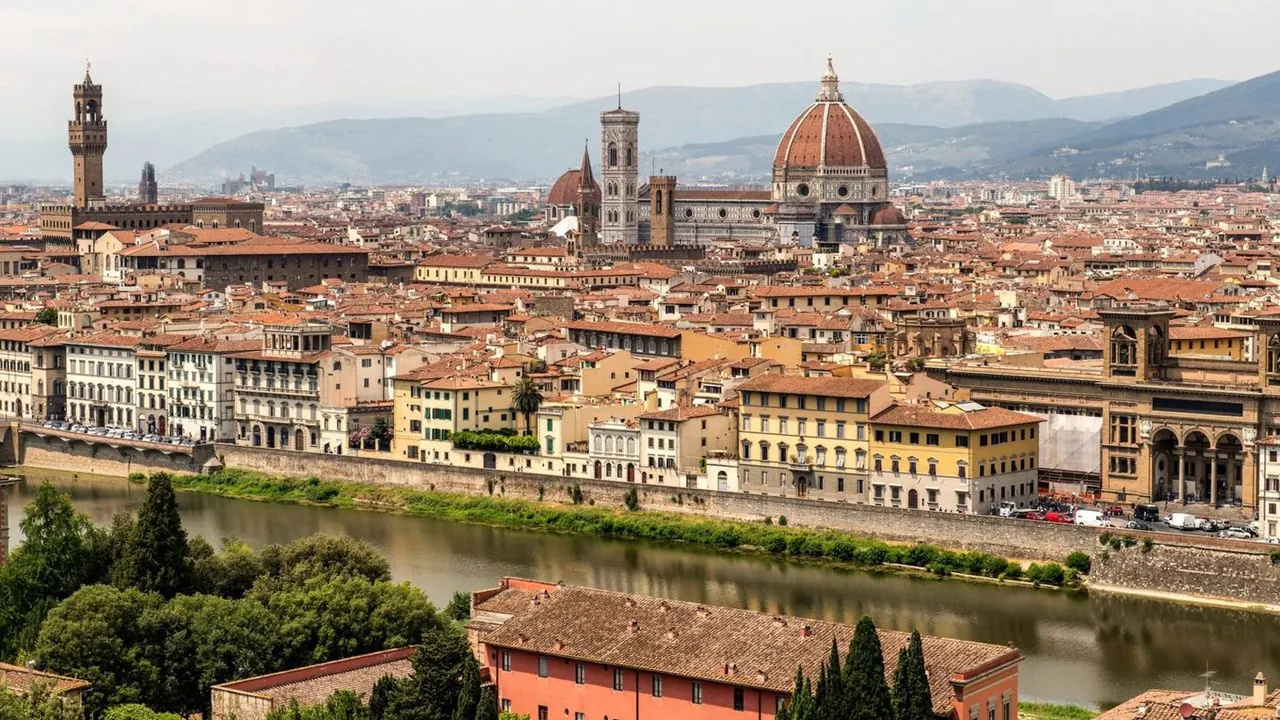
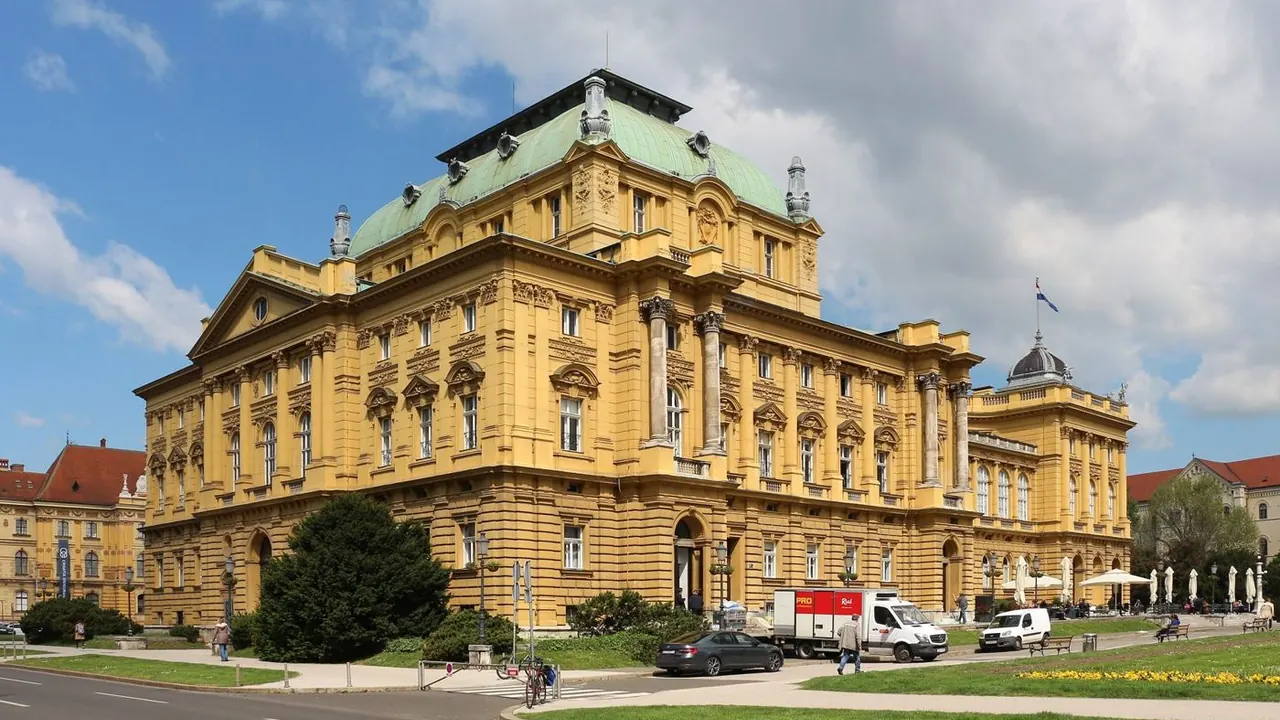
Photos: Florence by Wolfgang Weiser, Pexels License; Zagreb by Bernard Gagnon, CC BY-SA 4.0, cropped.
Florence or Zagreb?
Our verdict in twelve categories, each scored against the same fixed benchmark cities, and the climate month by month, so you can choose for your trip.
Choose Florence for
- culture and sights
- day trips
- shopping
Florence is the trip for travellers who want art, architecture and Tuscany in one go. The Renaissance collections, the dome and the frescoed chapels are among the most important in the world, the trattoria cooking and Chianti wine are a real reason to visit, and Siena, Lucca, Pisa and the hill towns are all close enough for a day out. Expect to pay for it, and to share the main sights with large summer crowds.
Choose Zagreb for
- prices
- families
- nightlife
Zagreb suits a slower, cheaper stay, with café terraces, Austro-Hungarian streets and parks rather than a long list of sights. It is easier with children, costs noticeably less, and has a forested mountain at the end of the tram line. Two or three relaxed days cover the city well, and it pairs naturally with the Zagorje castles, Plitvice or a later leg on the Croatian coast.
Scoreboard
Twelve categories on one fixed scale from 0 to 100. The shaded stretch is the gap between the two.
Your match
Pick a travel style or drag the sliders, and both match scores follow your weighting.
Wins on culture and sights and day trips with your weighting.
Wins on prices and families with your weighting.
What matters to you?
Category by category
What the scores mean for a trip.
Beaches & swimming
Neither city is a place to swim, and both leave the sea for a separate stay. The difference is in what you get on the day. From Florence a train reaches the sandy Versilia beaches near Viareggio in about an hour and a half, with rows of rented loungers. Zagreb's Adriatic is about two hours away by road, but the city has its own summer swimming at the pebbly shores of Lake Jarun and at Bundek, which is handy for a hot afternoon.
Food & drink
Florence eats better. Bistecca alla fiorentina, ribollita, lampredotto from the carts and the Mercato Centrale and Sant'Ambrogio markets make food one of the main reasons to visit, and Chianti Classico vineyards start just outside town. The catch is the set tourist menus around the Duomo, which is why the Oltrarno trattorie are worth seeking out.
Zagreb's cooking is heartier and narrower in range, closer to Central Europe: štrukli, turkey with mlinci, Zagorje sausages. Dolac market is a pleasure in the morning, and coffee on a Lower Town terrace is more of a local ritual than any meal. Fine dining is limited to a handful of serious kitchens.
Culture & sights
This is where the two are furthest apart. Florence is the Renaissance city: Brunelleschi's dome, Botticelli and Leonardo in the Uffizi, David in the Accademia, Fra Angelico's frescoes at San Marco and the Brancacci Chapel, enough for a week of serious looking, with queues and bookings to match.
Zagreb's heritage is pleasant rather than world-famous. The medieval Upper Town with St Mark's tiled roof, the Austro-Hungarian Green Horseshoe and museums such as the Mimara, the Naive Art collection and the Museum of Broken Relationships fill two unhurried days, and Mirogoj cemetery is one of the city's best sights.
Nightlife
The two are broadly level, with relaxed evenings in both and no great club scene. Florence revolves around aperitivo, wine bars and the crowd with drinks in hand on Piazza Santo Spirito. Zagreb has a café-bar culture that turns from coffee to drinks along Tkalčićeva, plus craft beer bars in the Lower Town courtyards and lakeside clubs at Jarun in summer, which give it a little more room for dancing.
Nature & outdoors
Both have green country on the doorstep, but of different kinds. Around Florence it is cultivated and gentle: olive terraces at Fiesole, the cypress lanes and vineyards of Chianti for walking and cycling, and the Casentino forests further out.
Zagreb's outdoors is wilder close to town. The beech-wooded Medvednica range starts at the city edge, with marked trails, mountain huts and even a small ski slope in snowy winters, and the lakes and waterfalls of Plitvice make a long but popular day.
Day trips
Florence has one of the best sets of day trips anywhere. Siena, Pisa, Lucca, San Gimignano, Volterra and the Chianti villages are all close, Bologna is a short high-speed train ride away, and the Val d'Orcia towns reach further south. You could spend a week without repeating yourself.
Zagreb's surroundings are pleasant without a headline destination. The Zagorje hills have Trakošćan castle and Marija Bistrica, baroque Varaždin and little Samobor are easy, and Ljubljana is possible as a long day. It is a good choice of outings, but on a smaller scale than Tuscany.
Good for families
Zagreb is the easier city with children. Its flat Lower Town, parks, trams that take pushchairs, the zoo in Maksimir, the Tesla technical museum and the short funicular give younger children plenty to do, and the lakes give a place to swim in summer.
Florence asks more of a family. The great sights are made for adults, the pavements are narrow and crowded, and high summer is very hot. Climbing the dome, the Palazzo Vecchio secret passages and the Boboli Gardens help, and Collodi's Pinocchio park is the classic outing.
Getting around
Florence edges ahead because almost everything is within about twenty minutes on foot, so most visitors barely need transport. Its central station also makes rail day trips simple. Zagreb's centre is compact too, but sights are spread a little wider, so the dense web of blue trams and the funicular to the Upper Town do more of the work. In both cities a car is only worth having for the countryside.
Shopping & style
Florence is a real shopping destination, built on craft. Leather workshops, marbled paper, the goldsmiths on the Ponte Vecchio, the Oltrarno artisans and the luxury houses of Via de' Tornabuoni all give you something worth taking home, as long as you look closely at the San Lorenzo stalls.
Shopping in Zagreb is everyday: chains and local fashion along Ilica, malls on the edge of town and little luxury. The souvenirs have charm, though, from licitar hearts and Croatian neckties to Dolac produce and the Sunday flea market at Britanski trg.
Affordability
Zagreb is the cheaper of the two by some distance. Central apartments, trams, museum entry and simple local food are all reasonably priced, though upmarket restaurants and cocktails cost what they would further west.
Florence is expensive for its size, mainly because of central hotel rooms and admission fees to the main museums and the Duomo. Street food, market lunches, house wine and walking everywhere help, and staying across the river or visiting in winter makes the biggest difference.
Live music & performing arts
Both cities have a full season of opera, ballet and orchestral concerts, so the difference is in reputation and in what goes on around the season. Florence's classical life has more international standing: this is where opera began, and the spring Maggio Musicale festival draws audiences from abroad. Most visitors, though, hear their music at chamber programmes in churches and palaces, and the plays at the Pergola are rarely in a language they follow.
Zagreb's classical offer is similar in scale, shared between the Croatian National Theatre and the Lisinski hall, home of the Zagreb Philharmonic, but it is far less known outside Croatia. It covers more beyond the classics, with operetta at the Komedija, jazz and rock clubs, courtyard concerts in the Upper Town and a large rock festival at Jarun. That makes it easier to find an evening out once the opera season is over.
Wellness & relaxation
Neither city has its own bathing tradition, so in both the soaking happens outside town. Florence has the more memorable options: the grand old spa halls of Montecatini Terme under an hour by train, the open-air sulphur pools of Bagno Vignoni and Saturnia, and the Tuscan farm stay as a way to slow down.
Zagreb's spas are the Zagorje resorts of Tuheljske, Krapinske and Stubičke Toplice, practical places where locals go for a weekend soak. Its real advantage is the calm of the city itself, with long café mornings and quiet Upper Town lanes, where summer in Florence's centre can feel crowded.
When should you go?
Pick your month. The climate figures are measured averages, not a forecast.
Florence in July
Zagreb in July
Daytime high, °C
Rainfall in the month, mm
Where the figures come from
Florence has no rain gauge within 25 km of the centre, so its rainfall comes from a gridded climate dataset read at the city rather than from a gauge further away.
Florence's sunshine is measured 71 km from the centre, at Pisa / S. Giusto.
Temperature and rainfall are climate normals, averaged over the years shown. Florence: 1995-2020 (sunshine 1991-2020, rainfall 1991-2020) normals, Firenze / Peretola (5.6 km from centre). Zagreb: 1991-2020 normals, Zagreb / Gric (0.6 km from centre).
Florence is at its best in April, May and early June, when days are warm, fairly dry and sunny without the heat getting in the way of walking. July and August are the driest and sunniest months of all, but afternoons near 33°C make the streets hard going. The rain arrives with autumn. It rises sharply from September, October and November are the wettest months at around 120mm, and winters are mild but grey.
Zagreb is cooler throughout the year and has no dry season. Summer highs stay nearer 29°C, which is easier for sightseeing than Tuscany's heat. Where Florence's summers are dry, though, Zagreb's rain is fairly even from June right through to November, often as showers and storms, and it peaks in September at about 104mm, the same month Florence turns wet. Winters are properly cold, with January highs around 5°C and little sunshine. Late spring is the most comfortable time, especially May and early June. High summer also works if you don't mind the odd downpour, and the warm days make the city lakes worth a swim. Autumn is mild but damp in both cities.
Which traveller are you?
On a culture and arts trip, Florence is the clear choice, and it deserves a full week rather than a weekend. Zagreb's museums make two pleasant days, but they are not the reason for a trip. In Florence, the collections are.
On a trip on a tight budget, Zagreb lets you stay longer for the same money, and in comfort rather than by scrimping. In Florence, a lean budget means giving up central rooms and some of the great museums, which are the point of going.
On a family trip with children, Zagreb lets the days run at a child's pace, with plenty of time outdoors between short sights. Florence suits older children who will enjoy a climb up the dome and a gallery visit, and it works better in spring than in summer.
Before you go
| Measure | Florence | Zagreb |
|---|---|---|
| Official language | Italian | Croatian |
| Currency | Euro (EUR) | Euro (EUR) |
| Sockets | CFL230 V, 50 Hz | CF230 V, 50 Hz |
| Driving side | Right | Right |
| Time zone | UTC+1, UTC+2 in summer | UTC+1, UTC+2 in summer |
| Emergency number | 112 | 112 |
| Elevation | 50 m | 127 m |
| Main airport | Florence Airport, Peretola (FLR)6 km from centre46 non-stop destinations | Zagreb Franjo Tuđman International Airport (ZAG)11 km from centre64 non-stop destinations |
| Public holidays this year | 13 days | 14 days |
By the numbers
| Measure | Florence | Zagreb |
|---|---|---|
| City population | 360,930 | 767,131 |
| People per km² | 3,528 | - |
| Museums within 10 km | 141 | 27 |
| UNESCO World Heritage sites within 50 km | 4 | 0 |
Where else could you go?
Every comparison below shares a destination with this one, so you can follow Florence or Zagreb somewhere new.