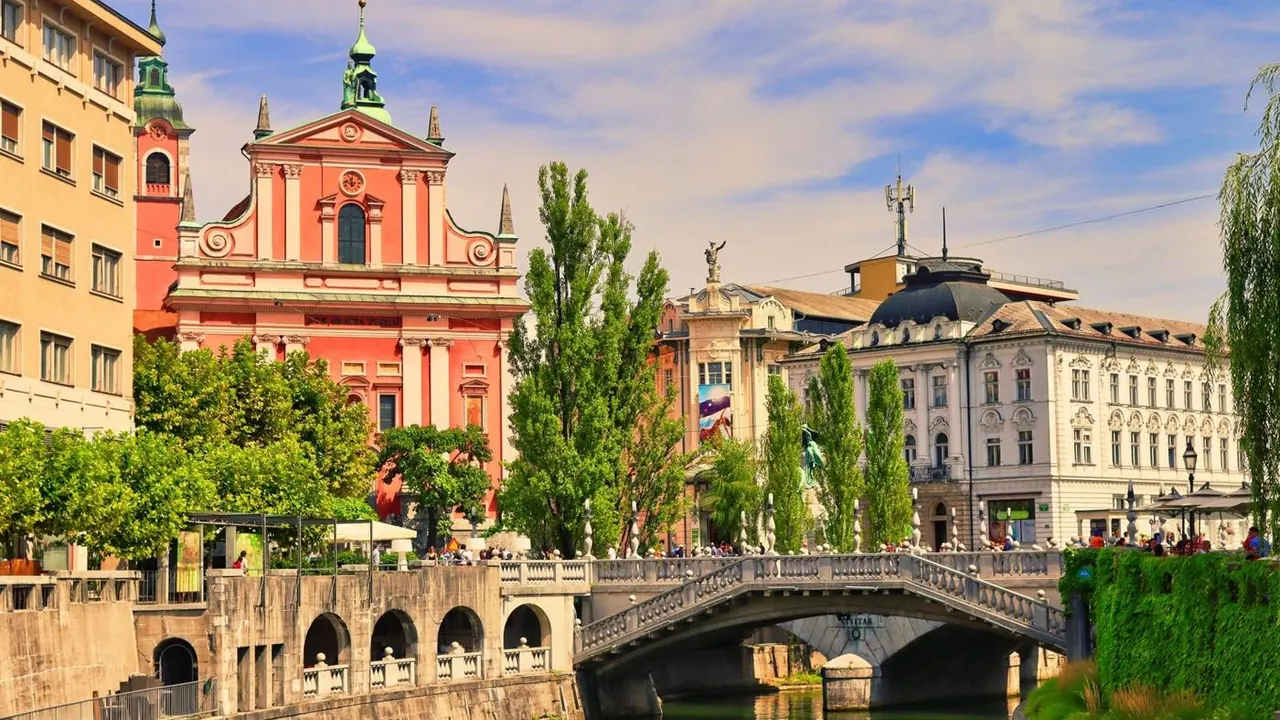
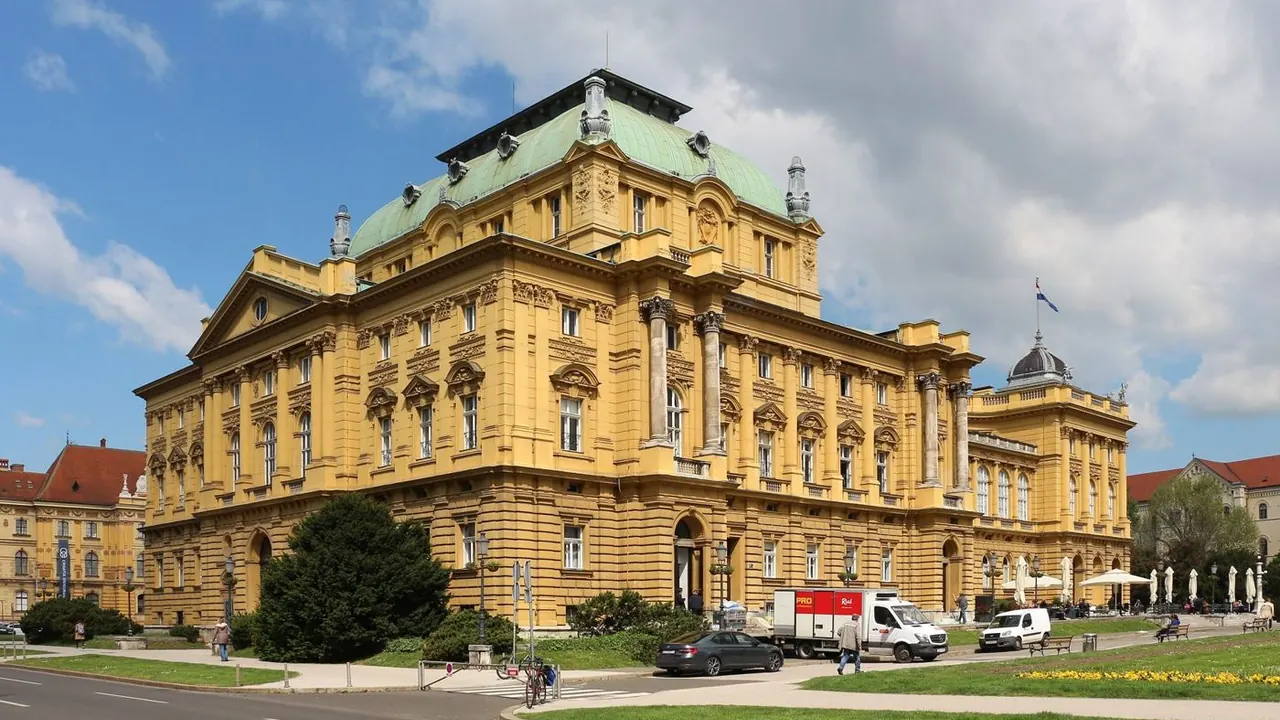
Photos: Ljubljana by detait, Pexels License; Zagreb by Bernard Gagnon, CC BY-SA 4.0, cropped.
Ljubljana or Zagreb?
Our verdict in twelve categories, each scored against the same fixed benchmark cities, and the climate month by month, so you can choose for your trip.
Choose Ljubljana for
- nature and the outdoors
- day trips
- beaches
Ljubljana suits travellers who want the landscape as much as the city. The Julian Alps, Bled, the Soča valley and the karst caves are all within easy reach of a small, car-free centre shaped by Plečnik. That makes it the better base for walkers, day-trippers and anyone after a calm few days with mountains on the horizon. The Adriatic at Piran is also closer, near enough for a day by the sea.
Choose Zagreb for
- nightlife
- shopping
- prices
For a city stay with more going on in the evening and a little more left in the wallet, Zagreb is the pick. Its café-bars along Tkalčićeva and around Flower Square run later, Ilica gives more choice for shopping, and rooms come cheaper. The countryside around it is gentler, with the castles and hills of Zagorje rather than Alpine peaks, so it rewards those who come mainly for the city itself.
Scoreboard
Twelve categories on one fixed scale from 0 to 100. The shaded stretch is the gap between the two.
Your match
Pick a travel style or drag the sliders, and both match scores follow your weighting.
Wins on nature and the outdoors and day trips with your weighting.
Wins on nightlife and shopping with your weighting.
What matters to you?
Category by category
What the scores mean for a trip.
Beaches & swimming
Neither city is a beach destination, but Ljubljana has the water closer to hand. The Alpine lakes at Bled and Bohinj are about an hour away, and the Slovenian coast at Piran about an hour and a half. That is near enough for an easy day of swimming, even if the shore there is mostly concrete platforms and pebble.
From Zagreb the Adriatic is about two hours away over the hills, so the sea makes a long day trip or a separate stay on the coast. In town, the pebbly shores of Lake Jarun and Bundek are fine for a cooling swim on a hot afternoon, much as the Sava is in Ljubljana.
Food & drink
Both kitchens are hearty and Central European, and they even share a dish: Ljubljana's štruklji dumplings and Zagreb's baked štrukli are close cousins. Ljubljana's strength is wine, with Vipava and Brda orange wines poured by the glass along the river. Zagreb's ritual is coffee, above all the Saturday promenade around Flower Square, and Dolac market under its red umbrellas is its answer to Plečnik's Central Market.
Culture & sights
Ljubljana is largely the work of one man. Plečnik's bridges, colonnades and library give it a unified, UNESCO-listed cityscape that is best enjoyed simply by walking it. Zagreb is split in two instead, with medieval Gradec and Kaptol on the hill above a formal Austro-Hungarian grid. It also has a slightly wider spread of museums, from the Mimara and the Strossmayer old masters to the Museum of Broken Relationships, as well as the ivy-covered arcades of Mirogoj.
Nightlife
Zagreb gives the fuller night out. Café-bars switch from coffee to drinks along Tkalčićeva, smaller cocktail and craft beer bars fill the Lower Town courtyards, and in summer the crowd moves out to the lakeside clubs at Jarun.
In Ljubljana, evenings centre on the terraces along the Ljubljanica embankments, which empty after midnight on weekdays. Metelkova's scruffy clubs are its one real late-night draw. They are good at weekends, but it is a narrower scene than Zagreb's.
Nature & outdoors
This is where Ljubljana pulls well ahead. Tivoli Park and Šmarna Gora are right on its doorstep, but the real prize is what lies beyond. The Kamnik-Savinja Alps are about 40 minutes away, Triglav National Park and the Vintgar gorge about an hour, and further out are the Soča for rafting and the Postojna and Škocjan caves.
Zagreb's Medvednica rises straight from the northern edge of the city and makes a fine half-day in beech woods, and Maksimir is a lovely old park. Beyond that the country is gentle hill land, and its showpiece, Plitvice, is a two-hour drive each way.
Day trips
Ljubljana sits in the middle of a small country, so Bled's island church, Škofja Loka, Predjama Castle, the Lipizzaners at Lipica, Idrija and Piran all make easy outings. Trieste and Zagreb itself are options across the border.
Zagreb's choice is good but more of a kind: the castles and pilgrimage church of Zagorje, baroque Varaždin, Samobor and Karlovac's star-shaped fortress. They make pleasant days out, but none has the pull of Bled or the Venetian streets of Piran.
Good for families
Both cities are calm, safe and flat enough for pushchairs. Each has a funicular that younger children love, and neither has a theme park or a big aquarium. The difference is in the extras. Ljubljana has the dragons on Dragon Bridge and a puppet theatre children can follow without the language, while Zagreb has the trams and mock mine of the Technical Museum and summer swimming at Jarun and Bundek.
Getting around
Both are walking cities at heart, but they work differently. Ljubljana's centre is largely pedestrianised and flat, with bike-share and electric shuttles, and visitors rarely need the buses. Zagreb is larger and runs on a dense web of blue trams, and the cobbles of its Upper Town are steep in places. For trips into the country, intercity buses are the quick way round in Slovenia, while from Zagreb a car matters mainly for Zagorje and Plitvice.
Shopping & style
Neither city is a shopping destination, but Zagreb has more to offer. Ilica and the streets around it mix international chains with local fashion, and the souvenirs come with a story, from licitar honey-dough hearts to neckties from the country that gave the world the cravat.
Ljubljana is smaller still, with a few design boutiques in the old town and along Trubarjeva. Its best buys come from the market: pumpkin-seed oil, salt from the coastal pans and Idrija lace.
Affordability
Ljubljana's costs depend a great deal on when you come. Outside July and August, or staying a little further out from the old town, rooms cost noticeably less, and the gap with Zagreb narrows. Local wine and beer are fairly priced all year, so an evening on the riverside terraces stays affordable.
Zagreb is the cheaper of the two overall. It is also well below the Croatian coast in high summer, which helps if the trip goes on to the sea. Small everyday pleasures cost little, so a coffee on a Lower Town terrace is a daily habit rather than a treat. The savings stop at the top end, though: upmarket restaurants, cocktails and the best hotels cost much what they would in Western Europe.
Live music & performing arts
Both cities have a proper season of their own. Ljubljana's Philharmonic traces its roots to 1701, and the highlight of its summer is the Ljubljana Festival in Plečnik's open-air Križanke courtyard.
Zagreb's answer is opera and ballet in the ochre Croatian National Theatre, concerts at the Lisinski hall and the Zagreb Soloists in churches, plus a large summer rock festival at Jarun. In both cities, most spoken theatre is in the local language.
Wellness & relaxation
Ljubljana is the more restful choice. Its green, car-free centre sets an unhurried pace, there is a large water park with a sauna complex on the eastern edge, and Slovenia's thermal spa towns are within about an hour's drive.
Zagreb has a slow café rhythm and quiet Upper Town lanes, and the Zagorje spas at Tuheljske and Krapinske Toplice are within an hour. In town itself, though, wellness means little more than hotel spa floors.
When should you go?
Pick your month. The climate figures are measured averages, not a forecast.
Ljubljana in July
Zagreb in July
Daytime high, °C
Rainfall in the month, mm
Temperature and rainfall are climate normals, averaged over the years shown. Ljubljana: 1991-2020 normals, Ljubljana / Bezigrad (1.9 km from centre). Zagreb: 1991-2020 normals, Zagreb / Gric (0.6 km from centre).
The two cities share a continental climate. Winters are cold, with daytime highs in single figures from December to February, and summers are warm, peaking around 28°C in July and August. Zagreb runs about a degree warmer through most of the year. June to August is the season for swimming, whether at Bled or in the Sava near Ljubljana or at Lake Jarun in Zagreb, and these are the sunniest months in both. Midsummer can feel close for walking the streets, so May and early September are the most comfortable months for sightseeing.
The real difference is rain. Ljubljana is clearly the wetter city, especially in autumn: September brings around 159mm there against about 104mm in Zagreb, and Ljubljana stays wet through November. Zagreb is drier in every month, which makes it the safer choice for a spring or autumn city break. In Ljubljana, autumn walking is best done in the drier spells.
Which traveller are you?
On an outdoors trip, Ljubljana is the clear choice. Triglav National Park, the Vintgar gorge and rafting on the Soča are an hour or two away, and Šmarna Gora starts at the city's edge. Zagreb's Medvednica and Samobor hills are gentler walking.
For a food and nightlife trip, Zagreb has the edge. The cooking is equally hearty in both, but Zagreb's evenings run longer, from the Tkalčićeva terraces to Lower Town craft beer bars and lakeside clubs at Jarun. Ljubljana's riverside goes quiet after midnight on weekdays.
On a trip on a tight budget, Zagreb makes the money go further. Central apartments, tram fares and museum tickets are all reasonably priced. In Ljubljana, the few central hotels charge Western European rates in summer, though set lunches and a walkable centre help.
Before you go
| Measure | Ljubljana | Zagreb |
|---|---|---|
| Official language | Slovene | Croatian |
| Currency | Euro (EUR) | Euro (EUR) |
| Sockets | CF230 V, 50 Hz | CF230 V, 50 Hz |
| Driving side | Right | Right |
| Time zone | UTC+1, UTC+2 in summer | UTC+1, UTC+2 in summer |
| Emergency number | 112 | 112 |
| Elevation | 309 m | 127 m |
| Main airport | Ljubljana Jože Pučnik Airport (LJU)20 km from centre32 non-stop destinations | Zagreb Franjo Tuđman International Airport (ZAG)11 km from centre64 non-stop destinations |
| Public holidays this year | 21 days | 14 days |
By the numbers
| Measure | Ljubljana | Zagreb |
|---|---|---|
| City population | 284,293 | 767,131 |
| People per km² | 1,736 | - |
| Museums within 10 km | 14 | 27 |
| UNESCO World Heritage sites within 50 km | 3 | 0 |
Where else could you go?
Every comparison below shares a destination with this one, so you can follow Ljubljana or Zagreb somewhere new.