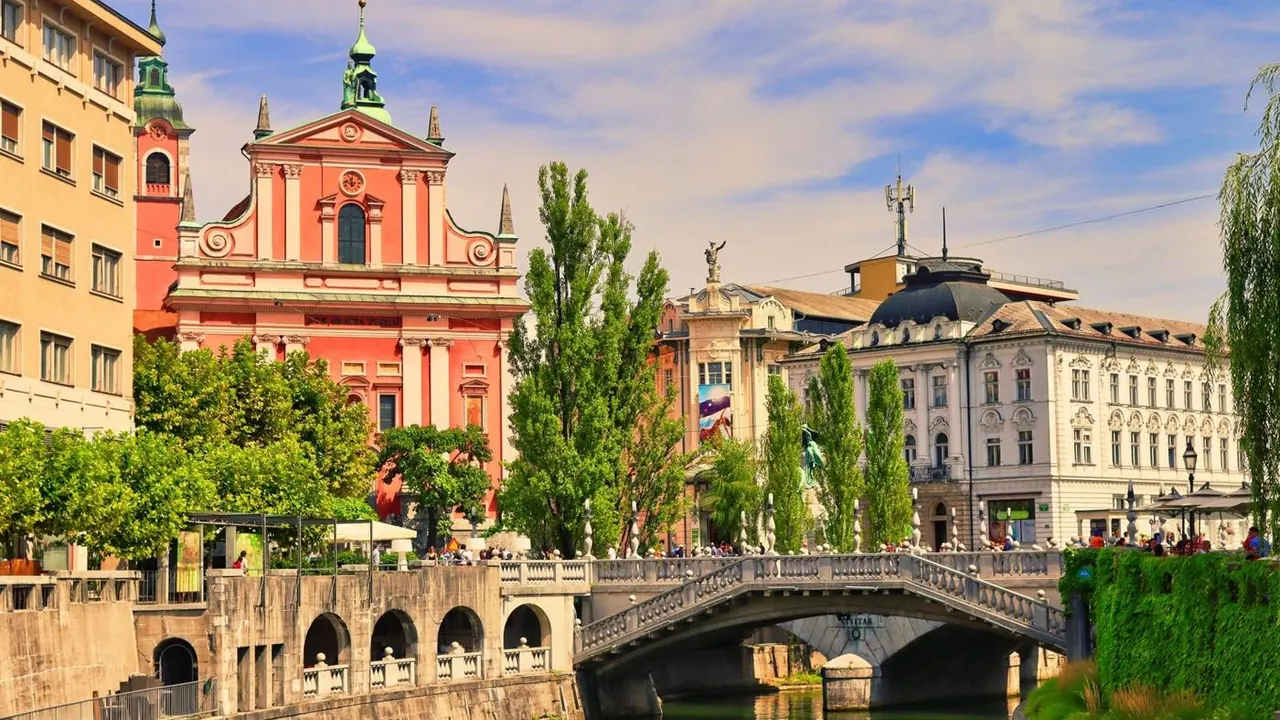
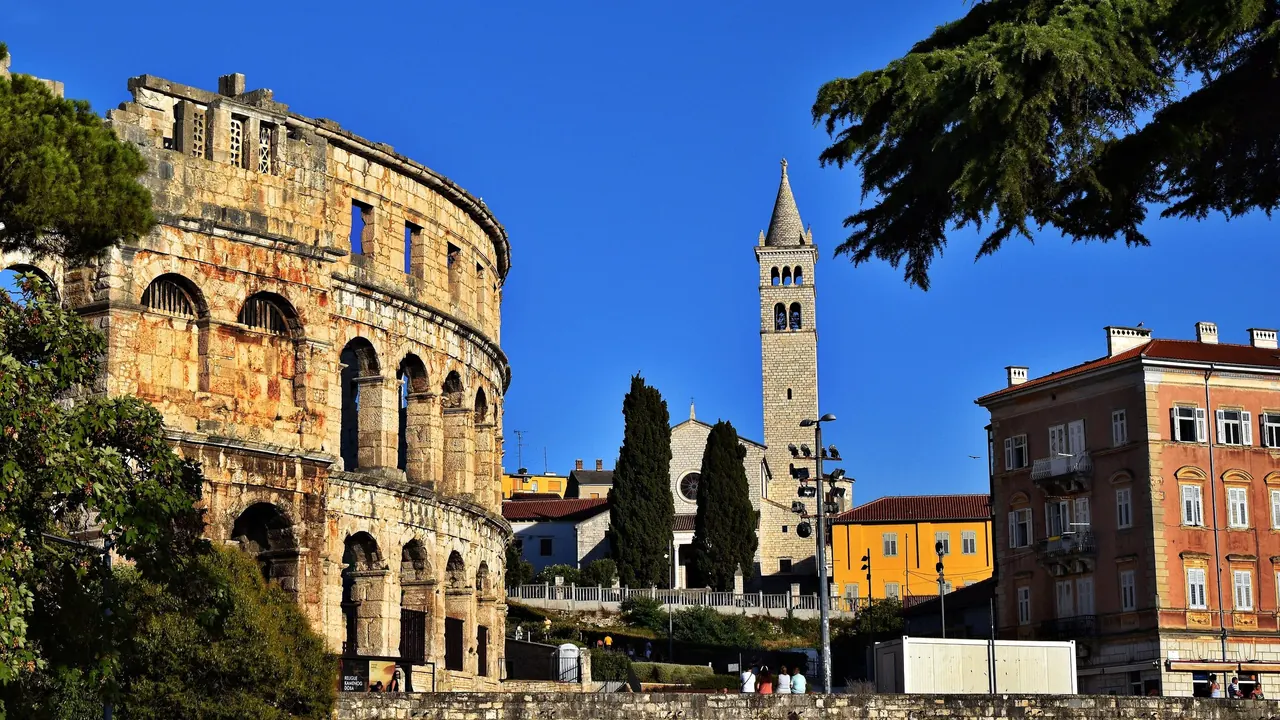
Photos: Ljubljana by detait, Pexels License; Pula by Miroslav.vajdic, CC BY-SA 4.0, cropped.
Ljubljana or Pula?
Our verdict in twelve categories, each scored against the same fixed benchmark cities, and the climate month by month, so you can choose for your trip.
Choose Ljubljana for
- getting around
- nature and the outdoors
- live music and the arts
Ljubljana suits travellers who want a small, walkable capital as a base for mountains, lakes and caves. The Julian Alps, Bled and the karst country are all within an easy drive, the centre needs no transport at all, and an evening at the opera or a Philharmonic concert is easy to fit in. Pack walking boots rather than swimwear.
Choose Pula for
- beaches
- families
- culture and sights
For a summer by the sea with Roman stones on the side, Pula is the stronger choice. Clear water off pine-shaded rocks and the wild coves of Kamenjak make swimming the heart of each day, and the Arena gives the town a monument of real stature. Rovinj and Istria's hill towns fill the days in between, though they are far easier with a hired car.
Scoreboard
Twelve categories on one fixed scale from 0 to 100. The shaded stretch is the gap between the two.
Your match
Pick a travel style or drag the sliders, and both match scores follow your weighting.
Too close to call, 1 point apart
Wins on getting around and nature and the outdoors with your weighting.
Wins on beaches and families with your weighting.
What matters to you?
Category by category
What the scores mean for a trip.
Beaches & swimming
Pula is the obvious pick for swimming. The coast around Verudela and Stoja and the wild coves of Cape Kamenjak give very clear water off rocks and pebbles all summer, and the sheltered bays at Medulin have shallows for small children. There is no sand, so water shoes earn their place in the bag.
Ljubljana has no sea at all. A swim means the Sava on the city's northern edge, Lake Bled or the colder water of Bohinj, or a drive of an hour and a half to Piran on the Slovenian coast. That is a day out, not a beach vacation.
Food & drink
Both cities eat well without being great food destinations, but the cooking is quite different. Ljubljana's is Alpine and hearty, with Carniolan sausage, štruklji and jota at gostilna inns, and its real strength is wine by the glass along the river, including the orange wines of western Slovenia.
Pula cooks Istrian food: truffle pasta, scampi buzara, grilled fish, Malvazija and Teran. The catch is that its best meals are often out in the hinterland villages, while the tables by the Arena lean towards tourist menus. In Ljubljana the good eating is right in the centre.
Culture & sights
The two are broadly level, but they reward you in different ways. Ljubljana's appeal is a whole townscape shaped by Plečnik, with the Triple Bridge, the market colonnades and the library forming a UNESCO-listed ensemble around a baroque and Secession old town, plus the murals of Metelkova.
Pula has one great monument instead. The three-storey Arena, the Temple of Augustus on the Forum and the Arch of the Sergii make Roman history unusually tangible, with Habsburg naval forts as a second layer. Either city is covered in two or three days.
Nightlife
Neither is a place for big nights out, and the real difference is the season. Ljubljana's riverside terraces and the scruffy late clubs of Metelkova run all year, kept going by students during term.
Pula comes alive only in summer, when the evening drifts from the Forum to beach bars on Verudela and around Medulin. Out of season most nights end early.
Nature & outdoors
Ljubljana has far more landscape within reach. Tivoli Park runs into forested hills, and the Julian Alps, Triglav National Park and the Kamnik-Savinja range offer serious hiking, with rafting on the Soča, the Postojna and Škocjan caves, and skiing in winter.
Pula's outdoors is coastal and low. Kamenjak's cliffs, sea kayaking among the islets and wreck diving are good, but the nearest real high ground, Učka, is an hour and a half away, and summer heat limits walking to spring and autumn.
Day trips
Both make excellent touring bases, and both can reach Piran and Trieste. From Ljubljana the whole of Slovenia is close: Bled, Škofja Loka, Predjama Castle, Idrija and the Brda wine villages, with Zagreb as another option. Buses and trains reach the main places.
Pula's range is Istria: Rovinj, the Byzantine mosaics at Poreč, hill towns like Motovun and Hum, and the boat to Brijuni. Buses are thin, so here a car matters more than it does around Ljubljana.
Good for families
Pula has the edge for children, mostly thanks to the sea. The shallow bays at Medulin, an aquarium inside a Habsburg fort, the Arena's underground passages and a dinosaur park and water park within an hour keep a week full, though rocky shores, summer heat and driving take some effort.
Ljubljana is gentler but thinner. Its flat, car-free centre suits pushchairs, and the castle funicular, the dragons and the puppet theatre delight younger children, but most families see it all in two or three days.
Getting around
Ljubljana is far easier to get around. Nearly everything a visitor wants is within about 20 minutes on foot through a largely pedestrianised centre, with bike-share and intercity buses for trips out.
Pula's old centre is just as walkable, but the coves, Kamenjak and the hill towns depend on a car or scooter, the regional buses are sparse and central parking is tight in high season.
Shopping & style
Neither is a shopping destination, and the best buys in both are edible. Ljubljana adds a little more variety, with Idrija lace, gingerbread hearts, a Sunday flea market on the embankment and a few design boutiques around Trubarjeva.
Pula's strength is Istrian olive oil, truffles, wine and pršut, often bought straight from producers, while its main street offers little beyond chains and souvenirs.
Affordability
Costs are similar, and both are mid-priced places where July and August rooms cost about what they would in Western Europe. In Ljubljana, accommodation is the main expense, while walking everywhere and set lunch menus keep daily spending low.
In Pula, the extras add up: car hire and boat trips, plus tourist-level prices near the Arena. Private apartments in spring or autumn are the way to keep it cheap.
Live music & performing arts
Ljubljana has a real year-round programme for a city its size. The Slovenian Philharmonic, the National Opera and Ballet, and Cankarjev dom fill the calendar, and the summer festival in Plečnik's Križanke courtyard brings visiting orchestras.
Pula has one memorable stage: summer concerts and film screenings inside the Roman Arena. Outside the summer there is little beyond Croatian-language theatre.
Wellness & relaxation
Ljubljana is the better choice for a restful stay. It has a water park with a large sauna complex, and Slovenia's thermal spa towns are within about an hour, while the quiet, green centre encourages long riverside afternoons.
Pula has only the spas of its resort hotels, so here relaxation means pine-shaded coastal walks and a slow coffee on the Forum outside high summer.
When should you go?
Pick your month. The climate figures are measured averages, not a forecast.
Ljubljana in July
Pula in July
Daytime high, °C
Rainfall in the month, mm
Where the figures come from
Pula's temperatures are measured 87 km from the centre, at Trieste.
Pula has no rain gauge within 25 km of the centre, so its rainfall comes from a gridded climate dataset read at the city rather than from a gauge further away.
Temperature and rainfall are climate normals, averaged over the years shown. Ljubljana: 1991-2020 (sunshine 1981-2010, rainfall 1981-2010) normals, Ljubljana / Bezigrad (1.9 km from centre). Pula: 1991-2020 normals, Trieste (87 km from centre).
Ljubljana is at its best from May to September, when highs reach 28°C in July and August and the long sunny days suit both the streets and the mountains. It is a wet city, though. June brings heavy showers, and from August the rain returns in earnest, peaking at 176mm in October. Winters are cold and grey, with highs around 4°C, better suited to the small ski resorts than to café terraces.
Pula is milder all year and much drier in summer. The sea reaches 25°C in August and is warm enough for swimming from June to September, and July is the sunniest month, with around 300 hours of sunshine. Spring and early autumn are pleasant for walking the Roman sites and Kamenjak, while the rain arrives from September and is heaviest in November. Its winters are clearly softer than Ljubljana's but still too cool for the beach.
Which traveller are you?
On a beach and sun trip, Pula is the clear choice. From Ljubljana a swim means the Sava or an Alpine lake. In Pula the Verudela and Stoja coves are a short bus or bike ride from the Arena.
For an outdoors trip, Ljubljana is the better base. Šmarna Gora starts at the city's edge, and Triglav National Park, the Soča valley and the karst caves are all within reach. Pula's walking and cycling around Kamenjak are gentler and lower.
For a short city break, Ljubljana is easier. Apart from the airport bus you need no transport, and the castle, the Central Market and the riverside wine bars are all on foot. Pula's Arena fills a day, but out of summer the town goes quiet.
Before you go
| Measure | Ljubljana | Pula |
|---|---|---|
| Official language | Slovene | Croatian |
| Currency | Euro (EUR) | Euro (EUR) |
| Sockets | CF230 V, 50 Hz | CF230 V, 50 Hz |
| Driving side | Right | Right |
| Time zone | UTC+1, UTC+2 in summer | UTC+1, UTC+2 in summer |
| Emergency number | 112 | 112 |
| Elevation | 309 m | 5 m |
| Main airport | Ljubljana Jože Pučnik Airport (LJU)20 km from centre32 non-stop destinations | Pula Airport (PUY)7 km from centre34 non-stop destinations |
| Public holidays this year | 21 days | 14 days |
By the numbers
| Measure | Ljubljana | Pula |
|---|---|---|
| City population | 284,293 | 52,220 |
| People per km² | 1,736 | 971 |
| Museums within 10 km | 14 | 4 |
| UNESCO World Heritage sites within 50 km | 3 | 1 |
| Swim season, months above 21 °C | - | 4 months |
Where else could you go?
Every comparison below shares a destination with this one, so you can follow Ljubljana or Pula somewhere new.