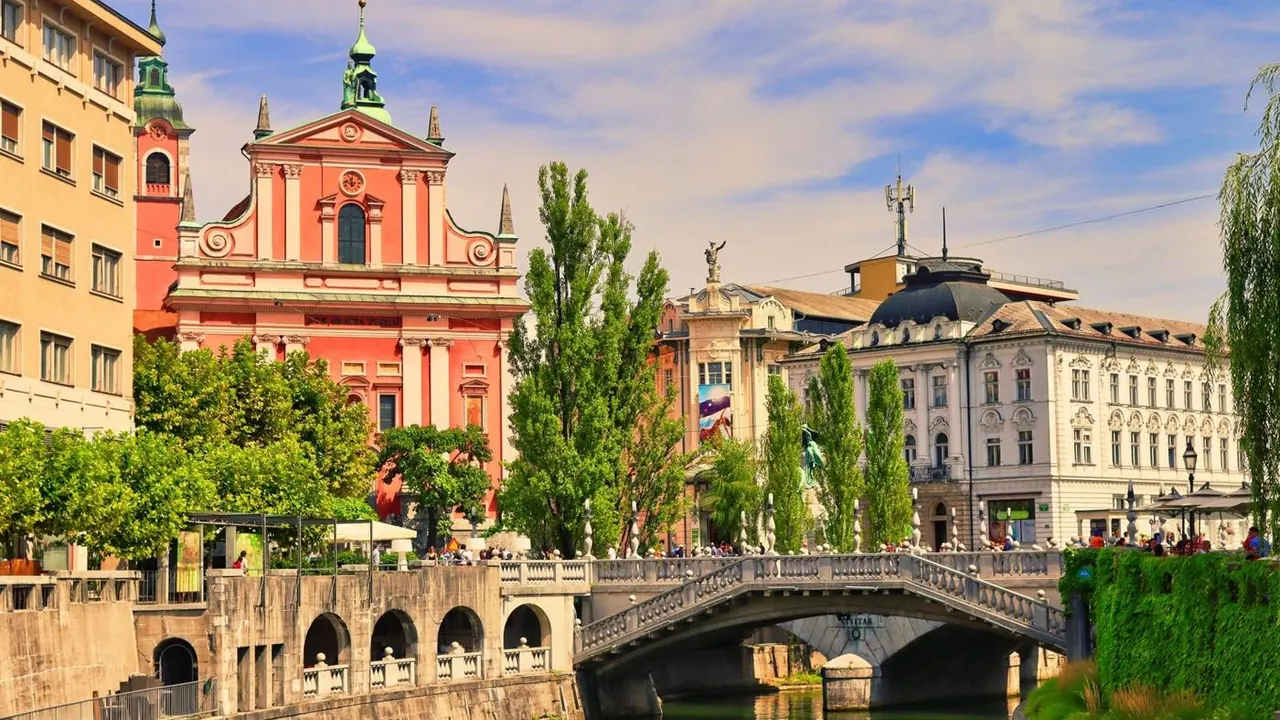
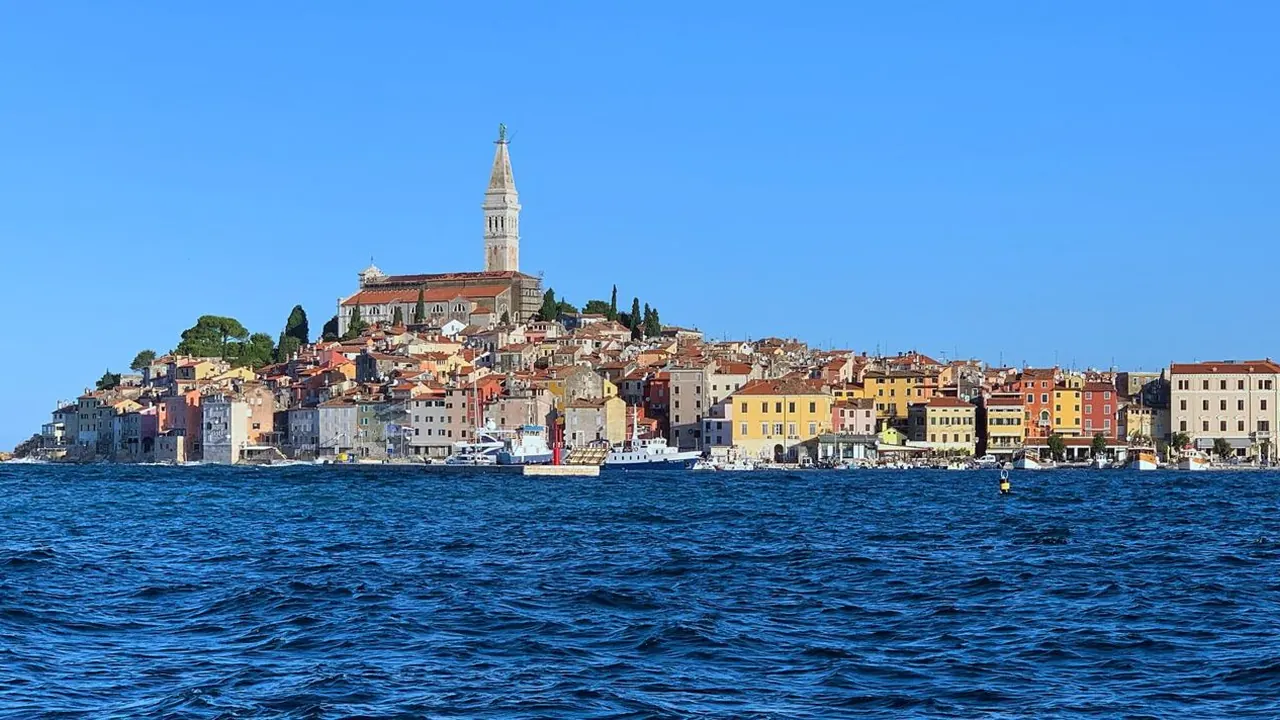
Photos: Ljubljana by detait, Pexels License; Rovinj by Vyacheslav Bukharov, CC BY-SA 4.0, cropped.
Ljubljana or Rovinj?
Our verdict in twelve categories, each scored against the same fixed benchmark cities, and the climate month by month, so you can choose for your trip.
Choose Ljubljana for
- live music and the arts
- nature and the outdoors
- getting around
Ljubljana suits a traveller who wants a small capital with real substance and the mountains close by. Plečnik's riverside centre, an opera and a philharmonic, Metelkova's late weekends and a centre you can cross on foot make for an easy, varied stay. Bled, the Julian Alps and the karst caves all make easy day trips, and it costs noticeably less to stay than on the coast.
Choose Rovinj for
- beaches
Choose Rovinj when the sea is the point of the trip. You swim off limestone ledges below the old town, take taxi boats to the islands and eat long fish dinners on the harbour, which makes it a slow summer town for couples and families. Roman Pula and the Istrian hill towns fill the days away from the rocks. Expect quiet evenings, and bring a car and a bigger budget.
Scoreboard
Twelve categories on one fixed scale from 0 to 100. The shaded stretch is the gap between the two.
Your match
Pick a travel style or drag the sliders, and both match scores follow your weighting.
Wins on live music and the arts and nature and the outdoors with your weighting.
Wins on beaches with your weighting.
What matters to you?
Category by category
What the scores mean for a trip.
Beaches & swimming
This is Rovinj's category by a wide margin. Ljubljana is inland, so a swim means the Sava on the city's northern edge, Lake Bled about an hour away, or a ninety-minute trip to the Slovenian coast at Piran.
Rovinj has the clear Adriatic right below its walls. Limestone ledges, pebble coves and bathing platforms run for kilometres through the Golden Cape park, and St Catherine and Red Island have quieter coves. There is no sand here either, so pack water shoes.
Food & drink
The two eat about equally well, but in different ways. Ljubljana's food is Alpine and inland: the Central Market under Plečnik's colonnades, Carniolan sausage and štruklji in gostilna inns, and riverside wine bars pouring Vipava, Brda and orange wines by the glass.
Rovinj's strength is the sea and the Istrian hinterland, with scampi buzara, grilled fish, truffled pasta and Malvazija. Its weak spot is the harbourfront, where many menus are written for passing visitors and cheap everyday food is hard to find. Ljubljana at least has its warm-weather street-food gathering on the market square.
Culture & sights
Ljubljana has noticeably more to see. Plečnik's bridges, embankments and library form a UNESCO-listed ensemble and the castle looks down from its wooded hill. The National Gallery, the Museum of Modern Art and the murals of Metelkova fill two or three days.
Rovinj is a single, beautiful set piece: a former island of Venetian houses climbing to St Euphemia, whose bell tower you can climb for the view. The main indoor sights are a town museum and the Batana House, so an afternoon covers it.
Nightlife
Neither is a party town, but Ljubljana has more going on after dinner. Its riverside terraces fill on warm evenings, students keep the bars busy during term, and Metelkova's scruffy clubs run late at weekends. In Rovinj the evening is a sunset drink on the rocks and a few waterfront bars. The town is quiet by midnight and largely shuts down outside summer.
Nature & outdoors
Ljubljana has far more of the outdoors within reach. Tivoli Park and Šmarna Gora are in the city itself, and the Kamnik-Savinja Alps start about 40 minutes out. The Julian Alps, Triglav National Park and the Soča valley offer serious hiking, rafting and, in winter, skiing.
Rovinj's landscape is gentler and mostly about water. You can walk the pine and cedar paths of the Golden Cape, kayak and dive among the islands and take a boat up the Lim Fjord. It is best in spring and autumn, and there are no mountains.
Day trips
Both sit in the middle of compact, rewarding regions, and Ljubljana has the wider spread. Bled, Škofja Loka, Predjama Castle, mercury-mining Idrija and the Brda wine villages are all close. Buses and trains reach the main ones, and Zagreb and Trieste are each about two hours away.
Rovinj's day trips lean on history: Pula's Roman amphitheatre, the mosaics of Porec's Euphrasian Basilica and the hill towns of Motovun and Groznjan above the truffle forests. They are excellent, but most of them need a car.
Good for families
The difference for families is underfoot. Ljubljana's centre is flat and largely closed to cars, so pushchairs and small legs cope easily. The castle funicular, the Dragon Bridge, the puppet theatre and a modest zoo on Rožnik hill fill two or three days.
Rovinj's old town is a climb of steep, polished cobbles, and its shore is rock rather than sand, so small children need water shoes and close watching. It makes up for that with boat trips to the islands, gelato on the harbour and resorts with pools and playgrounds. The big waterparks are a drive north.
Getting around
Both are walking towns at heart, but Ljubljana is easier, both in town and beyond. Everything from the market to Tivoli Park is within about 20 minutes on flat ground, bike-share covers the outer districts, and intercity buses reach most of the country.
In Rovinj the old town and the shore path are walkable too, though the lanes are steep and slippery. There is no railway, the hill towns and wineries are effectively car-only, and parking near the old town is tight in summer.
Shopping & style
Neither is a place to shop seriously, and in both the things worth taking home are local rather than branded. Ljubljana has a little more range. Besides the oils, honey and sea salt at the Central Market, the weekly antiques and flea market by the river is good for secondhand finds, and a few independent designers in the old-town lanes give a browse some variety beyond food and crafts.
Rovinj is narrower and depends more on the season. Most of what it sells is Istria in a jar or a bottle: truffles, olive oil and the region's wines. The more interesting stops are the painters' and craftspeople's studios on the steep lanes around Grisia. Once summer is over, there is noticeably less to choose from.
Affordability
Ljubljana is the cheaper stay. Set lunch menus at the inns, fairly priced local wine and a walkable centre keep daily spending moderate, although old-town rooms in summer are expensive.
Rovinj is among the pricier places on the Croatian coast. High-summer rooms and harbourside fish sold by weight add up fast. Private apartments, the campsites and a visit in late spring or September bring the cost down.
Live music & performing arts
The gap here is wide. Ljubljana has an opera and ballet house and a philharmonic whose roots go back to 1701. Cankarjev dom programmes concerts and dance all year, and the summer festival fills Plečnik's Križanke courtyard. That is enough for a good night out, though most theatre is in Slovene.
Rovinj has occasional summer concerts in St Euphemia and performances of the traditional bitinada singing, and very little outside the season. For a big concert you go to the Roman arena in Pula.
Wellness & relaxation
Ljubljana's calm comes from the city itself: a green, quiet centre largely free of cars, and long afternoons at riverside cafés. For bathing there is a large water park with saunas on the eastern edge, and several of Slovenia's thermal spa towns are within about an hour's drive.
In Rovinj the sea does the work: late swims off the rocks, evening walks in the Golden Cape pines and well-equipped resort hotel spas that are open to outside guests. Come in May, June or September, because in high summer the old town and the harbour are crowded.
When should you go?
Pick your month. The climate figures are measured averages, not a forecast.
Ljubljana in July
Rovinj in July
Daytime high, °C
Rainfall in the month, mm
Where the figures come from
Rovinj's temperatures are measured 64 km from the centre, at Trieste.
Rovinj has no rain gauge within 25 km of the centre, so its rainfall comes from a gridded climate dataset read at the city rather than from a gauge further away.
Temperature and rainfall are climate normals, averaged over the years shown. Ljubljana: 1991-2020 normals, Ljubljana / Bezigrad (1.9 km from centre). Rovinj: 1991-2020 normals, Trieste (63.7 km from centre).
Ljubljana has a proper continental year. Winters are cold, with highs around 4°C in January and December, and summer reaches 28°C in July and August. That is warm but rarely too hot for walking the streets. Rain falls all year and is heaviest in autumn, peaking at 159mm in September. Late spring and early summer are the most reliable time for both the city and the mountains, with long sunny days from May to August.
Rovinj is milder, drier in every month and sunnier through most of the year. The sea is warm enough for comfortable swimming from June to September and peaks at 26°C in August, and the town stays pleasant for walking well into October. Its wettest months are autumn and November. Winters are cool rather than cold, but quiet, and the swimming is over.
Which traveller are you?
On a beach and sun trip, Rovinj is the clear pick. Clear Adriatic water, rocky coves along the Golden Cape and island swimming by taxi boat are right at hand. From Ljubljana, the lakes and the sea are always a day trip.
For a culture and arts trip, Ljubljana gives more. Plečnik's UNESCO-listed works, the castle, several solid galleries and a season of opera, ballet and orchestral concerts fill a few days well. Rovinj's old town and two small museums take an afternoon.
On an outdoors trip, Ljubljana wins on scale. The Julian Alps, Triglav National Park, rafting on the Soča and the karst caves are an hour or so away. Rovinj offers gentler pleasures: forest paths, sea kayaking and diving around the islands.
Before you go
| Measure | Ljubljana | Rovinj |
|---|---|---|
| Official language | Slovene | Croatian |
| Currency | Euro (EUR) | Euro (EUR) |
| Sockets | CF230 V, 50 Hz | CF230 V, 50 Hz |
| Driving side | Right | Right |
| Time zone | UTC+1, UTC+2 in summer | UTC+1, UTC+2 in summer |
| Emergency number | 112 | 112 |
| Elevation | 309 m | 0 m |
| Main airport | Ljubljana Jože Pučnik Airport (LJU)20 km from centre32 non-stop destinations | Pula Airport (PUY)31 km from centre34 non-stop destinations |
| Public holidays this year | 21 days | 14 days |
By the numbers
| Measure | Ljubljana | Rovinj |
|---|---|---|
| City population | 284,293 | 12,968 |
| People per km² | 1,736 | - |
| Museums within 10 km | 14 | 1 |
| UNESCO World Heritage sites within 50 km | 3 | 1 |
| Swim season, months above 21 °C | - | 4 months |
Where else could you go?
Every comparison below shares a destination with this one, so you can follow Ljubljana or Rovinj somewhere new.