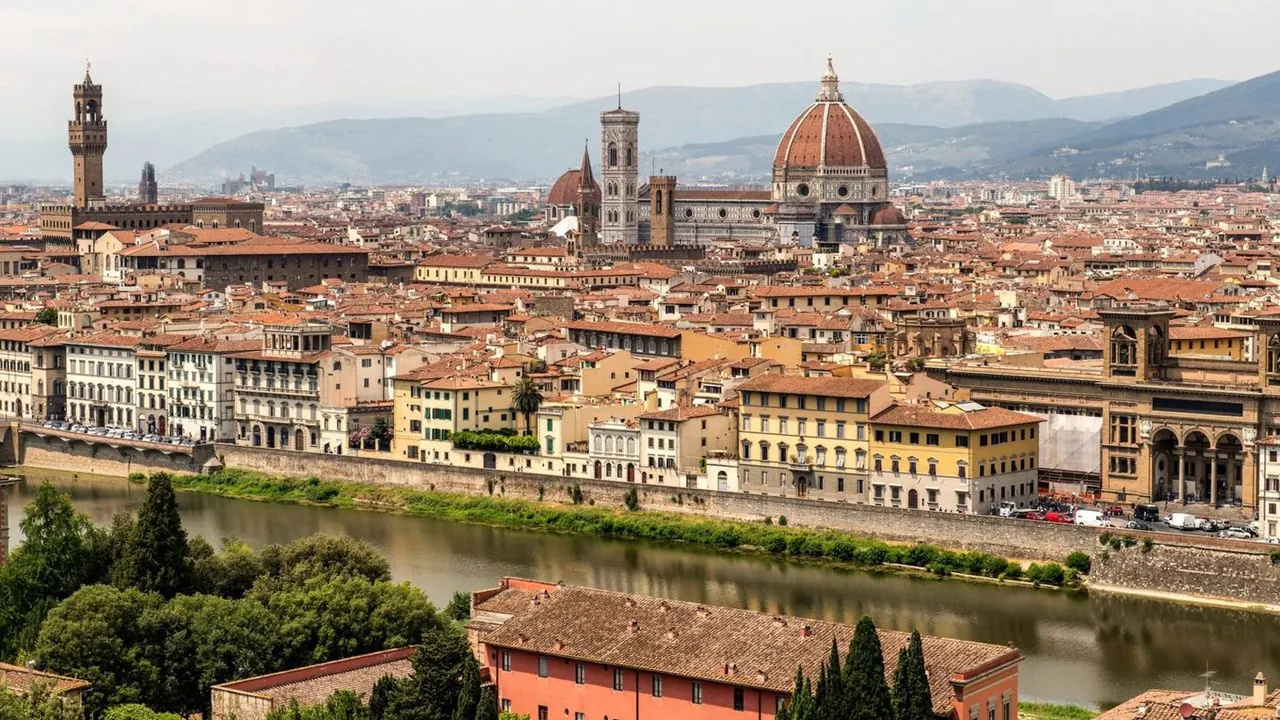
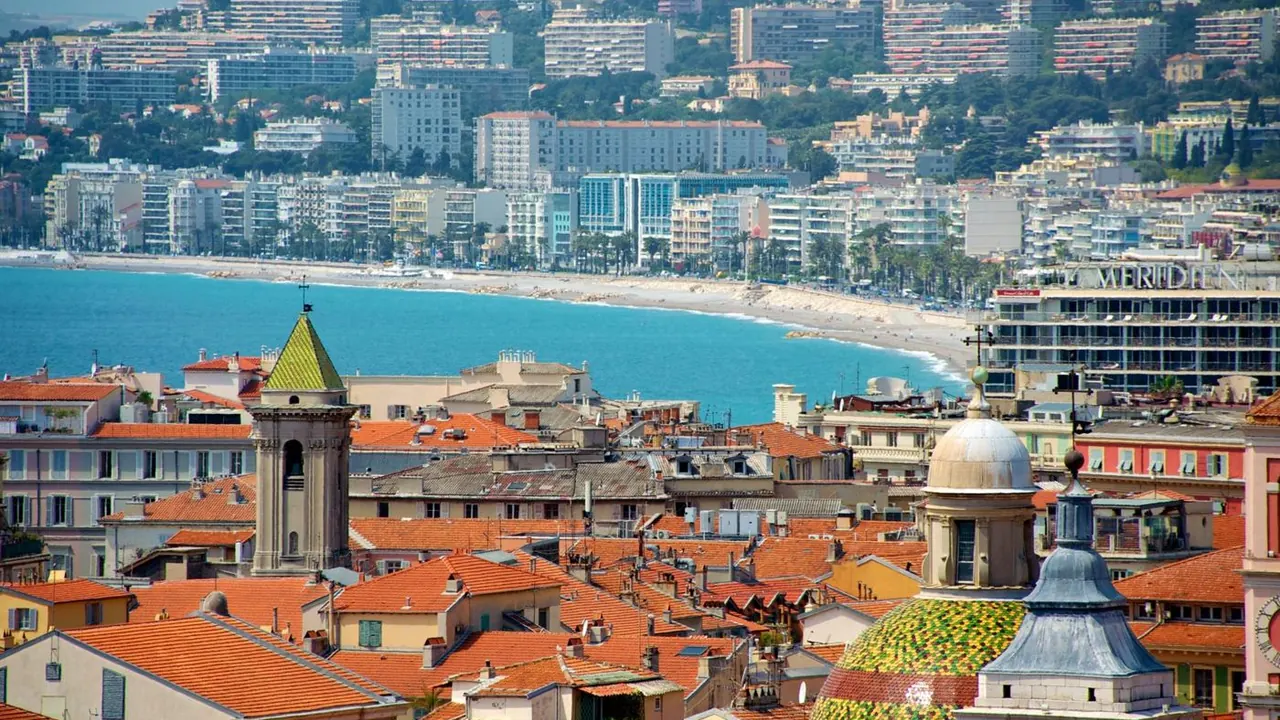
Photos: Florence by Wolfgang Weiser, Pexels License; Nice by Daniel Stockman, CC BY-SA 2.0, cropped.
Florence or Nice?
Our verdict in twelve categories, each scored against the same fixed benchmark cities, and the climate month by month, so you can choose for your trip.
Choose Florence for
- culture and sights
- shopping
- live music and the arts
Florence is the better pick for travellers who want art, history and food to fill the days. The Renaissance is all within walking distance: the Uffizi, the Accademia, the Bargello and Brunelleschi's dome. Siena, Lucca, Pisa and the Chianti hills make the best set of day trips in either city. Florence also wins on trattoria cooking and craft shopping. What it can't give you is the sea, and July and August in the city are very hot.
Choose Nice for
- beaches
- nature and the outdoors
- families
Nice suits a trip built around the Mediterranean, with the city's art museums as a bonus rather than the reason for coming. You can swim off the Promenade des Anglais from June into October, and small bays such as Villefranche and Beaulieu are a short ride away. The Alps rise straight behind the city, so the coast path, the Mercantour and even winter skiing are close. It is also easier with children, and the gentler summer heat and the wide promenade make for a slower, more outdoor stay.
Scoreboard
Twelve categories on one fixed scale from 0 to 100. The shaded stretch is the gap between the two.
Your match
Pick a travel style or drag the sliders, and both match scores follow your weighting.
Too close to call, 1 point apart
Wins on culture and sights and shopping with your weighting.
Wins on beaches and nature and the outdoors with your weighting.
What matters to you?
Category by category
What the scores mean for a trip.
Beaches & swimming
These two are completely different on the beach. In Florence, cooling off means a hotel pool or a public outdoor pool. The nearest sea is the sandy, lounger-lined Versilia coast, about an hour and a half away by train, which takes a whole day.
In Nice the beach is right in town, below the promenade. The shore is pebbles rather than sand, so a rented lounger or water shoes help. If you want sand and calmer water, Villefranche, Paloma beach on Cap Ferrat and Juan-les-Pins are all easy to reach.
Food & drink
Florence has the edge, with a cuisine that is deeper and more confident. Thick bistecca, ribollita, lampredotto from the carts and two serious food markets are backed by Chianti vineyards on the city's doorstep. The best meals are in family trattorie in the Oltrarno and around Sant'Ambrogio.
Nice cooks closer to Liguria than to Paris. Its food is good and simple: socca hot from the wood oven, pissaladière and stuffed vegetables, bought around the Cours Saleya market. Both cities have tourist menus to avoid near their famous spots, but Nice has less range once you get past its local dishes.
Culture & sights
Florence is one of the world's great art cities. The Uffizi, the Accademia, the Bargello, the Pitti Palace and the Duomo with its dome sit within a short walk of each other, and the smaller chapels and frescoes alone could fill extra days. Book ahead and expect queues.
Nice has a lighter, more modern offering. Its strength is twentieth-century art, at the Matisse Museum in Cimiez, the Chagall Museum and MAMAC. Around these are the baroque old town, Belle Époque villas and the Russian cathedral. It is a rewarding two or three days, but nothing in it matches the scale of the Uffizi.
Nightlife
Neither city is built for clubbing, and in both the typical night is dinner followed by drinks. Florence leans towards aperitivo and wine bars, with the liveliest crowds spilling out around Piazza Santo Spirito and summer bars set up along the Arno.
Nice puts its evenings in the narrow lanes of Vieux Nice, with pubs and cocktail bars, and summer adds the beach clubs and the promenade. Anyone wanting a glossier late night goes along the coast to Monaco or Cannes.
Nature & outdoors
Florence's countryside is pretty and cultivated. There are walks on the olive terraces at Fiesole and lanes lined with cypresses through Chianti, and the Casentino forests and the marble Apuan Alps are within reach for a longer outing.
Nice has far more variety, because mountains and sea meet here. There are coastal paths on Cap Ferrat and Cap d'Ail, gorges and perched villages behind the city, the high lakes and ibex of the Mercantour, and ski slopes about an hour and a half away in winter. On the water you can sail, dive and paddleboard.
Day trips
Both are excellent bases, but Florence has the stronger list. Siena, Pisa, Lucca, San Gimignano and the Chianti villages are close by, Bologna is a short high-speed train ride away, and the Val d'Orcia lies further south. Trains reach the main towns, but a car helps for the hill villages and wineries.
Nice's trips are shorter and simpler: Monaco, Èze, Menton, Antibes, Cannes, Saint-Paul-de-Vence and even Sanremo in Italy, nearly all within an hour on the coastal train or a bus. You never need a car. The towns are charming, but they don't match the weight of Siena or Pisa.
Good for families
Nice is the easier city with children. It has the flat promenade for pushchairs and bikes, playgrounds and water jets along the Promenade du Paillon, and the animals and greenhouses of Parc Phoenix, with the sea always close. The pebbles and the steps in the old town are the main nuisances.
Florence's main sights are made for adults. Children enjoy climbing the dome, the secret passages of Palazzo Vecchio and running about in the Boboli Gardens, but narrow pavements, summer crowds and the heat make it harder going. The Pinocchio park at Collodi is the classic family outing.
Getting around
Both cities are easy without a car. The difference is how you get about. Florence is almost entirely walkable, with the big sights about twenty minutes apart on stone paving, and there is no metro. Its trams and small buses mainly serve the airport, the suburbs and the climb to Fiesole.
Nice is more spread out along the sea. Here the tram crossing the city and the buses up to Cimiez are actually useful, and the coastal trains handle most excursions.
Shopping & style
Florence gives shoppers more to look for. It has leather from market stalls and small workshops, marbled paper, goldsmiths on the Ponte Vecchio and restorers and gilders working in the Oltrarno. Via de' Tornabuoni holds the Italian fashion houses that come from the city.
Nice is pleasant for browsing rather than a reason to go. It has chain stores on Avenue Jean Médecin, luxury labels around rue Paradis, and olive oil, soaps and Provençal fabrics in the old town. Serious luxury shoppers usually head to Monaco or Cannes.
Affordability
Both are costly. In each, the big expense is a central room in high season, and the savings come from eating simply. Florence's costs pile up in museum and Duomo tickets, but you can walk everywhere and lampredotto or market lunches are cheap.
In Nice the extra costs are beach loungers and seafront terraces. On the other hand, the trams and coastal trains keep day trips cheap, and many of the city's museums cost little.
Live music & performing arts
Florence has the deeper classical tradition. Opera was more or less born here, the Teatro del Maggio Musicale Fiorentino has its own orchestra, and the spring Maggio Musicale festival is one of Europe's oldest. Beyond the many church concerts put on for tourists, though, there is little live music.
Nice's calendar is more regional, with the Opéra de Nice and its philharmonic. It also has two big annual events Florence can't match: the Nice Jazz Festival in July and the Carnival in February.
Wellness & relaxation
Neither city has a bathing tradition of its own, and in both the spa within town means a hotel's treatment rooms. The real difference is how far you go to find calm. In Florence you leave the city for it. Montecatini Terme is an easy rail outing, the hot open-air springs of Saturnia and Bagno Vignoni in southern Tuscany justify a night away, and a few slow days among the vineyards do the rest.
In Nice the calm is on your doorstep. With the sea a short walk from the centre, a morning swim and an evening stroll by the bay need no planning, and seaside thalassotherapy takes care of treatments. In July and August, though, both cities are crowded and hot, so spring and autumn make for a far quieter stay in either.
When should you go?
Pick your month. The climate figures are measured averages, not a forecast.
Florence in July
Nice in July
Daytime high, °C
Rainfall in the month, mm
Where the figures come from
Florence has no rain gauge within 25 km of the centre, so its rainfall comes from a gridded climate dataset read at the city rather than from a gauge further away.
Florence's sunshine is measured 71 km from the centre, at Pisa / S. Giusto.
Temperature and rainfall are climate normals, averaged over the years shown. Florence: 1995-2020 (sunshine 1991-2020, rainfall 1991-2020) normals, Firenze / Peretola (5.6 km from centre). Nice: 1991-2020 normals, Nice (8 km from centre).
Florence is best in spring and early autumn. From April to early June, and again in late September and October, it is warm enough to sit outside but cool enough to walk the streets all day. July and August are hard work for sightseeing, with afternoons around 33°C in a valley that holds the heat. Autumn brings the rain, wettest from October to November at well over 80mm a month. Winters are cool and grey, with short days and little sun.
Nice has the gentler climate all year. Summer highs stay nearer 28°C, and the sea reaches about 25°C in August. It is comfortable for swimming from June into early October, when the water is still around 20°C. Like Florence, it turns wet from late September to November. Winter is milder and noticeably sunnier, though, so a January or February visit makes much more sense on the coast than in the Arno valley.
Which traveller are you?
On a beach and sun trip, choose Nice. You get a long seafront where you can swim, clear water from June into October and sandier coves a short train ride east. Florence is inland, and the coast is a full day out by rail.
For a culture and arts trip, Florence is the obvious choice. The Uffizi, David, the Bargello, the Duomo and the frescoes at San Marco fill a week. Nice's Matisse and Chagall museums are excellent, but there is about two or three days of them.
For an outdoors trip, Nice offers far more. There are coastal paths on Cap Ferrat, cycling routes along the corniches, hiking in the Esterel and the Mercantour, skiing within reach in winter, and diving or kayaking in the sea. Florence has gentle walks through olive groves and vineyards rather than mountains or water.
Before you go
| Measure | Florence | Nice |
|---|---|---|
| Official language | Italian | French |
| Currency | Euro (EUR) | Euro (EUR) |
| Sockets | CFL230 V, 50 Hz | CE230 V, 50 Hz |
| Driving side | Right | Right |
| Time zone | UTC+1, UTC+2 in summer | UTC+1, UTC+2 in summer |
| Emergency number | 112 | 112 |
| Elevation | 50 m | 0 m |
| Main airport | Florence Airport, Peretola (FLR)6 km from centre46 non-stop destinations | Nice-Côte d'Azur Airport (NCE)6 km from centre130 non-stop destinations |
| Public holidays this year | 13 days | 11 days |
By the numbers
| Measure | Florence | Nice |
|---|---|---|
| City population | 360,930 | 357,737 |
| People per km² | 3,528 | 4,975 |
| Museums within 10 km | 141 | 17 |
| UNESCO World Heritage sites within 50 km | 4 | 2 |
| Swim season, months above 21 °C | - | 4 months |
Where else could you go?
Every comparison below shares a destination with this one, so you can follow Florence or Nice somewhere new.