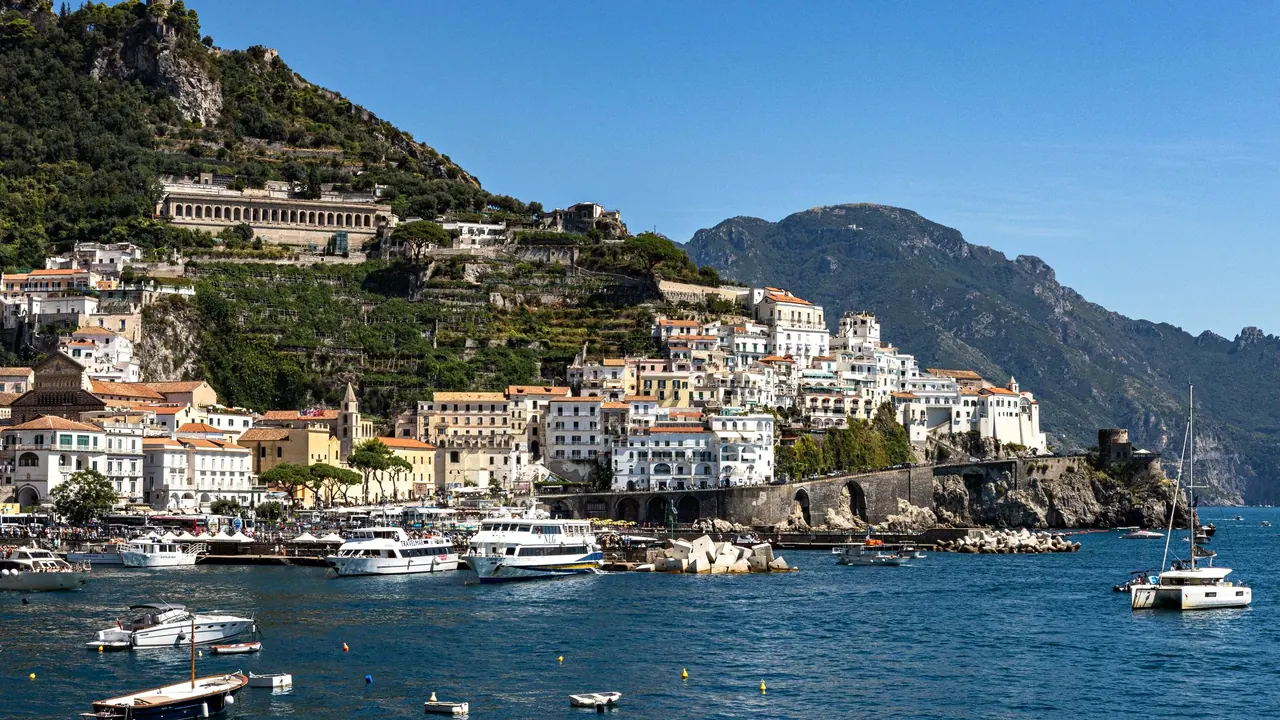
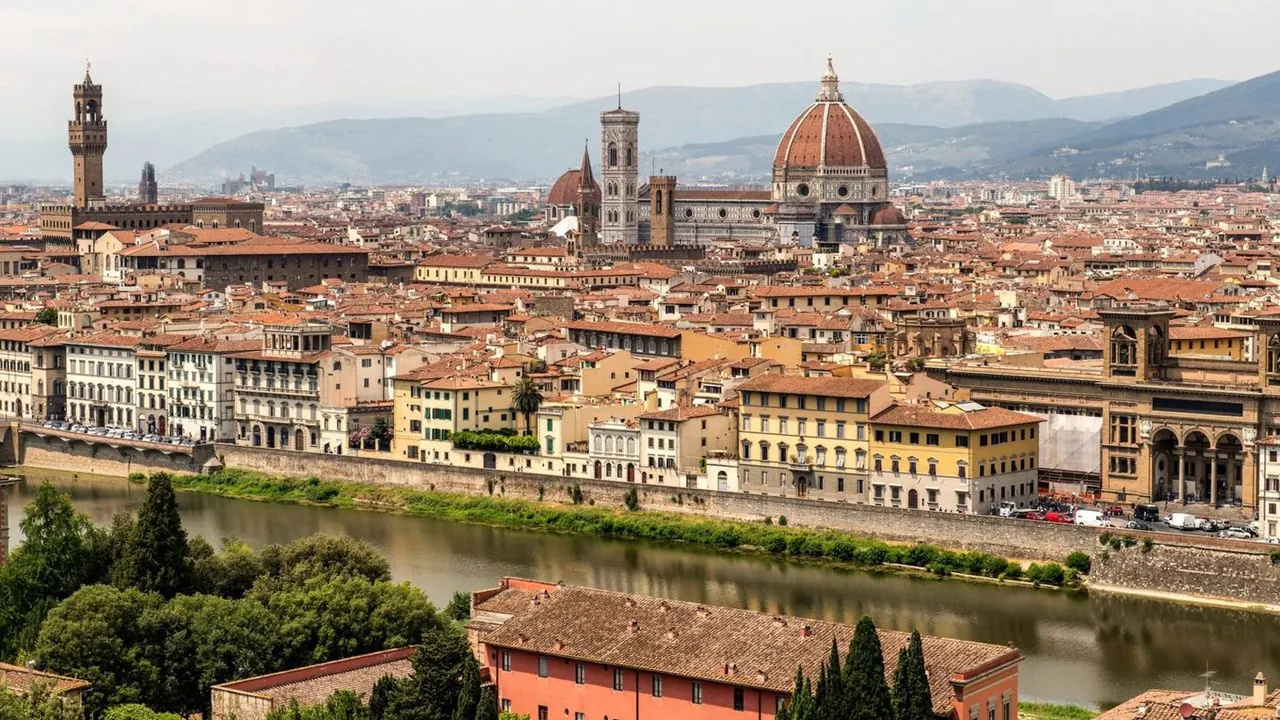
Photos: Amalfi by Oleksandra Zelena, Pexels License; Florence by Wolfgang Weiser, Pexels License.
Amalfi or Florence?
Our verdict in twelve categories, each scored against the same fixed benchmark cities, and the climate month by month, so you can choose for your trip.
Choose Amalfi for
- beaches
- nature and the outdoors
Amalfi is the choice for a slower coastal stay built around the sea and the mountains behind it. Swims from pebble coves, boat days to sea caves and the high trails above the coast are what it does best, and Ravello, Positano and Capri are all close by. It suits couples and walkers who are happy with quiet evenings and don't mind a high bill for the setting.
Choose Florence for
- culture and sights
- shopping
- live music and the arts
Florence gives far more to do in a day. It has one of the world's great concentrations of Renaissance art, a food culture of markets and trattorie, real opera, workshops worth shopping in and a compact centre you can cover on foot. With Siena, Pisa and Lucca close by, it is the better base for a first trip to Italy or for anyone who wants museums, meals and wine rather than the sea.
Scoreboard
Twelve categories on one fixed scale from 0 to 100. The shaded stretch is the gap between the two.
Your match
Pick a travel style or drag the sliders, and both match scores follow your weighting.
Wins on beaches and nature and the outdoors with your weighting.
Wins on culture and sights and shopping with your weighting.
What matters to you?
Category by category
What the scores mean for a trip.
Beaches & swimming
Amalfi is the only one of the two where swimming is part of a normal day. Marina Grande lies below the Duomo steps, Atrani's small beach is ten minutes away on foot, and boats reach coves and grottoes the road never touches. It is pebble rather than sand and crowded with loungers in high summer, but the sea is right there.
From Florence, the sandy Versilia beaches near Viareggio take about an hour and a half by train, so a swim means giving up a whole day. Most visitors make do with a pool.
Food & drink
Florence has the deeper and more rewarding table. There is bistecca, ribollita and lampredotto from street carts, the Mercato Centrale and Sant'Ambrogio markets show what locals buy, and the trattorie in the Oltrarno reward a little walking. Chianti wine is produced just south of the city.
Amalfi's cooking is narrower but distinctive: sfusato lemons, colatura from Cetara, and scialatielli with clams. It is good when you find the right trattoria up an alley, but the piazza and seafront mostly serve passing crowds.
Culture & sights
There is a large gap here. Florence holds Botticelli at the Uffizi, Michelangelo's David, Brunelleschi's dome, the Bargello's sculpture and the Fra Angelico cells at San Marco, which is enough for a week of looking.
Amalfi's heritage is its maritime republic. There is the striped Duomo with its Constantinople bronze doors, the Chiostro del Paradiso, the old Arsenale and the paper museum. They are fine, but a morning or afternoon covers them.
Nightlife
Neither is a clubbing city. Florence still offers a proper evening out, with aperitivo, wine bars, drinkers spilling across Piazza Santo Spirito, student pubs and summer bars along the Arno.
Amalfi stops at a late dinner and a gelato on the piazza. Once the last ferries and buses leave, the town falls silent, and a real night out means a trip to Salerno or Naples.
Nature & outdoors
Amalfi's setting is the more dramatic. The Lattari mountains fall straight into the sea, the Sentiero degli Dei looks across to Capri, the Valle delle Ferriere hides waterfalls in a shaded gorge, and kayaks slip into sea caves. Old mule stairways make demanding half-day walks between villages.
Florence's countryside is gentler and more cultivated, with olive terraces at Fiesole, cypress lanes and vineyards in Chianti for cycling, and the Casentino forests further out. It is lovely, but not on Amalfi's scale.
Day trips
Both are excellent bases, and Florence is slightly better. Siena, Pisa, Lucca, San Gimignano and the Chianti villages are all near, and Bologna is a short high-speed train ride away. Trains run all year, so the options don't shrink in winter.
Amalfi has Ravello, Positano, Capri and Paestum, with Pompeii and Herculaneum within a long day. But many of those trips depend on ferries that mostly run from spring to autumn, and on a coast road that crawls in summer.
Good for families
Florence is the easier of two awkward choices. Climbing the dome, the secret passages of Palazzo Vecchio, the globes at the Museo Galileo and space to run in the Boboli Gardens give children something to do, and the Pinocchio park at Collodi makes a classic day out.
Amalfi suits confident swimmers of school age who will love boats and sea caves. For toddlers, the steep stairs, crowded pebbles and winding, carsick-prone bus rides make it hard going.
Getting around
Both centres are small and walkable, but Florence handles transport far better. Its main sights lie within about twenty minutes of each other on foot, trams run to the airport, and Santa Maria Novella station sits in the middle for rail trips.
Amalfi's town is tiny but built on stairs, which makes it hard for anyone with limited mobility. Leaving it depends on packed buses and seasonal ferries along a single cliff road, and in summer full buses often pass by waiting queues.
Shopping & style
Florence is a serious place to shop for craft and fashion. There are leather workshops, goldsmiths on the Ponte Vecchio, gilders and framers in the Oltrarno, antique dealers on Via Maggio and the fashion houses of Via de' Tornabuoni.
Amalfi comes down to one main street of limoncello, ceramics and lemon soap. The handmade cotton paper from the valley is the one souvenir truly its own.
Affordability
Neither is cheap, but Amalfi costs more. Short supply pushes sea-view rooms towards capital-city prices, and loungers, boat hire and seafront meals all add up. The buses are the one bargain.
Florence's museum tickets add up quickly, but street food, market lunches and cheap house wine keep daily costs reasonable, and you will hardly need transport. Staying across the river or visiting in winter cuts the bill further.
Live music & performing arts
Florence, where opera was born, has a working opera house with its own orchestra and ballet, the Maggio Musicale festival each spring and the eighteenth-century Pergola theatre. There are many concerts in churches, though some are aimed at tourists.
Amalfi has no stage of its own. Its highlight is a summer evening at the Ravello Festival, with the orchestra playing on the Villa Rufolo terrace above the sea, a single but memorable occasion.
Wellness & relaxation
Amalfi restores you through its pace rather than through spas. Treatment rooms belong mostly to the cliff hotels and their own guests, so the calm comes from long shaded lunches, swims off the rocks and the hill hamlets above town. In July and August the centre itself is crowded and noisy.
Florence gives you more to work with. The city centre is no more restful in high season, but Montecatini Terme, with its grand old drinking halls and thermal establishments, is under an hour by train. The open-air sulphur pools of Bagno Vignoni and Saturnia make a longer day out or an overnight stay. Within the city, early mornings in the Boboli and Bardini gardens are quiet.
When should you go?
Pick your month. The climate figures are measured averages, not a forecast.
Amalfi in July
Florence in July
Daytime high, °C
Rainfall in the month, mm
Where the figures come from
Amalfi's temperatures are measured 65 km from the centre, at Grazzanise.
Amalfi has no rain gauge within 25 km of the centre, so its rainfall comes from a gridded climate dataset read at the city rather than from a gauge further away.
Florence has no rain gauge within 25 km of the centre, so its rainfall comes from a gridded climate dataset read at the city rather than from a gauge further away.
Florence's sunshine is measured 71 km from the centre, at Pisa / S. Giusto.
Temperature and rainfall are climate normals, averaged over the years shown. Amalfi: 1991-2020 normals, Grazzanise (64.7 km from centre). Florence: 1995-2020 (sunshine 1991-2020, rainfall 1991-2020) normals, Firenze / Peretola (5.6 km from centre).
Amalfi's sea is warm enough for proper swimming from June to September, peaking around 26°C in August, and July and August are the sunniest months. In midsummer the steep stairways and open trails are hard work in the heat, so May and early October are the best months for combining walking with a swim. The rain arrives in October and is heaviest in November, at around 143mm. Winter is mild but grey and wet.
Florence has no sea to wait for, so its best months are April, May, September and early October, when walking between museums is comfortable. July and August are hotter than on the coast, with highs near 33°C trapped in the valley, and long walks become a chore. Autumn is the wet season here too, with November the rainiest month at around 124mm. Florence's winters are cooler and drier than Amalfi's, so they work well for a museum trip.
Which traveller are you?
On a beach and sun trip, choose Amalfi. Florence is inland and the sand is a long day's outing away, while Amalfi offers clear water, coves reached by boat or stairs, and warm swimming right through the summer months.
For a culture and arts trip, Florence is the clear pick. The Uffizi, the Accademia, the Bargello and the Duomo complex could fill a week, and the opera house adds evenings to match. Amalfi's cathedral and cloister take half a day.
On a food and nightlife trip, Florence offers far more choice: lampredotto carts, two working markets, Oltrarno trattorie, Chianti by the glass and crowded evenings around Santo Spirito. Amalfi has good lemon-scented seafood but a narrow choice, and it goes quiet after dinner.
Before you go
| Measure | Amalfi | Florence |
|---|---|---|
| Official language | Italian | Italian |
| Currency | Euro (EUR) | Euro (EUR) |
| Sockets | CFL230 V, 50 Hz | CFL230 V, 50 Hz |
| Driving side | Right | Right |
| Time zone | UTC+1, UTC+2 in summer | UTC+1, UTC+2 in summer |
| Emergency number | 112 | 112 |
| Elevation | 6 m | 50 m |
| Main airport | Naples International Airport (NAP)38 km from centre131 non-stop destinations | Florence Airport, Peretola (FLR)6 km from centre46 non-stop destinations |
| Public holidays this year | 13 days | 13 days |
By the numbers
| Measure | Amalfi | Florence |
|---|---|---|
| City population | 4,729 | 360,930 |
| People per km² | 830 | 3,528 |
| Museums within 10 km | 8 | 141 |
| UNESCO World Heritage sites within 50 km | 5 | 4 |
| Swim season, months above 21 °C | 5 months | - |
Where else could you go?
Every comparison below shares a destination with this one, so you can follow Amalfi or Florence somewhere new.