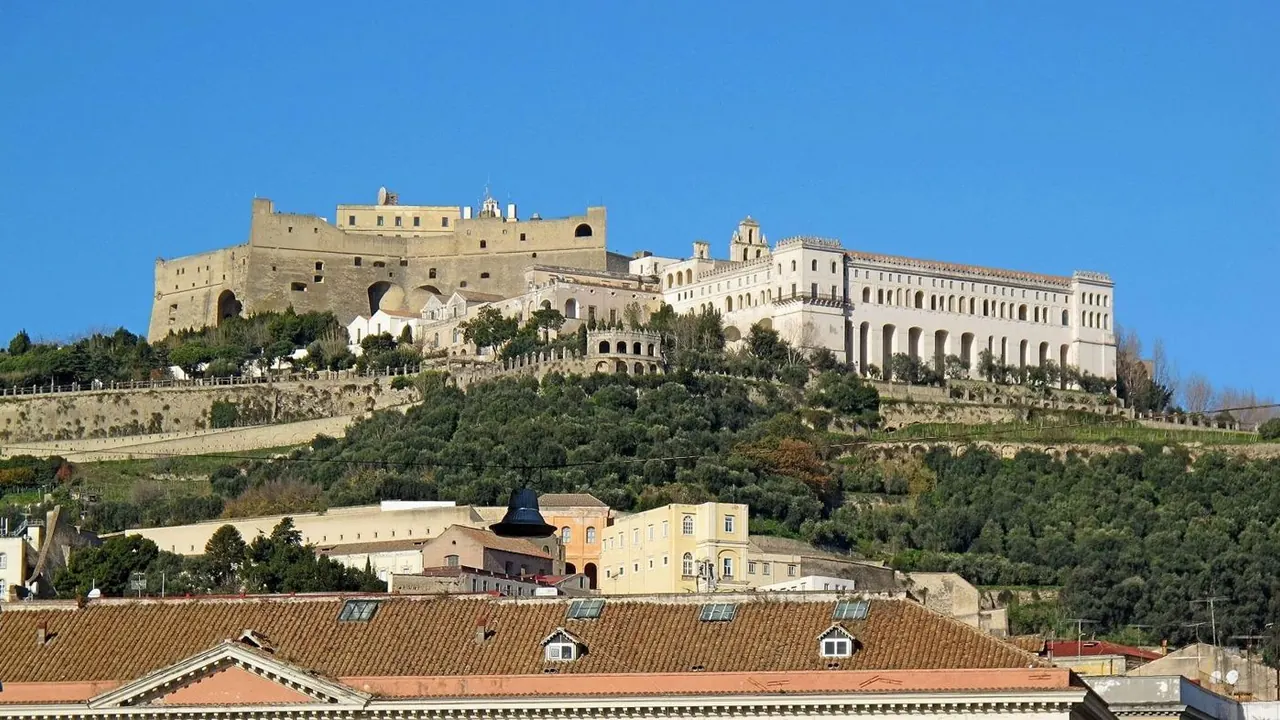
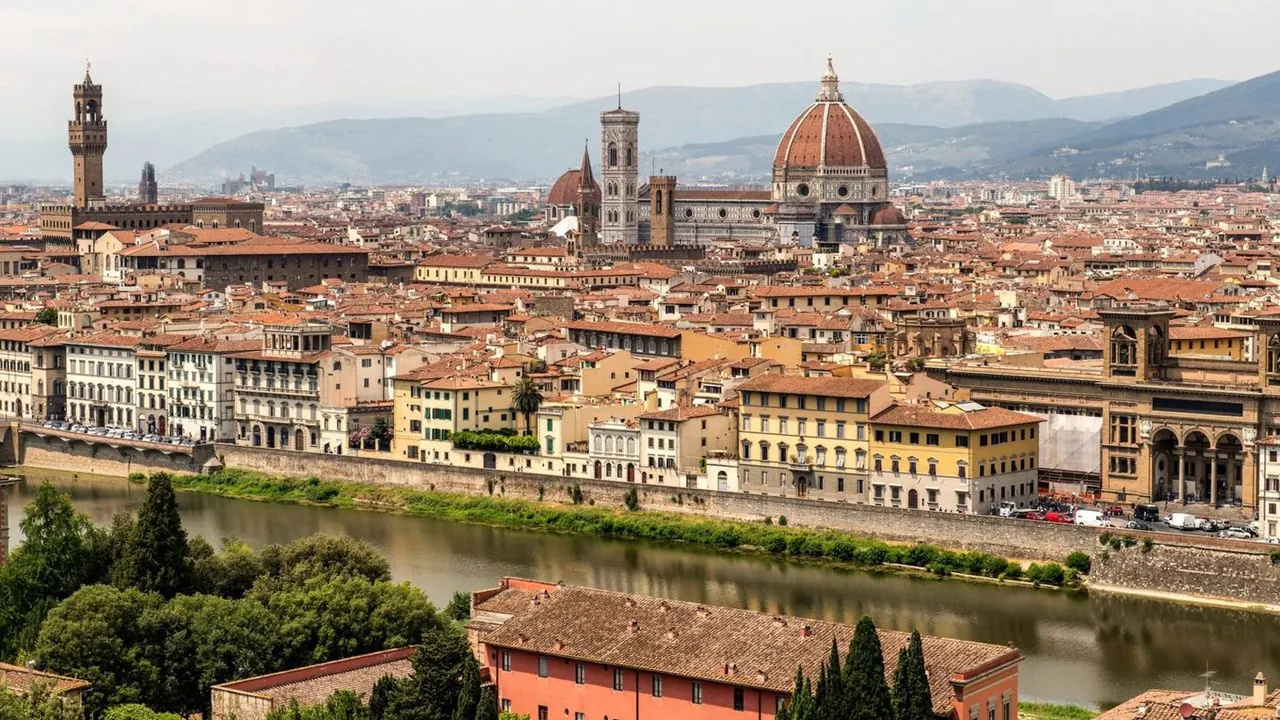
Photos: Naples by pietro scerrato, CC BY 3.0, cropped; Florence by Wolfgang Weiser, Pexels License.
Naples or Florence?
Our verdict in twelve categories, each scored against the same fixed benchmark cities, and the climate month by month, so you can choose for your trip.
Choose Naples for
- beaches
- prices
- nature and the outdoors
Choose Naples for the sea, the volcanoes and a city that is louder, cheaper and stays up later. It is the home of pizza and serious street food, the bay and its islands give you swimming that Florence cannot, and Vesuvius and the Phlegraean Fields make for proper walks. Expect more effort to get around, with slow buses, crowded local trains and scooters in the lanes.
Choose Florence for
- getting around
- shopping
- culture and sights
Florence suits the traveller who puts art at the centre of the trip and likes to see it all on foot. The Uffizi, the Accademia, the Duomo and the Bargello lie a short walk apart, the shops run to leather and old crafts, and the central station puts Siena, Pisa and Lucca within easy reach. In return you pay more, and evenings end quietly over a glass of Tuscan red rather than out in the street.
Scoreboard
Twelve categories on one fixed scale from 0 to 100. The shaded stretch is the gap between the two.
Your match
Pick a travel style or drag the sliders, and both match scores follow your weighting.
Wins on beaches and prices with your weighting.
Wins on getting around and shopping with your weighting.
What matters to you?
Category by category
What the scores mean for a trip.
Beaches & swimming
Florence sits inland in the Arno valley, so in practice a stay means no swimming. The sandy, lounger-lined beaches of the Versilia are about an hour and a half away by train, and most visitors cool off in a pool.
Naples has the sea at its feet. Locals sunbathe on the rocks below the Lungomare and at small lidos in Posillipo, though the water near the port is not always clean. The real reward is the clear water on the islands and the Sorrento peninsula, where a ferry turns a city stay into a beach day.
Food & drink
Both are cities of bold regional cooking rather than variety. Florence gives you bistecca, bread soups and lampredotto from carts, with Chianti poured by the glass and a fine-dining tier for a special night.
Naples has the edge for anyone who eats on the move. This is the home of pizza, and the fried street snacks, sfogliatelle and standing espresso make every walk through the historic centre a meal. Buffalo mozzarella and San Marzano tomatoes at the Pignasecca show where it all starts, though international cooking is scarce.
Culture & sights
Florence is the stronger city for art. Brunelleschi's dome, Botticelli at the Uffizi, the David and the Bargello sculpture make up the densest run of Renaissance masterpieces anywhere, all within a compact centre.
Naples is different in kind. Its strengths are antiquity and street life: the Archaeological Museum's Pompeii frescoes, the Veiled Christ, the tunnels and catacombs beneath, and a Greek street grid crowded with Baroque churches that is itself the main sight.
Nightlife
Naples is the better pick for a late night. Crowds gather on the steps of Piazza Bellini and in the alleys of Chiaia until well past midnight, and the evenings feel loud and sociable.
Florence winds down earlier, built around aperitivo, wine bars and the outdoor drinking around Piazza Santo Spirito. Neither city has much of a club scene, so in both the night happens outdoors rather than on a dance floor.
Nature & outdoors
Naples has the more dramatic landscape. You can walk to the crater rim of Vesuvius, through the oak woods of the extinct Astroni crater, snorkel at Gaiola, and hike the Path of the Gods above the Amalfi Coast.
Around Florence the countryside is gentle and farmed: olive terraces up to Fiesole, cypress-lined lanes through Chianti for cycling, and the beech forests of the Casentino further out. It is lovely walking, but tamer than the volcanic bay.
Day trips
Both are superb bases, and the difference is in what you go out to see. From Florence it is medieval towns and wine: Siena, Lucca, San Gimignano and the Val d'Orcia, with Bologna a quick high-speed hop and a car useful for the hill villages.
From Naples the outings are Roman ruins and islands: Pompeii and Herculaneum on the Circumvesuviana, Caserta's palace, ferries to Capri and Procida, the Amalfi Coast and the temples of Paestum.
Good for families
Neither city is easy with small children, though both welcome them warmly. In Florence the way in is climbing the dome, the secret passages of Palazzo Vecchio and running in the Boboli Gardens, with Collodi's Pinocchio park as an outing.
Naples has more set attractions, including a zoo, the Edenlandia amusement park and a science museum, and older children love the tunnels, funiculars and ferries. Scooters and broken pavements make it tiring, so many families stay in Sorrento instead.
Getting around
Florence is far simpler. The main sights lie within about twenty minutes' walk of one another, so most visitors hardly need the trams or buses, and the station is right in the centre for day trips.
Naples has more transport but it works less well. Metro Line 1, with its art-filled stations, and the funiculars up to Vomero are good, but buses crawl through traffic, the Circumvesuviana is crowded and late, and crossing the road takes nerve.
Shopping & style
Florence offers more to browse. Leather workshops, marbled paper, the goldsmiths of the Ponte Vecchio and the gilders and restorers of the Oltrarno sit alongside the fashion houses on Via de' Tornabuoni and the antique dealers of Via Maggio.
Naples is more specialised. Chiaia's tailors make suits, shirts and ties by hand, Via San Gregorio Armeno sells nativity figures all year, and coral and cameos come from Torre del Greco, but beyond Via Toledo the range runs thin.
Affordability
Naples is noticeably cheaper day to day. Pizza, street food and trattoria meals cost less than in the north, transport is cheap and modest B&Bs fill the historic centre. Costs only climb once you head to Capri or the Amalfi Coast.
Florence is expensive for its size, with high hotel prices in the centre and admission fees that pile up. Street stalls, house wine, staying across the river and a winter visit all help.
Live music & performing arts
Naples has the richer musical evening. The Teatro di San Carlo is the oldest working opera house in Europe and one of the most beautiful, and Neapolitan song still turns up in theatres and from musicians going between tables in the trattorias.
Florence, where opera was born around 1600, has the Maggio Musicale festival and a serious season at its opera house. Day to day, though, most visitors find tourist chamber concerts in churches.
Wellness & relaxation
Florence sends you out of town for a soak. Montecatini Terme, with its grand old drinking halls, is under an hour by train, and the open-air sulphur pools of Bagno Vignoni and Saturnia lie further south. Within the city, calm comes from the Boboli and Bardini gardens early in the day, or from a few nights on a farm in the Tuscan hills.
Naples has a real spa island on its doorstep. Ischia is about an hour away by hydrofoil, with dozens of thermal parks whose pools are terraced above the sea, and the Roman-era springs at Agnano are on the edge of the city. The city itself is loud, so the quiet moments are the cloisters of Santa Chiara and an evening walk along the Lungomare.
When should you go?
Pick your month. The climate figures are measured averages, not a forecast.
Naples in July
Florence in July
Daytime high, °C
Rainfall in the month, mm
Where the figures come from
Naples's sunshine is measured 28 km from the centre, at Grazzanise.
Florence has no rain gauge within 25 km of the centre, so its rainfall comes from a gridded climate dataset read at the city rather than from a gauge further away.
Florence's sunshine is measured 71 km from the centre, at Pisa / S. Giusto.
Temperature and rainfall are climate normals, averaged over the years shown. Naples: 2005-2020 (sunshine 1991-2020, rainfall 1971-2000) normals, Napoli / Capodichino (4.6 km from centre). Florence: 1995-2020 (sunshine 1991-2020, rainfall 1991-2020) normals, Firenze / Peretola (5.6 km from centre).
Both cities are at their most pleasant in spring and early autumn, roughly April to June and late September into October, when days are warm enough to linger outdoors but not draining. High summer is hot in both, and Florence is the harsher of the two, reaching 33°C in August in its enclosed valley, which makes afternoon sightseeing hard going. Naples stays a touch cooler and drier in July and August, and that is when its sea is warmest, around 25°C, so June to September is the swimming season there.
Winter is milder by the bay: Florence drops to about 11°C in January, a couple of degrees below Naples, with fewer hours of sun. Autumn brings the heavy rain to both. Florence turns wet from September, while Naples saves its downpours for November, its wettest month at 163mm, so October tends to be the kinder month in Naples.
Which traveller are you?
On a beach and sun trip, Naples is the clear choice. You can swim off the rocks along the Posillipo shore in the city, and clear coves on Capri, Ischia and Procida are a boat ride away. In Florence the sea is a long day's outing.
For a trip on a tight budget, Naples makes your money go further. Pizza, street food, coffee and simple guesthouses in the historic centre all cost less than in Florence, where central hotels and museum tickets quickly add up.
For a short city break, Florence is easier. Its great Renaissance sights are packed within a twenty-minute walk, so a long weekend is enough for the Uffizi, the dome and the Oltrarno with no transport at all.
Before you go
| Measure | Naples | Florence |
|---|---|---|
| Official language | Italian | Italian |
| Currency | Euro (EUR) | Euro (EUR) |
| Sockets | CFL230 V, 50 Hz | CFL230 V, 50 Hz |
| Driving side | Right | Right |
| Time zone | UTC+1, UTC+2 in summer | UTC+1, UTC+2 in summer |
| Emergency number | 112 | 112 |
| Elevation | 17 m | 50 m |
| Main airport | Naples International Airport (NAP)7 km from centre131 non-stop destinations | Florence Airport, Peretola (FLR)6 km from centre46 non-stop destinations |
| Public holidays this year | 13 days | 13 days |
By the numbers
| Measure | Naples | Florence |
|---|---|---|
| City population | 913,462 | 360,930 |
| People per km² | 7,676 | 3,528 |
| Museums within 10 km | 65 | 141 |
| UNESCO World Heritage sites within 50 km | 5 | 6 |
| Swim season, months above 21 °C | 5 months | - |
Where else could you go?
Every comparison below shares a destination with this one, so you can follow Naples or Florence somewhere new.