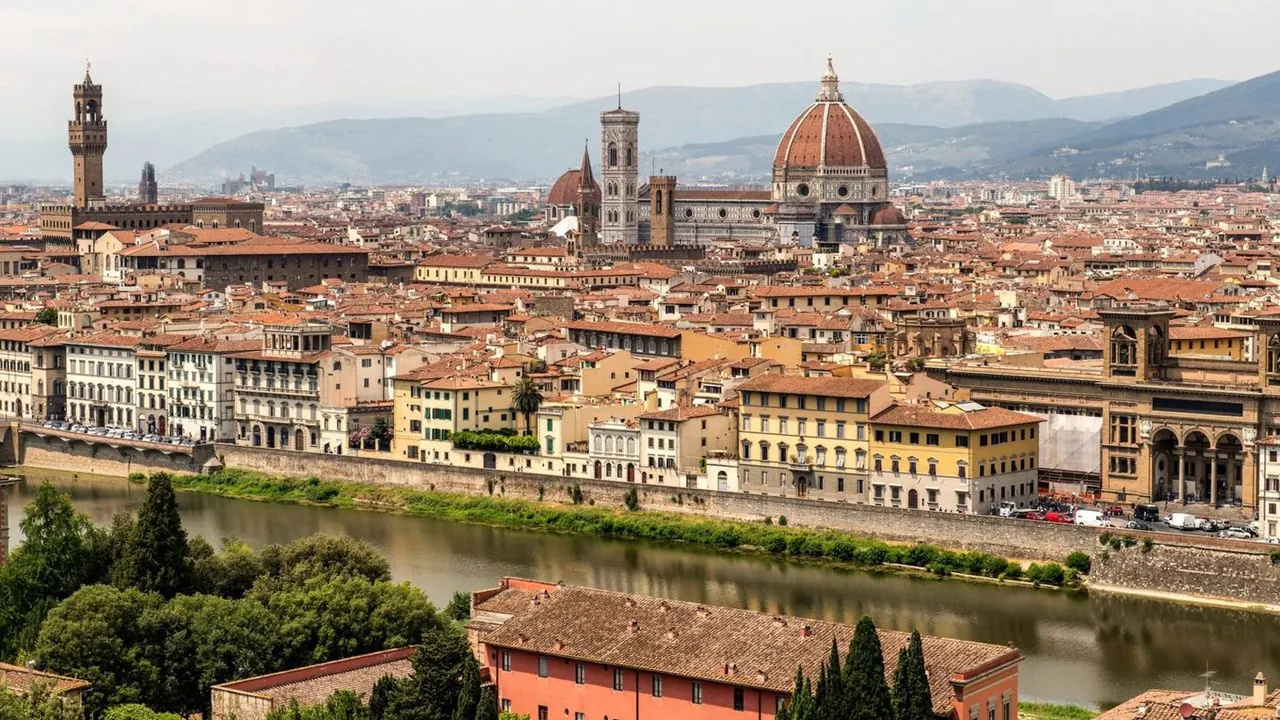
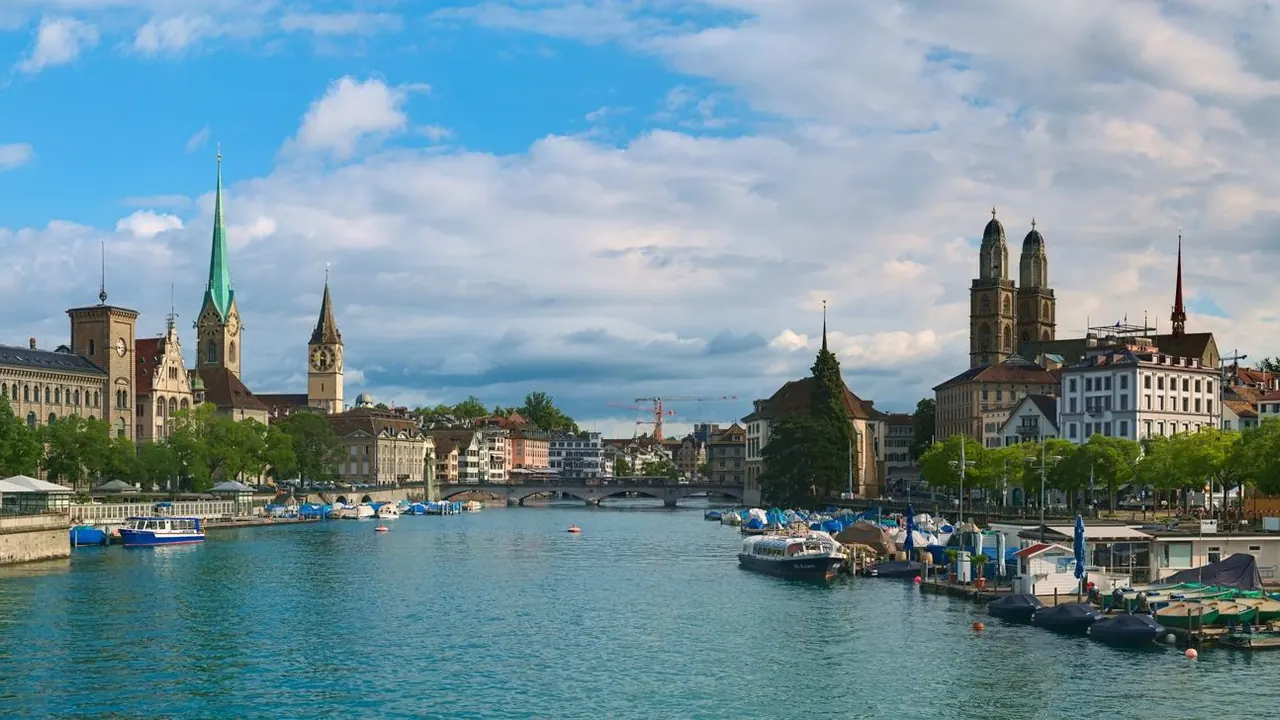
Photos: Florence by Wolfgang Weiser, Pexels License; Zurich by Daniel Kraft, CC BY-SA 3.0, cropped.
Florence or Zurich?
Our verdict in twelve categories, each scored against the same fixed benchmark cities, and the climate month by month, so you can choose for your trip.
Choose Florence for
- culture and sights
- prices
- food and drink
Florence is for the traveller who wants art, history and food to fill the days. The Renaissance is packed into a centre you can walk across in twenty minutes, the trattorie and markets feed you well, and Siena, Lucca, Pisa and the Chianti hills are all within an easy day out. It suits couples and adults who are happy with long dinners and a glass of Tuscan red rather than late nights, and it costs less than Zurich, though it is not a cheap city.
Choose Zurich for
- beaches
- families
- nature and the outdoors
Pick Zurich if your trip runs on lakes, mountains and smooth logistics. Trams, trains and boats take you anywhere on one ticket, the lake doubles as a summer swimming spot, and the Alps are close enough for a day of hiking or skiing. Families find it calm and easy, and it is the livelier of the two after dark, with proper clubs and a strong opera house. The catch is the price, which is among the steepest anywhere.
Scoreboard
Twelve categories on one fixed scale from 0 to 100. The shaded stretch is the gap between the two.
Your match
Pick a travel style or drag the sliders, and both match scores follow your weighting.
Wins on culture and sights and prices with your weighting.
Wins on beaches and families with your weighting.
What matters to you?
Category by category
What the scores mean for a trip.
Beaches & swimming
Neither city has a beach of its own, but Zurich makes far more of its water. In summer the lake and the Limmat become the city's swimming pool, with wooden bathing houses, lawned lidos and river baths where you drift with the current, all close to the old town.
Florence has nothing like it. Cooling off means a hotel pool or a public pool on the outskirts, and the sandy Versilia beaches near Viareggio take a full day's round trip by train. If a swim after sightseeing matters, Zurich delivers it, and if you want real sand, add a few nights on the Tuscan coast instead.
Food & drink
Florence is the stronger food city by some way. Its cooking is rooted in bistecca, ribollita, lampredotto from street carts and the produce stalls of the Mercato Centrale and Sant'Ambrogio, with Chianti vineyards on the doorstep and good trattorie in the Oltrarno once you leave the tourist menus near the Duomo.
Zurich eats well but more cautiously: veal in cream sauce with rösti, fondue in guild houses, and outstanding chocolate and confectionery from its old tea rooms. It has little street food or market culture, and every meal costs a lot, so for eating as a reason to travel, Florence wins easily.
Culture & sights
This is where Florence leaves Zurich far behind. It holds the Renaissance itself: Brunelleschi's dome, the Uffizi, Michelangelo's David, the Bargello, the Pitti Palace and smaller treasures like the San Marco frescoes and the Brancacci Chapel, enough for a week of close looking.
Zurich's culture is solid and pleasant rather than world-famous. The Kunsthaus, the Swiss National Museum and the Rietberg are fine museums, and the Grossmünster and the Chagall windows of the Fraumünster give the Altstadt real character, but two or three days covers it.
Nightlife
Zurich is the city for a proper night out. Its electronic music scene runs deep, with clubs in Kreis 4 and 5 and the old industrial halls of Zurich West going until morning at weekends, and Langstrasse keeping late hours. The drawback is the cost of every round.
Florence's evenings are about aperitivo, wine bars and crowds with glasses in hand on Piazza Santo Spirito, plus summer bars along the Arno. It is sociable and relaxed, but the club scene is small and the night ends early. Choose Florence for long dinners and Zurich for dancing.
Nature & outdoors
Zurich has the bigger landscape. The lake with the Glarus Alps at its far end, shore paths, the Uetliberg ridge a short train ride away and high mountains like Rigi and Pilatus within an hour make it a natural base for hiking in summer and skiing in winter.
Florence's countryside is gentler and more cultivated: olive terraces at Fiesole, the view from Piazzale Michelangelo, cypress lanes and vineyards in Chianti for walking and cycling, and the forests of the Casentino further out. It is lovely in spring and autumn, but it is farmland and hills rather than mountains.
Day trips
Both are superb bases, but Florence edges ahead on the quality of what lies nearby. Siena, Pisa, Lucca, San Gimignano, Volterra and the Chianti villages are all close, with Bologna under forty minutes by fast train, though a car helps for the hill towns and wineries.
Zurich's strength is ease. Lucerne, Bern, Basel, St Gallen and the Rhine Falls are all a comfortable train ride away with no car needed. The towns are attractive, but the Tuscan list has more places you would cross a continent to see.
Good for families
Zurich is much the easier city with children. It is clean, safe and orderly, the zoo with its Madagascar hall and elephant park is a full day in itself, the lake lidos have shallow water and lawns, and the Technorama in Winterthur and Lucerne's transport museum are easy outings by train.
Florence welcomes children but is built around adult interests. Climbing the dome, the secret passages of Palazzo Vecchio, the Museo Galileo and the Boboli Gardens help, as does the Pinocchio park at Collodi, but crowds, narrow pavements and summer heat wear young children down.
Getting around
Florence has no metro and barely needs one. The Duomo, the Uffizi, Ponte Vecchio and the Pitti Palace are all within about twenty minutes of each other on foot, and trams to the airport and small buses up to Fiesole cover the rest. The catch is the walking itself. Narrow pavements, summer crowds and stone paving tire you out, and the restricted traffic zone makes a car useless until you set off for the hill towns.
Zurich makes getting around easier. Blue trams, S-Bahn trains, the Uetliberg railway, funiculars and even the lake boats all run on one integrated ticket, the services keep to time, and the airport is a short train ride from the main station. You can give your feet a rest whenever you like, which Florence rarely lets you do.
Shopping & style
The two are broadly level but shop in different ways. Florence is about craft: leather from market stalls and small workshops, marbled paper, goldsmiths on the Ponte Vecchio and the gilders and restorers of the Oltrarno, with Via de' Tornabuoni for the fashion houses.
Zurich is about luxury and precision. Bahnhofstrasse lines up watchmakers, jewellers and department stores, Swiss chocolate is the obvious souvenir, and the viaduct arches in Zurich West hold design shops. Come to Florence for something handmade and to Zurich for a watch.
Affordability
Neither is cheap, but Florence is far kinder to your budget. Hotels in the centre and museum fees add up, yet street food, market lunches, house wine and walking everywhere keep daily costs reasonable, especially if you stay across the river or come in winter.
Zurich is among the most expensive places in the world to visit. Simple rooms, casual lunches and drinks all cost far more than in Florence, and supermarket picnics by the lake and the free lidos only soften the blow.
Live music & performing arts
Zurich offers the fuller evening programme. The Opernhaus is one of Europe's leading opera houses, the Tonhalle Orchestra plays in a fine nineteenth-century hall, and the Rote Fabrik and venues in Kreis 4 and 5 bring jazz, indie and electronic acts through the year.
Florence has the deeper history, as the city where opera was born, and the Teatro del Maggio Musicale Fiorentino with its spring festival. Most visitors, though, end up at chamber concerts in churches staged for tourists, and outside the classical season the stage is quiet.
Wellness & relaxation
Zurich makes it easier to unwind without leaving town. The thermal baths in the vaults of the old Hürlimann brewery have a rooftop pool, the wooden lake houses become saunas in winter with cold dips between sessions, and Baden's hot springs are twenty minutes away.
Florence has little inside the city beyond hotel spas, and its centre is crowded in high season. Its rewards lie further out, at the old spa town of Montecatini Terme, the sulphur pools of Saturnia and Bagno Vignoni, or a few slow nights on a farm stay in the hills.
When should you go?
Pick your month. The climate figures are measured averages, not a forecast.
Florence in July
Zurich in July
Daytime high, °C
Rainfall in the month, mm
Where the figures come from
Florence has no rain gauge within 25 km of the centre, so its rainfall comes from a gridded climate dataset read at the city rather than from a gauge further away.
Florence's sunshine is measured 71 km from the centre, at Pisa / S. Giusto.
Temperature and rainfall are climate normals, averaged over the years shown. Florence: 1995-2020 (sunshine 1991-2020, rainfall 1991-2020) normals, Firenze / Peretola (5.6 km from centre). Zurich: 1991-2020 normals, Zurich Town / Ville. (2.2 km from centre).
Florence is at its best in spring and early autumn. April, May and September are warm enough to spend whole days outdoors and sunny without being punishing. July and August are hot, with highs of about 33°C that make the stone streets and long museum queues hard going at midday, and from September the rain picks up, peaking in October and November at about 120mm a month. Winter is mild for walking but grey and short of sunshine.
Zurich runs cooler and on a different calendar. Its summer highs of about 24°C are comfortable for walking all day, and June to August is the only stretch warm enough for the lake lidos. Summer is also its wettest season though, with frequent showers through May to August. Winter is cold, around 4°C, and very dim in the city, which is when you head up into the mountains for sunshine and snow. If you want warm, dry weather in late spring, Florence wins. For a mild midsummer escape from the heat, Zurich is the better choice.
Which traveller are you?
On a culture and arts trip, Florence is the clear choice. The Uffizi, the Accademia, the Bargello and the Duomo complex sit a short walk apart, and the hill towns and Siena add a week's worth of further art and architecture.
On a family trip with children, Zurich is the easier city. The zoo and its rainforest hall, shallow lake lidos, boat rides and buggy-friendly trams keep things simple, while Florence's paintings, narrow pavements and summer heat work better for older children.
For an outdoors trip, Zurich has the edge. Lake promenades and the Uetliberg are right in town, and real Alpine hiking or a day's skiing is about an hour away. Florence offers gentler walks among olive terraces and Chianti vineyards.
Before you go
| Measure | Florence | Zurich |
|---|---|---|
| Official language | Italian | French, German, Italian, Romansh |
| Currency | Euro (EUR) | Swiss Franc (CHF) |
| Sockets | CFL230 V, 50 Hz | CJ230 V, 50 Hz |
| Driving side | Right | Right |
| Time zone | UTC+1, UTC+2 in summer | UTC+1, UTC+2 in summer |
| Emergency number | 112 | 112 |
| Elevation | 50 m | 408 m |
| Main airport | Florence Airport, Peretola (FLR)6 km from centre46 non-stop destinations | Zürich Airport (ZRH)9 km from centre226 non-stop destinations |
| Public holidays this year | 13 days | 10 days |
By the numbers
| Measure | Florence | Zurich |
|---|---|---|
| City population | 360,930 | 440,935 |
| People per km² | 3,528 | 5,016 |
| Museums within 10 km | 141 | 63 |
| UNESCO World Heritage sites within 50 km | 4 | 1 |
Where else could you go?
Every comparison below shares a destination with this one, so you can follow Florence or Zurich somewhere new.