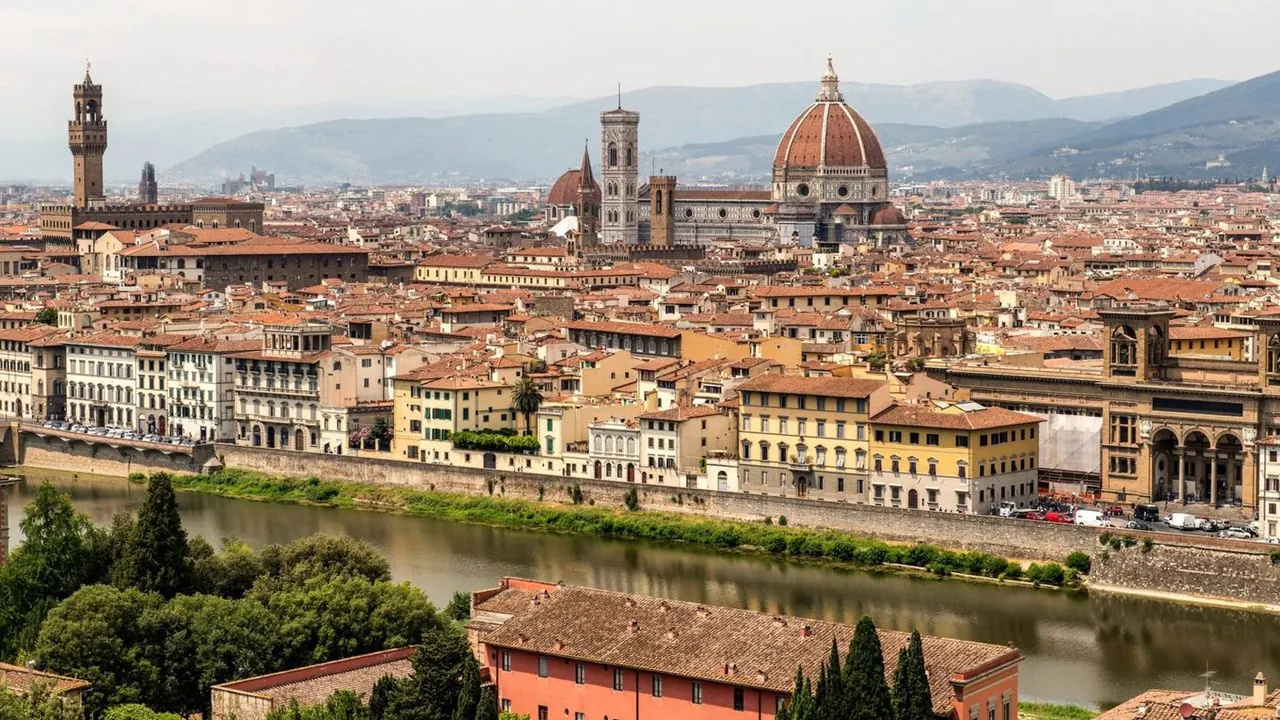
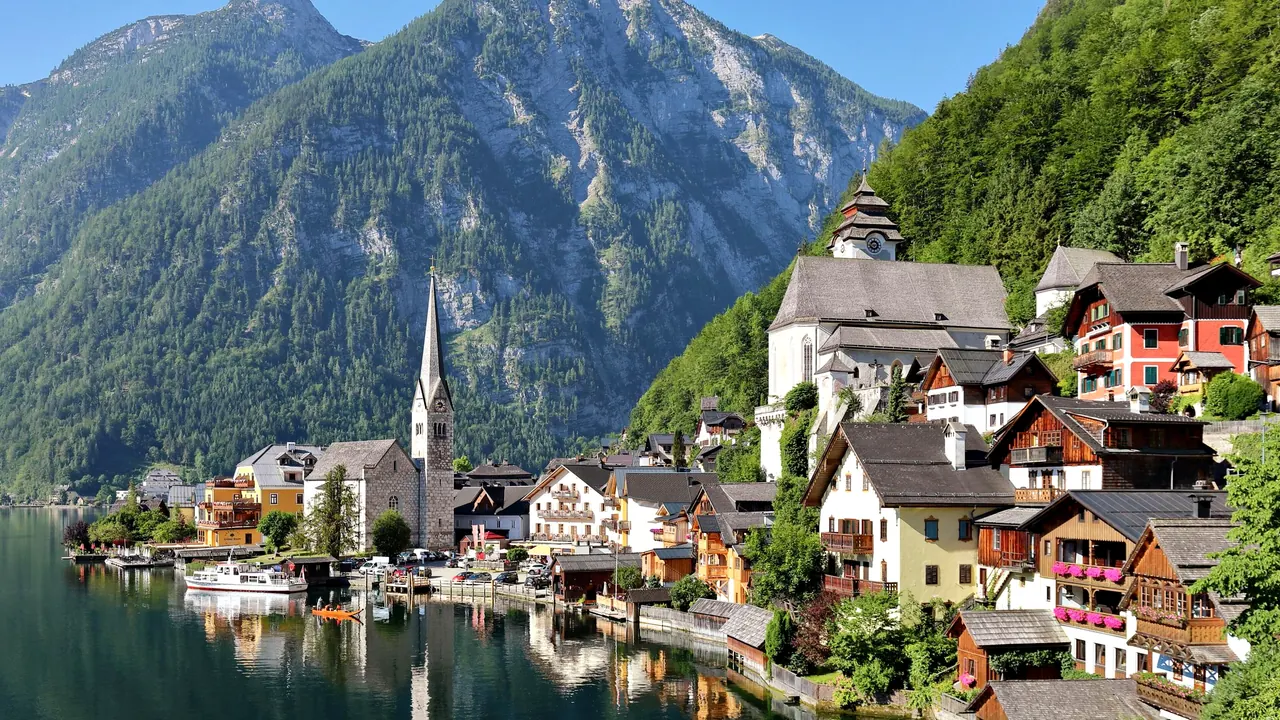
Photos: Florence by Wolfgang Weiser, Pexels License; Hallstatt by C.Stadler/Bwag, CC BY-SA 4.0, cropped.
Florence or Hallstatt?
Our verdict in twelve categories, each scored against the same fixed benchmark cities, and the climate month by month, so you can choose for your trip.
Choose Florence for
- culture and sights
- shopping
- food and drink
Florence is for travellers who want a city to fill their days. There is Renaissance art in the Uffizi, the Accademia and the Bargello, long trattoria dinners in the Oltrarno, and a train from Santa Maria Novella to Siena, Pisa or Bologna whenever the centre feels crowded. It suits a week of looking, eating and moving around, with evenings spent over wine rather than in clubs.
Choose Hallstatt for
- nature and the outdoors
- beaches
- wellness
Hallstatt suits a slower trip aimed at the mountains. The village itself takes a day at most, but the Dachstein, the ice caves, the walk to the Gosausee and the still lake make it a strong base for walkers and for anyone who wants quiet evenings by the water. Go for the landscape and the calm, not for restaurants, shopping or anything to do after dark.
Scoreboard
Twelve categories on one fixed scale from 0 to 100. The shaded stretch is the gap between the two.
Your match
Pick a travel style or drag the sliders, and both match scores follow your weighting.
Wins on culture and sights and shopping with your weighting.
Wins on nature and the outdoors and beaches with your weighting.
What matters to you?
Category by category
What the scores mean for a trip.
Beaches & swimming
Neither place is a beach destination, but Hallstatt at least lets you swim on the spot. There is a small lawn-and-jetty bathing area in the village and a larger lido at Obertraun. The lake water is cold and clear, and a dip after a summer hike is easy, even if the season is short.
Florence has no water to swim in. The nearest sea is the sandy Versilia coast, about an hour and a half away by train, so bathing means a hotel or public pool or a full day out.
Food & drink
This is one of the widest gaps between the two. Florence is a city you could plan a trip around for the food alone: rare bistecca, ribollita, tripe rolls from street carts, the Mercato Centrale and Sant'Ambrogio markets, and Chianti vineyards on the city's doorstep.
Hallstatt has a few guesthouse dining rooms serving schnitzel and dumplings. Smoked or pan-fried char from the lake is the one local dish worth seeking out. Most visitors eat well once and then head to Bad Ischl's patisseries for more choice.
Culture & sights
Florence holds one of the greatest concentrations of art in Europe. There is Brunelleschi's dome, the Uffizi, the Bargello's sculpture and the Pitti Palace, plus smaller treasures such as the Brancacci Chapel and the Medici Chapels, all within walking distance.
Hallstatt's culture is older and narrower. Seven thousand years of salt mining, the Iron Age burial finds that named the Hallstatt culture, and the painted skulls of the Beinhaus make a memorable half day or full day. Beyond that, the village itself is the sight.
Nightlife
Florence's evenings are modest by big-city standards, but there is real life after dinner. People drink on the steps of Piazza Santo Spirito, Sant'Ambrogio has its local bars, and in summer there are outdoor bars along the Arno.
In Hallstatt the village goes quiet once the day visitors leave, and an evening means dinner and a walk by the lake in the dark. Anyone who wants a drink after ten will be far happier in Florence.
Nature & outdoors
Hallstatt is the place for landscape. The lake fills a glacial trough under the Dachstein, and from the village you can reach cable cars, the Five Fingers platform, ice caves, waterfalls and the mirror view at the Gosausee. In winter there is ski touring.
Florence's outdoors is softer and more cultivated. You get olive terraces at Fiesole, cypress lanes and vineyards in Chianti, and the Casentino forests further out. These are lovely for a walk or a bike ride between museum days, but they are not mountains.
Day trips
Florence has some of the best day trips anywhere. Siena, Pisa, Lucca and Bologna are all an hour or so by train or bus, and the Chianti villages, San Gimignano and the Val d'Orcia are easy by car.
Hallstatt has a pleasant regional circuit instead: imperial Bad Ischl, St Wolfgang's altarpiece, Gmunden's lake castle, and Salzburg as a long day out. Without a car, the buses and the lakeside railway take careful planning, whereas Florence's central station makes most outings simple.
Good for families
Neither place is especially built for children, and each offers a few highlights. In Florence these are climbing the dome, the secret passages of Palazzo Vecchio, the globes at the Museo Galileo, open space in the Boboli and the Pinocchio park at Collodi. Hot summers and crowded pavements make spring or autumn the better time to go.
Hallstatt's draws are more physical: the miners' slides and underground lake in the salt mine, the ice caves for older children, and rowing boats in summer. The steep single lane is hard work with a pushchair, so families usually stay in Obertraun.
Getting around
Florence is easier to move around in. The main sights are within about twenty minutes of each other on foot, trams run to the airport, and Santa Maria Novella sits right in the centre for rail trips.
Hallstatt is tiny but steep, with steps up to the church. Arriving by train means taking a boat across from the station on the far shore. The buses to Obertraun, Gosau and Bad Ischl are sparse outside summer, so many visitors find a car worth having.
Shopping & style
Florence has real shopping. There is leather from market stalls and workshops, marbled paper, the jewellers on the Ponte Vecchio, the artisan workshops of the Oltrarno and the fashion houses on Via de' Tornabuoni.
Hallstatt has one lane of souvenir shops. The only buy you will find nowhere else is salt from the mountain above, sold as grinders or bath mixes. It takes half an hour at most.
Affordability
Both are pricey for what they are, but Florence is the easier one to do cheaply. Street-stall lampredotto, market lunches, cheap house wine and a walkable centre all keep daily costs down. Rooms across the river or near the station take the sting out of hotel prices.
Hallstatt has few beds and worldwide demand, so rooms and meals are priced at Alpine resort level, and the salt mine and cable car add up. The usual way round this is to sleep in Obertraun, Bad Goisern or Bad Ischl and come in for the day.
Live music & performing arts
Florence has a proper musical life, which makes sense in the city where opera began. The Maggio Musicale theatre stages opera, concerts and ballet through the season, and the spring festival is one of Europe's oldest. There are also church and palace concerts for a lighter evening.
Hallstatt has a brass band on feast days and the odd summer church concert. For a real night of music you would drive to Salzburg or catch operetta in Bad Ischl.
Wellness & relaxation
Florence sends you out of town to slow down, while in Hallstatt the calm is on the doorstep. Inside Florence the quiet hours come early in the morning, in the Boboli and Bardini gardens. For warm water you go further: the grand drinking halls of Montecatini Terme are under an hour by train, and the open-air sulphur pools at Saturnia need a longer day or a night away. A few nights on a farm in the hills is the classic way to unwind.
Hallstatt's stillness comes at the edges of the day, with mist on the lake at dawn and an empty lane once the tour groups have left. When you want a proper soak, the brine baths of Bad Ischl are half an hour away, and Bad Aussee and Bad Goisern have their own spa traditions nearby.
When should you go?
Pick your month. The climate figures are measured averages, not a forecast.
Florence in July
Hallstatt in July
Daytime high, °C
Rainfall in the month, mm
Where the figures come from
Florence has no rain gauge within 25 km of the centre, so its rainfall comes from a gridded climate dataset read at the city rather than from a gauge further away.
Florence's sunshine is measured 71 km from the centre, at Pisa / S. Giusto.
Hallstatt's temperatures are measured 56 km from the centre, at Salzburg.
Hallstatt has no rain gauge within 25 km of the centre, so its rainfall comes from a gridded climate dataset read at the city rather than from a gauge further away.
Temperature and rainfall are climate normals, averaged over the years shown. Florence: 1995-2020 (sunshine 1991-2020, rainfall 1991-2020) normals, Firenze / Peretola (5.6 km from centre). Hallstatt: 1991-2020 normals, Salzburg (55.5 km from centre).
Florence is at its best in April and May, and again in late September and October, when it is warm enough to sit outside and cool enough to walk between museums all day. July and August are very hot, with highs around 33°C, which makes afternoons in the stone streets hard going. Summer is the sunniest and driest season. Rain builds through the autumn and peaks in November at about 124mm, and winter is mild and grey but fine for museums.
Hallstatt runs on a different calendar. Summer is mild, with highs around 25°C, ideal for hiking and the only time a lake swim is realistic. It is also the wettest season, with about 178mm in July, so expect showers and mist between the clear days. Winter is cold, with January highs near 3°C, and that is the season for snow on the Krippenstein. Spring and autumn are cooler and quieter, and early autumn is often the steadiest time for walking.
Which traveller are you?
For a culture and arts trip, Florence wins easily. The Uffizi, the David, the Duomo and the frescoes at San Marco could fill a week. Hallstatt's salt mine, museum and Beinhaus are fascinating, but you will have seen them within a day.
On an outdoors trip, choose Hallstatt. There is serious Alpine country from the village edge: the Krippenstein cable car, the ice caves, the Echerntal waterfalls, the Gosausee and hut-to-hut routes. Florence offers pleasant walks in Fiesole and Chianti, but its countryside is gentle and farmed.
For a food and nightlife trip, Florence is the clear choice. It has bistecca, lampredotto carts, markets and Chianti by the glass, then aperitivo and late drinks around Santo Spirito. In Hallstatt you get lake fish and a terrace, kitchens that close early, and silence after dark.
Before you go
| Measure | Florence | Hallstatt |
|---|---|---|
| Official language | Italian | German, Austrian Sign Language |
| Currency | Euro (EUR) | Euro (EUR) |
| Sockets | CFL230 V, 50 Hz | CF230 V, 50 Hz |
| Driving side | Right | Right |
| Time zone | UTC+1, UTC+2 in summer | UTC+1, UTC+2 in summer |
| Emergency number | 112 | 112 |
| Elevation | 50 m | 511 m |
| Main airport | Florence Airport, Peretola (FLR)6 km from centre46 non-stop destinations | Salzburg Airport (SZG)55 km from centre64 non-stop destinations |
| Public holidays this year | 13 days | 16 days |
By the numbers
| Measure | Florence | Hallstatt |
|---|---|---|
| City population | 360,930 | 741 |
| People per km² | 3,528 | 12 |
| Museums within 10 km | 141 | 3 |
| UNESCO World Heritage sites within 50 km | 6 | 2 |
Where else could you go?
Every comparison below shares a destination with this one, so you can follow Florence or Hallstatt somewhere new.
- Sienavs Florence
- Salzburgvs Hallstatt
- Luccavs Florence
- Pisavs Florence
- Bolognavs Florence
- La Speziavs Florence