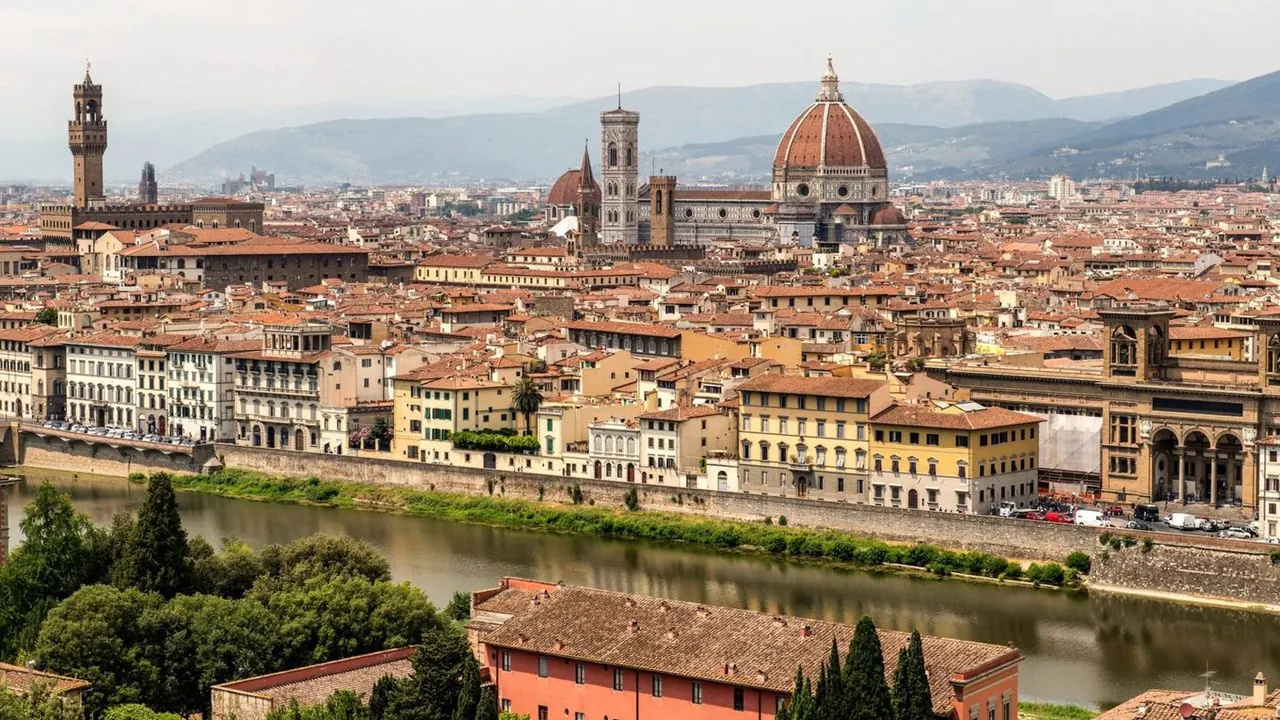
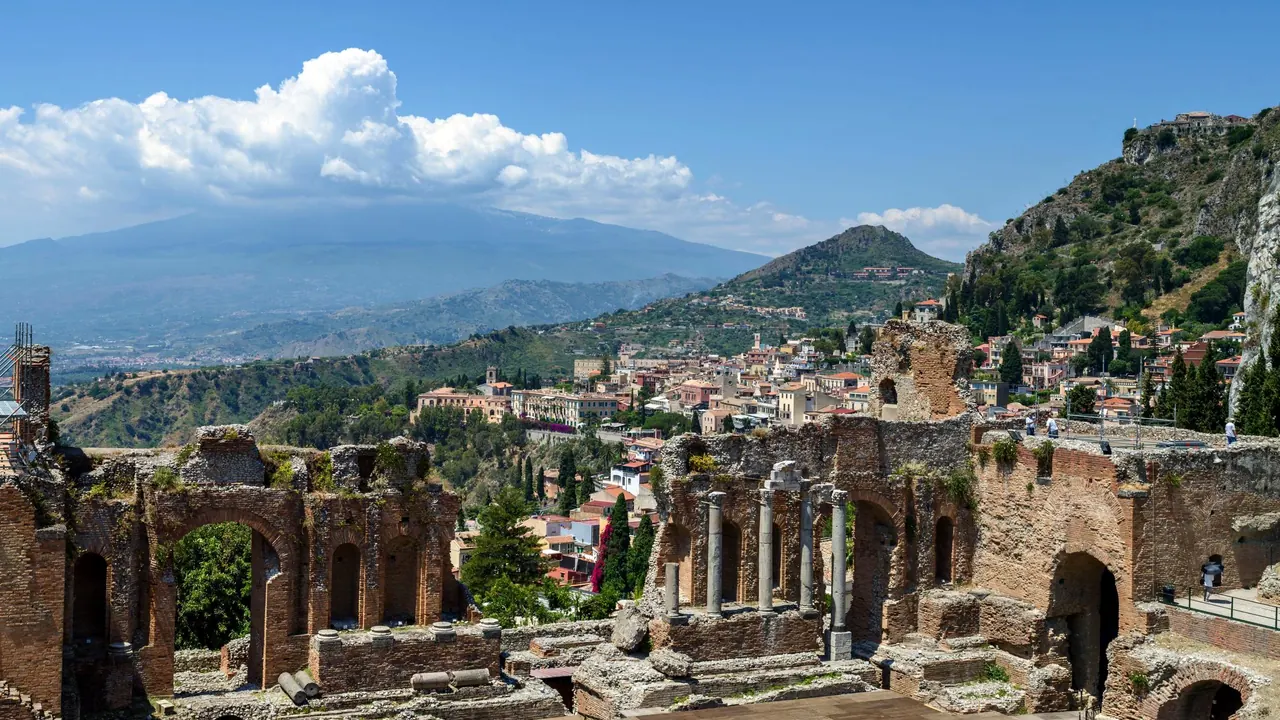
Photos: Florence by Wolfgang Weiser, Pexels License; Taormina by Reinhard Bruckner, Pexels License.
Florence or Taormina?
Our verdict in twelve categories, each scored against the same fixed benchmark cities, and the climate month by month, so you can choose for your trip.
Choose Florence for
- culture and sights
- shopping
- live music and the arts
Florence suits a traveller who wants a city to explore rather than a place to rest. The Renaissance is packed into a centre you can cross on foot, the trattorie and markets give you plenty of good meals, and Siena, Lucca, Pisa and Bologna are all close enough for a day out. Pick it for museums, craft shopping and a week that keeps moving.
Choose Taormina for
- beaches
- nature and the outdoors
- wellness
Taormina is the better choice for a slower Mediterranean stay built around the sea and the view. You get swimming coves below the town, Etna for walks and excursions, and the Greek theatre as the one great sight, with evenings spent on terraces rather than in galleries. It suits couples and anyone who wants their sightseeing in small doses between swims.
Scoreboard
Twelve categories on one fixed scale from 0 to 100. The shaded stretch is the gap between the two.
Your match
Pick a travel style or drag the sliders, and both match scores follow your weighting.
Wins on culture and sights and shopping with your weighting.
Wins on beaches and nature and the outdoors with your weighting.
What matters to you?
Category by category
What the scores mean for a trip.
Beaches & swimming
Here Taormina wins easily. From the town a cable car runs down to Mazzarò and the cove at Isola Bella, where the water is clear enough for snorkelling, and Giardini Naxos and Letojanni have longer beaches a short bus ride away. The beaches below the town are narrow pebble strips that fill up in high summer, but you can swim and still be back up on the terrace for dinner.
Florence lies inland in the Arno valley. Reaching the sandy Versilia coast takes a long day, so in the heat you are left with a hotel pool or one of the public pools on the edge of the city.
Food & drink
Florence gives you more to eat and a wider choice. Its cooking is the Tuscan kind: bistecca, ribollita and tripe rolls from street carts, with the Mercato Centrale and Sant'Ambrogio market to explore and Chianti reds poured by the glass. The good trattorie of the Oltrarno mean you can eat well every night of a long stay.
Taormina's food is distinctively Sicilian: granita and brioche for breakfast, swordfish and raw prawns, cannoli, and Etna wines on every list. The town is small, though, and the tourist menus along Corso Umberto leave few everyday places worth seeking out, so the better meals are often down in Giardini Naxos.
Culture & sights
Florence can fill a week with great art, while Taormina's sights fit into a day. Beyond the famous galleries, Florence has Brunelleschi's dome, the Medici Chapels, the tombs of Santa Croce and the frescoes of the Brancacci Chapel, all within walking distance of each other. In summer the big museums need booking ahead.
Taormina has one sight of real stature, the Greek theatre, with Etna framed behind its stage. Add the Arab-Norman palaces along the Corso and you have one unhurried day of sightseeing. There are no major museums, so for more history you go to Syracuse.
Nightlife
Neither town is a place for clubbing, but Florence has more going on after dark. Its large student population fills the bars around Piazza Santo Spirito and Sant'Ambrogio, and in summer outdoor bars open along the Arno.
Taormina's evenings are quieter and older in mood, with aperitivo in Piazza IX Aprile, a stroll along the Corso and piano bars above the sea. A few beach clubs stay open late in August, and out of season the town is quiet soon after dinner.
Nature & outdoors
Taormina has the more dramatic landscape. Within an hour you can walk the Silvestri craters on Etna, go up towards the summit with a guide or ski its slopes in winter. The basalt gorges of the Alcantara are closer still, and the marine reserve at Isola Bella is good for diving and kayaking.
Florence's countryside is gentle and farmed: olive terraces at Fiesole, cypress lanes in Chianti, and the Casentino forests further out. It is lovely for walking and cycling, but it has nothing to match a live volcano.
Day trips
Both make good bases, but Florence's choice is hard to match. Siena, Pisa, Lucca, San Gimignano and the Chianti villages are all within easy reach, Bologna is a short high-speed train ride away, and Santa Maria Novella station sits right in the centre.
Taormina's best day out is Syracuse and Ortigia, about two hours south, with baroque Catania and Noto as other strong options. Many of the nearer trips are slower ones, such as hill villages like Savoca or cellar visits on Etna, which you reach more easily by car or tour than by train.
Good for families
With children the two are close, and neither is built for them. Florence keeps children busy by letting them climb the dome, take the secret-passage tours of Palazzo Vecchio and run around the Boboli Gardens, while its downsides are summer crowds and heat.
Taormina's appeal is the cable car, snorkelling and a trip up Etna for older children, but the town's steps and steep lanes are hard going with a pushchair. Families with toddlers usually do better staying in Giardini Naxos, where the beaches are sandier and the streets flatter.
Getting around
Florence is easier to get around. Its main sights are within about twenty minutes of each other on flat ground, trams run to the airport, and the central station puts most day trips within reach without a car.
Taormina's centre is also walkable but sits on a slope, so every outing involves stairs. The railway station is down by the sea, and Etna and the inland villages realistically need a tour or a hired car.
Shopping & style
Florence is much the better place to shop. Leather workshops, marbled paper, the goldsmiths of the Ponte Vecchio and the gilders and restorers of the Oltrarno carry on long-established trades, and Via de' Tornabuoni has the Italian fashion houses.
Taormina's shopping is a single street, Corso Umberto, with coral, cameos, lace and Caltagirone ceramics. Pistachio cream and Etna wine make good things to take home, but for a wider range you have to go to Catania.
Affordability
Both are among the dearer places to stay in Italy, and both get much cheaper if you stay a short distance away. In Florence you save by staying across the river or near the station, eating at market counters and walking everywhere. Museum tickets are the cost that keeps adding up.
In Taormina the grand sea-view hotels set the price level. Staying down in Giardini Naxos or Letojanni and coming up for the evening makes the biggest difference, and granita and bakery snacks stay cheap whatever the season.
Live music & performing arts
Florence has a full season to offer. Opera was born here, the Teatro del Maggio Musicale has its own orchestra and ballet, and the Maggio Musicale is one of Europe's oldest music festivals.
Taormina's stage is a single, extraordinary one: the Greek theatre on summer nights, with concerts, opera and pop acts against the backdrop of Etna. Outside summer there is little to see, and Catania's Teatro Massimo Bellini is the nearest opera house.
Wellness & relaxation
The two are about level here, and neither has its own bathing tradition. Florence's restful moments come from early mornings in the Boboli and Bardini gardens, while its real spa options lie outside the city, at Montecatini Terme or the sulphur pools of Saturnia.
Taormina relaxes you through its setting, with hotel spas on terraces above the sea, volcanic-mud treatments and long lunches in view of Etna. That calm disappears in August, when the Corso fills with day-trippers.
When should you go?
Pick your month. The climate figures are measured averages, not a forecast.
Florence in July
Taormina in July
Daytime high, °C
Rainfall in the month, mm
Where the figures come from
Florence has no rain gauge within 25 km of the centre, so its rainfall comes from a gridded climate dataset read at the city rather than from a gauge further away.
Florence's sunshine is measured 71 km from the centre, at Pisa / S. Giusto.
Taormina's temperatures are measured 45 km from the centre, at Messina.
Taormina has no rain gauge within 25 km of the centre, so its rainfall comes from a gridded climate dataset read at the city rather than from a gauge further away.
Temperature and rainfall are climate normals, averaged over the years shown. Florence: 1995-2020 (sunshine 1991-2020, rainfall 1991-2020) normals, Firenze / Peretola (5.6 km from centre). Taormina: 1991-2020 normals, Messina (45.1 km from centre).
Florence is at its best in April, May and early June, and again in September, when it is warm enough for long days on foot and the heat stays bearable. July and August are hard work, with afternoons reaching 33°C in a valley that holds the heat. October is still mild but wet, with 105mm of rain, and November is wetter still. Winter is cool and grey, though the museums are quieter then.
Taormina has milder winters, with days around 15°C, and summers with almost no rain, only 8mm in July. The sea is warm enough for a proper swim from June to October and reaches 26°C in August. That makes June and September the best months, with beach weather and walking that is still comfortable. Taormina is also sunnier than Florence in every month. Like Florence, it turns wet from October, and in winter neither place suits a beach trip.
Which traveller are you?
For a beach and sun trip, Taormina is the obvious choice. Clear coves at Mazzarò and Isola Bella lie below the town, with sandier stretches at Giardini Naxos, while from Florence the nearest sand is a full day's return journey to the Versilia.
On a culture and arts trip, Florence is far ahead. You have the Uffizi, the Accademia, the Bargello, San Marco and the Duomo within a short walk, then opera at the Maggio Musicale. Taormina offers one superb Greek theatre and a single street of palaces.
For an outdoors trip, Taormina has the stronger landscape. Etna's craters and lava flows, the Alcantara gorges and snorkelling in the Isola Bella reserve are all close by. Florence gives you gentler walking and cycling among the olive terraces of Fiesole and the Chianti vineyards.
Before you go
| Measure | Florence | Taormina |
|---|---|---|
| Official language | Italian | Italian |
| Currency | Euro (EUR) | Euro (EUR) |
| Sockets | CFL230 V, 50 Hz | CFL230 V, 50 Hz |
| Driving side | Right | Right |
| Time zone | UTC+1, UTC+2 in summer | UTC+1, UTC+2 in summer |
| Emergency number | 112 | 112 |
| Elevation | 50 m | 204 m |
| Main airport | Florence Airport, Peretola (FLR)6 km from centre46 non-stop destinations | Catania-Fontanarossa Airport (CTA)47 km from centre96 non-stop destinations |
| Public holidays this year | 13 days | 13 days |
By the numbers
| Measure | Florence | Taormina |
|---|---|---|
| City population | 360,930 | 10,471 |
| People per km² | 3,528 | 799 |
| Museums within 10 km | 141 | 5 |
| UNESCO World Heritage sites within 50 km | 6 | 2 |
| Swim season, months above 21 °C | - | 5 months |
Where else could you go?
Every comparison below shares a destination with this one, so you can follow Florence or Taormina somewhere new.
- Cataniavs Taormina
- Sienavs Florence
- Luccavs Florence
- Pisavs Florence
- Bolognavs Florence
- Syracuse, Sicilyvs Taormina