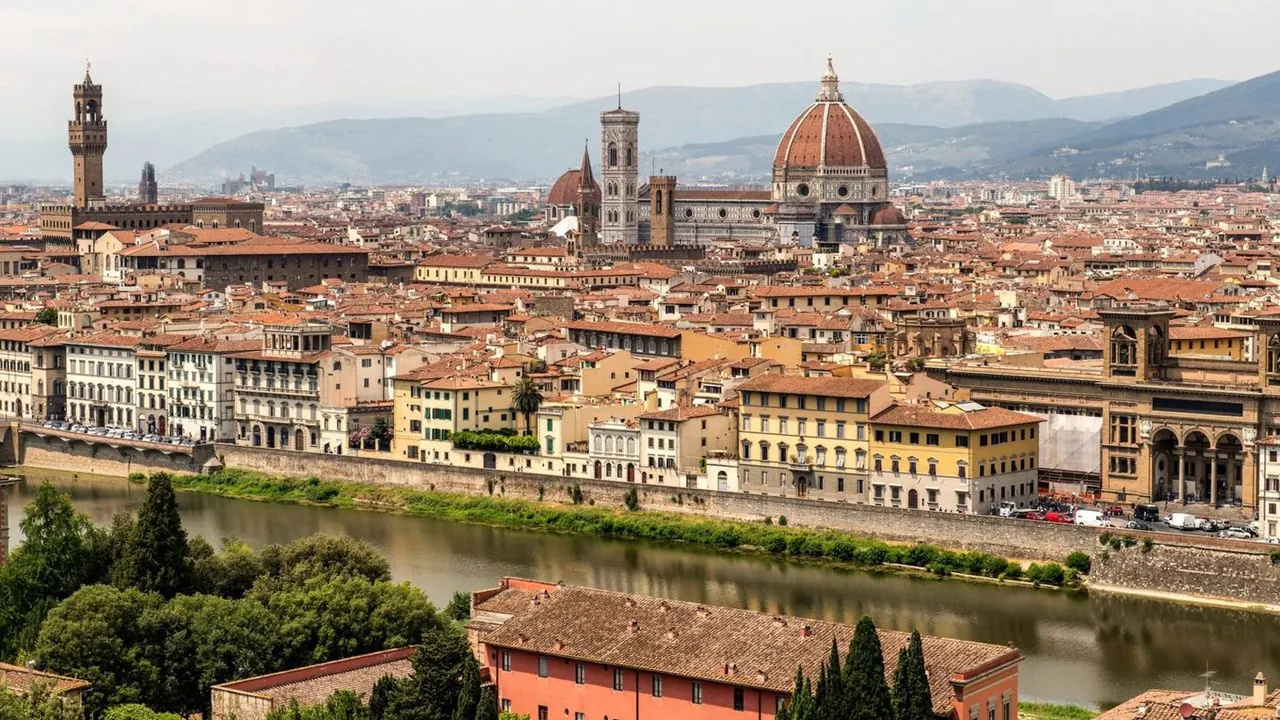
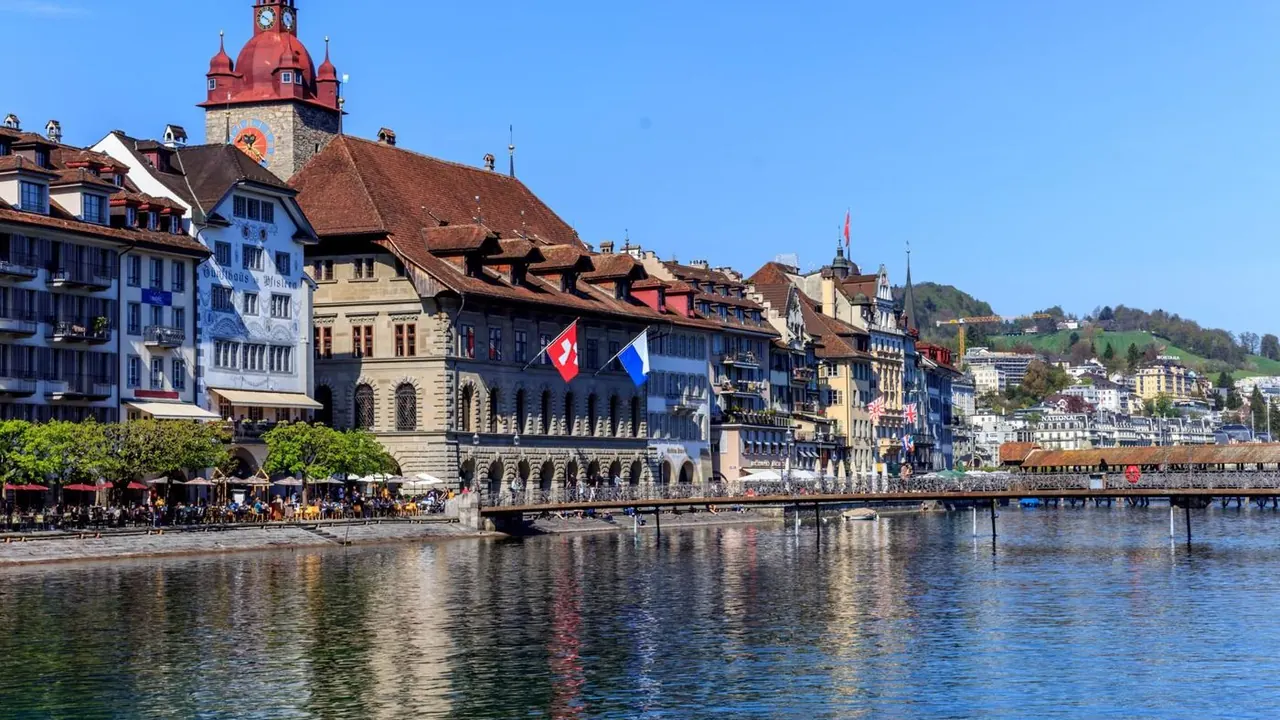
Photos: Florence by Wolfgang Weiser, Pexels License; Lucerne by ILOVESwitzerland, Pexels License.
Florence or Lucerne?
Our verdict in twelve categories, each scored against the same fixed benchmark cities, and the climate month by month, so you can choose for your trip.
Choose Florence for
- food and drink
- culture and sights
- prices
Florence is the choice for a trip built around art, history and the table. The Renaissance is packed into a centre you can cross on foot in twenty minutes, the trattorie of the Oltrarno and the market stalls feed you well, and Siena, Lucca, Pisa and the Chianti hills are all within easy reach. It costs less day to day than Lucerne, though it is hot and crowded in high summer and offers little for children or for anyone who wants to be outdoors.
Choose Lucerne for
- nature and the outdoors
- beaches
- families
If mountains, lake water and fresh air matter more to you than galleries, Lucerne wins clearly. Pilatus and Rigi rise straight from the lakeshore, paddle steamers and cogwheel trains turn every excursion into the outing itself, and the town is calm, safe and easy with children. Expect simpler food, quiet evenings and very high prices, and plan on spending most of your days out on the lake or up in the hills, not in the Old Town.
Scoreboard
Twelve categories on one fixed scale from 0 to 100. The shaded stretch is the gap between the two.
Your match
Pick a travel style or drag the sliders, and both match scores follow your weighting.
Wins on food and drink and culture and sights with your weighting.
Wins on nature and the outdoors and beaches with your weighting.
What matters to you?
Category by category
What the scores mean for a trip.
Beaches & swimming
Neither city has a beach, but Lucerne at least lets you swim on the spot. In July and August locals bathe from the Lido, the wooden lake baths and the lawns at Ufschötti, in clean, calm water with mountains behind, though the shore is grass and jetties, not sand.
Florence has nothing comparable in town, only hotel pools and public pools on the outskirts. Its proper sandy beaches are on the Versilia coast around Viareggio, warmer than the lake but a full day out by train.
Food & drink
Florence is a city people travel to for its food, and Lucerne is not. Florentine cooking is plain Tuscan fare done well, from rare bistecca and bread soups to lampredotto sold from kiosks, with the Mercato Centrale and Sant'Ambrogio for browsing and Chianti on the doorstep.
Lucerne serves good, hearty Swiss dishes such as Chügelipastete, rösti and perch from the lake in wood-panelled guild houses, but the range is narrow and much of the Old Town caters to coach tours. In both cities the best meals are away from the main sights, in the Oltrarno for one and the Neustadt for the other.
Culture & sights
Florence leads by a long way here: it is one of the great art cities of Europe, while Lucerne is a handsome town with a handful of famous sights. Florence holds the core of the Italian Renaissance, from Brunelleschi's dome over the Duomo and Botticelli and Leonardo in the Uffizi to Michelangelo's David, the sculpture of the Bargello and quieter rooms such as Fra Angelico's cells at San Marco and the Brancacci Chapel. That is enough for a week of looking.
Lucerne takes a day or two. You can see the covered Chapel Bridge and Water Tower, climb the towers of the Musegg Wall, visit the Lion Monument carved into its cliff and see the Picasso and Klee of the Rosengart Collection. It is better for a stroll through the frescoed Old Town than for long days in museums.
Nightlife
Neither is a clubbing city, but Florence keeps going later. Aperitivo leads into wine bars, and on warm nights the crowds spill across Piazza Santo Spirito and around Sant'Ambrogio, with summer bars along the Arno and student pubs near the centre.
Lucerne is quieter still, a drink by the river and a handful of bars in the Neustadt, and the lakefront is mostly empty by midnight. The exception is Fasnacht, when the whole town parties in costume until dawn.
Nature & outdoors
Lucerne's mountains and lake are the main reason to go, and Florence cannot compete. From the city you can ride the steep cogwheel railway up Pilatus, walk the ridges of Rigi, take the open-top cable car on the Stanserhorn or reach the glacier on Titlis, and steamers link it all together.
Florence has a softer, farmed landscape: olive terraces at Fiesole, the view from Piazzale Michelangelo, and cycling and walking among the vineyards of Chianti. The Casentino forests and the Apuan Alps add wilder country further out, but summer heat cuts walking short.
Day trips
Florence sits in the middle of Tuscany, so the hill towns people cross the world to see are mostly an hour or so away. Siena, Pisa and walled Lucca are easy by bus or train, San Gimignano, Volterra and the Chianti villages are best by car, and the Val d'Orcia lies further south. Bologna is a quick high-speed hop to the north, and a week of outings would not repeat itself.
Lucerne has Swiss cities and the lake instead. Zurich, Bern and Basel are each under an hour by train, and steamers carry you to Brunnen, the Rütli meadow and Altdorf, where the William Tell story is set. The scenic line over the Brünig Pass to Interlaken makes a longer day, and none of it needs a car.
Good for families
Lucerne is the easier place with children. The Swiss Museum of Transport can fill a whole day, the Glacier Garden and Goldau wildlife park add more, and paddle steamers, cogwheel trains and the toboggan run on Pilatus are fun in their own right. The flat, safe riverside and lakeside lawns make the pace easy, though rainy days can run short of ideas.
Florence is made for adult sightseeing. Climbing the dome, the secret passages of Palazzo Vecchio and the Boboli Gardens help, and Collodi's Pinocchio park is a good outing, but narrow pavements, summer crowds and heat make it harder going with small children.
Getting around
Both centres are compact and walkable, and neither has a metro. Lucerne is the smoother of the two, since the station, boat piers and Old Town sit together on the lakefront, and the same integrated Swiss tickets carry you onto steamers, mountain railways and cable cars.
In Florence you walk almost everywhere, with trams and small buses for the airport and the hills, but narrow pavements, summer crowds and stone paving make it more tiring, and a car is useful only for the countryside.
Shopping & style
Florence offers more, and most of it is craft. Leather from San Lorenzo stalls and small workshops, marbled paper, the goldsmiths of the Ponte Vecchio and the restorers and gilders of the Oltrarno give it real character, with luxury fashion on Via de' Tornabuoni and antiques on Via Maggio.
Lucerne is mainly about Swiss watches, sold in the large houses on Schwanenplatz, along with army knives, chocolate and cuckoo clocks. Beyond that there are a few Old Town boutiques and little fashion.
Affordability
Neither city is cheap, but Florence costs far less, and you notice the gap first at the table. In Florence lunch can be lampredotto from a cart or a plate at a Mercato Centrale counter, and dinner a simple trattoria meal with house wine. In Lucerne a plain plate of rösti in an Old Town tavern costs about what a good Tuscan dinner does. Florence's big outlays are a central room in the warm months and a string of museum tickets, and both come down if you sleep across the river or come in winter.
The gap is widest once you start moving. Florence's sights are all within walking distance, and the regional trains and buses to Siena, Pisa or Lucca cost little. In Lucerne the steamers, cogwheel railways and cable cars are the reason to go, and every ride takes a real bite out of the budget. A Swiss travel pass and picnics on the lakeside lawns help, but a week in Lucerne costs a good deal more than the same week in Florence.
Live music & performing arts
Both have a classical focus, and Lucerne has the edge thanks to the Lucerne Festival, which brings the world's leading orchestras to Jean Nouvel's lakefront hall, known for its acoustics, mainly in late summer. Outside festival weeks the programme is that of a small city, with the city theatre and Guggenmusik bands at Fasnacht.
Florence, where opera began around 1600, has the Teatro del Maggio Musicale Fiorentino and its long-running spring festival, but most visitors end up at concerts for tourists in churches, and theatre at the Pergola is in Italian.
Wellness & relaxation
The two are about level here, and neither has a bathing tradition of its own, so the difference lies in the kind of rest on offer. Florence's best relaxation is outside the city: the old spa halls of Montecatini Terme a short train ride away, the hot springs of Bagno Vignoni and Saturnia, or a few slow nights on a farm in the hills.
Lucerne is calmer in itself, with quiet evenings, lakeside promenades and long steamer rides, and Mario Botta's mineral bath on the Rigi gives you a soak with a mountain view.
When should you go?
Pick your month. The climate figures are measured averages, not a forecast.
Florence in July
Lucerne in July
Daytime high, °C
Rainfall in the month, mm
Where the figures come from
Florence has no rain gauge within 25 km of the centre, so its rainfall comes from a gridded climate dataset read at the city rather than from a gauge further away.
Florence's sunshine is measured 71 km from the centre, at Pisa / S. Giusto.
Lucerne has no rain gauge within 25 km of the centre, so its rainfall comes from a gridded climate dataset read at the city rather than from a gauge further away.
Lucerne's sunshine is measured 42 km from the centre, at Zurich Town / Ville..
Temperature and rainfall are climate normals, averaged over the years shown. Florence: 1995-2020 (sunshine 1991-2020, rainfall 1991-2020) normals, Firenze / Peretola (5.6 km from centre). Lucerne: 2005-2025 (sunshine 1991-2020, rainfall 1991-2020) normals, Emmen (4.2 km from centre).
The two cities have almost opposite years. Florence is best in late spring and early autumn, when May and late September are warm and sunny without the heat of July and August, which reach about 33°C and make long walks through the streets hard work. The autumn turns wet from September, with October and November the rainiest months, and winter is cool but mild by northern standards.
Lucerne is a summer destination. July and August top out at about 24°C, which is pleasant for hiking and a lake swim, but summer is also its wettest season, with 124 to 141mm in each of May to July, and low cloud can hide the peaks. Winter is cold and grey, with highs near 4°C and little sunshine, so outside the ski and sledging season the mountains lose much of their appeal. Overall Florence gets far more sun throughout the year.
Which traveller are you?
On a culture and arts trip, Florence is in another league. The Uffizi, the Accademia, the Bargello and the Duomo complex could fill a week, while Lucerne's chapel bridge, Lion Monument and Rosengart Collection are well covered in a day or two.
For an outdoors trip, Lucerne is the obvious pick. Pilatus, Rigi, the Stanserhorn and Titlis are all reachable by rail, cable car or steamer without a car, and summer brings ridge walks while winter brings skiing. Florence offers gentle olive-terrace and Chianti walks.
On a food and nightlife trip, Florence gives you far more to work with: bistecca, lampredotto from the carts, Chianti by the glass and late evenings around Piazza Santo Spirito. Lucerne serves solid fondue and lake fish, then goes quiet well before midnight.
Before you go
| Measure | Florence | Lucerne |
|---|---|---|
| Official language | Italian | French, German, Italian, Romansh |
| Currency | Euro (EUR) | Swiss Franc (CHF) |
| Sockets | CFL230 V, 50 Hz | CJ230 V, 50 Hz |
| Driving side | Right | Right |
| Time zone | UTC+1, UTC+2 in summer | UTC+1, UTC+2 in summer |
| Emergency number | 112 | 112 |
| Elevation | 50 m | 436 m |
| Main airport | Florence Airport, Peretola (FLR)6 km from centre46 non-stop destinations | Zürich Airport (ZRH)49 km from centre226 non-stop destinations |
| Public holidays this year | 13 days | 12 days |
By the numbers
| Measure | Florence | Lucerne |
|---|---|---|
| City population | 360,930 | 86,234 |
| People per km² | 3,528 | 2,963 |
| Museums within 10 km | 141 | 14 |
| UNESCO World Heritage sites within 50 km | 4 | 1 |
Where else could you go?
Every comparison below shares a destination with this one, so you can follow Florence or Lucerne somewhere new.