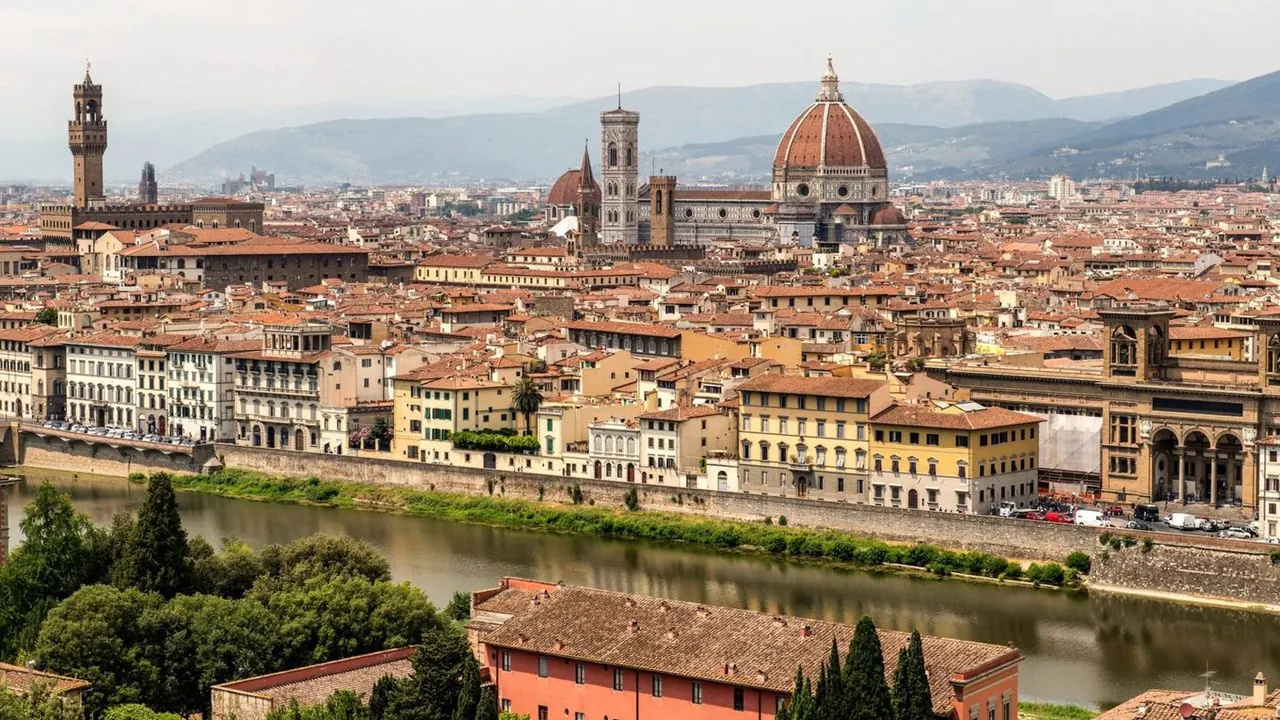
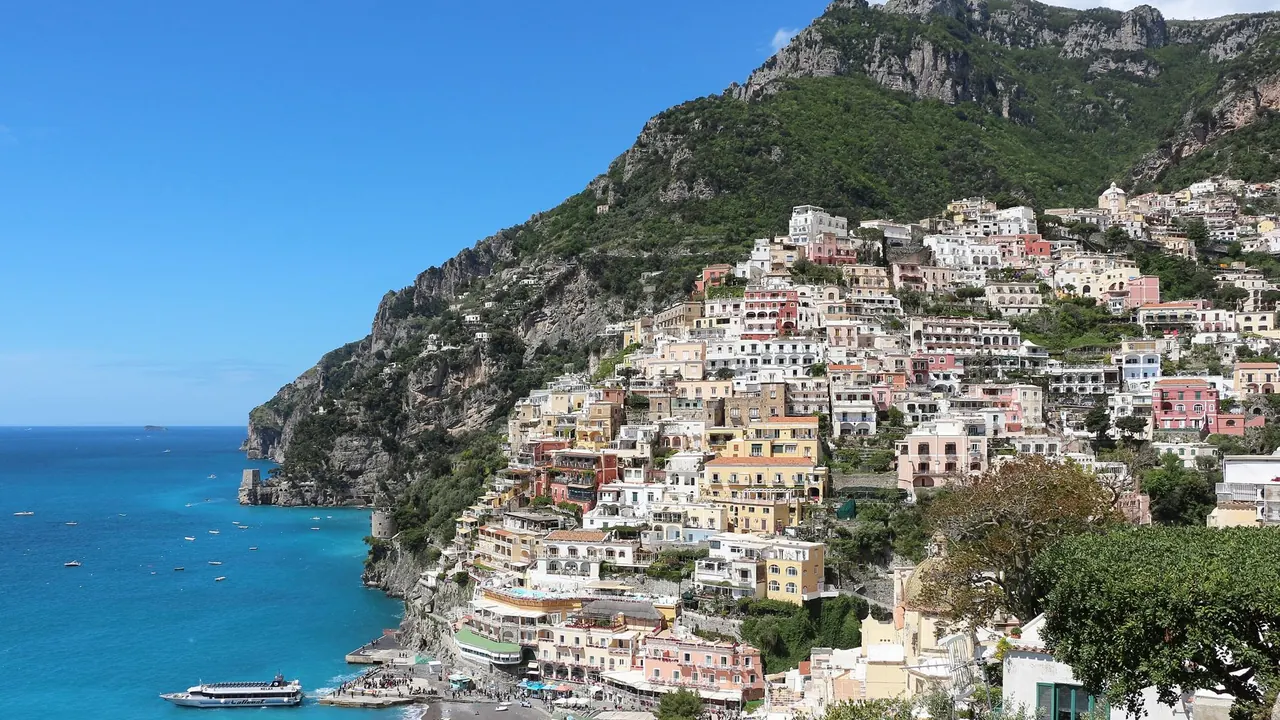
Photos: Florence by Wolfgang Weiser, Pexels License; Positano by Bernard Gagnon, CC BY 4.0, cropped.
Florence or Positano?
Our verdict in twelve categories, each scored against the same fixed benchmark cities, and the climate month by month, so you can choose for your trip.
Choose Florence for
- culture and sights
- getting around
- live music and the arts
Choose Florence if your trip is about art, architecture and eating well. The Uffizi, the Accademia and Brunelleschi's dome are a short walk apart. Trattorie and market stalls keep you fed between them, and trains run to Siena, Pisa, Lucca and Bologna for days out. It suits first visits to Italy, couples who like museums, and anyone travelling with children or watching their spending.
Choose Positano for
- beaches
- nature and the outdoors
- wellness
Positano is for a slower stay built around the sea and the cliffs. Days go on swimming from Spiaggia Grande or Fornillo, taking a boat to Capri and walking the Path of the Gods, with long lunches on a terrace in between. It rewards couples and walkers who want views more than sights and can live with steep stairs and high prices.
Scoreboard
Twelve categories on one fixed scale from 0 to 100. The shaded stretch is the gap between the two.
Your match
Pick a travel style or drag the sliders, and both match scores follow your weighting.
Wins on culture and sights and getting around with your weighting.
Wins on beaches and nature and the outdoors with your weighting.
What matters to you?
Category by category
What the scores mean for a trip.
Beaches & swimming
The gap here is as wide as it gets. Florence sits inland on the Arno, so a swim means a pool or a full day on the train to the loungers of the Versilia coast.
Positano is built for the sea. Spiaggia Grande and Fornillo are right below the town, Arienzo and Laurito are a stairway or a boat ride away, and the water is clear and deep. The shore is coarse grey sand and pebbles that shelves steeply, so it suits swimmers better than paddlers.
Food & drink
Of the two, Florence is the place to eat. Bistecca, ribollita, lampredotto from a cart, the stalls of the Mercato Centrale and Sant'Ambrogio, and Chianti poured by the glass give real range, from street food to the family trattoria.
Positano does one thing well: seafood pasta, grilled fish and lemon desserts on a terrace above the water. The menus tend to repeat, there is little market or everyday eating, and the view is part of what you pay for.
Culture & sights
Florence holds one of the great concentrations of art in Europe: the Uffizi, the David, the sculpture in the Bargello, the dome and Fra Angelico's frescoes in the monks' cells at San Marco. That is enough for a week.
In Positano the town itself is the sight: pastel houses stacked up the ravine, the majolica dome of Santa Maria Assunta and the painted Roman villa beneath it. A couple of hours covers it, and anyone wanting more heads to Naples or Pompeii.
Nightlife
Neither is a clubbing destination, but Florence gives you more to do after dinner. Aperitivo crowds spill across Piazza Santo Spirito, Sant'Ambrogio draws locals, the student pubs stay loud and summer brings outdoor bars along the Arno.
Positano's evening is a drink with a view and a long dinner, plus one cave club at the end of the main beach for a dressed-up late crowd in summer. Out of season it goes quiet, which suits couples more than groups.
Nature & outdoors
Positano has the more dramatic landscape. The Lattari mountains drop straight into the sea, the Path of the Gods runs along the cliffs above Nocelle, and kayaks follow the shore to grottoes and the Li Galli islets.
Florence offers gentler, farmed country: olive terraces at Fiesole, the cypress lanes and vineyards of Chianti for cycling, and the Casentino forests further out. It makes for pleasant walking rather than a spectacle.
Day trips
Both are superb bases, and Florence comes out ahead on range and ease. Siena, Pisa, Lucca and Bologna are each about an hour or less by train or bus, with San Gimignano and the Chianti villages close by car, and all of it works in any season.
Positano's list is just as famous: Amalfi, Ravello, Capri, Pompeii, Herculaneum and Paestum. The difference is getting there, because most ferries stop in winter and the coast road is slow in summer.
Good for families
Florence's centre is flat and compact, so children can walk it, while Positano is built almost entirely of stairs and a pushchair is useless there. Florence also gives children more to do. They can climb the dome or Giotto's bell tower, hunt for the secret passages of Palazzo Vecchio, look at the globes in the Museo Galileo and run off energy in the Boboli Gardens. The Pinocchio park at Collodi makes a classic day out. Its weak point is July and August, when the heat and the crowds wear small children down.
In Positano the sea is the only real attraction for children. The water is calm and warm in summer, but the pebbly beaches shelve quickly. Older children who like swimming and boat trips will be happy there, but families with toddlers usually do better somewhere flatter.
Getting around
Florence is easy to cover on foot, with the Duomo, the Uffizi and the Pitti Palace about twenty minutes apart. Trams run to the airport, and Santa Maria Novella station sits in the centre for trips out.
Positano is small but vertical, and nearly every walk means hundreds of steps. One local bus climbs the upper road, coastal buses crawl in summer traffic, and ferries are the best link to other towns, though mostly in season.
Shopping & style
Florence has more depth. There are leather workshops and the San Lorenzo stalls, marbled paper, the goldsmiths on the Ponte Vecchio, artisans in the Oltrarno, fashion houses on Via de' Tornabuoni and antique dealers on Via Maggio.
Positano has a single, distinctive look: moda Positano linen and resort wear, sandals cut to fit while you wait, ceramics and lemon goods. It is a pleasure to browse, but there is nothing beyond that style.
Affordability
Neither is a cheap stay, but Florence costs a good deal less and gives you far more ways to control the bill. Its big expenses are few and easy to see: a room in the historic centre and the admission fees for the Uffizi, the Accademia and the dome. Around them, a day can cost very little, with lunch from a lampredotto cart or a market counter, a carafe of house wine at a trattoria and a centre you cross on foot.
Positano leaves much less room to save. You pay for the view in almost everything, from the room and the lounger to the terrace dinner and the boat to the next town. With no street food or market eating to fall back on, the day-to-day spending stays high as well. The surest way to cut costs there is to stay somewhere cheaper along the coast and come in for the day, or to go outside high summer.
Live music & performing arts
Opera was born in Florence around 1600, and the city still has a resident company at the Teatro del Maggio Musicale Fiorentino, with its old spring festival, plus the Teatro della Pergola and chamber concerts in churches. Positano has only the odd summer concert, so music lovers there go to Ravello's clifftop festival or to Naples for opera.
Wellness & relaxation
The two are about level here, but the calm comes from different places. Florence has hotel spas and the quiet of the Boboli and Bardini gardens. Its real bathing culture lies outside the city, at Montecatini Terme and the sulphur pools of Saturnia and Bagno Vignoni.
Positano relaxes you through its setting: hotel pools cut into the cliff, spas and a slow lunch over the sea. In high summer the crowds and the stairs work against rest, so May, June and late September are its gentlest months.
When should you go?
Pick your month. The climate figures are measured averages, not a forecast.
Florence in July
Positano in July
Daytime high, °C
Rainfall in the month, mm
Where the figures come from
Florence has no rain gauge within 25 km of the centre, so its rainfall comes from a gridded climate dataset read at the city rather than from a gauge further away.
Florence's sunshine is measured 71 km from the centre, at Pisa / S. Giusto.
Positano's temperatures are measured 25 km from the centre, at Capri.
Positano has no rain gauge within 25 km of the centre, so its rainfall comes from a gridded climate dataset read at the city rather than from a gauge further away.
Positano's sunshine is measured 59 km from the centre, at Grazzanise.
Temperature and rainfall are climate normals, averaged over the years shown. Florence: 1995-2020 (sunshine 1991-2020, rainfall 1991-2020) normals, Firenze / Peretola (5.6 km from centre). Positano: 2005-2025 (sunshine 1991-2020, rainfall 1991-2020) normals, Capri (25.3 km from centre).
Florence is at its best in spring and autumn. April, May, September and early October are warm enough for long days on foot. In July and August it reaches about 33°C in the stone streets, which makes sightseeing hard work. October and November are the wettest months, with well over 100mm of rain, and winter is cool and short of sunshine.
Positano is milder in winter and less fierce in summer, peaking at around 30°C in August. The sea is warm enough for swimming from June, when it reaches 23°C, through September, and the summer months are almost dry. Heavy rain returns from October through the winter. For the cliff paths, aim for spring or early autumn, and for the beach, June to September.
Which traveller are you?
For a beach and sun trip, Positano is the clear choice. It has clear deep-blue water, Spiaggia Grande and Fornillo right below the town, and boats to coves and Capri. Florence is inland, and its nearest sand is a full day out at Viareggio.
On a culture and arts trip, Florence wins easily. The Uffizi, the Bargello, the Accademia and San Marco could fill a week, and the opera house adds evenings out. Positano's sights come down to one domed church and a buried Roman villa.
For a food and nightlife trip, Florence offers far more: lampredotto carts, two working markets, trattorie in the Oltrarno, Chianti by the glass and lively bars around Santo Spirito. Positano's terrace lunches are lovely but repetitive, and its evenings end early.
Before you go
| Measure | Florence | Positano |
|---|---|---|
| Official language | Italian | Italian |
| Currency | Euro (EUR) | Euro (EUR) |
| Sockets | CFL230 V, 50 Hz | CFL230 V, 50 Hz |
| Driving side | Right | Right |
| Time zone | UTC+1, UTC+2 in summer | UTC+1, UTC+2 in summer |
| Emergency number | 112 | 112 |
| Elevation | 50 m | 142 m |
| Main airport | Florence Airport, Peretola (FLR)6 km from centre46 non-stop destinations | Naples International Airport (NAP)33 km from centre131 non-stop destinations |
| Public holidays this year | 13 days | 13 days |
By the numbers
| Measure | Florence | Positano |
|---|---|---|
| City population | 360,930 | 3,729 |
| People per km² | 3,528 | 429 |
| Museums within 10 km | 141 | 10 |
| UNESCO World Heritage sites within 50 km | 4 | 5 |
| Swim season, months above 21 °C | - | 5 months |
Where else could you go?
Every comparison below shares a destination with this one, so you can follow Florence or Positano somewhere new.