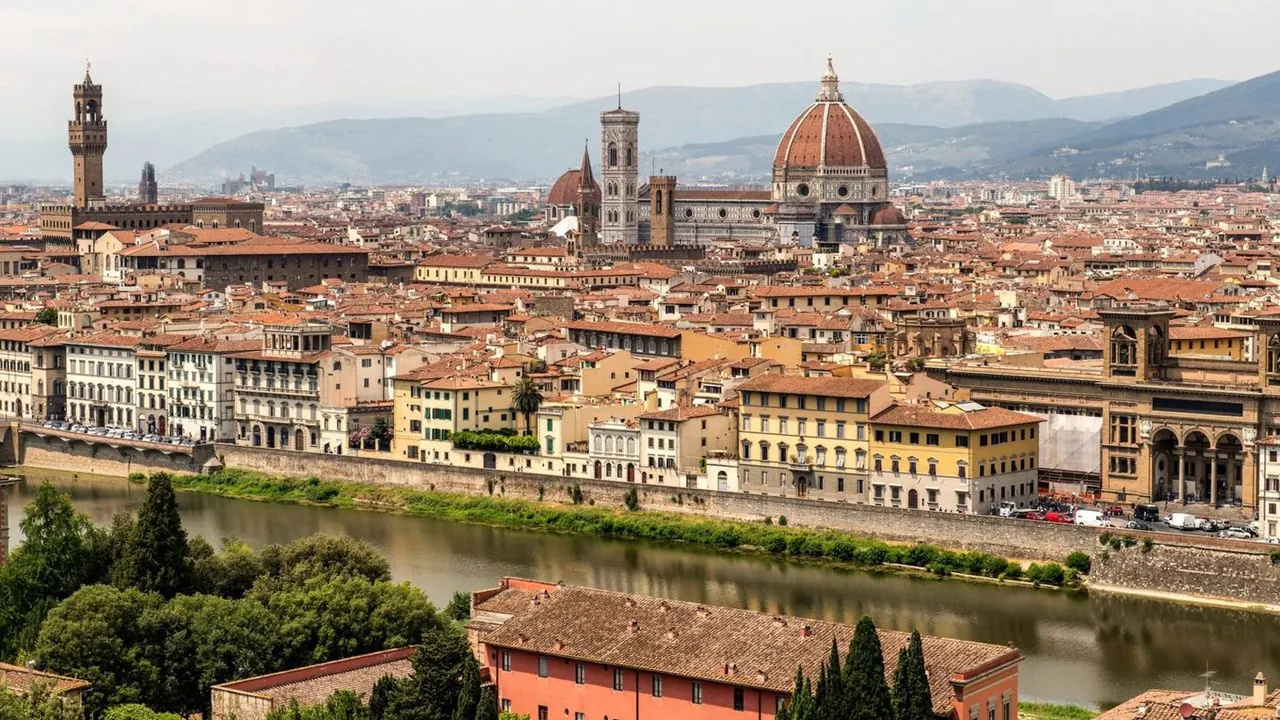
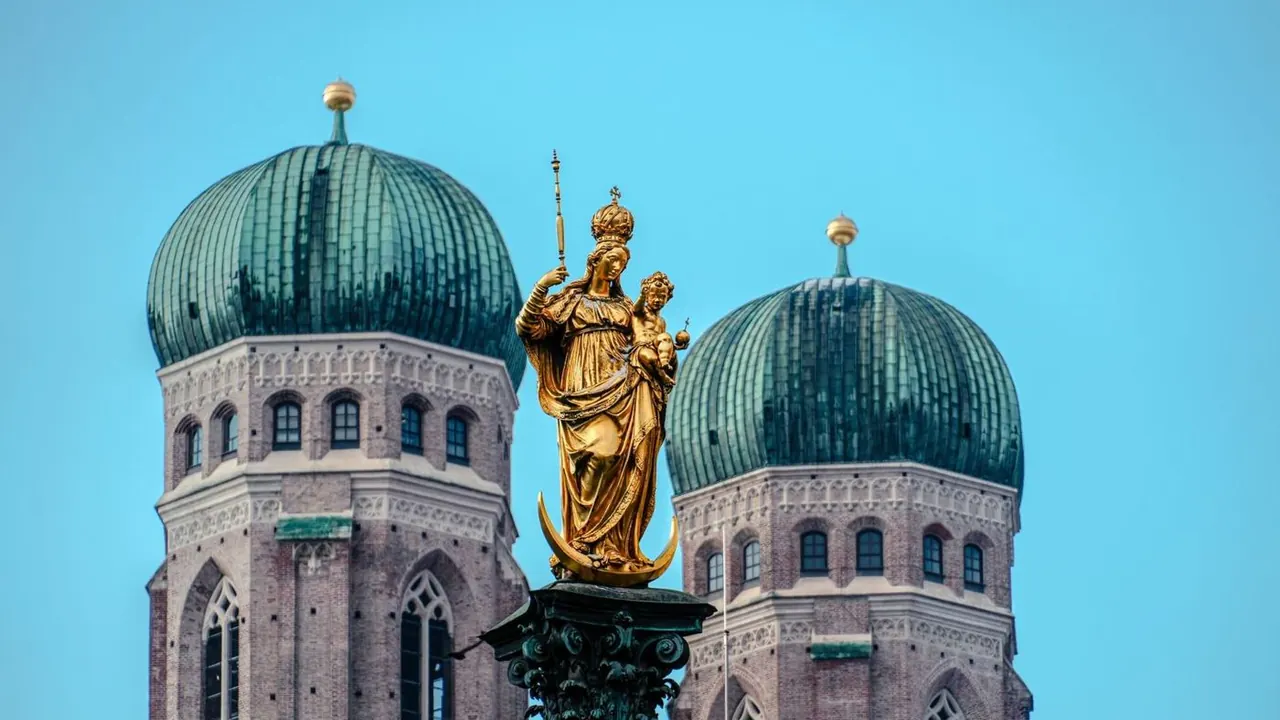
Photos: Florence by Wolfgang Weiser, Pexels License; Munich by 0xd1ma, Pexels License.
Florence or Munich?
Our verdict in twelve categories, each scored against the same fixed benchmark cities, and the climate month by month, so you can choose for your trip.
Choose Florence for
- culture and sights
- food and drink
- day trips
Florence is the choice when the trip is about art and eating well. The Uffizi, the Accademia and the Bargello sit within a short walk of each other. Dinner is a long trattoria meal in the Oltrarno, and the next morning you can be in Siena, Lucca or the Chianti vineyards. It suits adults and couples happy to go slowly and finish the night over a glass of red rather than on a dance floor.
Choose Munich for
- families
- live music and the arts
- nature and the outdoors
Munich makes more sense for families, music lovers and anyone who wants mountains within reach. It has a world-class opera house, a large zoo, lakes to swim in and the Alps about an hour south, and the trains link it all together. Evenings in the beer gardens are relaxed, and the thermal baths and saunas give a rest day real substance. You give up some of Florence's density of masterpieces, but the trip is easier to plan around a mix of interests.
Scoreboard
Twelve categories on one fixed scale from 0 to 100. The shaded stretch is the gap between the two.
Your match
Pick a travel style or drag the sliders, and both match scores follow your weighting.
Wins on culture and sights and food and drink with your weighting.
Wins on families and live music and the arts with your weighting.
What matters to you?
Category by category
What the scores mean for a trip.
Beaches & swimming
Neither city is a beach destination, but Munich fits a swim into the day more easily. Florence's nearest sea is the Versilia coast around Viareggio, with long sandy beaches lined with rented loungers and warm summer water. Getting there by train and back is a full day, so most visitors in July settle for a hotel or public pool.
In Munich, people sunbathe on the gravel banks of the Isar, and the Starnberger See and Ammersee are under an hour away by S-Bahn, with lawns and jetties. The lake water is alpine-fed and fresh rather than warm, but you can go after a morning in a museum.
Food & drink
Florence gives food lovers more to work with. Bistecca, ribollita and pappa al pomodoro fill the trattorie of the Oltrarno and Sant'Ambrogio. Lampredotto comes from street carts, the Mercato Centrale and Sant'Ambrogio market show what locals buy, and Chianti Classico is grown just south of town. Eat a few streets away from the Duomo to avoid the set tourist menus.
Munich eats around its beer. Roast pork, Schweinshaxe, white sausage and pretzels go with litres of Helles in the beer halls, and you can bring a picnic to the beer gardens. The Viktualienmarkt and the coffee-and-cake habit add variety, but beyond Bavarian cooking the range is narrower than in Tuscany.
Culture & sights
Florence holds an extraordinary concentration of Renaissance art. Brunelleschi's dome, the Uffizi, David in the Accademia, the Bargello's sculpture and the frescoed cells of San Marco are all within a compact medieval centre, and the smaller chapels and churches could fill a week.
Munich's strength is royal collections rather than a single great era. The Alte Pinakothek and the rest of the Kunstareal, the Residenz, Nymphenburg and the vast Deutsches Museum make a rich programme. But the old town around Marienplatz was largely rebuilt after the war, so the streets themselves carry less history than Florence's.
Nightlife
Munich keeps you out later. A beer hall evening can run on for hours, Glockenbachviertel and Gärtnerplatz have a dense run of cocktail and gay bars, and a few serious techno clubs stay open until morning at weekends. During Oktoberfest the Theresienwiese tents take over the city.
Florence's nights are built around aperitivo and wine bars. On warm evenings people drink outdoors on Piazza Santo Spirito, and there are bars along the Arno in summer. The club scene is small, though, and the city goes quiet earlier.
Nature & outdoors
Florence's countryside is gentle and cultivated. Olive terraces climb towards Fiesole, cypress-lined lanes wind through the Chianti vineyards, and the beech and fir forests of the Casentino lie further out. The Apuan Alps and the Tuscan Apennines offer some mountain walking, and Abetone has winter skiing, but the peaks are lower and less dramatic and the slopes fewer.
Munich has the bigger landscapes. The Alps show on the southern skyline, and trains reach the Wetterstein, the Zugspitze and Tegernsee for serious hiking in summer and a much wider choice of skiing in winter. In town, the English Garden is vast, and surfers ride the Eisbach wave at its edge.
Day trips
Both are superb bases, but Florence has more famous towns close by. Siena, Pisa, Lucca and Bologna are each about an hour or less away, and San Gimignano, Volterra, the Chianti villages and the Val d'Orcia add more. A hire car helps with the hill towns.
Munich's list is strong but more spread out. Augsburg is close, and Nuremberg, Regensburg and Salzburg are an hour or more by train. Neuschwanstein, the classic excursion, takes about two hours each way. On the other hand, regional trains handle almost all of it without a car.
Good for families
Munich is much easier with children. There is Hellabrunn zoo on the Isar meadows, the hands-on Deutsches Museum, a Sea Life aquarium, beer gardens with playgrounds and lake beaches for summer afternoons, and Legoland within driving distance. The city is clean, green and gentle to get around.
Florence can work with the right approach. Children tend to enjoy climbing the dome, the secret-passage tours of Palazzo Vecchio, the globes at the Museo Galileo and the Boboli Gardens. But there is little purpose-built for families beyond the Pinocchio park at Collodi, and summer heat and crowds wear young children out.
Getting around
Both centres are compact enough to walk, so the difference shows once you leave them. In Florence the main sights are about twenty minutes apart on foot and most visitors barely use transport. There is no metro, though, the stone paving is tiring and the pavements are narrow and crowded in summer.
Munich has an integrated U-Bahn, S-Bahn, tram and bus network that reaches Nymphenburg, the Olympic Park, the airport and the lakes. The flat streets and riverside routes also make cycling easy, which Florence's crowded centre does not.
Shopping & style
The two are equally good for shopping but offer different things. Florence is about craft: leather from market stalls and workshops, marbled paper, goldsmiths on the Ponte Vecchio and gilders and restorers in the Oltrarno, plus fashion houses on Via de' Tornabuoni. Mainstream and independent fashion is limited.
Munich covers more ground. Department stores and chains line Neuhauser Strasse and Kaufingerstrasse, luxury labels are on Maximilianstrasse, and Glockenbach and Schwabing have independent boutiques. Its signature buy is Tracht, the dirndls and lederhosen of Bavarian costume, and in December the Christmas markets add craft stalls.
Affordability
Both cities are expensive, and in both the hotel bill hurts most. In Florence, admission to the big museums and the dome climb adds up over a few days. Street-food lunches, cheap house wine and walking everywhere save money, and so do a room across the river or a winter visit.
In Munich, rooms are dear all year and peak during Oktoberfest and the big trade fairs. A picnic in a beer garden, free days in the parks and at the lakes, and token Sunday museum fees help balance it out.
Live music & performing arts
Munich is the stronger city for an evening of music. The Bavarian State Opera plays most of the year in the National Theatre, and three orchestras of real standing perform in the Herkulessaal and the Prinzregententheater. The rococo Cuvilliés Theatre, a respected jazz scene and big concerts at the Olympic Park add range.
Florence, where opera was more or less born, has the Teatro del Maggio and its spring festival, one of the oldest in Europe. Away from those, most visitors end up at church and palace concerts staged for tourists, and there is little beyond the classical season.
Wellness & relaxation
Munich has a bathing culture you can use without leaving town. There is the Art Nouveau Müller'sches Volksbad with its Roman-style steam bath, there are textile-free public saunas with infusion rituals, and the huge thermal complex at Erding is under an hour away. Lazy afternoons on the English Garden lawns add to it.
In Florence itself, relaxation is limited to hotel spas and quiet early hours in the Boboli or Bardini gardens. The real rewards are further out: Montecatini Terme by train, the hot sulphur pools of Saturnia and Bagno Vignoni, or a few nights on a farm stay in the hills.
When should you go?
Pick your month. The climate figures are measured averages, not a forecast.
Florence in July
Munich in July
Daytime high, °C
Rainfall in the month, mm
Where the figures come from
Florence has no rain gauge within 25 km of the centre, so its rainfall comes from a gridded climate dataset read at the city rather than from a gauge further away.
Florence's sunshine is measured 71 km from the centre, at Pisa / S. Giusto.
Temperature and rainfall are climate normals, averaged over the years shown. Florence: 1995-2020 (sunshine 1991-2020, rainfall 1991-2020) normals, Firenze / Peretola (5.6 km from centre). Munich: 1991-2020 normals, München (1.9 km from centre).
The two cities have opposite rhythms. Florence is warm from May and becomes very hot in July and August, when afternoons reach 33°C and walking the streets is hard work. Summer there is also the sunniest and driest time, and the right season for a coast day in the Versilia. The rain comes in autumn, building to about 124mm in November. Late April to early June and the second half of September are the best weeks for sightseeing.
Munich stays milder all summer, with highs around 25°C that suit lake swimming from June to early September. Those months are also its wettest, with about 121mm of rain in June, often as showers and thunderstorms. Winter is cold and grey, with January highs around 4°C. Late spring and early autumn give the best walking weather. For a sunny city break in winter Florence is the gentler of the two, though neither is warm then.
Which traveller are you?
On a family trip with children, Florence asks a lot of young visitors, because its great sights are made for adults and its summers are tiring. Munich is the better choice, with far more built for children and a calmer city to move around.
For a culture and arts trip, choose Florence if painting, sculpture and architecture are the point, since the Renaissance is packed into a few walkable streets. If opera and orchestras matter more than galleries, Munich's stages are the stronger draw.
On an outdoors trip, Florence suits gentle rambles and cycling through cultivated hills close to town. Munich is the better base for anything more ambitious, with real mountains, swimming lakes and long cycle routes all within about an hour by train.
Before you go
| Measure | Florence | Munich |
|---|---|---|
| Official language | Italian | German |
| Currency | Euro (EUR) | Euro (EUR) |
| Sockets | CFL230 V, 50 Hz | CF230 V, 50 Hz |
| Driving side | Right | Right |
| Time zone | UTC+1, UTC+2 in summer | UTC+1, UTC+2 in summer |
| Emergency number | 112 | 112 |
| Elevation | 50 m | 519 m |
| Main airport | Florence Airport, Peretola (FLR)6 km from centre46 non-stop destinations | Munich Airport (MUC)29 km from centre210 non-stop destinations |
| Public holidays this year | 13 days | 12 days |
By the numbers
| Measure | Florence | Munich |
|---|---|---|
| City population | 360,930 | 1,505,036 |
| People per km² | 3,528 | 4,844 |
| Museums within 10 km | 141 | 74 |
| UNESCO World Heritage sites within 50 km | 4 | 1 |
Where else could you go?
Every comparison below shares a destination with this one, so you can follow Florence or Munich somewhere new.