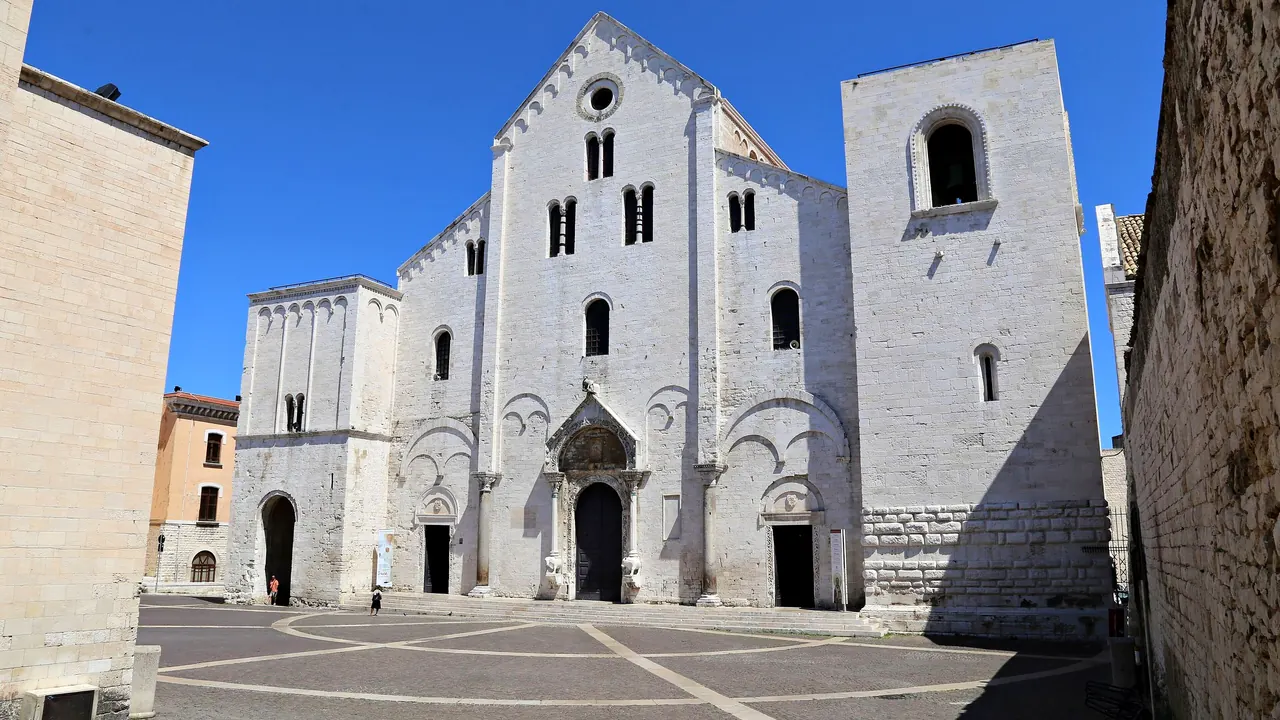
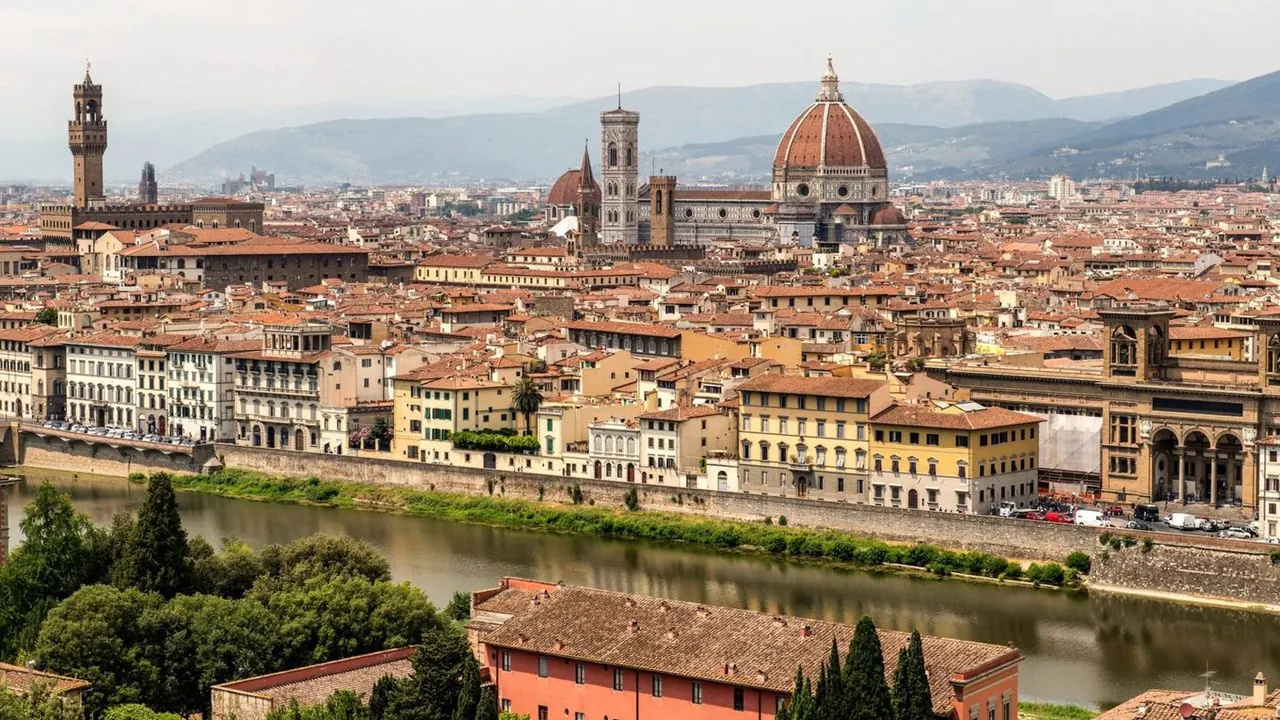
Photos: Bari by Sailko, CC BY-SA 4.0, cropped; Florence by Wolfgang Weiser, Pexels License.
Bari or Florence?
Our verdict in twelve categories, each scored against the same fixed benchmark cities, and the climate month by month, so you can choose for your trip.
Choose Bari for
- beaches
- prices
- nightlife
Bari suits a slower, sunnier southern trip where the sea is part of every day. You get a sandy beach in town and clear coves a short train ride away. The street food and seafood are cheap and very local, and evenings spill late into the piazzas. Matera, the trulli and the white towns of the Valle d'Itria are all within reach. Choose it if you want good value, warm water and a base for exploring Puglia, and you don't mind a thinner list of sights.
Choose Florence for
- culture and sights
- shopping
- getting around
Florence is the better pick for anyone travelling mainly for art and architecture. The Uffizi, the Accademia, the Duomo and dozens of smaller chapels and palaces sit within a short walk of each other. Siena, Pisa, Lucca and the Chianti hills are easy to reach on day trips. It also wins for craft shopping and fine Tuscan wine. In return you pay more, you're a long way from the sea, and summers in the city can be hard going.
Scoreboard
Twelve categories on one fixed scale from 0 to 100. The shaded stretch is the gap between the two.
Your match
Pick a travel style or drag the sliders, and both match scores follow your weighting.
Too close to call, 2 points apart
Wins on beaches and prices with your weighting.
Wins on culture and sights and shopping with your weighting.
What matters to you?
Category by category
What the scores mean for a trip.
Beaches & swimming
Bari has the sea on its doorstep. Pane e Pomodoro is a sandy beach just beyond the centre, and the lidos and rocky platforms around Torre Quetta carry on along the shore. In summer you can swim in warm, calm water on any afternoon. The better swimming is a short train ride south, among the limestone coves of Polignano a Mare and the clear inlets around Monopoli.
Florence has no swimming to speak of. The Versilia beaches near Viareggio take about an hour and a half by train, and they are rows of rented loungers rather than wild coves. Most visitors cool off in a hotel or public pool instead.
Food & drink
Both are excellent places to eat, and the difference is in the cooking itself. In Bari the food is about the sea and the street. You'll find raw urchins and octopus by the fishermen's pier, focaccia barese and fried sgagliozze from kitchen windows, and orecchiette rolled by hand in the old town lanes, with Primitivo and Negroamaro to drink.
Florence is meat, bread and wine country: thick bistecca, ribollita and lampredotto from street carts. The Mercato Centrale and Sant'Ambrogio show how the city really eats, and Chianti vineyards start just south of town. Florence also has more fine dining, but more tourist menus too, so pick trattorie in the Oltrarno over the streets around the Duomo.
Culture & sights
Here Florence is in a different league. The Duomo, the Baptistery, the Uffizi, the Accademia, the Bargello and the Pitti Palace together make one of the great concentrations of art in the world. Smaller treasures such as the Brancacci Chapel and the Medici Chapels could fill a week.
Bari's sights are charming but few. The Basilica di San Nicola is a fine piece of Apulian Romanesque and a real pilgrimage site, and it sits near the cathedral, the Norman-Swabian castle and the whitewashed lanes of Bari Vecchia. Add the Murat quarter and the Pinacoteca, and most visitors have seen it in a day or two.
Nightlife
Bari has the livelier evenings. Students and young locals fill Piazza Mercantile and Piazza Ferrarese late into the night, the bars of the Umbertino streets and the seafront stay open past midnight, and in high summer the crowd heads to beach clubs along the coast. It is mostly a local crowd, and winter weeknights are quiet.
Florence's evenings centre on aperitivo and wine bars. Piazza Santo Spirito and Sant'Ambrogio are the liveliest corners, and there are student pubs near the centre. Clubs are few and the night ends earlier, so it suits a long dinner more than dancing.
Nature & outdoors
Florence has more countryside close at hand. The olive terraces of Fiesole and the paths up Monte Morello begin at the edge of town, the Chianti hills are classic walking and cycling country, and the Casentino forests and the Apuan Alps are within a long day.
Bari sits on a flat plain of olive groves. Its seafront promenade is the main outdoor space, and the open karst plateau of Alta Murgia and the Grotte di Castellana are about an hour away. It is gentle country with no mountains near.
Day trips
Both are superb bases, and many people choose either one for the excursions alone. Florence has the edge. Siena, Pisa, Lucca, San Gimignano and the Chianti villages are all close, and Bologna is under forty minutes by fast train. Good rail links from Santa Maria Novella make most of these easy without a car.
From Bari the trips are just as memorable: the cave dwellings of Matera, the trulli of Alberobello, Ostuni's white streets, Trani's cathedral on the sea and Baroque Lecce. Regional lines are slower and less frequent, though, so the inland towns often call for a hire car.
Good for families
Bari is a little easier with children. The sandy city beach, the traffic-free lanes of the old town and the evening stroll on the seafront all suit younger ones. The Grotte di Castellana and the Fasano safari park make good outings. You'll need to plan around the midday heat.
In Florence most of what is on offer was made for adults. Climbing the dome, the secret passages of Palazzo Vecchio and the Boboli Gardens help, and Collodi's Pinocchio park is an hour away. Narrow pavements and summer crowds make it harder work.
Getting around
Florence is the easier city to get around. The Duomo, the Uffizi, Ponte Vecchio and the Pitti Palace are all within a short walk of each other, trams run to the airport, and the main station is right in the centre for day trips. A car is only useful once you leave the city.
Central Bari is also flat and easy on foot, and a train runs to the airport. Beyond the centre things get harder: the buses are slow and confusing, and the regional railways can be infrequent, which is why many visitors hire a car.
Shopping & style
Florence is far better for shopping. It has leather workshops and the San Lorenzo stalls, marbled paper, jewellers on the Ponte Vecchio, gilders and restorers in the Oltrarno, and luxury fashion houses along Via de' Tornabuoni.
Bari's shopping is mostly practical: chain stores along Via Sparano and a few boutiques. The best things to bring home are edible, such as dried orecchiette, taralli and olive oil, plus some Puglian ceramics.
Affordability
Bari is the cheaper of the two. Street food, trattoria meals and local wine cost little, the main sights are free, and rooms stay reasonable outside July and August. Beach clubs and car hire are the main extra costs.
Florence costs noticeably more. Hotels in the centre are expensive for much of the year, and museum and dome tickets add up over a few days. Eating at market counters, staying across the river or coming in winter helps.
Live music & performing arts
Both cities centre on a major opera house, and Florence has the deeper tradition. Opera was more or less born there. The Teatro del Maggio Musicale Fiorentino has its own orchestra, and the spring Maggio Musicale is one of Europe's oldest festivals.
Bari's Teatro Petruzzelli, one of Italy's largest opera houses, puts on opera, ballet and concerts, and a summer jazz festival plays in the piazzas and the castle. In both cities the theatre is mostly in Italian.
Wellness & relaxation
Neither city is much of a spa destination, but Florence has more within reach. Montecatini Terme's thermal halls are under an hour by train, and the hot springs of Bagno Vignoni and Saturnia make a longer outing. The Boboli and Bardini gardens offer calm in town.
Bari has no bathing tradition beyond hotel spas. What it offers is a slow pace: long lunches and evening strolls on the seafront. For real pampering, visitors book a restored country estate inland.
When should you go?
Pick your month. The climate figures are measured averages, not a forecast.
Bari in July
Florence in July
Daytime high, °C
Rainfall in the month, mm
Where the figures come from
Bari has no rain gauge within 25 km of the centre, so its rainfall comes from a gridded climate dataset read at the city rather than from a gauge further away.
Bari's sunshine is measured 77 km from the centre, at Marina Di Ginosa.
Florence has no rain gauge within 25 km of the centre, so its rainfall comes from a gridded climate dataset read at the city rather than from a gauge further away.
Florence's sunshine is measured 71 km from the centre, at Pisa / S. Giusto.
Temperature and rainfall are climate normals, averaged over the years shown. Bari: 1991-2020 (sunshine 1961-1990) normals, Bari / Palese Macchie (7 km from centre). Florence: 1995-2020 (sunshine 1991-2020, rainfall 1991-2020) normals, Firenze / Peretola (5.6 km from centre).
Bari is a summer city. The sea is warm enough for proper swimming from June to September, peaking at about 26°C in August, and June to August are close to dry. Daytime highs around 30°C in July and August make midday walking tiring, so the old town is best seen in the morning and evening. May and early October are gentler for sightseeing, and the sea holds its warmth through September. That is also when the rain returns, building to its heaviest in November, but winters stay mild.
Florence is hotter in summer and wetter in autumn. Inland in its bowl of hills, August reaches about 33°C, which is too hot for long days on stone streets. April, May, late September and early October are the best months for walking, with long sunny days in late spring. October and November are the wettest months, peaking at around 124mm in November. Winter days are cool and short on sunshine, a little colder than on Bari's coast.
Which traveller are you?
On a beach and sun trip, Bari is the clear choice. It has its own sandy city beach and warm, calm water through the summer. The cliff coves of Polignano a Mare and Monopoli are half an hour south. Florence's nearest sea is a full day's outing.
For a culture and arts trip, Florence is the place to go. It holds a whole run of Renaissance masterpieces, from Botticelli in the Uffizi to the David in the Accademia. Brunelleschi's dome and the frescoes at San Marco are close by. Bari's Romanesque basilica and old town take a day or two.
On a trip with a tight budget, Bari makes your money go further. Focaccia, panzerotti and trattoria lunches cost little, local wine is cheap, and the old town and basilica are free. In Florence, rooms in the centre and museum tickets soon add up.
Before you go
| Measure | Bari | Florence |
|---|---|---|
| Official language | Italian | Italian |
| Currency | Euro (EUR) | Euro (EUR) |
| Sockets | CFL230 V, 50 Hz | CFL230 V, 50 Hz |
| Driving side | Right | Right |
| Time zone | UTC+1, UTC+2 in summer | UTC+1, UTC+2 in summer |
| Emergency number | 112 | 112 |
| Elevation | 5 m | 50 m |
| Main airport | Bari Karol Wojtyła International Airport (BRI)9 km from centre104 non-stop destinations | Florence Airport, Peretola (FLR)6 km from centre46 non-stop destinations |
| Public holidays this year | 13 days | 13 days |
By the numbers
| Measure | Bari | Florence |
|---|---|---|
| City population | 315,473 | 360,930 |
| People per km² | 2,687 | 3,528 |
| Museums within 10 km | 12 | 141 |
| UNESCO World Heritage sites within 50 km | 1 | 6 |
| Swim season, months above 21 °C | 4 months | - |
Where else could you go?
Every comparison below shares a destination with this one, so you can follow Bari or Florence somewhere new.