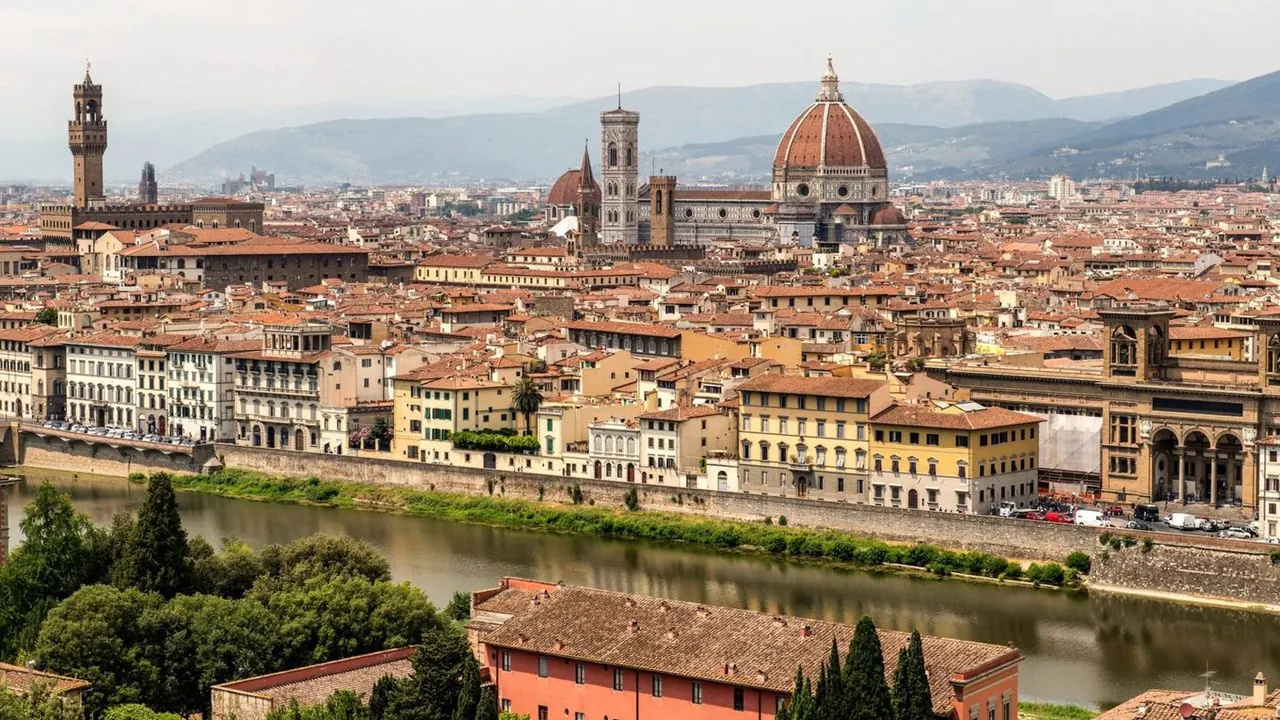
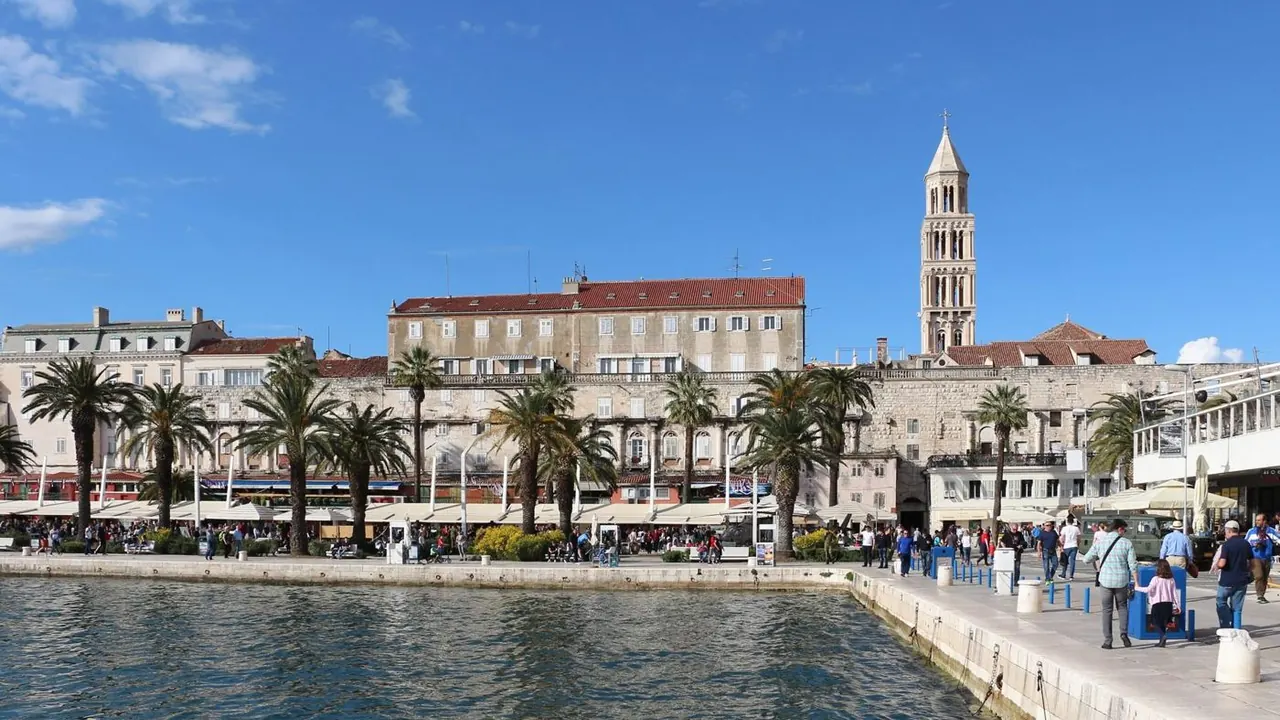
Photos: Florence by Wolfgang Weiser, Pexels License; Split by Bernard Gagnon, CC BY-SA 4.0, cropped.
Florence or Split?
Our verdict in twelve categories, each scored against the same fixed benchmark cities, and the climate month by month, so you can choose for your trip.
Choose Florence for
- shopping
- culture and sights
- live music and the arts
Florence is the choice for travellers who want art, architecture and food to fill the days. The Uffizi, the Accademia, the Bargello and Brunelleschi's dome sit within a short walk of each other, and the city works as a base for Siena, Pisa, Lucca, Bologna and the Chianti hills. Long trattoria dinners, Tuscan wine and craft shopping round out a trip built on looking, eating and moving between historic towns. It costs more, and it has no sea.
Choose Split for
- beaches
- nature and the outdoors
- nightlife
Split suits people who want the Adriatic as part of each day. You can walk from Diocletian's Palace to a swim, take a ferry out to Brač or Hvar, and spend free days hiking Marjan and Mosor or rafting the Cetina canyon. The sights take a couple of days at most, so Split is for a summer of sea, islands and late evenings on the Riva more than a week of museums, and outside July and August it is the cheaper of the two.
Scoreboard
Twelve categories on one fixed scale from 0 to 100. The shaded stretch is the gap between the two.
Your match
Pick a travel style or drag the sliders, and both match scores follow your weighting.
Too close to call, 2 points apart
Wins on shopping and culture and sights with your weighting.
Wins on beaches and nature and the outdoors with your weighting.
What matters to you?
Category by category
What the scores mean for a trip.
Beaches & swimming
This is Split's category by a long way. The Adriatic is a short walk from Diocletian's Palace. Bačvice is a shallow sandy bay where locals play picigin, and the pine-shaded coves of Kašjuni and Bene on the Marjan peninsula are quieter. Most of the shore is pebble or concrete platforms, though, so for long beaches people take the ferry to Brač, Šolta or Hvar.
Florence has no beach at all. The sandy Versilia coast around Viareggio is about an hour and a half away by train and lined with rented loungers, and that takes up a whole day. In summer most visitors cool off in a pool instead.
Food & drink
Florence offers the richer table. Thick, rare bistecca, ribollita, chicken-liver crostini and lampredotto from street carts make a distinctive local cuisine, the Mercato Centrale and Sant'Ambrogio show it off, and the Chianti vineyards begin at the city's edge. Its trattorie in the Oltrarno and the fine-dining tier give you more range for a week of eating.
Split's Dalmatian cooking is simpler and centred on the sea: grilled fish, black risotto, pašticada, and peka ordered ahead in konobas in Varoš, with Plavac Mali or Pošip to drink. It is good, but there is little beyond it, and the scene goes quiet in winter. In both cities the menus closest to the main sights are the ones to avoid.
Culture & sights
Florence is in another league. The Uffizi, the Accademia, the Bargello, the Pitti Palace, the Duomo with its Baptistery doors, and smaller treasures like the Brancacci Chapel and the cells of San Marco make it one of the densest concentrations of art anywhere. A week there still leaves things unseen.
Split has one extraordinary sight rather than many. Diocletian's Palace is a Roman emperor's residence that people still live in, with the Peristyle, the cathedral built into his mausoleum and the vaulted substructures. Add the Meštrović Gallery and the Archaeological Museum, and two days covers most of it.
Nightlife
In summer, Split is the livelier of the two. Small bars fill the palace alleys and stairways until late, and the beach bars and clubs around Bačvice keep a younger crowd out into the early hours. The catch is that this is a seasonal scene, and from October to May it shrinks to a few bars.
Florence is steadier through the year but quieter. Evenings mean aperitivo, a wine bar and drinks on the steps around Piazza Santo Spirito, with a cluster of student pubs and a small club scene. It suits a long dinner and a late glass better than dancing.
Nature & outdoors
Split has wilder and more varied country right on its doorstep. The pine forest of Marjan begins at the edge of the old town, Mosor and Kozjak offer proper ridge hikes, and Biokovo, the Cetina canyon at Omiš and the waterfalls of Krka are all within about an hour. The sea adds kayaking, sailing and island-hopping.
Florence's outdoors is gentler and more cultivated: olive terraces at Fiesole, the view from San Miniato, and the cypress lanes of Chianti for cycling and walking. The Casentino forests and the Apuan Alps are further away. Both cities are too hot for long walks in high summer.
Day trips
Both make good bases, but Florence is close to unmatched. Siena, Pisa, Lucca, San Gimignano, Volterra and the Chianti villages are all within easy reach, Bologna is under forty minutes by fast train, and the Val d'Orcia towns lie further south. You could spend a week of day trips without repeating yourself.
Split's trips mix towns and islands. Trogir and Šibenik are both UNESCO-listed, and closer to the city are the ruins of Salona and the Klis Fortress, with ferries to Hvar, Brač and Vis. The range is narrower, and outside summer the sea crossings need more planning.
Good for families
Split is a little easier with children, mostly because of the water. The shallow bay at Bačvice is good for paddling, Marjan gives them shade and room to run, and a ferry ride often becomes the highlight of the trip.
Florence takes more effort. Its treasures are made for adults, so the best ways in are hands-on: climbing the dome, the secret passages of Palazzo Vecchio, the Museo Galileo and the Boboli Gardens, with Collodi's Pinocchio park as an outing. Neither city has an aquarium or theme park worth the trip, and both are hot and crowded in July and August.
Getting around
Both centres are best on foot, but Florence covers more ground well. The Duomo, the Uffizi, Ponte Vecchio, the Accademia and the Pitti Palace are all within about twenty minutes of each other, trams link the main station with the airport, and small buses climb to Fiesole and Piazzale Michelangelo. Santa Maria Novella, right in the centre, is the base for the main rail day trips to Pisa, Lucca and Bologna.
Split's core is smaller and car-free, and the ferry port, bus station and railway sit together at the harbour, so island crossings start a short walk from the palace. Beyond that the local bus network is basic, the coast road clogs in summer, and the palace's polished stone steps are hard work with a pushchair.
Shopping & style
Florence is a real shopping city, built on craft. You can buy leather from workshops and San Lorenzo stalls, marbled paper, Ponte Vecchio gold, and work by the gilders and framers of the Oltrarno. Via de' Tornabuoni has the luxury houses, and Via Maggio has the antique dealers. Look closely at the leather, as quality varies.
Split offers far less. The palace shops are mostly souvenirs, lavender and ties, the chains are on Marmontova, and the best finds are edible: olive oil, wine, figs and brandy from the Pazar market.
Affordability
Split goes easier on a budget, although high summer narrows the gap. In July and August its old-town rooms and fish sold by weight can feel like Western European prices, and ferries add up. In May, June, late September and winter, though, it is a modestly priced city with cheap bakeries and inexpensive sights.
Florence is expensive all through spring to autumn. Central rooms cost a lot and museum tickets add up over a few days. Street lampredotto, market lunches and house wine help, as does staying near the station or across the river.
Live music & performing arts
Florence has the deeper programme, built around a full classical season rather than a summer festival. Opera was more or less born there around 1600, the Teatro del Maggio Musicale has its own orchestra and stages opera, concerts and ballet through the season, and the Maggio festival in spring is one of Europe's oldest. Many visitors only see the church and palace concerts put on for tourists, though, and jazz and other live music are thin.
Split's Croatian National Theatre also runs opera, ballet and drama through the season, but there is less around it, and the city comes into its own in summer, when the Split Summer Festival brings open-air opera and concerts to the Peristyle. The local sound is klapa, the unaccompanied harmony singing of Dalmatia, which you can often hear in the palace vestibule. Outside summer there is little else on.
Wellness & relaxation
Neither city has a bathing culture of its own, so in both, spa time means hotel spas. The difference is what lies nearby. From Florence, Montecatini Terme is under an hour by train, and the hot springs of Bagno Vignoni and Saturnia are a longer trip, along with farm stays in the hills.
Split's calm comes from the Dalmatian habit of fjaka: long coffees on the Riva, the pine woods of Marjan, or a quiet island when the old town gets loud at night.
When should you go?
Pick your month. The climate figures are measured averages, not a forecast.
Florence in July
Split in July
Daytime high, °C
Rainfall in the month, mm
Where the figures come from
Florence has no rain gauge within 25 km of the centre, so its rainfall comes from a gridded climate dataset read at the city rather than from a gauge further away.
Florence's sunshine is measured 71 km from the centre, at Pisa / S. Giusto.
Temperature and rainfall are climate normals, averaged over the years shown. Florence: 1995-2020 (sunshine 1991-2020, rainfall 1991-2020) normals, Firenze / Peretola (5.6 km from centre). Split: 1991-2020 normals, Split / Marjan (0.9 km from centre).
The two cities have a similar calendar, with mild, damp winters and hot, dry summers, but Florence feels the extremes more. Sitting inland in the Arno valley, it reaches about 33°C in August, too hot for long afternoons on stone streets, so May and late September to early October are the best times for sightseeing there. The autumn rains hit Florence hard as well, peaking at around 124mm in November, so late autumn is often grey and wet.
Split is a few degrees cooler in midsummer thanks to the sea breeze, and it gets more sun all year round. The Adriatic is warm enough to swim from June, at about 22°C, and is warmest in August at around 25°C. It stays pleasant into early October, which makes September the best month for combining swimming with walking the old town. November is Split's wettest month too, and from then until spring it is a quiet coastal town rather than a beach base.
Which traveller are you?
For a beach and sun trip, Split wins easily. Bačvice and the coves around Marjan are a walk from the old town, and ferries reach the longer beaches of Brač and Hvar. In Florence the nearest sand is a full day out at Viareggio.
On a culture and arts trip, Florence is the clear pick. The Uffizi, David at the Accademia, the frescoes of San Marco and the Pitti Palace could fill a week, with opera at the Maggio Musicale in the evening. Split's palace is remarkable, but you will have seen its sights in two days.
On a shopping trip, choose Florence. Leather workshops, marbled paper, the goldsmiths of the Ponte Vecchio, the Oltrarno artisans and Via de' Tornabuoni give a real range. Split offers mostly souvenirs, chain stores and the Pazar market's olive oil, figs and brandies.
Before you go
| Measure | Florence | Split |
|---|---|---|
| Official language | Italian | Croatian |
| Currency | Euro (EUR) | Euro (EUR) |
| Sockets | CFL230 V, 50 Hz | CF230 V, 50 Hz |
| Driving side | Right | Right |
| Time zone | UTC+1, UTC+2 in summer | UTC+1, UTC+2 in summer |
| Emergency number | 112 | 112 |
| Elevation | 50 m | 0 m |
| Main airport | Florence Airport, Peretola (FLR)6 km from centre46 non-stop destinations | Split Saint Jerome Airport (SPU)12 km from centre69 non-stop destinations |
| Public holidays this year | 13 days | 14 days |
By the numbers
| Measure | Florence | Split |
|---|---|---|
| City population | 360,930 | 160,577 |
| People per km² | 3,528 | - |
| Museums within 10 km | 141 | 11 |
| UNESCO World Heritage sites within 50 km | 4 | 4 |
| Swim season, months above 21 °C | - | 4 months |
Where else could you go?
Every comparison below shares a destination with this one, so you can follow Florence or Split somewhere new.