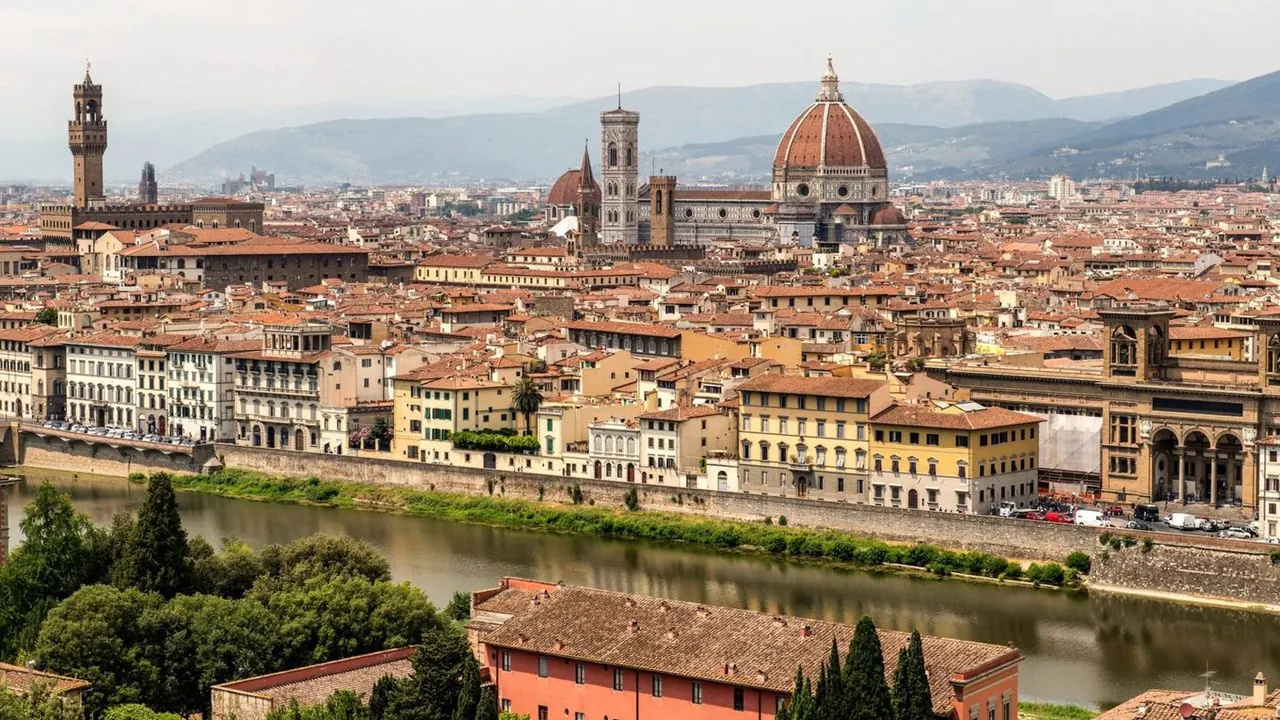
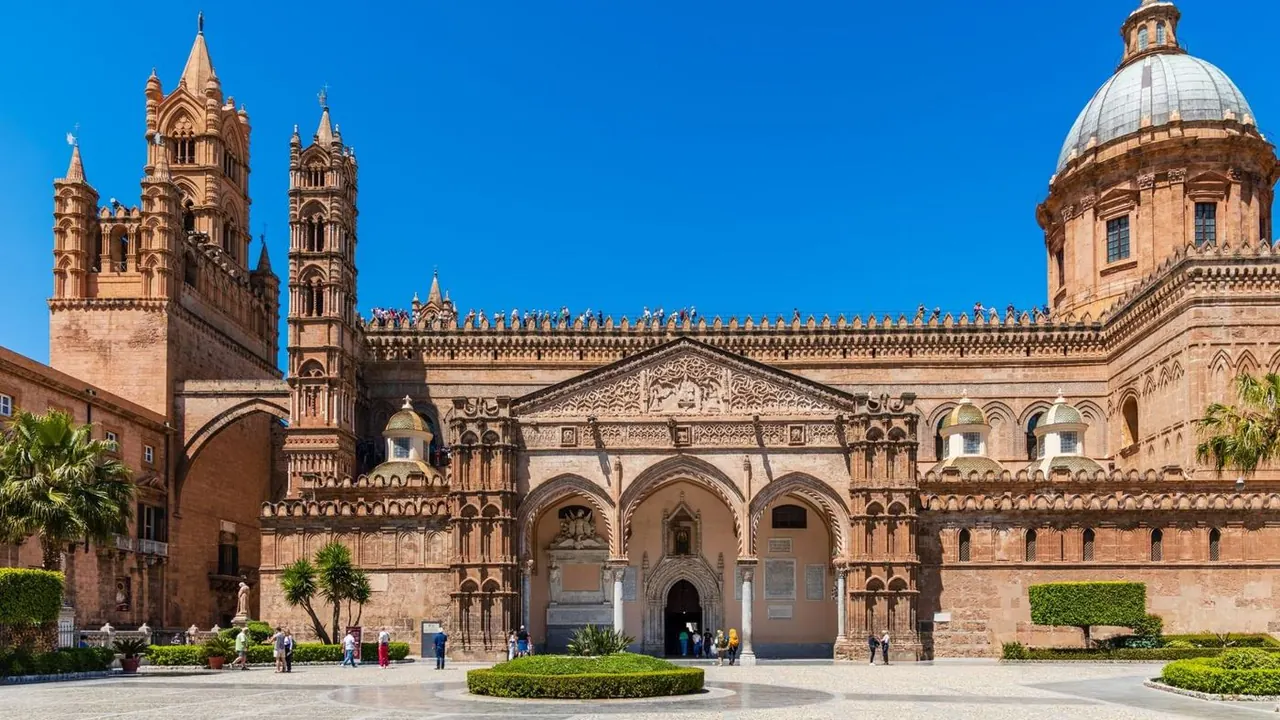
Photos: Florence by Wolfgang Weiser, Pexels License; Palermo by Antonino Giangrasso, Pexels License.
Florence or Palermo?
Our verdict in twelve categories, each scored against the same fixed benchmark cities, and the climate month by month, so you can choose for your trip.
Choose Florence for
- getting around
- shopping
- culture and sights
Florence suits travellers who come for art and history. The Uffizi, the Accademia, the Bargello and the Duomo all sit within a short walk of each other, and Siena, Pisa, Lucca and the Chianti hills are close enough for a different outing every day. It rewards people who like to see the sights on foot and come home with good leather or paper, and who don't mind paying more for the privilege.
Choose Palermo for
- beaches
- prices
- nightlife
Palermo is the better choice if you want the sea and the street as much as the sights. Mondello's sandy bay is a short bus ride away, the markets feed you for very little, and evenings are spent outdoors over drinks. The Arab-Norman mosaics and the Greek temples within reach give it plenty of depth. It asks for more patience with traffic and rougher streets, and in return it costs noticeably less.
Scoreboard
Twelve categories on one fixed scale from 0 to 100. The shaded stretch is the gap between the two.
Your match
Pick a travel style or drag the sliders, and both match scores follow your weighting.
Wins on getting around and shopping with your weighting.
Wins on beaches and prices with your weighting.
What matters to you?
Category by category
What the scores mean for a trip.
Beaches & swimming
Florence is inland, and swimming means a pool or a long day out to the sandy Versilia coast around Viareggio. The sea is not really part of a stay there.
Palermo has a proper beach within easy reach. Mondello's pale sand and clear, shallow water are a short bus ride from the centre, and there is deep-water rock swimming towards Sferracavallo and Capo Gallo. Cefalù's long town beach is an easy train trip as well. You won't swim from the city's own harbour front, but a morning at the sea fits easily around sightseeing.
Food & drink
Both cities eat well at stalls and in family trattorie, but Palermo has the edge. Its markets at Ballarò, the Capo and the Vucciria turn street food into a whole evening of panelle, arancine and sfincione. The cooking carries Arab flavours of saffron, raisins and pine nuts, and the sweets, from cannoli to granita with brioche, are an attraction in their own right.
Florence's food is plainer and built on meat, bread and beans: bistecca, ribollita, and lampredotto from the carts. Its strength is wine, with Chianti Classico on the doorstep. You eat best in the Oltrarno and around Sant'Ambrogio, away from the set menus near the Duomo.
Culture & sights
Florence has the deeper collection of art. Brunelleschi's dome, the Uffizi, Michelangelo's David, the Bargello and the Pitti Palace make it the place to see the Renaissance at full strength, and the smaller sights such as San Marco and the Brancacci Chapel could fill a week on their own.
Palermo offers something rarer, though less of it. The Arab-Norman churches, the Palatine Chapel with its gold mosaics and Islamic ceiling, the baroque oratories and the Salinas museum show a meeting of cultures you won't find in Tuscany. The setting is rougher, with a crumbling old centre around the monuments.
Nightlife
Palermo stays out later and louder. The Vucciria becomes an open-air drinking spot after dark, the Kalsa fills with wine and cocktail bars, and on warm nights the streets are still busy past midnight. In summer the dancing moves to beach venues around Mondello.
Florence's evenings are calmer: aperitivo, dinner and a late glass of wine around Santo Spirito or Sant'Ambrogio, plus student pubs near the centre. Neither city has much of a club scene.
Nature & outdoors
Palermo has the wilder scenery. Monte Pellegrino rises straight above the city, Capo Gallo has cliff paths and snorkelling, the Zingaro reserve has a coastal trail past coves, and the Madonie mountains reach close to 2,000m.
Florence's surroundings are gentler and more cultivated. There are olive terraces at Fiesole, cypress lanes and vineyards in Chianti that are ideal for cycling, and the Casentino forests further out. It is lovely walking country, though there is no coast or high mountain landscape to match Sicily's.
Day trips
Florence has more first-rank towns within easy reach. Bologna is under forty minutes by high-speed train, Pisa about an hour, and walled Lucca a little more, while Siena is an easy bus ride. San Gimignano's towers, Volterra and the Chianti wine villages such as Greve and Radda are a different matter, and you will want a car or a tour for those. From Florence you could spend a week on outings and never repeat one.
Palermo has fine excursions too, though fewer of them sit close by. Monreale's mosaics are half an hour up the hill, Cefalù is an hour away by train, and there are the lone temple at Segesta and Erice above the salt pans. Agrigento and Selinunte are about two hours away, and most of the ancient sites are much easier with a hire car.
Good for families
Neither city is easy with small children, and both rely on gelato and patience. Florence's appeal for children is hands-on: climbing the dome, the secret passages of Palazzo Vecchio, the Boboli Gardens and the Pinocchio park at Collodi.
Palermo's best card is Mondello's shallow sandy bay, along with the puppet shows, and families are welcome in restaurants late into the evening. Its lanes without pavements and its heavy traffic are harder on a pushchair than Florence's crowded but orderly centre.
Getting around
Florence is far easier to get around. The major sights are all a short walk apart, Santa Maria Novella station sits in the centre for day trips, and trams and small buses cover the rest. Narrow pavements and summer crowds are the main nuisances.
Palermo's centre is walkable along Via Maqueda and Corso Vittorio Emanuele, but the side lanes mean dodging scooters and parked cars. Buses are slow in traffic, driving is stressful, and yet a car is still the practical way to reach Segesta or the interior.
Shopping & style
Florence is a city for buying well-made things. It has leather workshops, bookbinders and marbled paper, jewellers on the Ponte Vecchio, artisan restorers in the Oltrarno, and luxury labels on Via de' Tornabuoni. Look closely at the leather, as some of it is mass-produced.
Palermo's shopping is more modest: fashion along Via Libertà, painted ceramics, marionettes, coral jewellery and edible souvenirs such as capers and pistachio pesto from the markets.
Affordability
Palermo is clearly the cheaper stay. You can make a meal of street food, trattorie and local wine cost far less than in the north, and old-centre guesthouses are fairly priced for most of the year. Only July and August at the seaside push costs up.
Florence is expensive for its size. Central hotels and the admission fees at the big museums add up over a few days. Street food, market lunches and walking everywhere help, but it rarely feels cheap.
Live music & performing arts
The two are much alike, each built around a serious opera house. Florence has the Maggio Musicale, one of Europe's oldest music festivals, in the city where opera was born. Many visitors there end up at church concerts staged for tourists.
Palermo has the grand Teatro Massimo, where tickets are easy to get, a long-standing jazz following, and the Opera dei Pupi, armoured marionettes in small family theatres. The puppets have no equivalent in Florence and make a memorable evening.
Wellness & relaxation
Florence offers a little more calm. The Boboli and Bardini gardens and quiet Oltrarno evenings give some respite, and Montecatini Terme, a grand spa town, is under an hour by train. Further south, the sulphur pools and farm stays of the Tuscan countryside are the classic way to unwind.
Palermo is noisier, with scooters and market cries. Its quiet corners are the cloisters, the Orto Botanico and the seafront walk at the Foro Italico, and its nearest thermal baths are at Termini Imerese.
When should you go?
Pick your month. The climate figures are measured averages, not a forecast.
Florence in July
Palermo in July
Daytime high, °C
Rainfall in the month, mm
Where the figures come from
Florence has no rain gauge within 25 km of the centre, so its rainfall comes from a gridded climate dataset read at the city rather than from a gauge further away.
Florence's sunshine is measured 71 km from the centre, at Pisa / S. Giusto.
Palermo has no rain gauge within 25 km of the centre, so its rainfall comes from a gridded climate dataset read at the city rather than from a gauge further away.
Palermo's sunshine is measured 67 km from the centre, at Ustica.
Temperature and rainfall are climate normals, averaged over the years shown. Florence: 1995-2020 (sunshine 1991-2020, rainfall 1991-2020) normals, Firenze / Peretola (5.6 km from centre). Palermo: 1991-2020 (sunshine 1961-1990) normals, Palermo / Punta Raisi (24.1 km from centre).
Florence is at its best in April, May and the first half of September, when the days are warm enough for long walks without the summer heat. July and August are fiercely hot, up to 33°C, and the narrow stone streets hold the warmth well into the evening. October is a trade-off: the days are still mild and pleasant for sightseeing, but it is one of the wettest months at around 105mm, so pack for rain. November is wetter still, and winters are cool and grey, though the museums are quieter then.
Palermo has milder winters and a drier, sunnier summer. From May to August there is hardly any rain, and the sea warms to 27°C by August, so beach weather runs from June into October. High summer is hot but less extreme than inland Tuscany, topping out around 29°C. Rain returns from October to December, but the days stay mild, so Palermo is the better choice from November to February. In spring the order flips: Florence warms up faster, and through April and May it is clearly the warmer of the two, while Palermo stays drier and a little sunnier.
Which traveller are you?
For a beach and sun trip, Palermo wins clearly. Mondello's shallow turquoise bay is half an hour from the old town, the rocks at Capo Gallo offer quieter swimming, and the summers are long and dry. From Florence, the coast is an hour and a half by train, so a swim takes up the whole day.
On a shopping trip, choose Florence. It is a working craft city where you can watch things being made and buy them straight from the bench, and several of Italy's great fashion houses come from there. Take your time to tell real workshop pieces from mass-produced stock. Palermo is pleasant to browse but not worth the trip for shopping.
On a tight budget, Palermo goes much further. A few stops at Ballarò or the Capo add up to dinner for very little, guesthouses in the old centre are fairly priced, and church entry is cheap. In Florence, hotel rooms and the big museum tickets quickly eat into a modest budget.
Before you go
| Measure | Florence | Palermo |
|---|---|---|
| Official language | Italian | Italian |
| Currency | Euro (EUR) | Euro (EUR) |
| Sockets | CFL230 V, 50 Hz | CFL230 V, 50 Hz |
| Driving side | Right | Right |
| Time zone | UTC+1, UTC+2 in summer | UTC+1, UTC+2 in summer |
| Emergency number | 112 | 112 |
| Elevation | 50 m | 14 m |
| Main airport | Florence Airport, Peretola (FLR)6 km from centre46 non-stop destinations | Falcone–Borsellino Airport (PMO)25 km from centre106 non-stop destinations |
| Public holidays this year | 13 days | 13 days |
By the numbers
| Measure | Florence | Palermo |
|---|---|---|
| City population | 360,930 | 630,167 |
| People per km² | 3,528 | 3,924 |
| Museums within 10 km | 141 | 42 |
| UNESCO World Heritage sites within 50 km | 4 | 1 |
| Swim season, months above 21 °C | - | 5 months |
Where else could you go?
Every comparison below shares a destination with this one, so you can follow Florence or Palermo somewhere new.