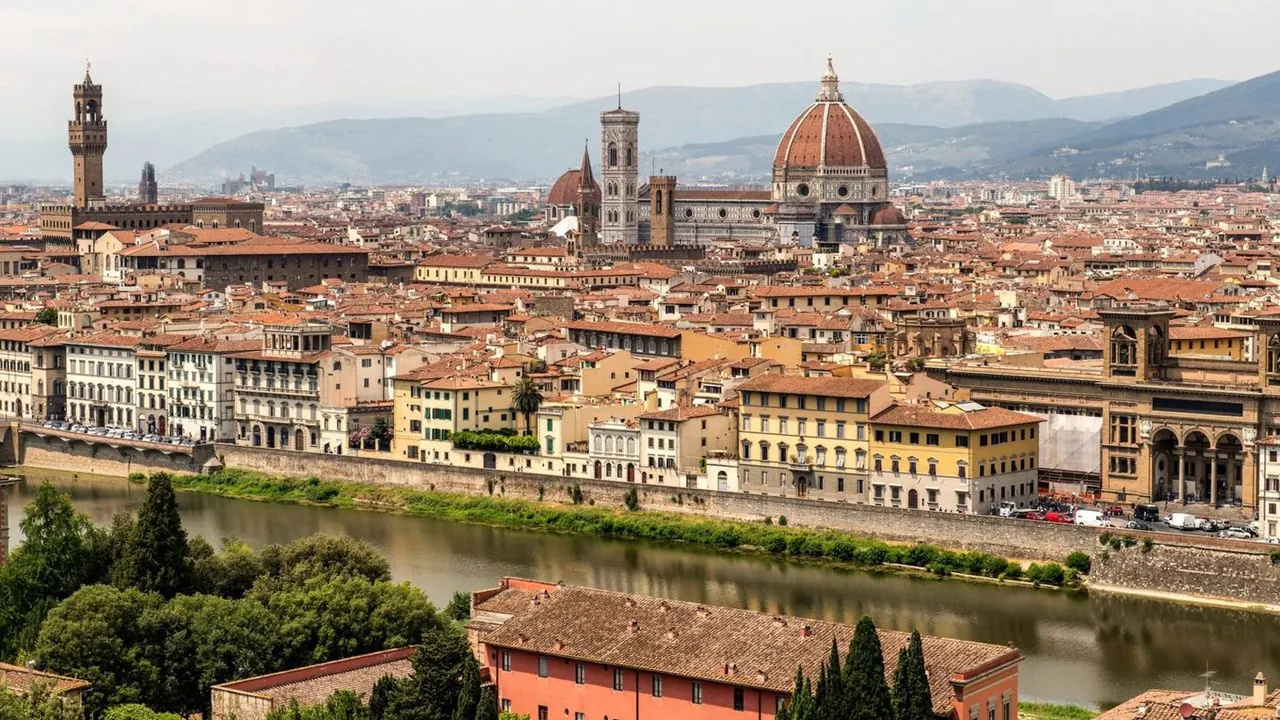
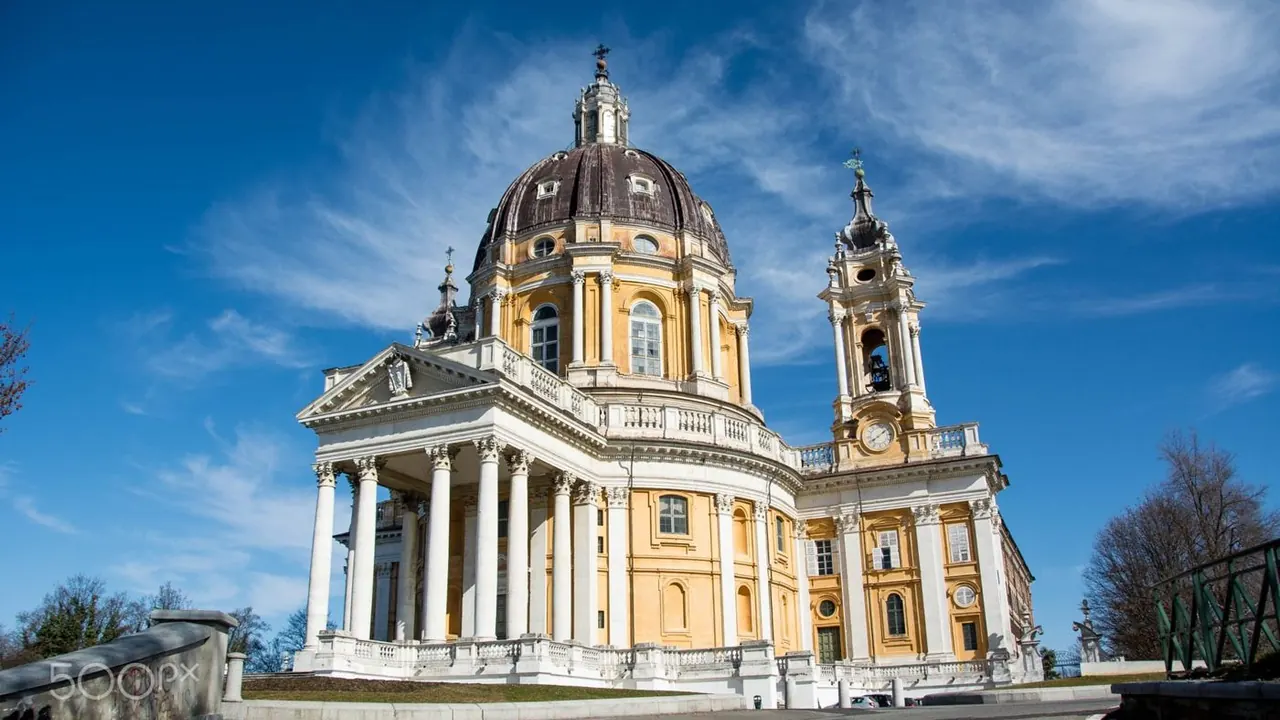
Photos: Florence by Wolfgang Weiser, Pexels License; Turin by Konstantin Dacosta, CC BY 3.0, cropped.
Florence or Turin?
Our verdict in twelve categories, each scored against the same fixed benchmark cities, and the climate month by month, so you can choose for your trip.
Choose Florence for
- culture and sights
- day trips
- shopping
Florence is for the traveller who wants art and the Renaissance at the centre of the trip. The Uffizi, the Accademia, the Bargello and Brunelleschi's dome are all a short walk apart, and Siena, Pisa, Lucca and the Chianti hills fill the days beyond the city. It suits people who will accept higher costs and summer crowds in return for a remarkable number of masterpieces and the Tuscan countryside on the doorstep.
Choose Turin for
- prices
- nature and the outdoors
- families
Turin is the better pick if you would rather eat and drink seriously, spend less and have the Alps within reach. Piedmontese cooking, Barolo country an hour south, the Museo Egizio and a calm, arcaded centre make for a roomier and more relaxed stay. It is also the easier of the two with children, and for anyone who wants to hike or ski as well as see a city.
Scoreboard
Twelve categories on one fixed scale from 0 to 100. The shaded stretch is the gap between the two.
Your match
Pick a travel style or drag the sliders, and both match scores follow your weighting.
Too close to call, 2 points apart
Wins on culture and sights and day trips with your weighting.
Wins on prices and nature and the outdoors with your weighting.
What matters to you?
Category by category
What the scores mean for a trip.
Beaches & swimming
Neither city is a place to swim, and from both the sea means a long day out. From Florence the train reaches the broad sandy beaches of the Versilia around Viareggio in about an hour and a half, where rows of rented loungers and umbrellas line the shore. From Turin the Ligurian Riviera at Savona and Varazze takes a little longer.
What Turin has instead is lake water. Avigliana and Viverone are close enough for a summer swim, and Lago Maggiore is further off. In Florence, visitors cool off in hotel pools and the public pools on the edge of the city.
Food & drink
Both cities eat well, but Turin's table is richer and more varied. It has agnolotti del plin, tajarin, vitello tonnato and white truffles from the Langhe in autumn, with Barolo on every wine list. Vermouth and the aperitivo began here, and the historic cafés serve gianduiotto chocolates and bicerin.
Florence cooks more plainly, with bistecca, bread soups and Chianti, but it wins on street food. Lampredotto carts and the Mercato Centrale and Sant'Ambrogio markets offer something Turin barely has. Its tourist menus around the Duomo mean eating well takes more care, and the Oltrarno trattorie are the place to go.
Culture & sights
For art, Florence is in a different league. The Uffizi, the Accademia's David, the Bargello's sculpture, Brunelleschi's dome and the frescoes of San Marco and the Brancacci Chapel form a body of Renaissance work that no other city matches, and there is enough to fill a week.
Turin offers something different rather than more. It has the Museo Egizio, one of the great Egyptian collections, the baroque Savoy palaces including Venaria, the Cinema Museum inside the Mole and the industrial history told at Lingotto and the car museum. It rewards a few well-paced days, without the queues and advance booking that Florence's big museums demand.
Nightlife
Turin has the livelier evenings. After a generous aperitivo, people move on to the small cocktail bars of the Quadrilatero Romano, the pavement crowds of San Salvario or the more alternative Vanchiglia. In summer there is the riverside Murazzi, and a few clubs occupy old industrial buildings.
In Florence the evening is more about a long dinner and a late glass of wine. Drinkers spill out of the bars on Piazza Santo Spirito, summer bars open along the Arno, and the club scene is small. Neither city goes as late as a big capital, but Turin keeps going a little longer.
Nature & outdoors
Turin pulls well ahead here, because the Alps are on its horizon and only an hour or an hour and a half away. There are ibex and high trails in the Gran Paradiso, hut-to-hut hiking in the Susa valley and skiing around Sestriere in winter. Closer to town, the hill paths to Superga, the deer of the Mandria park and the cycle paths along the Po fill a free afternoon.
Florence's countryside is gentler and more cultivated: olive terraces at Fiesole, cypress-lined lanes in Chianti for walking and cycling, and the Casentino forests further out. It is lovely in spring and autumn, but it has no high mountain country to compare with Turin's.
Day trips
Both cities make good bases, but Florence has the longer list of famous places. Siena, Pisa, Lucca, San Gimignano, Volterra and the Chianti villages are all close, Bologna is under forty minutes by fast train, and the Val d'Orcia lies further south. Many of the main towns can be reached by rail or bus.
Turin's days out lean towards wine and mountains: Alba and Barolo in the Langhe, Asti and the Monferrato hills, and the Sacra di San Michele above the Susa valley. Milan is an hour away, and Genoa and Aosta about two. The choice is strong, but there are fewer of the big-name towns, and the wine villages are much easier by car.
Good for families
Turin is the easier city with children. Its flat grid and long arcades suit pushchairs and give shelter from both rain and sun, and crowds are rarely heavy. Children tend to enjoy the glass lift up the Mole, the car museum, the Egizio's mummies and the rack railway to Superga, and the Zoom park at Cumiana makes a full day out.
Florence welcomes children, but its sights are made for adults. The pavements are narrow, the summer streets are packed and July is fiercely hot. Climbing the dome, the secret passages of Palazzo Vecchio and the Boboli Gardens help, and the Pinocchio park at Collodi is the classic outing.
Getting around
Florence is the easier city to cover on foot. The Duomo, the Uffizi, Ponte Vecchio, the Accademia and the Pitti Palace are all within about twenty minutes of one another, and Santa Maria Novella station is right in the centre for day trips. The downsides are narrow pavements and crowded summer streets.
Turin's flat, arcaded grid is pleasant to walk, but places such as Lingotto and Venaria lie well outside it. Beyond the centre you rely on a single metro line and on trams and buses that are slower and take some working out.
Shopping & style
Florence is the better place to buy things made by hand. Leather comes from the San Lorenzo stalls and the Oltrarno workshops, and there is marbled paper, gold from the jewellers on the Ponte Vecchio and luxury fashion on Via de' Tornabuoni. Look closely, though, because some of the leather is mass-produced.
Turin's best buys are edible: chocolate, pastries, truffles, cheese and Piedmontese wine. It also has mainstream shops on Via Garibaldi, big labels under the Via Roma arcades and the Balon flea market on Saturdays. Neither city offers a wide range of fashion, but Florence has a craft tradition that Turin cannot match.
Affordability
Your money goes noticeably further in Turin. Central hotels are fairly priced for most of the year, an aperitivo can stand in for dinner, and Porta Palazzo and the neighbourhood trattorie keep meals cheap. Costs rise mainly during trade fairs, in truffle season and at fine-dining tables.
Florence is expensive for its size. Hotels cost a lot from spring to autumn, and museum fees add up over a few days. Street food, market lunches and walking everywhere help, and so do staying across the river or near the station and visiting in winter.
Live music & performing arts
Turin has the fuller programme through the year. The Teatro Regio stages a full opera and ballet season, the RAI National Symphony Orchestra plays in its own auditorium and there are concerts in the Lingotto hall. Jazz clubs and long-running festivals of classical, jazz and electronic music add to it.
Florence has the deeper history. Opera was more or less born here, and the city hosts the Maggio Musicale festival. Most visitors, though, hear its music at church and palace concerts staged for tourists, and there is little to choose from outside the season. In both cities the theatre is almost entirely in Italian.
Wellness & relaxation
Neither city has a bathing tradition of its own, and both rely on hotel spas and a handful of day spas. They differ in how you unwind. In Turin the calm comes from the city's own pace, with long breaks in historic cafés and walks under the arcades and along the Po. In crowded Florence you need early mornings or the Boboli and Bardini gardens.
For thermal waters, Florence is better placed. Montecatini Terme is under an hour by train, and the sulphur pools of Bagno Vignoni and Saturnia lie further south. From Turin, Acqui Terme and the Aosta valley baths are both close to two hours away.
When should you go?
Pick your month. The climate figures are measured averages, not a forecast.
Florence in July
Turin in July
Daytime high, °C
Rainfall in the month, mm
Where the figures come from
Florence has no rain gauge within 25 km of the centre, so its rainfall comes from a gridded climate dataset read at the city rather than from a gauge further away.
Florence's sunshine is measured 71 km from the centre, at Pisa / S. Giusto.
Turin has no rain gauge within 25 km of the centre, so its rainfall comes from a gridded climate dataset read at the city rather than from a gauge further away.
Temperature and rainfall are climate normals, averaged over the years shown. Florence: 1995-2020 (sunshine 1991-2020, rainfall 1991-2020) normals, Firenze / Peretola (5.6 km from centre). Turin: 1991-2020 normals, Torino / Caselle (15.4 km from centre).
Florence is the hotter and sunnier of the two. May and June are its best months, warm and fairly dry with long, bright days. By July and August afternoons reach about 33°C, which is too hot for long walks between museums. The rain builds from September, and October and November are the wettest months, with close to 120mm each. Winters are mild but grey and short of sun.
Turin is cooler all year. Summer highs are nearer 29°C, so July is easier on foot than in Florence. Its rain falls differently: May and August are both damp, and September to November is the wettest stretch of the year. June and July are its best months, warm and fairly dry. Winter is clearly colder, with January highs of around 7°C, but it is also one of the drier seasons, so a crisp winter visit can work, especially combined with the ski slopes.
Which traveller are you?
For a culture and arts trip, choose Florence and go deep. Away from the famous galleries are the Medici Chapels, the tombs at Santa Croce and room after room in the Pitti Palace, enough Renaissance art for a week. Turin offers a wider mix but less of it.
On an outdoors trip, Turin lets you use the mountains in every season, with ski touring in winter and climbing or mountain biking in summer, and you are back in the city by evening. Florence's olive hills are pleasant, but summer heat leaves them mainly for spring and autumn.
On a tight budget, Turin is the easier city to save in. Its trams and metro are cheap, which helps when visiting Venaria or Lingotto, and the bakeries and market stalls are generous at the cheap end. In Florence, saving means staying out of the centre and choosing your ticketed sights carefully.
Before you go
| Measure | Florence | Turin |
|---|---|---|
| Official language | Italian | Italian |
| Currency | Euro (EUR) | Euro (EUR) |
| Sockets | CFL230 V, 50 Hz | CFL230 V, 50 Hz |
| Driving side | Right | Right |
| Time zone | UTC+1, UTC+2 in summer | UTC+1, UTC+2 in summer |
| Emergency number | 112 | 112 |
| Elevation | 50 m | 239 m |
| Main airport | Florence Airport, Peretola (FLR)6 km from centre46 non-stop destinations | Turin Airport (TRN)14 km from centre65 non-stop destinations |
| Public holidays this year | 13 days | 13 days |
By the numbers
| Measure | Florence | Turin |
|---|---|---|
| City population | 360,930 | 841,600 |
| People per km² | 3,528 | 6,474 |
| Museums within 10 km | 141 | 72 |
| UNESCO World Heritage sites within 50 km | 4 | 4 |
Where else could you go?
Every comparison below shares a destination with this one, so you can follow Florence or Turin somewhere new.