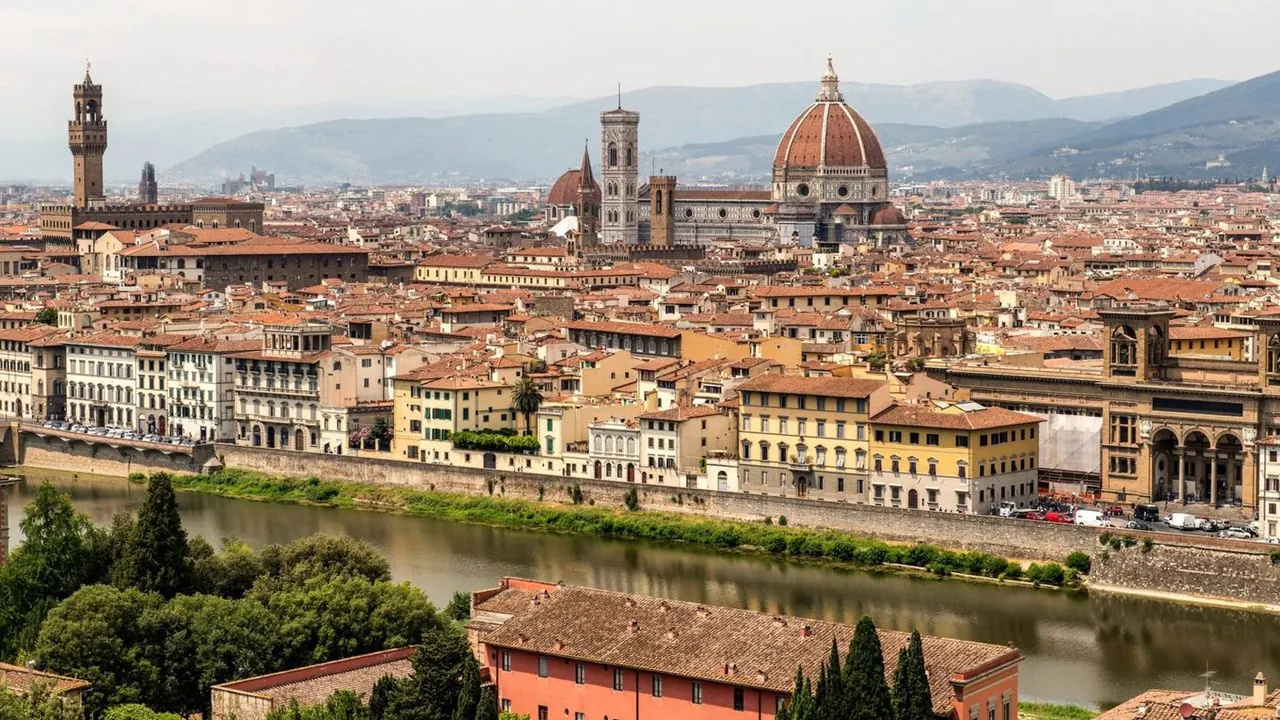
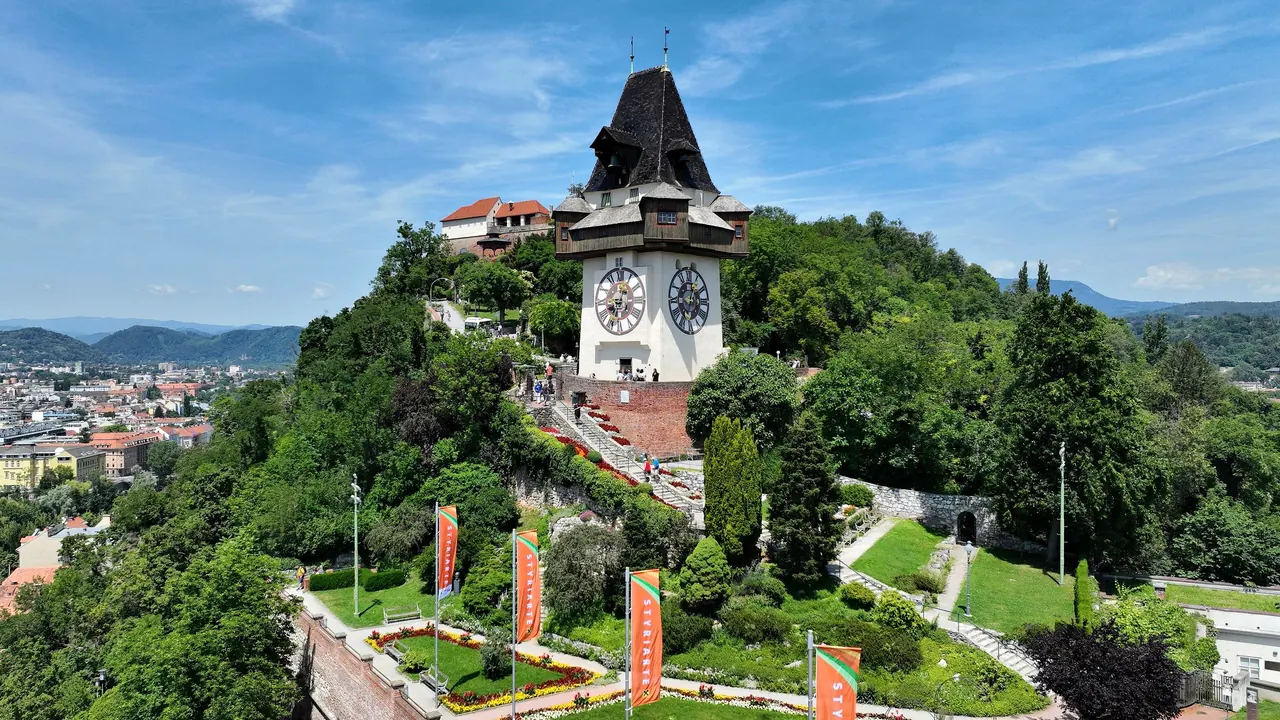
Photos: Florence by Wolfgang Weiser, Pexels License; Graz by C.Stadler/Bwag, CC BY-SA 4.0, cropped.
Florence or Graz?
Our verdict in twelve categories, each scored against the same fixed benchmark cities, and the climate month by month, so you can choose for your trip.
Choose Florence for
- day trips
- culture and sights
- shopping
Florence is the choice when art and history are the reason for the trip. The Uffizi, the Accademia, the Bargello and Brunelleschi's dome are all within a short walk of each other, and Siena, Pisa, Lucca and the Chianti vineyards are close enough to fill a week of day trips. Add Tuscan trattoria cooking and serious craft shopping, and it rewards travellers who want a lot packed into each day and will put up with summer crowds and higher bills.
Choose Graz for
- families
- nature and the outdoors
- prices
Graz suits travellers who want a calmer, easier city with green hills all around. Its old town takes two or three unhurried days, and after that the Schöckl, the gorges and the South Styrian wine hills take over. Children love the slide inside the Schlossberg, the thermal villages to the east are good for slowing down, and the whole stay costs a little less and is far less crowded than Florence.
Scoreboard
Twelve categories on one fixed scale from 0 to 100. The shaded stretch is the gap between the two.
Your match
Pick a travel style or drag the sliders, and both match scores follow your weighting.
Wins on day trips and culture and sights with your weighting.
Wins on families and nature and the outdoors with your weighting.
What matters to you?
Category by category
What the scores mean for a trip.
Beaches & swimming
Neither city is a swimming destination, but they cool off in different ways. From Florence, the sea means a full day out to the sandy, lounger-lined beaches of the Versilia, about an hour and a half away by train, so most visitors settle for a hotel or public pool.
Graz has no sea at all, but its gravel-pit bathing lakes, especially the Schwarzlsee just south of town, have grassy banks and jetties. You can fit one into a hot afternoon, which the Tuscan coast does not allow.
Food & drink
Florence is the stronger place to eat. Thick bistecca, ribollita, lampredotto from the carts and the stalls of the Mercato Centrale and Sant'Ambrogio make for a confident local cuisine, and Chianti Classico starts just outside the city. The best meals are in family trattorie in the Oltrarno rather than near the Duomo.
Graz has an appealing regional table built on pumpkin seed oil, cold fried chicken salad and Wurzelfleisch, with morning farmers' markets at Kaiser-Josef-Platz and Lendplatz. Its crisp white wines are best tasted at the rustic Buschenschank taverns in the southern hills. There is less variety, though, and fewer meals that people travel for.
Culture & sights
Here the gap is wide. Florence holds the core of the Renaissance in a compact centre: the Duomo and Baptistery, Botticelli and Leonardo at the Uffizi, David at the Accademia and the sculpture of the Bargello, followed by a long list of chapels and palaces. You could fill a week and still miss things.
Graz is a well-kept historic town rather than an art capital. Its highlights are the arcaded courtyards of the old town, the Uhrturm on the Schlossberg, the remarkable armoury of the Landeszeughaus and Schloss Eggenberg, with the modern Kunsthaus for contrast. Two or three days cover it comfortably.
Nightlife
Both cities give you a good evening out but little late-night dancing. The difference is in the setting. Florence revolves around aperitivo and wine bars, with crowds holding drinks in Piazza Santo Spirito, and in summer outdoor bars open along the Arno.
Graz is more of a student pub-crawl town, centred on the lanes of the Bermuda Triangle near Mehlplatz, with artier bars in Lend. Unlike Florence, it gets noticeably quieter in the long summer break.
Nature & outdoors
Graz has more to offer outdoors. The Schöckl rises right above the city, with a cable car, trails and paragliders, the Mur cycle path runs through town, and the gorge of the Bärenschützklamm and the alpine walls of the Gesäuse are within a day's reach.
Florence's countryside is gentler and more cultivated. You get olive terraces at Fiesole, cypress-lined lanes through Chianti for cycling, and the forests of the Casentino further out. It is lovely walking in spring and autumn but rarely wild, and summer heat cuts it short.
Day trips
Florence is one of the best bases anywhere for day trips. Siena, Pisa, Lucca, San Gimignano, Volterra, Bologna and the Val d'Orcia towns are all within reach, many of them by train from Santa Maria Novella.
Graz has pleasant outings rather than famous names: the South Styrian Wine Road, Riegersburg on its crag, the Lipizzaner stud at Piber, the library of Admont Abbey and Maribor across the border. Most of them are easier by car, and a few days covers the best of them.
Good for families
Graz is more relaxed with children. The Schlossberg alone makes a half-day, with its lift, the Märchenbahn tunnel train and the long slide down inside the hill. Add a dedicated children's museum in the Augarten, toboggan runs on the Schöckl and buggy-friendly trams.
Florence can work with older children who will climb the dome or go looking for the secret passages of Palazzo Vecchio, and the Pinocchio park at Collodi is a classic outing. But narrow pavements, heavy summer crowds and adult-focused galleries make it harder going.
Getting around
Both are compact cities you explore on foot, and neither needs a car inside it. In Florence the main sights are within about twenty minutes' walk, but stone paving and crowded streets wear you down, there is no metro, and the central station is where the rail trips to other Tuscan towns begin.
Graz is flatter and largely pedestrianised. Trams run right through the old town, cycling along the Mur is easy, and a funicular saves the climb up the Schlossberg. In both, the countryside beyond is far easier by car.
Shopping & style
Florence is much the better shopping trip, built on centuries-old crafts. You will find leather workshops and the San Lorenzo stalls, marbled paper, goldsmiths on the Ponte Vecchio and gilders and restorers in the Oltrarno. Via de' Tornabuoni adds the big Italian fashion houses, though you need to look closely for quality.
Graz is pleasant to browse along the Herrengasse and the steep Sporgasse, with small design and vintage shops in Lend. Its best souvenirs are edible: pumpkin seed oil, Schilcher rosé and regional chocolate, plus traditional costume and loden.
Affordability
Graz is the somewhat gentler city on the wallet, though neither is cheap. Florence charges heavily for central hotel rooms from spring to autumn, and the entry fees for its big museums add up quickly. Street food, market lunches and house wine help keep daily costs down.
Graz is fair rather than a bargain. Student-driven lunch menus and bakeries keep daytime eating reasonable, hotels are moderate for Austria, and combined tickets cover the Joanneum museums.
Live music & performing arts
The two are evenly matched but offer different things. Florence has the heritage: opera was more or less born here, the Maggio Musicale is among Europe's oldest festivals, and the Teatro del Maggio runs a classical season. Many visitors, though, end up at tourist-oriented church concerts, and jazz is thin.
Graz is broader and more contemporary. Its large opera house mixes in operetta and musicals, and steirischer herbst brings avant-garde work every autumn. Graduates of the music university's jazz programme keep a real club scene going. Spoken theatre is in Italian in one city and German in the other.
Wellness & relaxation
Graz is a little better for unwinding. Its centre is quiet by day, the coffee houses and the Stadtpark invite you to linger, and the Styrian thermal villages, including Hundertwasser's Bad Blumau and the large pools of Loipersdorf, are about an hour east.
Florence's centre is rarely restful in high season, though the Boboli and Bardini gardens help. The grand old spa town of Montecatini Terme is under an hour by train, and the sulphur pools of Saturnia and Bagno Vignoni suit an overnight stay in the countryside.
When should you go?
Pick your month. The climate figures are measured averages, not a forecast.
Florence in July
Graz in July
Daytime high, °C
Rainfall in the month, mm
Where the figures come from
Florence has no rain gauge within 25 km of the centre, so its rainfall comes from a gridded climate dataset read at the city rather than from a gauge further away.
Florence's sunshine is measured 71 km from the centre, at Pisa / S. Giusto.
Temperature and rainfall are climate normals, averaged over the years shown. Florence: 1995-2020 (sunshine 1991-2020, rainfall 1991-2020) normals, Firenze / Peretola (5.6 km from centre). Graz: 1991-2020 normals, Graz Airport (7.9 km from centre).
Florence is at its best in spring and early autumn, from about April to early June and again in September and early October, when the days are warm enough for long walks and the light is good. July and August are the sunniest and driest months, but highs reach 33°C, which makes queuing outside museums and crossing open piazzas hard work. The rain arrives in autumn and peaks in November at around 124mm, while winter stays mild but grey.
Graz follows a more Central European pattern. Summer is pleasant rather than fierce, with highs of about 27°C in July, warm enough for the bathing lakes from June to August. Summer is also the wettest part of the year, at around 125mm a month, so expect showers on hill days. Winters are much colder than in Florence, with January highs near 3°C, so late spring and September are the best times for walking both the town and the hills.
Which traveller are you?
For a culture and arts trip, Florence is the clear choice. The Renaissance began here, and the city still keeps enough of its painting, sculpture and architecture to fill a week, with Siena and Lucca nearby to add more. Graz's handsome old town takes a couple of days.
On a family trip with young children, Graz is the more relaxed base. It is safe, clean and unhurried, nothing is far from anything else, and the Herberstein wildlife park and the Stübing farmhouses make easy days out. In Florence, the great sights are mostly made for adults.
For an outdoors trip, Graz has the wilder setting. It sits where the eastern Alps drop into hill country, so in one stay you can cycle by the river, walk through the wine hills and go proper alpine hiking. Florence's countryside is lovely but tamer, more vineyard than mountain.
Before you go
| Measure | Florence | Graz |
|---|---|---|
| Official language | Italian | German, Austrian Sign Language |
| Currency | Euro (EUR) | Euro (EUR) |
| Sockets | CFL230 V, 50 Hz | CF230 V, 50 Hz |
| Driving side | Right | Right |
| Time zone | UTC+1, UTC+2 in summer | UTC+1, UTC+2 in summer |
| Emergency number | 112 | 112 |
| Elevation | 50 m | 353 m |
| Main airport | Florence Airport, Peretola (FLR)6 km from centre46 non-stop destinations | Graz Airport (GRZ)9 km from centre26 non-stop destinations |
| Public holidays this year | 13 days | 16 days |
By the numbers
| Measure | Florence | Graz |
|---|---|---|
| City population | 360,930 | 306,971 |
| People per km² | 3,528 | 2,406 |
| Museums within 10 km | 141 | 29 |
| UNESCO World Heritage sites within 50 km | 6 | 1 |
Where else could you go?
Every comparison below shares a destination with this one, so you can follow Florence or Graz somewhere new.