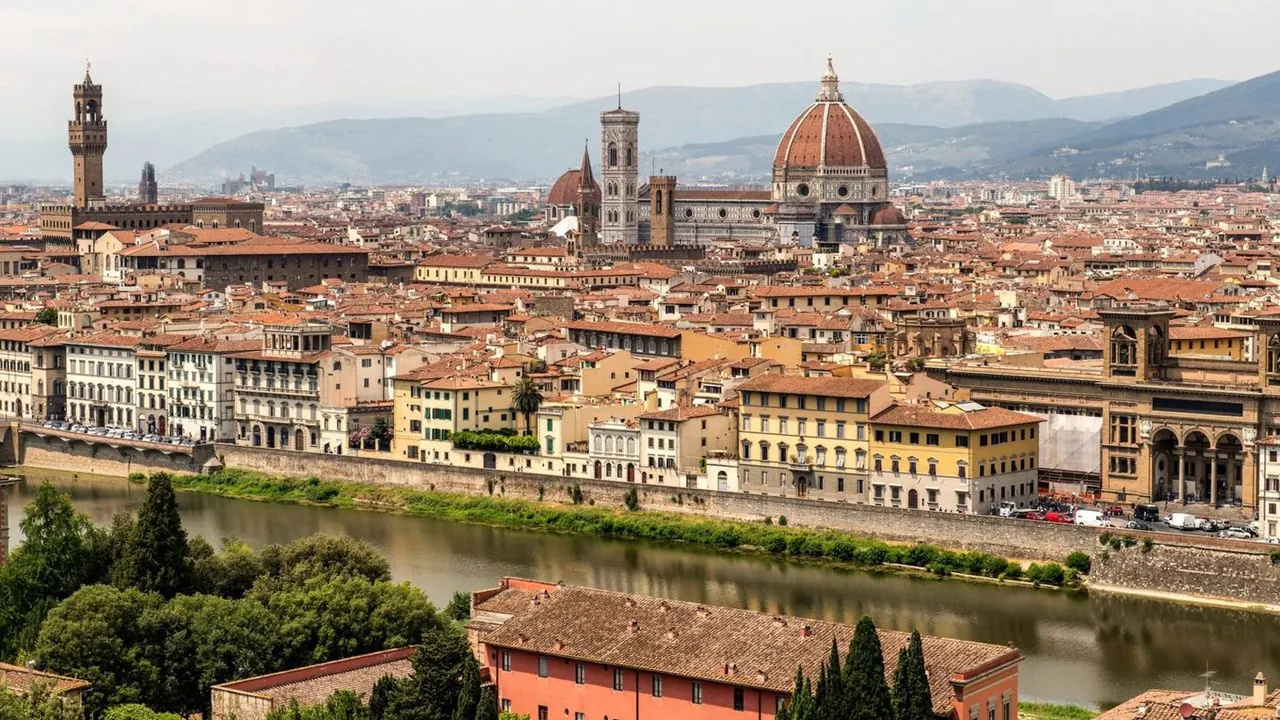
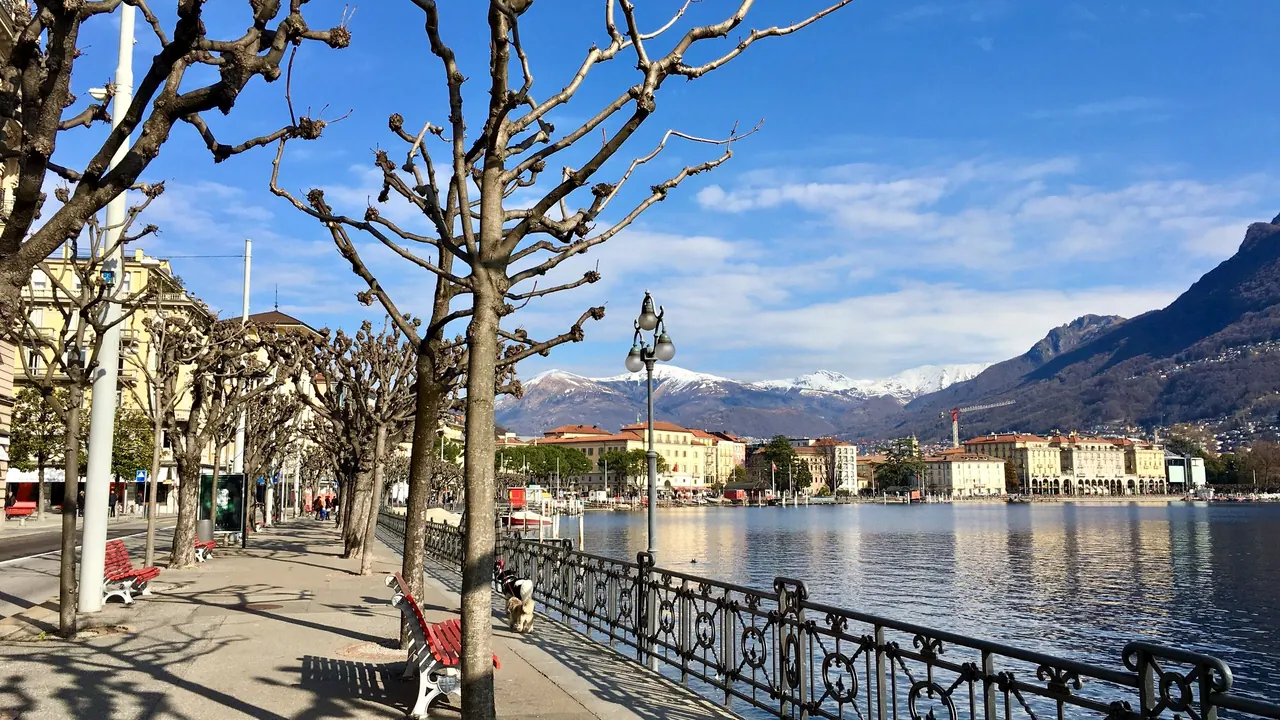
Photos: Florence by Wolfgang Weiser, Pexels License; Lugano by Thomas Woodtli from Zürich, Switzerland, CC BY-SA 2.0, cropped.
Florence or Lugano?
Our verdict in twelve categories, each scored against the same fixed benchmark cities, and the climate month by month, so you can choose for your trip.
Choose Florence for
- culture and sights
- food and drink
- shopping
Florence is for travellers who want a city to fill their days. The Renaissance is packed into a centre you can walk in twenty minutes, from the Uffizi and the Accademia to the Bargello and San Marco. Around that come trattoria cooking, craft workshops and a ring of Tuscan towns within easy reach. Pick it for a trip built around art, food and Siena, Pisa or Lucca as day trips, and accept the summer crowds and heat.
Choose Lugano for
- beaches
- nature and the outdoors
- families
Lugano suits a slower, greener trip where the landscape matters more than the sights. Its pleasures are the lake and the mountains above it: funiculars up Monte Brè and San Salvatore, the walk to Gandria, an afternoon at a lido and dinner in a grotto. It is the better base for walkers and families with young children who like outdoor days, provided the budget can stretch to Swiss prices and nobody minds that the old town takes only a day.
Scoreboard
Twelve categories on one fixed scale from 0 to 100. The shaded stretch is the gap between the two.
Your match
Pick a travel style or drag the sliders, and both match scores follow your weighting.
Wins on culture and sights and food and drink with your weighting.
Wins on beaches and nature and the outdoors with your weighting.
What matters to you?
Category by category
What the scores mean for a trip.
Beaches & swimming
Neither city has a beach of its own, but Lugano lets you swim without leaving town. The lido at the Cassarate mouth and the bathing decks towards Castagnola and Paradiso put you in the lake on any hot summer afternoon, with boats out to the small baths in the villages.
From Florence, a swim means a hotel pool or a public pool on the edge of the city, or a full day's train trip to the sandy Versilia coast around Viareggio. If cooling off in open water matters, Lugano is the easier choice.
Food & drink
Florence is the stronger eating city by some distance. You can have bistecca and ribollita in Oltrarno trattorie, lampredotto from a cart, and browse the stalls at Sant'Ambrogio and the Mercato Centrale, with Chianti poured by the glass and serious gelato in between. It has range at every price, as long as you avoid the set menus round the Duomo.
Lugano's best meal is a long lunch at a grotto: polenta, braised meat and Ticino Merlot at a granite table under chestnut trees. Beyond that the choice thins out quickly. There is little street food and not much variety, so many visitors cross into Italy to eat.
Culture & sights
This is where the two differ most. Florence holds the core of the Renaissance within walking distance: the Duomo and Baptistery, the Uffizi, David in the Accademia, the Bargello's sculpture, the Pitti Palace and smaller treasures like the Brancacci Chapel. There is enough for a week, and booking ahead is necessary.
Lugano's sights are pleasant and modest. You get the arcaded streets around Piazza della Riforma, the Luini Passion fresco in Santa Maria degli Angioli, the art collection split between LAC and Palazzo Reali, and the Hesse museum up in Montagnola. One unhurried day covers them.
Nightlife
Florence gives you more to do after dinner, though neither city is for dancing till dawn. Piazza Santo Spirito fills with people drinking outside on warm nights, Sant'Ambrogio has a more local bar crowd, and in summer bars set up along the Arno. The student population keeps some places loud.
Lugano's evenings are an aperitivo by the lake and a long dinner, with a few smart cocktail bars and a well-dressed local crowd. The town is usually quiet before midnight, and young locals go to Milan for a big night out.
Nature & outdoors
Lugano is the place for scenery. Steep wooded mountains drop straight into the lake, and funiculars from the edge of town reach the tops of Monte Brè and San Salvatore. From there, paths lead down through chestnut woods. Monte Generoso's rack railway, the ridge from Lema to Tamaro and the green rivers of the Verzasca and Maggia valleys turn a stay into a walking trip, with kayaks and paddleboards on the lake as well.
Florence's countryside is gentler and more cultivated. You can walk the olive terraces at Fiesole or cycle the cypress-lined Chianti lanes, and the Casentino forests and the Apuan marble peaks are further out for a long day.
Day trips
Both are excellent bases, but Florence has more first-rank places close by. Siena, Pisa, Lucca, San Gimignano, Volterra and the Chianti villages are all in reach, Bologna is a short high-speed ride, and the Val d'Orcia lies further south. Trains handle the towns, and a car opens up the hill villages.
Lugano's strength is that its trips cross a border. Milan's Last Supper and Brera, Como, Bellinzona's castles, Lake Maggiore and the Borromean Islands are all easy by rail or boat. It is a shorter list than Florence's, but more varied in landscape.
Good for families
Lugano is easier with children because the lake and mountains keep them busy. They get boat rides to the villages, slides at the lidos, funiculars and the Generoso rack railway, playgrounds in Parco Ciani and Swissminiatur at Melide. The steep streets are hard work with a pushchair, and older teenagers may run out of things to do.
Florence asks more of young visitors. The dome climb, the secret passages of Palazzo Vecchio, the Museo Galileo and the Boboli Gardens are the highlights, with Pinocchio's park at Collodi as an outing. Narrow pavements and the summer heat make it a spring or autumn choice for families.
Getting around
Both centres are easy to manage without a car, but in different ways. Florence is flat and compact. The Uffizi, Ponte Vecchio, the Accademia and the Pitti are a short walk apart, trams run to the airport, and Santa Maria Novella sits in the centre for rail trips. Crowds and stone paving are the main hardships.
In Lugano the challenge is the slope. A funicular links the hilltop station to the old town, and boats, buses and mountain railways do much of the work that feet do in Florence.
Shopping & style
Florence is the better place to shop, especially for things made by hand. It has leather from workshops and the San Lorenzo stalls, marbled paper, goldsmiths on the Ponte Vecchio, gilders and framers in the Oltrarno and antiques on Via Maggio, with the fashion houses of Via de' Tornabuoni for luxury.
Lugano's shopping is mostly Via Nassa, where Swiss watchmakers and Italian labels line the arcades for a wealthy clientele. Add delicatessens and the Mendrisio outlet village and that is most of it. There is little craft, and serious shoppers go on to Milan.
Affordability
Neither is a cheap stay, but Florence is clearly easier on the wallet. Centre hotels and museum fees add up, yet street food, market counters, trattoria meals and cheap house wine keep daily costs reasonable. Since you walk everywhere, transport costs almost nothing.
Lugano charges Swiss prices for everything: hotels, dinners, wine, boats and mountain railways. Grotti and set lunches help, and so does the free regional transport that comes with most hotel stays, but there is no budget way to stay in town.
Live music & performing arts
Florence has the deeper classical tradition, as the city where opera began. The Teatro del Maggio Musicale stages opera, concerts and ballet with its own orchestra, the spring festival is one of Europe's oldest, and the Pergola is a beautiful old playhouse. Many visitors only see the church concerts put on for tourists.
Lugano's music centres on one place, LAC, where the Orchestra della Svizzera italiana plays in a hall with fine acoustics. Its best-known event is Estival Jazz, which fills Piazza della Riforma with free concerts in summer. Opera lovers head to La Scala in Milan.
Wellness & relaxation
Florence's calm has to be found at the edges of the day: early mornings, the Boboli and Bardini gardens, and a slow evening across the river in the Oltrarno. For proper bathing you leave the city. The old spa halls of Montecatini Terme are under an hour by train, and the hot sulphur pools of Bagno Vignoni and Saturnia go well with a night or two on a farm stay in the hills.
Lugano works the other way round. The town itself is restful, but there is little to bathe in. The ease comes from its pace: palm-lined promenades, an afternoon at a lido and a bench in Parco Ciani. Hotel spas and the indoor pool and sauna complex near Rivera cover a wet day.
When should you go?
Pick your month. The climate figures are measured averages, not a forecast.
Florence in July
Lugano in July
Daytime high, °C
Rainfall in the month, mm
Where the figures come from
Florence has no rain gauge within 25 km of the centre, so its rainfall comes from a gridded climate dataset read at the city rather than from a gauge further away.
Florence's sunshine is measured 71 km from the centre, at Pisa / S. Giusto.
Temperature and rainfall are climate normals, averaged over the years shown. Florence: 1995-2020 (sunshine 1991-2020, rainfall 1991-2020) normals, Firenze / Peretola (5.6 km from centre). Lugano: 1991-2020 normals, Lugano (1.2 km from centre).
Florence is at its best in May, June, September and early October, when days are warm and the streets are comfortable to walk. July and August are hot, with highs around 33°C, so long afternoons of sightseeing get tiring, although these are also the driest and sunniest months. The rain arrives in autumn and peaks in November at about 124mm. Winter is cool but still mild enough for museums and walking.
Lugano runs several degrees cooler all year, with summer highs of about 27°C. That makes July and August pleasant for lido afternoons and lakeside walks, when Florence can feel heavy. The trade-off is rain: from April to November Lugano gets far more than Florence, close to 178mm in May, and it often comes as summer storms. Winters are colder than Florence's, so the lake town is mostly a trip for late spring to early autumn, with spring and autumn best for hiking.
Which traveller are you?
On a culture and arts trip, Florence wins easily. Botticelli in the Uffizi, Michelangelo's David, the Fra Angelico cells at San Marco and Brunelleschi's dome can fill a week, and the opera house adds evenings. Lugano's old town and LAC take a day.
For an outdoors trip, Lugano is the better choice. Funiculars and a rack railway lift you straight onto mountain paths, the Monte Lema to Tamaro ridge is a fine day hike, and the Verzasca valley is an hour away. Florence offers gentler walking in Fiesole and Chianti.
On a tight budget, Florence is easier, though neither city is cheap. Lampredotto from the carts, market lunches and house wine keep costs down, and you can walk everywhere. In Lugano even the boats and mountain railways carry Swiss prices.
Before you go
| Measure | Florence | Lugano |
|---|---|---|
| Official language | Italian | French, German, Italian, Romansh |
| Currency | Euro (EUR) | Swiss Franc (CHF) |
| Sockets | CFL230 V, 50 Hz | CJ230 V, 50 Hz |
| Driving side | Right | Right |
| Time zone | UTC+1, UTC+2 in summer | UTC+1, UTC+2 in summer |
| Emergency number | 112 | 112 |
| Elevation | 50 m | 283 m |
| Main airport | Florence Airport, Peretola (FLR)6 km from centre46 non-stop destinations | Milan Malpensa International Airport (MXP)46 km from centre208 non-stop destinations |
| Public holidays this year | 13 days | 15 days |
By the numbers
| Measure | Florence | Lugano |
|---|---|---|
| City population | 360,930 | 63,495 |
| People per km² | 3,528 | 837 |
| Museums within 10 km | 141 | 17 |
| UNESCO World Heritage sites within 50 km | 6 | 5 |
Where else could you go?
Every comparison below shares a destination with this one, so you can follow Florence or Lugano somewhere new.