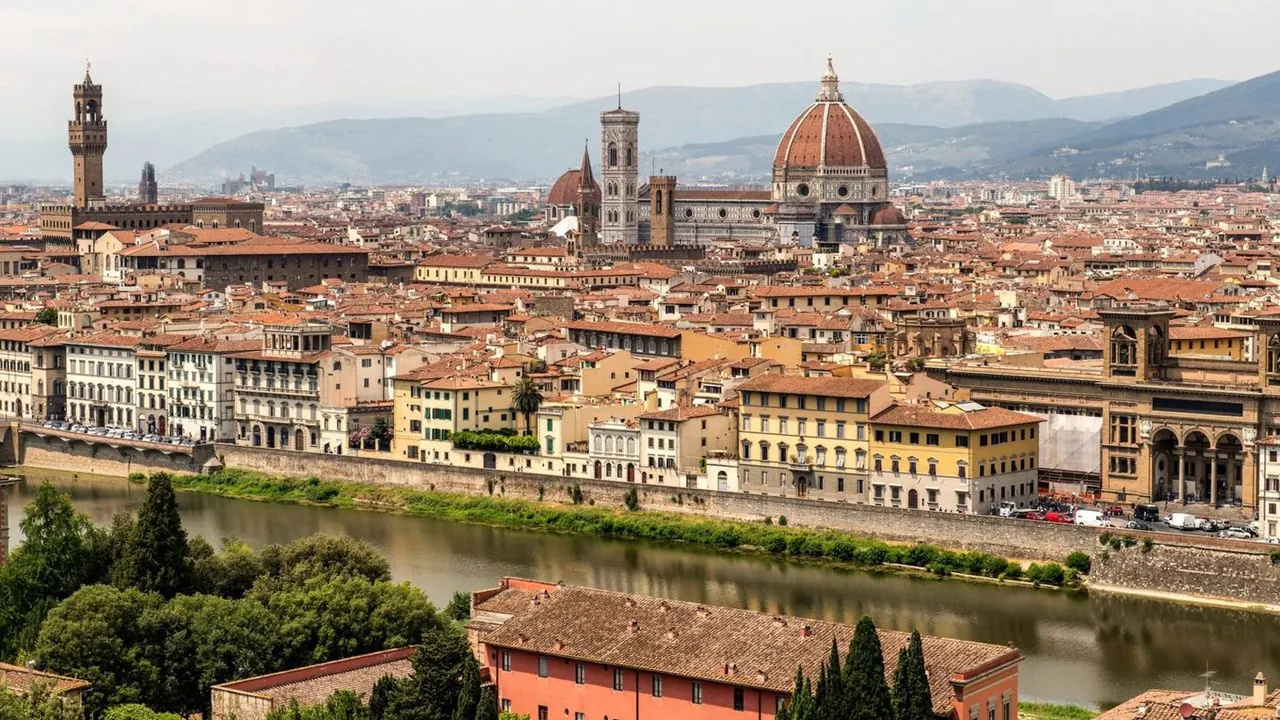
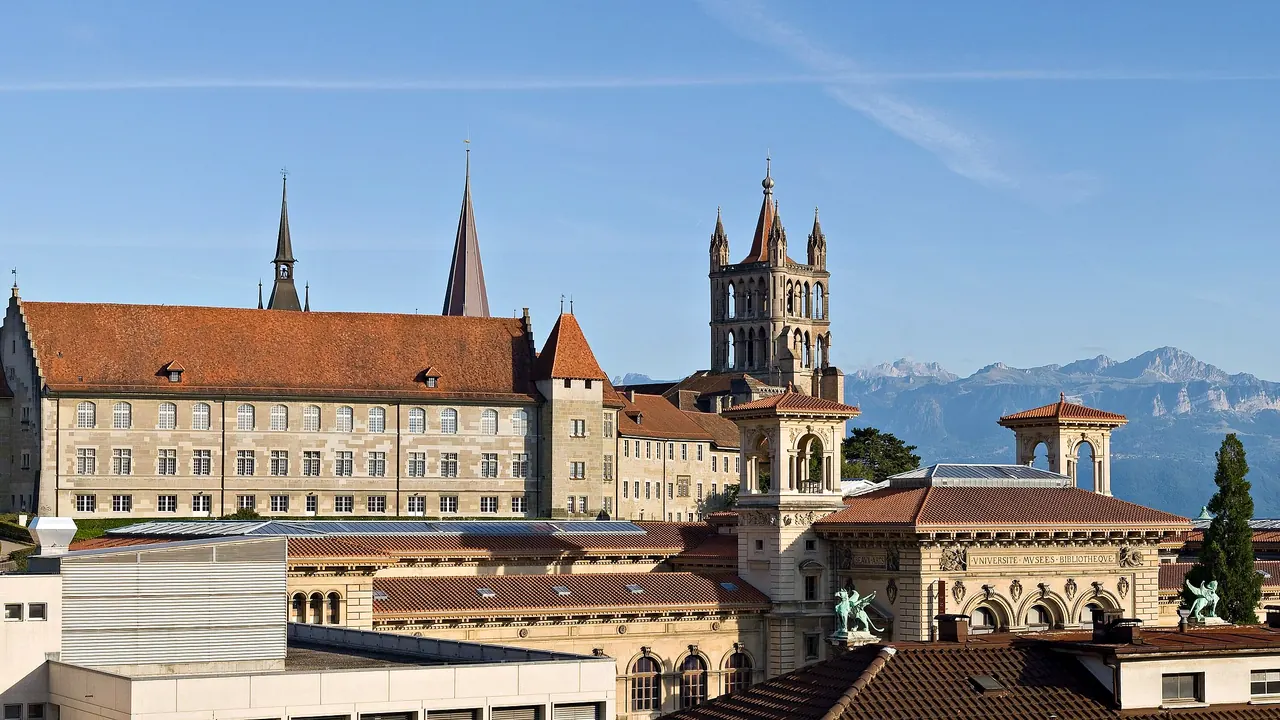
Photos: Florence by Wolfgang Weiser, Pexels License; Lausanne by Christian Mehlführer, CC BY-SA 3.0, cropped.
Florence or Lausanne?
Our verdict in twelve categories, each scored against the same fixed benchmark cities, and the climate month by month, so you can choose for your trip.
Choose Florence for
- culture and sights
- shopping
- prices
Florence is the choice for travellers who want art and history at the heart of the trip. The Uffizi, the Accademia and the Duomo are a short walk apart, and Siena, Pisa, Lucca and the Chianti hills fill the days after. It also eats better, from trattoria cooking to lampredotto from a cart, and it is easier on the wallet, though neither city is cheap.
Choose Lausanne for
- beaches
- nature and the outdoors
- families
Pick Lausanne if your idea of a good day ends on a mountain path or in the lake. The Lavaux terraces, the Vaud Alps and the Jura are all close by train, and in summer you can swim straight off the waterfront. Children get an aquarium, an animal park in the woods and paddle steamers. Expect to pay heavily for all of it.
Scoreboard
Twelve categories on one fixed scale from 0 to 100. The shaded stretch is the gap between the two.
Your match
Pick a travel style or drag the sliders, and both match scores follow your weighting.
Wins on culture and sights and shopping with your weighting.
Wins on beaches and nature and the outdoors with your weighting.
What matters to you?
Category by category
What the scores mean for a trip.
Beaches & swimming
Neither city is a beach destination, but Lausanne at least lets you swim without leaving town. On summer afternoons the lake becomes the local pool, with lawns and pebble shores at Vidy, Bellerive and towards Lutry, and the old lido at Bellerive makes an easy outing.
Florence has nowhere to swim in the city itself. Cooling off means a hotel or public pool, and the sandy Versilia beaches near Viareggio take a full day there and back. The sand is softer there than on Lausanne's shingle shores, but the trip is an outing of its own rather than part of a stay in the city.
Food & drink
Florence is the stronger food city, mostly because of its everyday eating. You can have lampredotto from a cart, bistecca in an Oltrarno trattoria and lunch at the counters of the Mercato Centrale or Sant'Ambrogio, with Chianti poured by the glass.
Lausanne's cooking is hearty and seasonal, with lake perch in summer and fondue in winter, and its Chasselas from the Lavaux terraces is a real pleasure. It is at its best in its top restaurants. The middle range is fairly ordinary and there is little street food.
Culture & sights
Here the gap is wide. Florence holds one of the great concentrations of art in the world: Brunelleschi's dome, the Uffizi, David in the Accademia, the sculpture in the Bargello and the frescoes at San Marco and the Brancacci Chapel. There is enough to fill a week.
Lausanne has a fine Gothic cathedral, a steep and attractive old town and a few good museums. The Olympic Museum at Ouchy and the Collection de l'Art Brut are the most memorable. It makes a pleasant two or three days of sightseeing, but few people would travel for it alone.
Nightlife
Neither city is built for partying, but evenings out feel different in each. Florence is about aperitivo, long dinners and wine bars. On warm evenings crowds spill across Piazza Santo Spirito, but there is very little in the way of clubs.
Lausanne has the dancing that Florence lacks. It is concentrated in the converted warehouses of the Flon on Friday and Saturday nights, with a big student crowd behind it. Weeknights there are very quiet, and drinks cost noticeably more.
Nature & outdoors
Lausanne is clearly ahead for the outdoors. The Alps rise across the lake, and the Lavaux terraces give one of Switzerland's finest vineyard walks. Within about an hour, the Vaud Alps and the Jura offer serious hiking, skiing and a glacier, and the lake has sailing and paddleboarding.
The countryside around Florence is softer and more cultivated, with olive terraces at Fiesole, cycling lanes through the Chianti and the Casentino forests further out. It is lovely for a walk in spring or autumn, but it is not a place to build a trip around the outdoors.
Day trips
Both make excellent bases, but Florence comes out ahead on the sheer weight of what lies close by. Siena, Pisa, Lucca, San Gimignano and Volterra are each classics in their own right. Bologna is a short high-speed train ride away, and the Chianti villages start just south of the city.
Lausanne's strength is how easy everything is. Trains reach Montreux, Chillon, Geneva, Bern, Gruyères and Fribourg with no need for a car, and boats cross to the French shore. These places are charming, but the Tuscan towns carry more history, although several of the hill villages are easier to reach with a car.
Good for families
Lausanne is the easier city with children. The Olympic Museum is hands-on, and the aquarium-vivarium and the animal park and pedal boats at Sauvabelin are made for them. Summer adds lakeside lawns and trips on the paddle steamers. The steep streets and restaurant bills are the main hurdles.
Florence welcomes children, but the city is built around paintings and churches. Climbing the dome, the secret passages of Palazzo Vecchio and the Boboli Gardens all help, and the Pinocchio park at Collodi makes a day out. Still, summer heat and crowds on narrow pavements soon tire young legs.
Getting around
Both cities are easy to get around, but in opposite ways. Florence is flat and compact, with the Duomo, the Uffizi and the Pitti Palace a short walk from one another. The stone paving and summer crowds are tiring, and trams and small buses cover the edges.
Lausanne is just as small but climbs steeply from the lake to the cathedral, so the m2 metro does the climbing for you. Its station connects to Switzerland's punctual rail network. In Florence, Santa Maria Novella station plays the same role for Tuscan day trips.
Shopping & style
Florence is the better place to shop, mainly for its crafts. Leather workshops, marbled paper, the goldsmiths of the Ponte Vecchio and the artisans of the Oltrarno sit alongside the fashion houses of Via de' Tornabuoni. You do need an eye to tell the good leather from the mass-produced.
Lausanne's range is narrower: watches, jewellery and chocolate on Rue de Bourg, and familiar chains around Saint-François and the Flon. It is a good place to pick up a Swiss watch or a bottle of Lavaux wine, but not one to travel to for shopping.
Affordability
Neither city is cheap, but Florence leaves far more room in a budget, and the gap shows most at mealtimes. In Florence a filling lunch can come from a tripe cart or a market counter with a glass of house wine, so eating well need not mean sitting down. In Lausanne even a plain restaurant meal is a real expense, and with little street food the alternative is self-catering. Rooms follow the same pattern. Central Florence is dear from spring to autumn, but a bed across the Arno or near the station, or a winter visit, eases the bill. In Lausanne Swiss hotel prices apply wherever you stay.
The sights reverse the picture. Florence's big outlay is admission: the Uffizi, the Accademia and the dome climb each charge a fee, and over a few days these add up to a large part of the trip. Lausanne's best days cost little once you are there, since the waterfront at Ouchy and the paths through the Lavaux vines are free. Getting around is cheap in both. In Florence you walk almost everywhere, and in Lausanne the m2 metro takes you up the hill, though it does little to offset the cost of eating and sleeping in Switzerland.
Live music & performing arts
The two are evenly matched but lean in different directions. Florence's strength is opera and classical music, from the Teatro del Maggio Musicale Fiorentino to its spring festival. Most visitors, though, end up at church concerts staged for tourists.
Lausanne leads with dance. It is home to the Béjart Ballet and the Prix de Lausanne, and the Théâtre de Vidy stages contemporary theatre with an international reputation. In July the Montreux Jazz Festival is a short train ride away.
Wellness & relaxation
Lausanne is the more restful of the two. Its lakeside promenades and the lanes through the Lavaux vines invite slow days, and the grand lakeside hotels have extensive spas. Thermal water at Yverdon-les-Bains is under half an hour away by train.
Florence's crowded centre offers little calm beyond the Boboli and Bardini gardens. Its bathing culture lies further out, at Montecatini Terme or the hot springs of Bagno Vignoni and Saturnia, and these are best combined with a few nights in the countryside.
When should you go?
Pick your month. The climate figures are measured averages, not a forecast.
Florence in July
Lausanne in July
Daytime high, °C
Rainfall in the month, mm
Where the figures come from
Florence has no rain gauge within 25 km of the centre, so its rainfall comes from a gridded climate dataset read at the city rather than from a gauge further away.
Florence's sunshine is measured 71 km from the centre, at Pisa / S. Giusto.
Lausanne's temperatures are measured 40 km from the centre, at Payerne.
Lausanne has no rain gauge within 25 km of the centre, so its rainfall comes from a gridded climate dataset read at the city rather than from a gauge further away.
Temperature and rainfall are climate normals, averaged over the years shown. Florence: 1995-2020 (sunshine 1991-2020, rainfall 1991-2020) normals, Firenze / Peretola (5.6 km from centre). Lausanne: 1991-2020 (sunshine 1961-1990) normals, Payerne (39.7 km from centre).
Florence is at its best in April, May, late September and October, when it is warm enough to linger in the squares. In July and August afternoons reach 33°C, and walking between museums becomes hard work. Summer is also its driest and sunniest stretch. Rain picks up through the autumn and peaks at 124mm in November, and winters are cool but mild.
Lausanne is a good deal cooler all year. Summer is the time to come: highs reach about 26°C in July, which is warm enough for swimming in the lake and long evenings on the waterfront, although rain falls steadily through these months too. Winter in town is cold and grey, with highs near 4°C and only about 41 hours of sun in December. In winter, come for the mountains above the fog rather than for the city.
Which traveller are you?
For a culture and arts trip, Florence is the obvious choice. The Uffizi, the Accademia, the Bargello and Brunelleschi's dome are a short walk apart, and Siena and Pisa carry the story further. Lausanne's cathedral and museums cannot match that depth.
On an outdoors trip, Lausanne is far better placed. You can walk the Lavaux terraces in the morning and sail or paddleboard on Lake Geneva in the afternoon. Alpine hiking, skiing and the Jura are all within an hour, while Florence offers gentler, cultivated hills.
On a family trip with children, Lausanne makes life easier. The Olympic Museum, the aquarium-vivarium, the animal park and pedal boats at Sauvabelin and summer swimming at Bellerive keep children busy. In Florence, the paintings, the summer heat and the crowded pavements test their patience.
Before you go
| Measure | Florence | Lausanne |
|---|---|---|
| Official language | Italian | French, German, Italian, Romansh |
| Currency | Euro (EUR) | Swiss Franc (CHF) |
| Sockets | CFL230 V, 50 Hz | CJ230 V, 50 Hz |
| Driving side | Right | Right |
| Time zone | UTC+1, UTC+2 in summer | UTC+1, UTC+2 in summer |
| Emergency number | 112 | 112 |
| Elevation | 50 m | 495 m |
| Main airport | Florence Airport, Peretola (FLR)6 km from centre46 non-stop destinations | Geneva International Airport (GVA)52 km from centre150 non-stop destinations |
| Public holidays this year | 13 days | 9 days |
By the numbers
| Measure | Florence | Lausanne |
|---|---|---|
| City population | 360,930 | 144,873 |
| People per km² | 3,528 | 3,499 |
| Museums within 10 km | 141 | 31 |
| UNESCO World Heritage sites within 50 km | 6 | 3 |
Where else could you go?
Every comparison below shares a destination with this one, so you can follow Florence or Lausanne somewhere new.