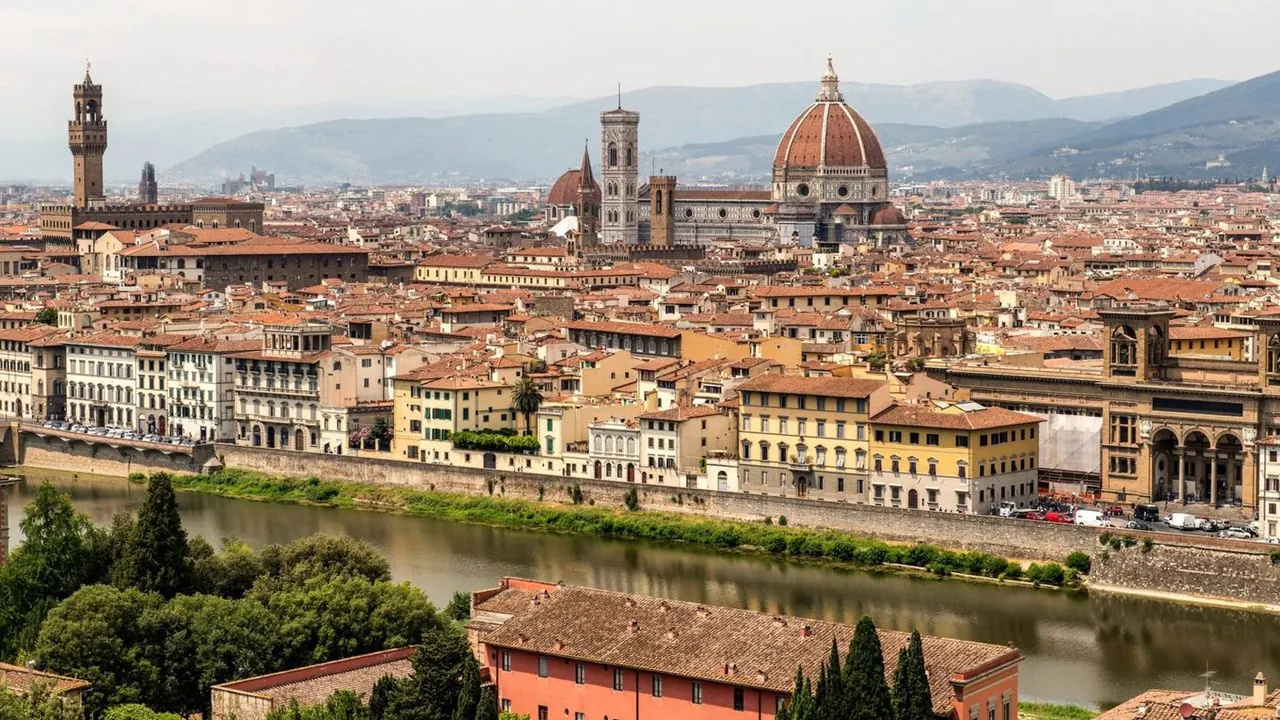
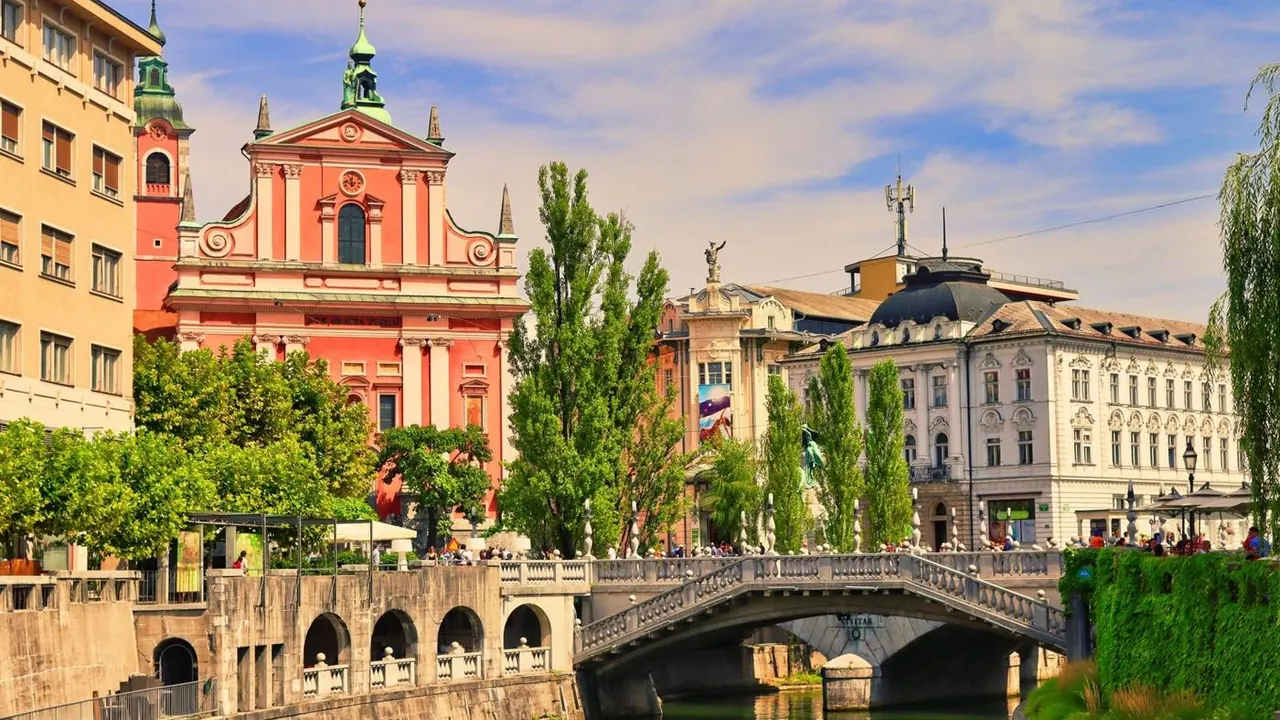
Photos: Florence by Wolfgang Weiser, Pexels License; Ljubljana by detait, Pexels License.
Florence or Ljubljana?
Our verdict in twelve categories, each scored against the same fixed benchmark cities, and the climate month by month, so you can choose for your trip.
Choose Florence for
- culture and sights
- shopping
- day trips
Florence is the choice when the trip is about art, cooking and the Tuscan towns around it. The Uffizi, the Accademia and the Duomo are a short walk apart, Siena, Lucca and Bologna make easy outings, and the trattorie, markets and leather workshops reward days spent on foot. It costs more and is tiring in high summer, but Ljubljana cannot match how much it fits into a week.
Choose Ljubljana for
- nature and the outdoors
- prices
- families
Travellers who would rather spend their days in the mountains than in galleries will be happier in Ljubljana. The Julian Alps, Bled and the karst caves are about an hour out, the car-free centre is calm and easy with children, and money goes noticeably further. Its sights are pleasant rather than profound, so it suits a slower trip that uses the city as a base for the country around it.
Scoreboard
Twelve categories on one fixed scale from 0 to 100. The shaded stretch is the gap between the two.
Your match
Pick a travel style or drag the sliders, and both match scores follow your weighting.
Wins on culture and sights and shopping with your weighting.
Wins on nature and the outdoors and prices with your weighting.
What matters to you?
Category by category
What the scores mean for a trip.
Beaches & swimming
Neither city suits a beach vacation, but a summer swim is easier to arrange from Ljubljana. Locals bathe in the Sava on the northern edge, and Lake Bled, about an hour away, is warm enough in July and August, with colder, clearer Bohinj beyond it. Slovenia's own coast at Piran is concrete and pebble rather than sand.
Florence has no water close by at all, so in summer you rely on hotel and public pools. The sandy Versilia beaches near Viareggio are the nicer shore of the two, but at an hour and a half by train they take a full day, not an afternoon.
Food & drink
Florence is the stronger place to eat, with a cuisine people travel for: bistecca alla fiorentina, ribollita, lampredotto from street carts, and the Mercato Centrale and Sant'Ambrogio markets. The catch is the set menus around the Duomo, so the good meals are in the trattorie of the Oltrarno.
Ljubljana's cooking is hearty and regional, with štruklji, jota and Carniolan sausage in gostilna inns, and a morning at the Central Market under Plečnik's colonnades is well spent. Its wines, including the orange wines of the west, hold their own against the Chianti poured in Florence, but the food is narrower in range and a week is enough to work through it.
Culture & sights
This is the widest gap between the two. Florence holds the core of the Renaissance within a few streets: Brunelleschi's dome, Botticelli in the Uffizi, David in the Accademia, the Bargello's sculpture and the frescoes at San Marco. That is enough for a full week if you book ahead.
In Ljubljana the appeal lies in the townscape as a whole, not in its collections. Plečnik's bridges, embankments and library, the baroque old town and the castle on its hill fill two or three pleasant days, and Metelkova adds a rougher modern edge, but none of its museums is a reason to make the trip.
Nightlife
Neither is a city for dancing until dawn, and the difference is mostly one of setting. Florence's evenings run from aperitivo to the wine bar, with crowds drinking on Piazza Santo Spirito, a more local scene at Sant'Ambrogio and loud student pubs near the centre.
In Ljubljana the night is spent on the terraces along both banks of the Ljubljanica. It also has something Florence lacks in Metelkova, where small, scruffy clubs in the former barracks stay open late at weekends.
Nature & outdoors
Ljubljana has the real mountains. Šmarna Gora and the Tivoli woods start in town, and the Kamnik-Savinja Alps are about forty minutes away. The Julian Alps, Triglav National Park, rafting on the Soča and the Postojna caves are all within a day, with small ski resorts in winter.
Florence's outdoors is gentler and more cultivated: olive terraces at Fiesole, cypress lanes and vineyards in Chianti for walking and cycling, and the Casentino forests further out. It is lovely in spring and autumn, but it is farmed countryside, not wild country.
Day trips
Florence has an extraordinary ring of towns around it: Siena, Pisa, Lucca, San Gimignano, Volterra and the Chianti villages, with Bologna under forty minutes away by fast train. You could spend a week of outings without repeating one.
Ljubljana does well for a small country. Bled, Škofja Loka, Predjama Castle, Idrija and Piran are all within reach, and Trieste and Zagreb lie across the borders. Its outings lean towards lakes, castles and villages rather than great art cities.
Good for families
Ljubljana is the easier of the two with children. Its flat, mostly car-free centre suits pushchairs, the castle funicular and the Dragon Bridge go down well, and Tivoli Park, the small zoo on Rožnik hill and the puppet theatre fill the rest of the time.
Florence asks more of young families, with narrow pavements, heavy summer crowds, the heat and sights made for adults. Climbing the dome, the secret passages of Palazzo Vecchio and a day at the Pinocchio park in Collodi help, but in neither city will you find a big attraction built for children.
Getting around
Both are walking cities, with the main sights about twenty minutes apart on foot, so the difference lies in the details. Florence's stone pavements are narrow and crowded in summer, trams run to the airport, and Santa Maria Novella station sits in the centre for rail trips across Tuscany.
Ljubljana's centre is largely pedestrianised and far less crowded, with electric shuttles and a bike-share scheme. To get into the countryside, intercity buses are quicker than its slow trains, and a car helps in the mountain valleys.
Shopping & style
Florence is a real shopping destination for crafts. It has leather from workshops and the San Lorenzo stalls, marbled paper, the goldsmiths of the Ponte Vecchio, the gilders of the Oltrarno and the fashion houses on Via de' Tornabuoni. Look closely at the leather, though, since some of it is mass-produced.
Ljubljana is good for small gifts: honey, pumpkin-seed oil, coastal salt, Idrija lace and gingerbread hearts, plus a Sunday flea market on the embankment. It has no luxury street and little fashion to speak of.
Affordability
Ljubljana is easier on a budget. Set lunch menus at the inns, fairly priced local wine and cheap entry to most sights keep daily costs down, though central hotels in summer charge Western European rates.
Florence is expensive from spring to autumn, and the Uffizi, the Accademia and the dome climb each charge a real fee. Lampredotto from the street stalls, lunches at market counters and walking everywhere all help, and so does staying across the river or near the station.
Live music & performing arts
Florence has the deeper classical heritage, since opera began here around 1600. It has the Teatro del Maggio Musicale Fiorentino and its spring festival, one of the oldest in Europe. Much of what visitors actually see, though, is concerts in churches staged for tourists.
Ljubljana is not far behind for a city of its size. It has the Philharmonic, the National Opera and Ballet, Cankarjev dom and summer concerts in Plečnik's Križanke courtyard. It also has more of a fringe, with rock, jazz and alternative gigs at Metelkova.
Wellness & relaxation
Neither city has a bathing tradition of its own, so both send you out of town to soak. From Florence that means the grand halls of Montecatini Terme, under an hour away by train, or the open-air sulphur pools of Saturnia and Bagno Vignoni on a longer outing.
What Ljubljana offers instead is everyday calm, with a green, car-free centre and slow afternoons at riverside cafés, a contrast to Florence's crowded summer streets. Slovenia's thermal spa towns are about an hour's drive away, and there is a water park with saunas on the city's edge.
When should you go?
Pick your month. The climate figures are measured averages, not a forecast.
Florence in July
Ljubljana in July
Daytime high, °C
Rainfall in the month, mm
Where the figures come from
Florence has no rain gauge within 25 km of the centre, so its rainfall comes from a gridded climate dataset read at the city rather than from a gauge further away.
Florence's sunshine is measured 71 km from the centre, at Pisa / S. Giusto.
Temperature and rainfall are climate normals, averaged over the years shown. Florence: 1995-2020 (sunshine 1991-2020, rainfall 1991-2020) normals, Firenze / Peretola (5.6 km from centre). Ljubljana: 1991-2020 normals, Ljubljana / Bezigrad (1.9 km from centre).
Florence is at its best in spring and autumn. By May daytime highs reach about 24°C, which is ideal for walking. July and August climb past 32°C and make afternoons in the streets hard work, though they are also the driest and sunniest months. The rain comes in autumn, with October and November the wettest months, and winters are mild but grey.
Ljubljana is cooler and wetter all year. Winter is cold, around 4°C in January, so the best months run from late May to September, when the mountains are open. July and August peak at a comfortable 28°C, warm enough for a swim in the Alpine lakes. Rain falls steadily through the summer and September is the wettest month of all, so in summer Florence is the drier of the two, and in spring and late autumn it is the warmer one.
Which traveller are you?
On a culture and arts trip, Florence is the clear pick. The Renaissance is packed into a few streets, from the Uffizi to the Accademia, and Siena and Pisa make easy days out. Ljubljana's Plečnik townscape is charming, but two days cover it.
For an outdoors trip, Ljubljana is far better placed. Alpine hiking, gorges and river rafting all fit into a day out, and you can climb a wooded hill on the city's edge before breakfast. Florence offers lovely but gentle walks through farmed Tuscan hills.
On a trip on a tight budget, Florence makes you pay for what you came to see, because its great art is behind ticket desks. Ljubljana's main sight is the town itself, free to wander, with lakes and mountains a short bus ride away.
Before you go
| Measure | Florence | Ljubljana |
|---|---|---|
| Official language | Italian | Slovene |
| Currency | Euro (EUR) | Euro (EUR) |
| Sockets | CFL230 V, 50 Hz | CF230 V, 50 Hz |
| Driving side | Right | Right |
| Time zone | UTC+1, UTC+2 in summer | UTC+1, UTC+2 in summer |
| Emergency number | 112 | 112 |
| Elevation | 50 m | 309 m |
| Main airport | Florence Airport, Peretola (FLR)6 km from centre46 non-stop destinations | Ljubljana Jože Pučnik Airport (LJU)20 km from centre32 non-stop destinations |
| Public holidays this year | 13 days | 21 days |
By the numbers
| Measure | Florence | Ljubljana |
|---|---|---|
| City population | 360,930 | 284,293 |
| People per km² | 3,528 | 1,736 |
| Museums within 10 km | 141 | 14 |
| UNESCO World Heritage sites within 50 km | 4 | 3 |
Where else could you go?
Every comparison below shares a destination with this one, so you can follow Florence or Ljubljana somewhere new.