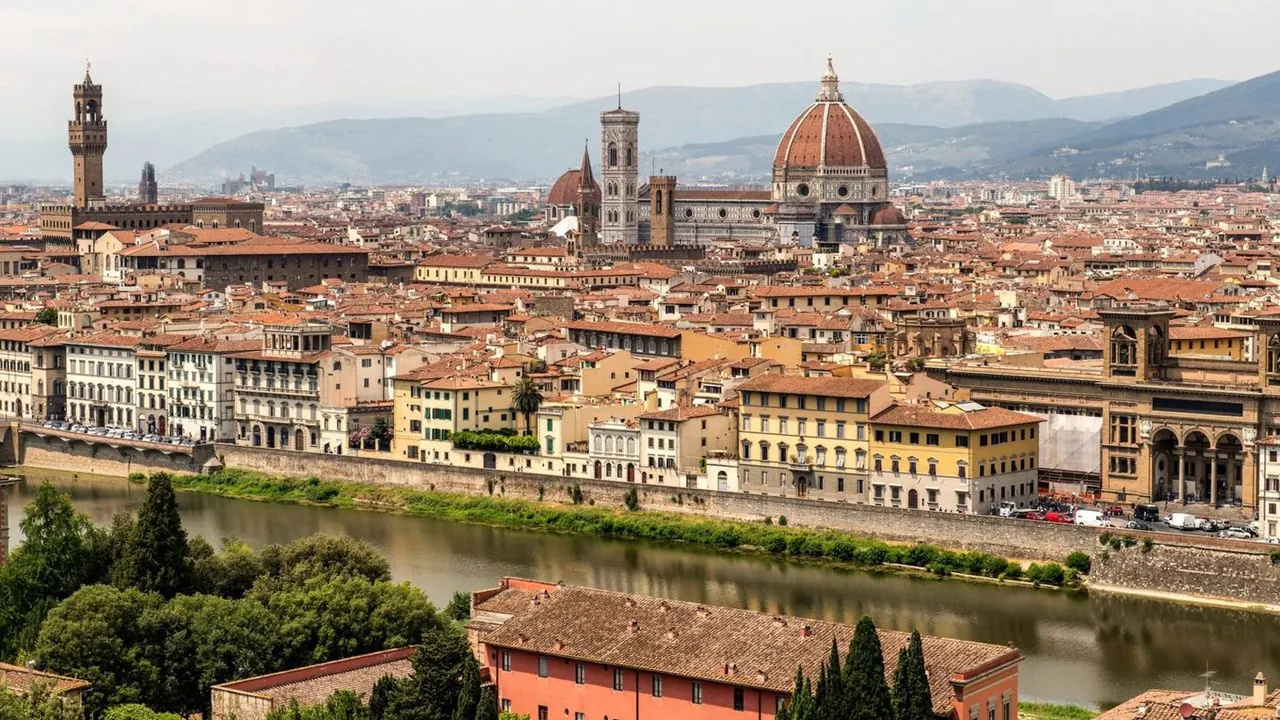
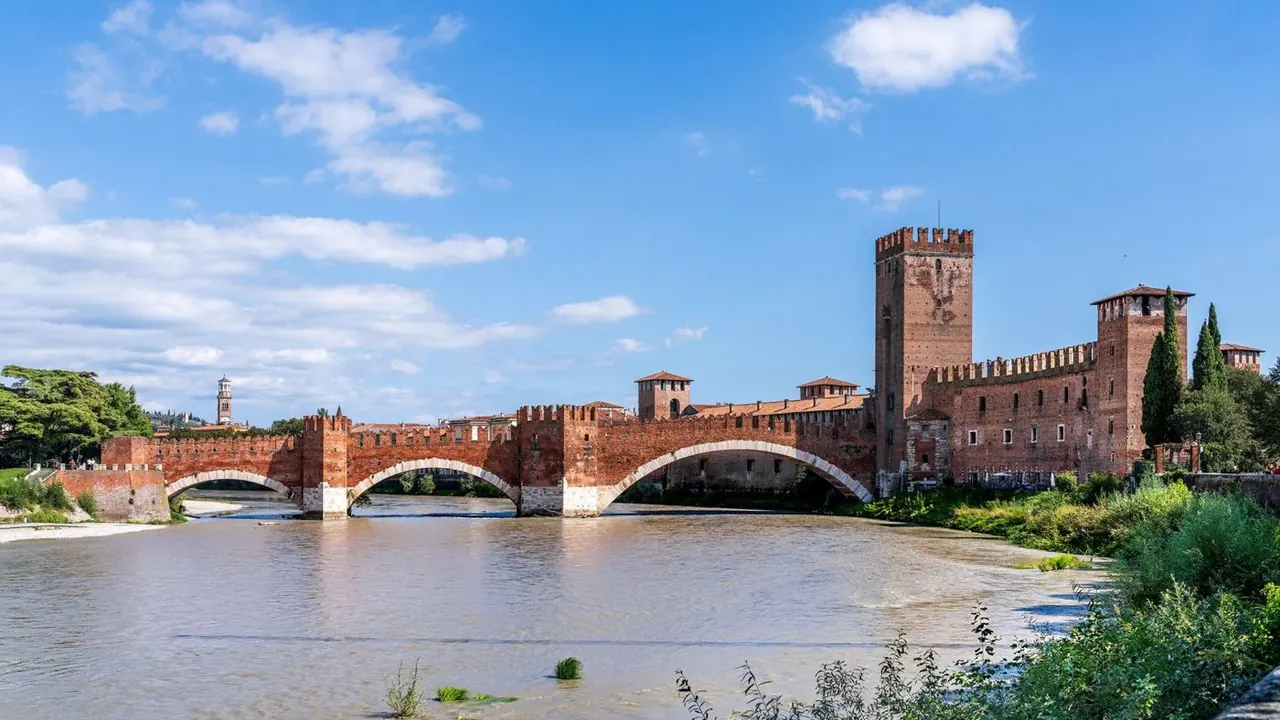
Photos: Florence by Wolfgang Weiser, Pexels License; Verona by NorbertNagel, CC BY-SA 4.0, cropped.
Florence or Verona?
Our verdict in twelve categories, each scored against the same fixed benchmark cities, and the climate month by month, so you can choose for your trip.
Choose Florence for
- shopping
- culture and sights
- getting around
Florence suits the traveller who puts art and architecture first. Its small centre holds the Renaissance at full strength, from Brunelleschi's dome to the Uffizi and the Bargello, and a week here hardly runs out of things to see. Add the Tuscan hill towns within easy reach, trattoria cooking with market street food, and real leather and craft workshops in the Oltrarno, and it is the stronger city for a rich, busy trip. You pay more for it, and summer here is hot and crowded.
Choose Verona for
- beaches
- families
- prices
If you want a gentler, more varied trip, Verona is the better pick. The Roman Arena and San Zeno give it plenty of history for two or three unhurried days, and then Lake Garda takes over. Swimming off the southern shore, Sirmione's thermal pools and Italy's biggest theme park are all about half an hour away, and the ridge walks on Monte Baldo are about an hour. Summer opera under the stars is reason enough to come on its own, Venice is an easy day out by train, and the bills come out somewhat lower.
Scoreboard
Twelve categories on one fixed scale from 0 to 100. The shaded stretch is the gap between the two.
Your match
Pick a travel style or drag the sliders, and both match scores follow your weighting.
Too close to call, 2 points apart
Wins on shopping and culture and sights with your weighting.
Wins on beaches and families with your weighting.
What matters to you?
Category by category
What the scores mean for a trip.
Beaches & swimming
Verona has the real swimming option here, even though it has no coast. Lake Garda's southern shore is about half an hour away, with lidos, lawns running down to the water and Sirmione's flat rocks to lie on, and the water is calm, clear and warm in high summer. It suits a few afternoons by the water, though the narrow shores fill up at weekends.
From Florence, the sea means a full day out to the sandy, lounger-lined beaches of the Versilia, about an hour and a half by train. Most visitors cool off in a pool instead, or add a few nights on the coast to the trip.
Food & drink
Florence has the edge, mostly because there is more variety. Next to the bistecca and the bread soups it has a proper street-food culture, with lampredotto from carts and the market counters of the Mercato Centrale and Sant'Ambrogio, and the family trattorie of the Oltrarno reward a little effort.
Verona's cooking is richer and more wintry: risotto made with Amarone, bigoli with duck, bollito with peppery pearà, served in wood-panelled osterie. Its great strength is wine, with Valpolicella, Amarone and Soave all made nearby, but there is little to eat on the street and less range beyond the local dishes.
Culture & sights
These are two very different kinds of sightseeing, and Florence is in another league for depth. Its centre holds the masterpieces of the Renaissance: the Duomo and its dome, the Uffizi's Botticellis and Leonardos, David in the Accademia, the Pitti Palace and a long list of chapels and smaller museums. It easily fills a week.
Verona is mostly a city of layers rather than famous collections. It has a Roman amphitheatre still in use, the Romanesque San Zeno, the Scaliger tombs and Castelvecchio's art museum in Carlo Scarpa's celebrated setting. It is rewarding and very well preserved, but two or three days covers it comfortably.
Nightlife
Neither city is built for late nights, and in both the evening is about a drink rather than dancing. Florence's liveliest spot is Piazza Santo Spirito, where crowds stand outside with glasses in hand. It also has pubs full of foreign students and summer bars along the Arno.
Verona centres on spritz tables in Piazza delle Erbe and cheaper student bars in Veronetta. In summer it also gets a late burst when the opera crowd pours out of the Arena around midnight.
Nature & outdoors
Verona has more dramatic country around it. Lake Garda sits under the steep slopes of Monte Baldo, with ridge walks, paragliding and reliable wind for sailing and windsurfing at the northern end. The Lessinia plateau adds beech woods and limestone gorges, and the Valpolicella vineyards begin just north of town.
Florence's landscape is softer and more farmed. You can walk the olive terraces at Fiesole, cycle the cypress-lined lanes of Chianti, or go further out to the Casentino forests in the Apennines. It is lovely walking country in spring and autumn, but it is gentle rather than wild.
Day trips
Both are among the best bases in Italy, and Florence just edges ahead for how many top-class towns lie close by. Siena, Pisa, Lucca, San Gimignano, Volterra and the Chianti villages are all within easy reach, and Bologna is a short high-speed train ride. A car makes the hill towns and wineries much easier.
Verona's strength is variety. You get Venice, Padua, Vicenza and Mantua by train, the harbour towns of Lake Garda and the wine cellars of Valpolicella and Soave, so a week can mix art cities with days on the lake.
Good for families
Verona is clearly better with children, because the things they enjoy most are just outside town. Gardaland and the water parks along Garda's southern shore, the drive-through safari at Parco Natura Viva and the shallow lake water are all about half an hour away. In town, the Arena captures young imaginations and the flat, pedestrian centre is easy with a pushchair.
Florence takes more effort. Climbing the dome, the secret passages of Palazzo Vecchio and the globes at the Museo Galileo all help, but narrow pavements, summer crowds and the heat wear children out. The Pinocchio park at Collodi is the main outing for the little ones.
Getting around
Both are best seen on foot, and both keep cars out of their historic centres, but Florence is a little easier to manage. All its major sights lie within about twenty minutes' walk of each other, Santa Maria Novella station is right in the centre for day trips, and trams run to the airport.
Verona's centre in the river loop is small and flat, but the station is a walk or a bus ride south of Piazza Bra and there is no tram. The rail lines to Venice, Milan and the lake are excellent, while the Valpolicella villages and some Garda attractions really need a car.
Shopping & style
Florence is the place for serious shopping, thanks to craft that goes back centuries. You will find leather from market stalls to proper workshops, marbled paper, goldsmiths on the Ponte Vecchio, gilders and restorers in the Oltrarno, and the great fashion houses along Via de' Tornabuoni. Look closely at the leather, though, as quality varies.
Verona's Via Mazzini and the streets off it are smart but provincial, with Italian labels rather than local crafts. The best things to take home are edible: a bottle of Amarone, Garda olive oil or a pandoro.
Affordability
Neither is cheap, but Verona is somewhat kinder to the budget. Its student osterie in Veronetta and wine counters serving snacks with a glass keep meals reasonable, though central rooms get scarce and dear on summer opera nights and during trade fairs.
Florence costs more overall. Central hotels are expensive for much of the year, and the admission fees for the big museums and the dome climb add up over a few days. Street-food lunches, house wine and walking everywhere help, and so does staying across the river or coming in winter.
Live music & performing arts
Verona has the bigger draw: grand opera in the Roman Arena on summer evenings, with thousands on the ancient stone tiers and candles lit as night falls. The Roman theatre adds Shakespeare, dance and jazz outdoors, though outside summer the Teatro Filarmonico's programme is modest.
Florence, where opera was born, has more steady classical depth. The Maggio Musicale orchestra stages opera, concerts and ballet through its season, and the spring festival is one of Europe's oldest. What most visitors actually see, though, is concerts in churches and palaces aimed at tourists.
Wellness & relaxation
Verona has a slight advantage, because its warm springs are closer. You can soak in Sirmione's thermal pools facing Lake Garda, visit the spring-fed park near Lazise or the old baths at Caldiero, all an easy outing, and the town itself is calm outside the crowds at the Arena.
Florence offers hotel spas and the quiet of the Boboli and Bardini gardens. For real bathing you go to the grand old spa town of Montecatini, or further to the open-air sulphur pools at Saturnia, and a farm stay in the hills is the usual way to slow down.
When should you go?
Pick your month. The climate figures are measured averages, not a forecast.
Florence in July
Verona in July
Daytime high, °C
Rainfall in the month, mm
Where the figures come from
Florence has no rain gauge within 25 km of the centre, so its rainfall comes from a gridded climate dataset read at the city rather than from a gauge further away.
Florence's sunshine is measured 71 km from the centre, at Pisa / S. Giusto.
Temperature and rainfall are climate normals, averaged over the years shown. Florence: 1995-2020 (sunshine 1991-2020, rainfall 1991-2020) normals, Firenze / Peretola (5.6 km from centre). Verona: 1991-2020 normals, Verona / Villafranca (11.6 km from centre).
Both cities are at their best in May and from September into early October, when it is warm enough to walk the streets all day without the summer heat. Florence gets hotter in high summer, with July and August reaching 33°C in its enclosed valley, so long afternoons of sightseeing get hard going. Those months are its driest and sunniest, though. Autumn is the wet season, with the rain building to around 124mm in November.
Verona stays a little cooler in summer at about 30°C, and June to September is when Lake Garda is warm enough to swim. Its rain is spread more evenly through the year, with summer storms included, so it lacks a sharp wet season like Florence's autumn. Winter is the bigger difference: Verona sits on the edge of the Po plain and is noticeably colder, with January highs around 7°C, while Florence stays a few degrees milder and gets a little more winter sun.
Which traveller are you?
For a culture and arts trip, Florence is the clear choice. The Uffizi, Michelangelo's David, the Bargello and the frescoes at San Marco are all a short walk apart, and you could spend a week here and still have galleries left.
On a family trip with children, Verona works better. Gardaland, the safari zoo at Parco Natura Viva and calm, shallow lake swimming are all about half an hour away, and the flat, mostly traffic-free centre is easy going with a pushchair.
For a beach and sun trip, Verona gets you much closer to the water. You can be on the lidos and limestone shelves of Lake Garda's southern shore in about half an hour, while Florence's nearest sand at Viareggio takes a full day out.
Before you go
| Measure | Florence | Verona |
|---|---|---|
| Official language | Italian | Italian |
| Currency | Euro (EUR) | Euro (EUR) |
| Sockets | CFL230 V, 50 Hz | CFL230 V, 50 Hz |
| Driving side | Right | Right |
| Time zone | UTC+1, UTC+2 in summer | UTC+1, UTC+2 in summer |
| Emergency number | 112 | 112 |
| Elevation | 50 m | 59 m |
| Main airport | Florence Airport, Peretola (FLR)6 km from centre46 non-stop destinations | Verona Villafranca Valerio Catullo Airport (VRN)10 km from centre96 non-stop destinations |
| Public holidays this year | 13 days | 13 days |
By the numbers
| Measure | Florence | Verona |
|---|---|---|
| City population | 360,930 | 255,588 |
| People per km² | 3,528 | 1,285 |
| Museums within 10 km | 141 | 18 |
| UNESCO World Heritage sites within 50 km | 4 | 5 |
Where else could you go?
Every comparison below shares a destination with this one, so you can follow Florence or Verona somewhere new.