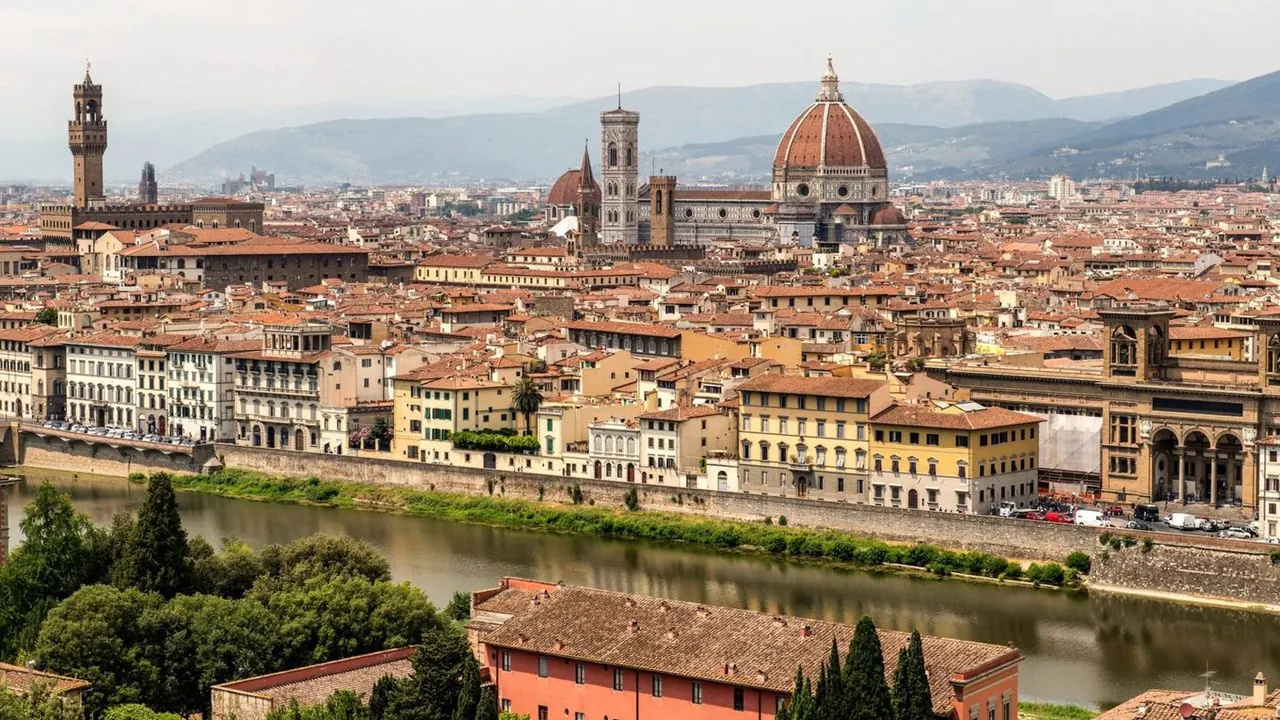
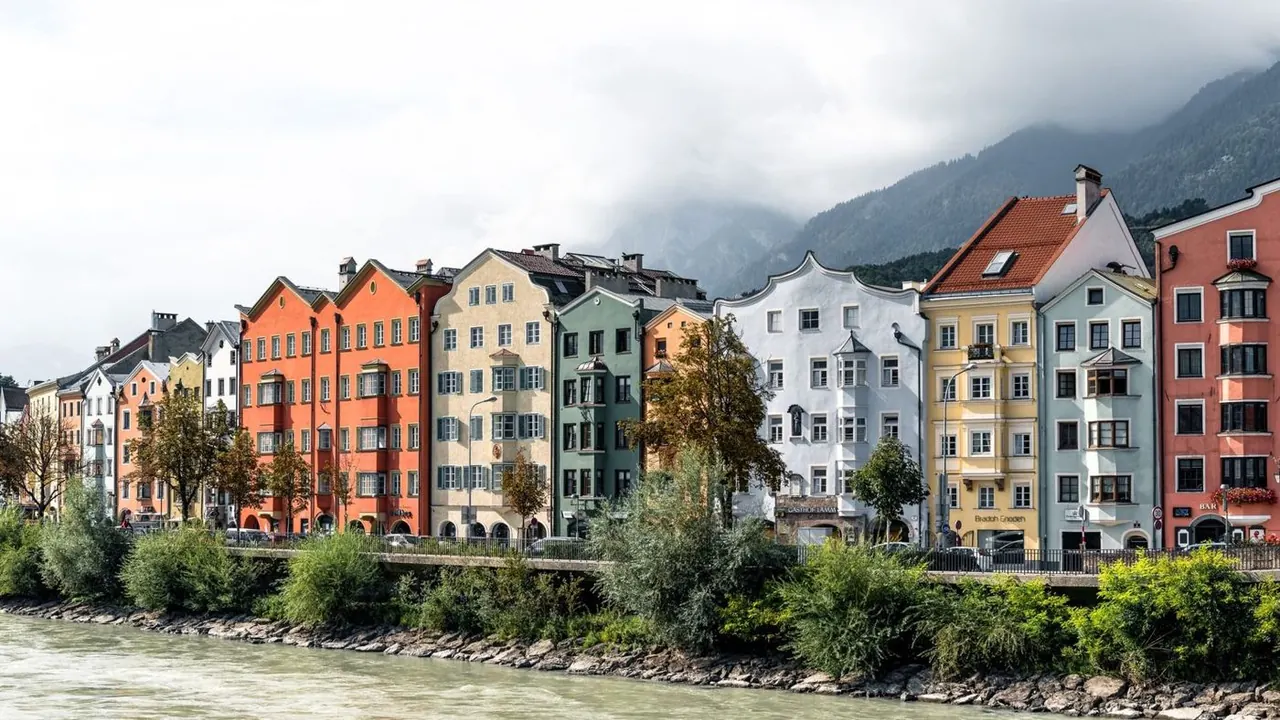
Photos: Florence by Wolfgang Weiser, Pexels License; Innsbruck by Wolfgang Weiser, Pexels License.
Florence or Innsbruck?
Our verdict in twelve categories, each scored against the same fixed benchmark cities, and the climate month by month, so you can choose for your trip.
Choose Florence for
- culture and sights
- food and drink
- shopping
Florence is for travellers who want to spend their days with paintings, sculpture and churches, and their evenings at a trattoria table. The Renaissance collections, the Tuscan cooking and markets, and a run of famous towns within easy reach by train make it the richer choice for a first trip to Italy or a slow week of looking and eating.
Choose Innsbruck for
- nature and the outdoors
- families
- beaches
If you would rather spend the day on a ridge than in a gallery, Innsbruck is the better pick. The Nordkette rises straight from the old town, the Karwendel and the Stubai valley lie just beyond, and the same slopes work for hiking in summer and skiing in winter. It suits active couples and families with children who need room to run, and its handsome Habsburg centre is easy to see in a couple of days.
Scoreboard
Twelve categories on one fixed scale from 0 to 100. The shaded stretch is the gap between the two.
Your match
Pick a travel style or drag the sliders, and both match scores follow your weighting.
Wins on culture and sights and food and drink with your weighting.
Wins on nature and the outdoors and families with your weighting.
What matters to you?
Category by category
What the scores mean for a trip.
Beaches & swimming
Neither city is a place to swim, and Innsbruck has only a slight edge because its water is closer. The small lakes on the plateaus above town, such as the Lanser See, make a warm afternoon swim possible in high summer, while the clear Achensee is beautiful but cold.
From Florence the nearest water is the sea itself, on the sandy Versilia coast near Viareggio. That means a full day out by train, so on most days a hotel pool is the realistic way to cool down.
Food & drink
Florence eats much better. Bistecca, ribollita and lampredotto from street carts, the Mercato Centrale and Sant'Ambrogio markets, Chianti reds poured by the glass and serious gelato give every day several good meals. The best of them are in the trattorie of the Oltrarno.
Innsbruck's cooking is hearty and satisfying after a day outdoors, with Gröstl, Kaspressknödel and Kaiserschmarrn, and a meal at a mountain hut can be the high point of the trip. But the range is narrow, there are no food markets or street food to explore, and most of the wine comes from elsewhere.
Culture & sights
This is where Florence leaves Innsbruck far behind. Brunelleschi's dome, Botticelli at the Uffizi, Michelangelo's David and the Fra Angelico frescoes at San Marco are among the most important works in European art, and the city can fill a full week with museums and churches.
Innsbruck's heritage is imperial rather than artistic: the Golden Roof, the Hofburg, Maximilian's bronze-ringed tomb in the Hofkirche and the cabinet of curiosities at Ambras Castle. All of it is worth seeing, and all of it fits comfortably into two or three days.
Nightlife
Florence's evenings run on aperitivo and a late glass of wine. On warm nights drinkers spill across Piazza Santo Spirito in the Oltrarno, Sant'Ambrogio draws more of a local crowd, and in summer outdoor bars open along the Arno and in the parks.
Innsbruck saves its later nights for the old brick arches under the railway viaduct, where bars and small clubs stay open late at weekends. In winter much of the partying moves out to après-ski in the surrounding resorts. The settings differ, but the two are about level. Both are small scenes that wind down early, and neither suits a trip built around clubbing.
Nature & outdoors
Innsbruck is a mountain city in the full sense. The Nordkette ridge at around 2,300m is half an hour from the old town, the Karwendel nature park lies behind it, and glaciers, hiking trails, ski slopes and rafting rivers surround the valley in every direction.
Florence's countryside is lovely but tame. You can walk the olive terraces at Fiesole or cycle the Chianti lanes, and the Casentino forests are worth a longer day, but this is farmed land rather than alpine wilderness, and the summer heat cuts walks short.
Day trips
Florence has the stronger set of excursions. Siena, Pisa, Lucca, San Gimignano and the Chianti villages are all close, and Bologna is a short high-speed ride away, so you could spend a week making day trips and still see first-rank towns.
Innsbruck's advantage is reach across borders. Munich and Salzburg are under two hours by rail, Bolzano and Merano lie over the Brenner, and Hall in Tirol and Rattenberg are close by. It is a good base, though fewer of its destinations are as famous as Tuscany's.
Good for families
Innsbruck is easier with children. It is small, safe and clean, the Alpenzoo with its ibex, bears and wolves is on the funicular line, and summer brings adventure trails, playgrounds by the huts and lake swimming, with ski schools in winter.
Florence can still work with older children who like climbing the dome, the secret passages of Palazzo Vecchio and the Boboli Gardens. But the main sights are made for adults, the pavements are narrow and the summers are hot, and the Pinocchio park at Collodi is the only real family outing nearby.
Getting around
Both centres are best on foot and neither city needs a car, so getting around is equally easy in each. Florence relies almost entirely on walking, with trams mainly for the airport and Santa Maria Novella as the station for day trips.
Innsbruck's centre is flat and short distances apart, and its transport reaches upward: the Hungerburg funicular leaves from the edge of the old town, and ski buses and trams run out to Igls and the Stubai valley.
Shopping & style
Florence is much the better shopping city, built around old crafts: leather workshops, marbled paper, goldsmiths on the Ponte Vecchio and gilders in the Oltrarno. Via de' Tornabuoni adds the big Italian fashion houses, and there are antiques on Via Maggio.
Innsbruck fills an afternoon on Maria-Theresien-Strasse and in the old town arcades. Its best buys are practical or local, such as loden jackets, Speck, schnapps and excellent mountain gear.
Affordability
In Florence the money goes on a central hotel and on tickets for the Uffizi, the Accademia and the Duomo climb. Daily spending stays reasonable with lampredotto from a cart, market lunches and house wine, and walking everywhere costs nothing. Staying across the river or near the station saves the most.
Innsbruck's costs come from the mountains: cable car tickets on an active trip, filling but not cheap meals at the inns, and hotel rates that peak in ski season and around the Christmas markets. The city cards that bundle transport with lifts take some of the edge off. Over a whole trip the two cost about the same, and both are noticeably cheaper outside their busy seasons.
Live music & performing arts
Florence has the deeper tradition. This is where opera began, and the Maggio Musicale festival and the Teatro del Maggio's own orchestra give it a serious season, although many visitors only see the church concerts staged for tourists.
Innsbruck's Landestheater and symphony orchestra provide a solid provincial programme. Its standout is the summer Festival of Early Music in settings such as the Spanish Hall at Ambras, with yodelling and brass folk evenings as a local alternative.
Wellness & relaxation
Rest near Florence means Tuscan spa towns and countryside. The grand drinking halls of Montecatini Terme are under an hour by train, the open-air sulphur pools of Bagno Vignoni and Saturnia make a longer outing, and a few slow nights on a hill farm are the classic way to unwind. In the city itself, the calm moments are early mornings and the Boboli and Bardini gardens.
Innsbruck offers the Alpine kind instead: a hotel sauna with a mountain view up in Igls or on the plateaus, clean air, an evening at a mountain hut and a town that never feels hurried. The big thermal complexes of the Ötztal and Zillertal are about an hour away. For unwinding the two are about level. The choice is between warm sulphur water and a sauna after a day on the trails.
When should you go?
Pick your month. The climate figures are measured averages, not a forecast.
Florence in July
Innsbruck in July
Daytime high, °C
Rainfall in the month, mm
Where the figures come from
Florence has no rain gauge within 25 km of the centre, so its rainfall comes from a gridded climate dataset read at the city rather than from a gauge further away.
Florence's sunshine is measured 71 km from the centre, at Pisa / S. Giusto.
Temperature and rainfall are climate normals, averaged over the years shown. Florence: 1995-2020 (sunshine 1991-2020, rainfall 1991-2020) normals, Firenze / Peretola (5.6 km from centre). Innsbruck: 1991-2020 normals, Innsbruck-Flughafen (3.3 km from centre).
Florence is at its best in April, May and from late September into early October, when it is warm enough to sit outside and comfortable enough to walk between the sights all day. July and August are fiercely hot, up to 33°C in the stone streets, though they are also the driest and sunniest months. From September the rain arrives, and October and November are the wettest stretch of the year at up to 124mm. Winter is mild but grey and short on sunshine.
Innsbruck runs almost the other way. Summer is pleasantly warm rather than hot, with highs around 26°C that suit long hikes, and July and August are good for a swim in the plateau lakes. They are also the wettest months, though, with up to 144mm in August, so plan mountain days around the weather. Winter brings highs near 4°C and the ski season, while late spring and September give drier, clearer days in the mountains. Put simply, Florence is a spring and autumn city, and Innsbruck works in both summer and winter.
Which traveller are you?
On a culture and arts trip, Florence is the clear choice. The Uffizi, the Accademia, the Bargello and the Duomo complex hold the core of the Renaissance within a short walk, and a week still leaves churches and chapels unseen. Innsbruck's Habsburg sights take two days.
For an outdoors trip, choose Innsbruck. The funicular and cable cars take you from the old town to alpine ridges in under half an hour, with hut-to-hut hiking, via ferratas, paragliding and skiing all close by. Florence offers gentle walks through olive groves and vineyards.
On a family trip with children, Innsbruck is easier. The Alpenzoo, adventure trails, playgrounds beside mountain huts and lakes for swimming give children plenty to do outside. Florence asks young children to sit through a lot of art, and its summers are hot and crowded.
Before you go
| Measure | Florence | Innsbruck |
|---|---|---|
| Official language | Italian | German, Austrian Sign Language |
| Currency | Euro (EUR) | Euro (EUR) |
| Sockets | CFL230 V, 50 Hz | CF230 V, 50 Hz |
| Driving side | Right | Right |
| Time zone | UTC+1, UTC+2 in summer | UTC+1, UTC+2 in summer |
| Emergency number | 112 | 112 |
| Elevation | 50 m | 574 m |
| Main airport | Florence Airport, Peretola (FLR)6 km from centre46 non-stop destinations | Innsbruck Airport (INN)4 km from centre40 non-stop destinations |
| Public holidays this year | 13 days | 16 days |
By the numbers
| Measure | Florence | Innsbruck |
|---|---|---|
| City population | 360,930 | 132,499 |
| People per km² | 3,528 | 1,263 |
| Museums within 10 km | 141 | 28 |
| UNESCO World Heritage sites within 50 km | 4 | 1 |
Where else could you go?
Every comparison below shares a destination with this one, so you can follow Florence or Innsbruck somewhere new.