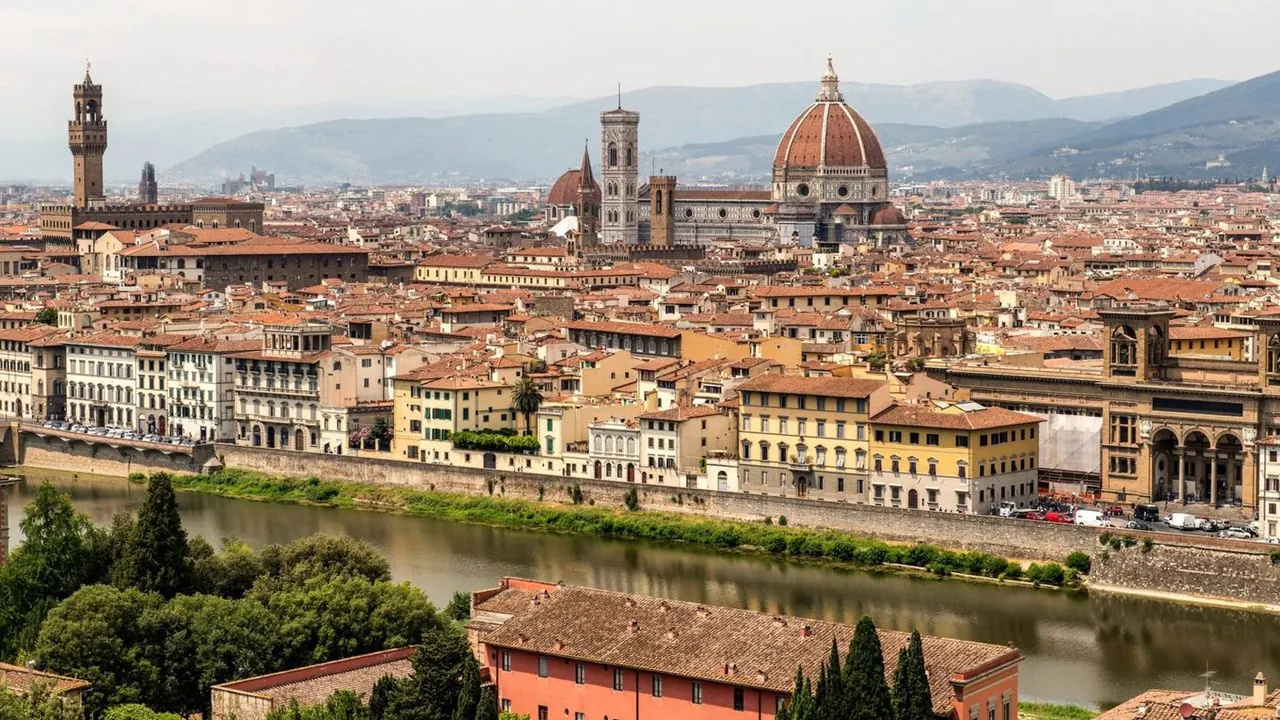
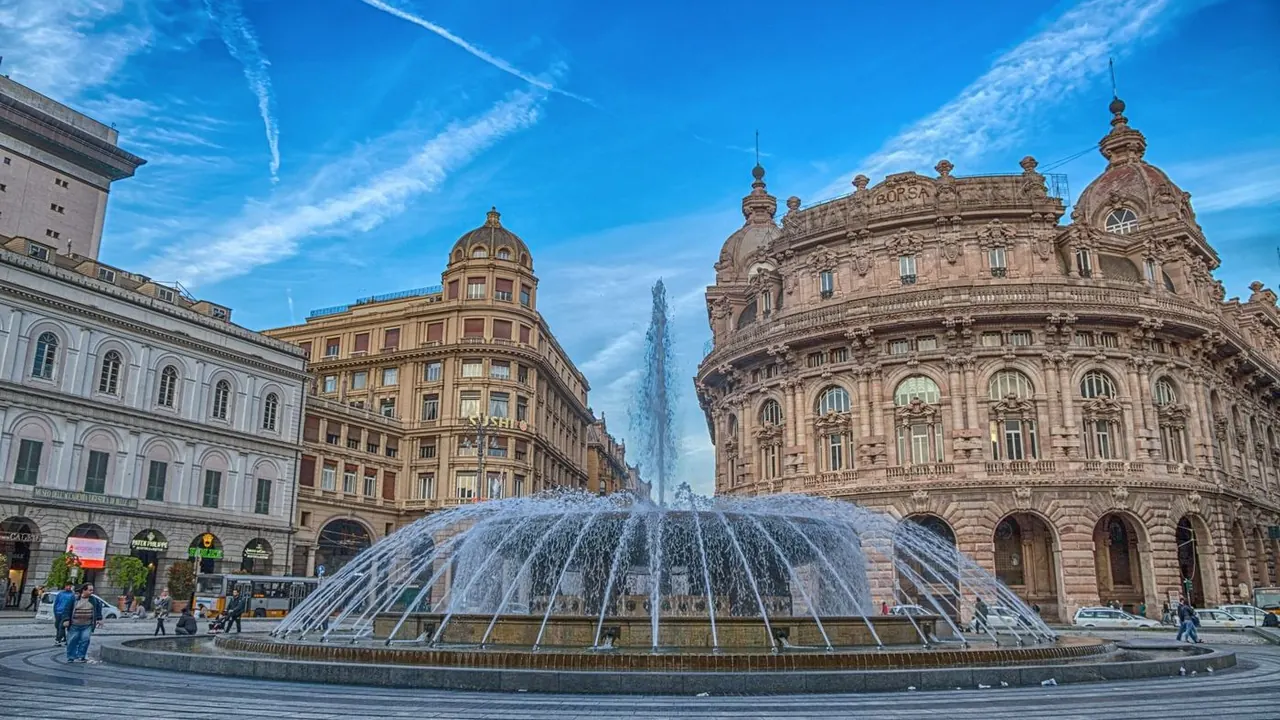
Photos: Florence by Wolfgang Weiser, Pexels License; Genoa by Faber1893, CC BY-SA 4.0, cropped.
Florence or Genoa?
Our verdict in twelve categories, each scored against the same fixed benchmark cities, and the climate month by month, so you can choose for your trip.
Choose Florence for
- shopping
- culture and sights
- day trips
Florence is for the traveller who wants the Renaissance at full strength: the Uffizi, the Accademia, the Bargello and Brunelleschi's dome, all within a short walk of each other, and then Siena, Lucca, Pisa and the Chianti hills on the days in between. It also suits anyone shopping for leather, paper and goldsmiths' work. Expect to pay more, and don't expect a swim.
Choose Genoa for
- beaches
- nature and the outdoors
- prices
Genoa is the better choice for a trip that mixes city and sea. Its medieval caruggi and palace museums give you plenty to see, but the real difference is that you can swim at Boccadasse or Nervi in the afternoon, walk the Portofino cliff paths, and take the train to the Cinque Terre. It costs less than Florence, and the aquarium and harbour make it easier with children.
Scoreboard
Twelve categories on one fixed scale from 0 to 100. The shaded stretch is the gap between the two.
Your match
Pick a travel style or drag the sliders, and both match scores follow your weighting.
Too close to call, 2 points apart
Wins on shopping and culture and sights with your weighting.
Wins on beaches and nature and the outdoors with your weighting.
What matters to you?
Category by category
What the scores mean for a trip.
Beaches & swimming
These two are far apart. Florence lies inland in the Arno valley, so you would cool off in a hotel pool or a public pool on the city's edge. The sandy Versilia coast near Viareggio is a full day's outing by train.
Genoa has swimming within the city itself: the pebble cove at Boccadasse, the bathing establishments along Corso Italia and the rock platforms below Nervi's promenade. Camogli, Santa Margherita and Sestri Levante are a short ride along the coast. The shores are mostly pebble and summer weekends are crowded, but an afternoon swim fits easily into a city stay.
Food & drink
Both cities eat well and very locally. The difference is land against sea. Florence is about meat, bread and beans: thick bistecca, ribollita and lampredotto from the carts, with Chianti reds poured by the glass and a little more fine dining at the top end.
Genoa cooks with herbs, chickpeas and fish: pesto with trofie, focaccia at breakfast, farinata and fried panissa from the old-town friggitorie, and crisp Vermentino with seafood in the harbour trattorias. Each city has a market worth a morning, Sant'Ambrogio in Florence and the Mercato Orientale in Genoa.
Culture & sights
Florence is in another league here. It is where the Renaissance took shape, and the Uffizi, the Accademia, the Bargello, the Duomo and the Brancacci Chapel give you masterpieces you know from books, enough to fill a week. Book ahead and expect summer queues.
Genoa is a pleasure to discover. Its medieval caruggi are among the largest old quarters in Europe, and the UNESCO-listed palaces on Via Garibaldi hold Van Dyck and Rubens beneath painted ceilings, with the Staglieno cemetery a remarkable extra. It rewards curiosity, but it isn't a pilgrimage the way Florence is.
Nightlife
Evenings are much alike in the two cities: aperitivo, a late glass of wine, few clubs and no dawn finish. In Florence the crowd gathers around Piazza Santo Spirito in the Oltrarno, with a noisier pub strip for study-abroad students. Genoa's crowd fills the small bars around Piazza delle Erbe in the medieval lanes, and in summer it moves out to the waterfront and the beach clubs along Corso Italia.
Nature & outdoors
Genoa has the wilder setting. A funicular takes you up to the ring of hilltop forts, the cliff paths of the Portofino promontory lead down to San Fruttuoso, and the Cinque Terre trails are a train ride away. Boats also go out whale watching in the Pelagos Sanctuary, and the coast suits kayaking and diving.
Florence's surroundings are softer and more cultivated: olive terraces at Fiesole, cypress lanes and vineyards through Chianti for walkers and cyclists, and the forests of the Casentino further out. It is lovely country to walk through, but it has no sea and no cliffs.
Day trips
Both are superb bases, but Florence has more first-rank towns within reach. Siena, Pisa, Lucca, San Gimignano, Volterra and the Val d'Orcia towns are all within range, and Bologna is under forty minutes away by fast train. You could fill a week of day trips without repeating yourself, though a car helps for the hill villages.
Genoa's strength is the coast. Portofino, Camogli and the five Cinque Terre villages line the railway to the east, with quieter Noli and Finale Ligure to the west. Milan and Turin are close enough for a museum day.
Good for families
Genoa is the easier city with children, mainly because of the Porto Antico. The aquarium is one of Europe's largest, and next to it are a science centre, a tropical biosphere and a submarine you can walk through. The funiculars and public lifts are a ride in themselves. The steep, dark lanes of the old town are hard work with a pushchair, though.
Florence's main sights are made for adults. Climbing the dome, the secret-passage tours of Palazzo Vecchio and the Boboli Gardens help, and the Pinocchio park at Collodi makes a good outing. Narrow pavements and the July heat make a slow spring visit the sensible choice.
Getting around
Florence is flat and compact. The Duomo, the Uffizi, Ponte Vecchio and the Pitti Palace are all within twenty minutes of each other on foot, Santa Maria Novella station sits in the centre for day trips, and trams run to the airport.
Genoa makes you work harder. The city climbs steeply from the water, the caruggi are a maze, and buses crawl through congested streets. Funiculars, a rack railway, public lifts and a single short metro line help, and the coastal railway is the best way to reach Nervi and the Riviera.
Shopping & style
Florence is the stronger place to shop, with crafts at its core. There is leather from the San Lorenzo stalls and small workshops, marbled paper, goldsmiths on the Ponte Vecchio, gilders and restorers in the Oltrarno, and luxury labels along Via de' Tornabuoni. Look closely, though, because some of the leather is mass-produced.
Genoa's shopping is more modest. Via XX Settembre's arcades and Via Roma cover the familiar Italian brands, and the best finds are edible or handmade: pesto, candied fruit and olive oil from long-established shops, plus silver filigree and coral from the old-town workshops.
Affordability
Genoa costs noticeably less. Central hotels are cheaper than in Italy's most visited cities, focaccia and farinata make almost free lunches, and the funiculars and lifts cost little. The bill climbs mainly in the smart Riviera resorts and on loungers in summer.
Florence asks more of your budget. Rooms in the historic centre are expensive for much of the year, and admission to the big museums and the dome adds up over a few days. Street-stall lampredotto, market lunches and walking everywhere bring daily costs back down.
Live music & performing arts
Both cities offer an opera house and an evening or two of classical music rather than a scene to travel for. Florence has the slight edge in pedigree: opera was more or less born here, and the Maggio Musicale is one of Europe's oldest festivals, though many visitors only see the church concerts staged for tourists.
Genoa's Teatro Carlo Felice runs a similar season of opera, ballet and symphonic concerts. What the city adds is its own history in music, with Paganini concerts and small clubs that carry on the tradition of its singer-songwriters.
Wellness & relaxation
Neither city has a bathing tradition of its own, and spas within either city come down mostly to hotel spas. Florence comes out a little ahead because of what lies beyond it: Montecatini Terme's grand old spa halls are under an hour by train, the open-air sulphur pools at Saturnia and Bagno Vignoni are within reach, and a few nights on a hill farm are a classic way to slow down.
Genoa's quiet corner is Nervi, with its seafront promenade and villa gardens. The nearest thermal waters are at Acqui Terme, inland in the Piedmont hills.
When should you go?
Pick your month. The climate figures are measured averages, not a forecast.
Florence in July
Genoa in July
Daytime high, °C
Rainfall in the month, mm
Where the figures come from
Florence has no rain gauge within 25 km of the centre, so its rainfall comes from a gridded climate dataset read at the city rather than from a gauge further away.
Florence's sunshine is measured 71 km from the centre, at Pisa / S. Giusto.
Genoa has no rain gauge within 25 km of the centre, so its rainfall comes from a gridded climate dataset read at the city rather than from a gauge further away.
Genoa's sunshine is measured 80 km from the centre, at Capo Mele.
Temperature and rainfall are climate normals, averaged over the years shown. Florence: 1995-2020 (sunshine 1991-2020, rainfall 1991-2020) normals, Firenze / Peretola (5.6 km from centre). Genoa: 1991-2020 normals, Genova / Sestri (6.7 km from centre).
Florence sits in an inland basin and summer there is harsh: daytime highs reach 33°C in August, which makes the stone streets and the museum queues heavy going. May and September have long sunny days with gentler heat, and the late spring is the most comfortable time for walking. The rain comes in autumn, rising to about 124mm in November, and winter is cool, grey and quiet.
Genoa's sea air keeps it milder all year. August peaks at around 28°C and the water reaches 25°C, so you can swim comfortably from late June into September, which Florence can't offer at all. Its summers are also very dry. Autumn rain arrives here too, with about 105mm in November, but Genoa's winter days are a little warmer and sunnier than Florence's, which makes it the gentler of the two out of season.
Which traveller are you?
On a beach and sun trip, Genoa is the obvious pick. You can swim within the city at Boccadasse, Corso Italia and Nervi, and the Riviera bays are a short train ride away. From Florence, the sea means a full day out.
For a culture and arts trip, choose Florence. The Uffizi, David in the Accademia, the Bargello, San Marco's frescoes and the Pitti Palace are all a short walk apart, with Siena and Lucca within easy reach on top.
On a family trip with children, Genoa works better. The aquarium, the science centre and the walk-through submarine at the Porto Antico, the funiculars and nearby swimming coves keep children busy, while Florence's main sights are churches and paintings made for adults.
Before you go
| Measure | Florence | Genoa |
|---|---|---|
| Official language | Italian | Italian |
| Currency | Euro (EUR) | Euro (EUR) |
| Sockets | CFL230 V, 50 Hz | CFL230 V, 50 Hz |
| Driving side | Right | Right |
| Time zone | UTC+1, UTC+2 in summer | UTC+1, UTC+2 in summer |
| Emergency number | 112 | 112 |
| Elevation | 50 m | 20 m |
| Main airport | Florence Airport, Peretola (FLR)6 km from centre46 non-stop destinations | Genoa Cristoforo Colombo Airport (GOA)7 km from centre25 non-stop destinations |
| Public holidays this year | 13 days | 13 days |
By the numbers
| Measure | Florence | Genoa |
|---|---|---|
| City population | 360,930 | 558,745 |
| People per km² | 3,528 | 2,325 |
| Museums within 10 km | 141 | 51 |
| UNESCO World Heritage sites within 50 km | 4 | 1 |
| Swim season, months above 21 °C | - | 4 months |
Where else could you go?
Every comparison below shares a destination with this one, so you can follow Florence or Genoa somewhere new.