France
Avignon
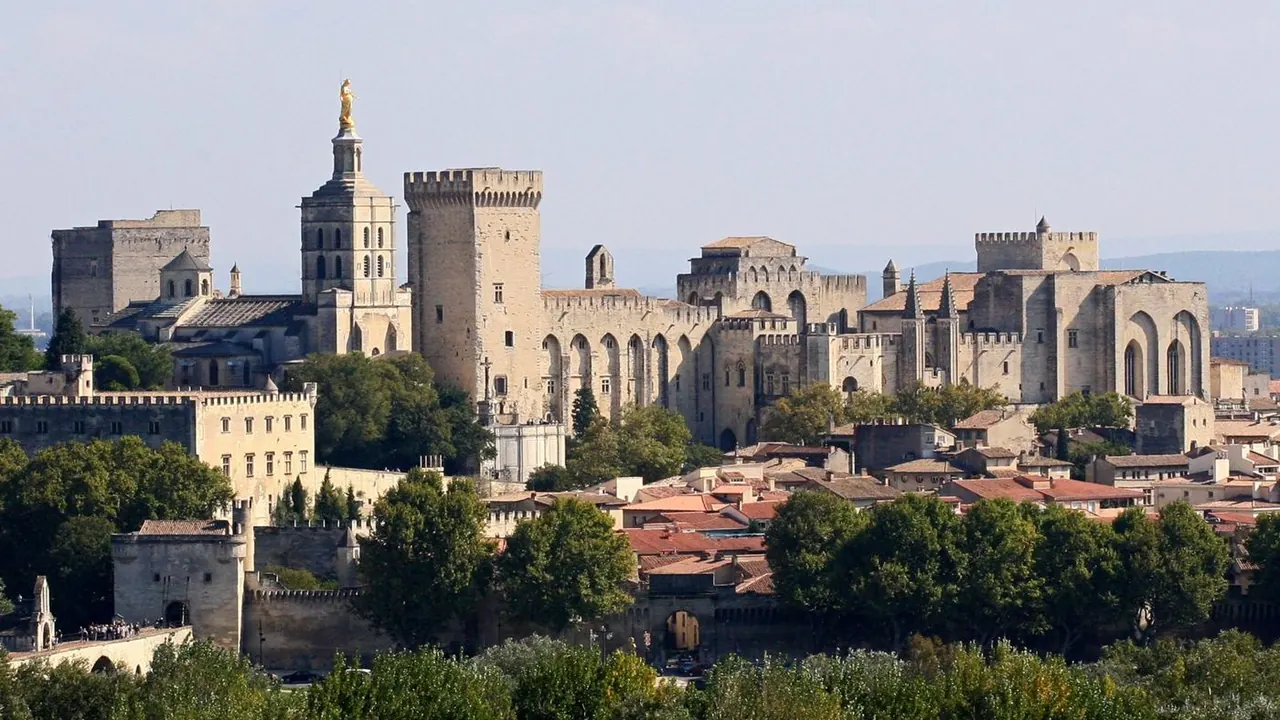
The Palais des Papes and the cathedral
- Day trips92
- Nature & outdoors70
- Culture & sights69
Photo: BlueBreezeWiki, CC BY-SA 3.0, cropped
Match
53
Every category weighted equally
- Beach & sun48
- Culture & arts59
- Food & nightlife52
- Family trip53
- Outdoors58
- Relax & unwind51
- Shopping & style52
- On a budget52
Avignon in twelve categories
Our verdict on each, scored 0 to 100 against the same fixed benchmark cities, so a score means the same thing on every page.
Beaches & swimming. Scores 22 out of 100.
Food & drink. Scores 57 out of 100.
Culture & sights. Scores 69 out of 100.
Nightlife. Scores 30 out of 100.
Nature & outdoors. Scores 70 out of 100.
Day trips. Scores 92 out of 100.
Good for families. Scores 45 out of 100.
Getting around. Scores 62 out of 100.
Shopping & style. Scores 38 out of 100.
Affordability. Scores 44 out of 100.
Live music & performing arts. Scores 68 out of 100.
Wellness & relaxation. Scores 35 out of 100.
Avignon category by category
Beaches & swimming
22Avignon is an inland river town, and beach life is not part of a stay here. The Rhône is too fast and too busy for swimming. The real summer swim is in the Gardon, about half an hour away by car. On hot afternoons families fill its clear green pools and rocky banks below the Pont du Gard.
The Mediterranean is about an hour and a quarter's drive south. There are the long, wild sands of Saintes-Maries-de-la-Mer in the Camargue and the resort beaches around Le Grau-du-Roi, where the water reaches about 23°C in August. It makes a good day out, but not one you would make every day. For a daily dip, most visitors rely on the pool at their hotel or vacation rental.
Food & drink
57Eating in Avignon means Provençal cooking: tians and ratatouille, daube braised in red wine, lamb with herbs, tapenade and anchoïade, with goat's cheese, melons and apricots from the surrounding plain. The covered market of Les Halles, behind its living plant wall on Place Pie, is the best place to see it. Morning stalls sell olives, cheese and vegetables, and small counters cook lunch from what they sell.
Wine is the real strength. Châteauneuf-du-Pape and the Côtes du Rhône villages are on the doorstep, and many bistros pour local bottles by the glass. The cafés on Place de l'Horloge and around the Palais mostly serve visitors, so the better tables are in the side streets around Rue des Teinturiers and Place des Corps Saints. The choice of food from elsewhere is narrow.
Culture & sights
69For most of the 14th century Avignon was the seat of the popes, and that left it the largest Gothic palace in Europe. The Palais des Papes is a fortress-scale building of bare stone halls, chapels with frescoes and terraces above the rooftops. Next to it are the cathedral, the Rocher des Doms garden on the bluff above the Rhône, and the four broken arches of the Pont Saint-Bénezet, the bridge of the song. Together they form a UNESCO-listed ensemble.
Almost 4km of medieval ramparts still enclose the town. Inside them are cardinals' mansions, the canal-side waterwheels of Rue des Teinturiers and several fine museums: the Petit Palais for Italian primitives, the Musée Calvet for fine arts and the Collection Lambert for contemporary art. Across the river, Villeneuve-lès-Avignon adds a Carthusian charterhouse and Fort Saint-André. It is a compact set that two unhurried days will cover.
Nightlife
30Most of the year Avignon goes out gently. People take an aperitif on Place Pie or Place des Corps Saints, have a glass of Côtes du Rhône on a café terrace, and stop at a few student bars near the university quarter. By midnight the streets inside the walls are mostly quiet, and there is very little club life.
July is the exception. During the festival the squares and terraces are packed until the small hours, and performers, audiences and street crowds keep the old town awake every night. Outside that month, a visitor looking for a real night out goes to Marseille or Montpellier.
Nature & outdoors
70Avignon sits where the Rhône plain meets some of the most celebrated country in southern France. Mont Ventoux rises to 1,910m about an hour to the north-east. Its bare limestone summit is a pilgrimage for road cyclists and a good hike in cooler months. Closer in are the Luberon's cliffs and ochre trails, the jagged Dentelles de Montmirail, the white crags of the Alpilles, and the gorges of the Gardon, with canoeing down to the Pont du Gard.
To the south, the Camargue is a world of lagoons, flamingos, white horses and black bulls, best seen on foot or horseback. On the Île de la Barthelasse, flat riverside cycling starts just across the bridge. Spring and autumn are the seasons for it. Summer brings fierce heat, and the mistral can blow hard for days.
Day trips
92This is Avignon's great strength. Within half an hour by train or car lies some of the finest Roman heritage outside Italy: the arena and the Maison Carrée in Nîmes, the arena and cloister in Arles, the Roman theatre in Orange, which still has its stage wall, and the Pont du Gard aqueduct. Arles also offers its Van Gogh connections, and Saint-Rémy and the hilltop fortress of Les Baux are close behind.
North and east are the wine villages of Châteauneuf-du-Pape and Gigondas, Vaison-la-Romaine, the canal town of L'Isle-sur-la-Sorgue with its antiques dealers, and the Luberon hill villages of Gordes, Roussillon and Ménerbes. Uzès is a short drive west. Aix-en-Provence and Marseille are about half an hour away by high-speed train. The villages are best reached with a car.
Good for families
45Children tend to enjoy the Palais des Papes more than they expect, thanks to the augmented-reality tablet tour, and they like dancing on the broken bridge they know from the song. The Rocher des Doms garden has a playground, ducks and a view over the river. The walled centre is small enough to cover on foot, and on the whole it is calm.
Beyond that, little in the town is made for children. The family days out are outside it: canoeing and swimming at the Pont du Gard, the Camargue's flamingos and horses, and a few amusement and water parks in the surrounding countryside, which all need a car. The narrow cobbled lanes are tiring with a pushchair, July is hot and packed with festival crowds, and spring or early autumn suit a family far better.
Getting around
62Inside the ramparts Avignon is a walking town. Almost everything a visitor comes for lies within twenty minutes on foot of the central station by the walls. The lanes are narrow and cobbled, and the mistral can make crossing the open squares tiring, but it is easy to find your way around. Buses and a single tram line serve the outer districts and are rarely needed.
The high-speed TGV station is a few kilometres south of the walls, linked by a short shuttle train. Regional trains from the central station reach Arles, Nîmes, Orange and Marseille easily. The hill villages, the vineyards and Mont Ventoux are another matter: buses there are sparse, so a hire car or a tour is the realistic option.
Shopping & style
38Shopping in Avignon is modest and mostly Provençal. Rue de la République, the main axis from the station, is lined with high-street chains. The more interesting shops are in the lanes around Rue Joseph Vernet and Rue des Marchands, selling printed Provençal cottons, lavender, olive-wood and soap, along with a few independent fashion and design boutiques.
The best things to take home are edible: tapenade, olive oil, calissons and wine, bought at Les Halles or from the producers themselves. Weekend flea and flower markets add some colour. For serious antiques hunting, people make the trip out to L'Isle-sur-la-Sorgue rather than shopping in town.
Affordability
44Avignon has the price level of a provincial French town that is also a major tourist stop. It is clearly cheaper than Paris or the Riviera, but not a bargain. Set lunch menus in the bistros away from the main squares are fair value, and much of the old town costs nothing to explore on foot. Wine bought from local producers is good value for its quality.
Rooms are the variable. In July, during the festival, hotels and rentals inside the walls are booked far ahead at steep rates. In spring and autumn the same places are much easier on the budget. Exploring the countryside usually means paying for a hire car.
Live music & performing arts
68For three weeks every July, Avignon becomes one of the world's great theatre towns. The Festival d'Avignon, founded in 1947, stages major productions in the Cour d'honneur of the Palais des Papes and in cloisters, chapels and quarries around the region. Alongside it runs the Off, a huge open fringe with well over a thousand shows a day in every hall, cellar and courtyard in town. Posters cover every wall, and performers hand out flyers in the streets.
The rest of the year is far quieter, but still more than a town this size usually has. The Opéra Grand Avignon on Place de l'Horloge stages opera, ballet and concerts, and a dozen or so small permanent theatres keep up a regular programme. A well-regarded jazz club also plays most weeks.
Wellness & relaxation
35Avignon has no bathing culture of its own. Wellness comes down to spas in the better hotels and a handful of day spas and massage studios. What it does offer is a slow southern rhythm: long lunches, shaded squares under plane trees, and the quiet of the Rocher des Doms garden in the late afternoon.
Many visitors who come to unwind stay outside the walls, in farmhouse guesthouses among the vineyards and lavender, with a pool and nothing much to do. July is the opposite of restful in town, and when the mistral blows for days it can wear on the nerves.
When should you go?
Pick a month to see what it is like. The climate figures are measured averages, not a forecast.
Avignon in July
Daytime high, °C
Rainfall in the month, mm
The whole year
Shaded against this city’s own year: the deepest cell is its best month for that figure and the palest its weakest.
Where the figures come from
Avignon has no rain gauge within 25 km of the centre, so its rainfall comes from a gridded climate dataset read at the city rather than from a gauge further away.
Avignon's sunshine is measured 65 km from the centre, at Marseille / Marignane.
Temperature and rainfall are climate normals, averaged over the years shown. Avignon: 2005-2020 (sunshine 1991-2020, rainfall 1991-2020) normals, Avignon / Morières-lès-Avignon (8.6 km from centre).
Before you go
| Measure | Avignon |
|---|---|
| Official language | French |
| Currency | Euro (EUR) |
| Sockets | CE230 V, 50 Hz |
| Driving side | Right |
| Time zone | UTC+1, UTC+2 in summer |
| Emergency number | 112 |
| Elevation | 10 m |
| Main airport | Marseille Provence Airport (MRS)65 km from centre126 non-stop destinations |
| Public holidays this year | 11 days |
By the numbers
| Measure | Avignon |
|---|---|
| City population | 92,188 |
| People per km² | 1,420 |
| Museums within 10 km | 11 |
| UNESCO World Heritage sites within 50 km | 6 |
Compare Avignon with
Every comparison with a written verdict behind it.