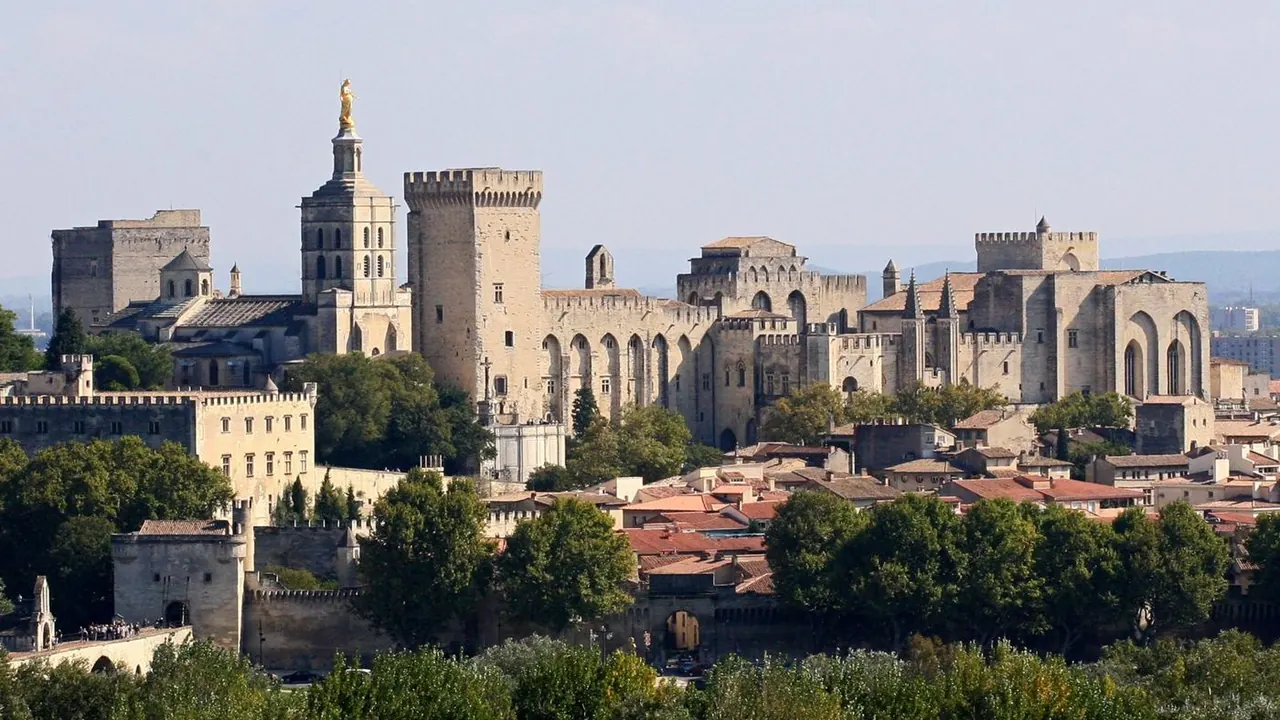
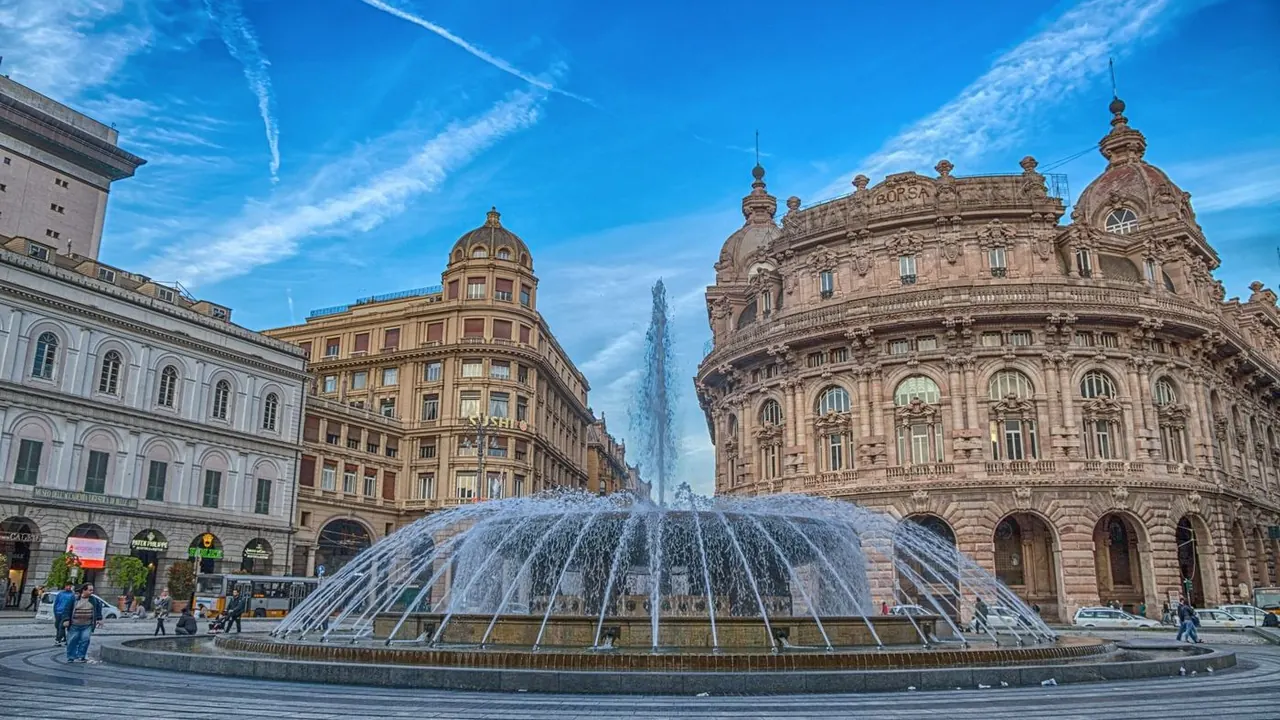
Photos: Avignon by BlueBreezeWiki, CC BY-SA 3.0, cropped; Genoa by Faber1893, CC BY-SA 4.0, cropped.
Avignon or Genoa?
Our verdict in twelve categories, each scored against the same fixed benchmark cities, and the climate month by month, so you can choose for your trip.
Choose Avignon for
- live music and the arts
- day trips
Avignon is the better choice if you want a base for touring Provence rather than a city to fill every day. The Roman arenas of Nîmes and Arles, the theatre at Orange and the Pont du Gard are all close by, the Luberon villages and Châteauneuf vineyards are a short drive away, and the papal palace and ramparts take two easy days. Come in July if theatre is the point, or in spring and autumn for walking and wine.
Choose Genoa for
- beaches
- families
- food and drink
Genoa makes more sense if you want the sea, the food and a large old city all in one place. You can swim most afternoons in summer, eat pesto, focaccia and fried fish in the lanes, and spend days in the palaces and caruggi of a medieval quarter few visitors expect. It works better with children, costs a little less, and the coastal railway takes you to Portofino and the Cinque Terre without a car.
Scoreboard
Twelve categories on one fixed scale from 0 to 100. The shaded stretch is the gap between the two.
Your match
Pick a travel style or drag the sliders, and both match scores follow your weighting.
Wins on live music and the arts and day trips with your weighting.
Wins on beaches and families with your weighting.
What matters to you?
Category by category
What the scores mean for a trip.
Beaches & swimming
Here the two cities are very different. Avignon is inland, and the Rhône is not for swimming. The best summer swim is in the green pools of the Gardon below the Pont du Gard, half an hour away by car. The Camargue sands are a full day's outing, so most visitors use their hotel pool.
Genoa has swimming within the city: the small cove at Boccadasse, the bathing establishments along the Corso Italia and the rock platforms at Nervi. Better coves are a short train ride along the Riviera. The beaches are mostly pebble, with rented loungers, but you can have a swim and a city day together.
Food & drink
Both cities cook in a strong regional style, but Genoa's is the more rewarding to eat your way through. Pesto with trofie, focaccia at breakfast, and farinata and fried fish from the old friggitorie make cheap street food. There is fresh seafood in the harbour trattorias, and the Mercato Orientale shows off Ligurian produce.
Avignon's strength is wine more than food. Châteauneuf-du-Pape and the Côtes du Rhône are right on its doorstep, and bistros in the lanes around Rue des Teinturiers pour them by the glass. Les Halles is the place for Provençal daube, tians, cheese and lunch at the market counters, but the squares near the Palais are mostly geared to tourists.
Culture & sights
Avignon's sights are grand but compact. The Palais des Papes, the cathedral, the broken bridge and the ramparts form one UNESCO ensemble, with the Petit Palais and Collection Lambert to add. You can see it all in two unhurried days.
Genoa has more depth and keeps surprising you. The caruggi make up one of Europe's largest medieval quarters, and above them the Rolli palaces on Via Garibaldi hold Van Dyck, Rubens and painted halls. Add San Lorenzo cathedral, the Lanterna and the marble sculpture of Staglieno cemetery, and you need several days.
Nightlife
Neither is a party city, but Genoa keeps going later. Students and locals fill the small bars around Piazza delle Erbe at weekends, and in summer evenings move to the waterfront bars and beach clubs along the Corso Italia.
Avignon is mostly in bed by midnight, after an aperitif on Place Pie and a glass of Côtes du Rhône. The exception is July, when festival crowds keep the squares full into the small hours.
Nature & outdoors
Both have fine country close by, and both are best walked in spring and autumn. Genoa's has the advantage of starting at the edge of town. A funicular to Righi leads to the ridge path past the old forts, the Portofino park's cliff paths run down to San Fruttuoso, and the Cinque Terre trails are reachable by train. Boats also go out from the harbour to look for whales and dolphins.
Avignon's landscapes are just as famous: the bare summit of Mont Ventoux, the Luberon's ochre trails, the Alpilles and the Camargue lagoons with flamingos and white horses. Except for flat cycling on the Île de la Barthelasse, though, you need a car to reach most of them.
Day trips
This is where Avignon wins. Within half an hour you can reach the arenas of Nîmes and Arles, the Roman theatre at Orange and the Pont du Gard. Les Baux, Saint-Rémy, Gordes, Roussillon and the Châteauneuf vineyards are not much further. You could fill a week with a different trip each day, ideally with a car.
Genoa's trips follow one railway line, which makes them easy. Portofino, Camogli and the Cinque Terre lie to the east, and the quieter walled towns of Finale Ligure and Albenga to the west. Milan and Turin are close enough for a museum day. The choice is good but has less variety than Provence.
Good for families
Genoa is the easier city with children, mainly thanks to the Porto Antico. The aquarium can take half a day, the Galata museum lets them walk through a submarine, and the funiculars and public lifts feel like rides. The steep, dark old town is harder with a pushchair.
Avignon has a few highlights, such as the tablet tour of the Palais des Papes, dancing on the bridge from the song and the playground in the Rocher des Doms. After that, family days mean driving to the Pont du Gard, the Camargue or a water park.
Getting around
Avignon is a compact walled town where almost everything lies within twenty minutes on foot of the central station. The lanes are cobbled and the mistral can make the open squares hard work, but you rarely need the buses or the single tram line. Genoa makes you climb. The city rises steeply from the harbour, so funiculars, a rack railway and old public lifts are part of getting about, alongside one short metro line and slow buses.
Beyond the centre, Genoa's coastal railway reaches Nervi and the Riviera towns, so you never need to drive. Avignon's regional trains are just as handy for Arles, Nîmes, Orange and Marseille. For the hill villages, the vineyards and Mont Ventoux, though, you will need a hire car or a tour.
Shopping & style
Neither city is mainly about clothes, but Avignon depends more on what you can eat and drink. Châteauneuf-du-Pape or Côtes du Rhône bought from the growers, olive oil, tapenade and calissons are better uses of luggage space than anything in its shops. Its crafts are gentler than Genoa's: printed cottons, lavender and soap rather than worked metal. For antiques, you leave town altogether.
Genoa gives you more to browse. Workshops in the old town still make silver filigree, coral and ceramics, which are souvenirs with more craft in them than Provençal fabric. The pesto, candied fruit and olive oil from its long-established shops travel just as well as Avignon's tapenade. For fashion, the arcades of Via XX Settembre and the Italian labels on Via Roma make a real afternoon's shopping, while Avignon's main street is mostly chains.
Affordability
Genoa is the easier city on a budget. Focaccia and farinata make very cheap meals, central hotels cost less than in Italy's busiest cities, and the trains and funiculars mean you don't need a car. Costs mainly add up from loungers and the smart Riviera resorts in summer.
Avignon is fair value outside July. Set lunches away from the squares and wine bought from producers are good buys, but rooms inside the walls get expensive during the festival, and seeing the countryside usually means paying for a hire car.
Live music & performing arts
Avignon is ahead, mainly because of July. The Festival d'Avignon stages major productions in the Cour d'honneur of the papal palace, and the Off fringe puts on well over a thousand shows a day across the town. The rest of the year the Opéra Grand Avignon, a dozen small theatres and a jazz club keep things going.
Genoa offers a steady programme rather than a big event. There is opera and ballet at the Teatro Carlo Felice, concerts in Paganini's honour and small clubs in the singer-songwriter tradition. The Teatro Nazionale's plays are in Italian, which limits them for most visitors.
Wellness & relaxation
Neither city has a bathing tradition, and spas in both are mostly in the better hotels. The ways to relax differ, though. Avignon's is to stay outside the walls in a farmhouse guesthouse among vineyards and lavender, with a pool and long lunches, avoiding July and days of mistral.
In Genoa the quiet places are Nervi's seafront promenade and villa gardens and the slow lunches in Riviera villages. The historic thermal town of Acqui Terme is a little over an hour inland if you want real spa waters.
When should you go?
Pick your month. The climate figures are measured averages, not a forecast.
Avignon in July
Genoa in July
Daytime high, °C
Rainfall in the month, mm
Where the figures come from
Avignon has no rain gauge within 25 km of the centre, so its rainfall comes from a gridded climate dataset read at the city rather than from a gauge further away.
Avignon's sunshine is measured 65 km from the centre, at Marseille / Marignane.
Genoa has no rain gauge within 25 km of the centre, so its rainfall comes from a gridded climate dataset read at the city rather than from a gauge further away.
Genoa's sunshine is measured 80 km from the centre, at Capo Mele.
Temperature and rainfall are climate normals, averaged over the years shown. Avignon: 2005-2020 (sunshine 1991-2020, rainfall 1991-2020) normals, Avignon / Morières-lès-Avignon (8.6 km from centre). Genoa: 1991-2020 normals, Genova / Sestri (6.7 km from centre).
Avignon has the hotter, sunnier summer. Highs reach 32°C in July and August, which suits a pool but makes the middle of the day hard going on the streets. May, June and late September are better for sightseeing and the countryside. The autumn rain starts suddenly, with October the wettest month at around 109mm and September and November not far behind. Winters are cool and bright rather than cold.
Genoa stays milder because of the sea. August peaks at about 28°C, July is the driest month, and the sea is warm enough for swimming from June through September, reaching 25°C in August. Spring and early autumn are pleasant for walking the hills. From October the rain is heavier than in Avignon, peaking at about 212mm in October, so late autumn is the weaker season on the Ligurian coast.
Which traveller are you?
For a beach and sun trip, Genoa is the clear pick. You can swim from the Corso Italia platforms or the cove at Boccadasse in town, and the train runs on to Camogli and Sestri Levante. In Avignon a swim means a drive to the Gardon or the coast.
On a family trip with young children, Genoa has much more to offer. The aquarium, the walk-through submarine and the science centre at the Porto Antico fill whole days, and funiculars are fun in themselves. Avignon has little for children inside the walls.
For theatre lovers, Avignon in July has nothing to match it on the Italian coast. The Festival d'Avignon stages productions in the papal palace courtyard, and the Off fills every cellar and courtyard with shows. Genoa's theatre is mostly in Italian.
Before you go
| Measure | Avignon | Genoa |
|---|---|---|
| Official language | French | Italian |
| Currency | Euro (EUR) | Euro (EUR) |
| Sockets | CE230 V, 50 Hz | CFL230 V, 50 Hz |
| Driving side | Right | Right |
| Time zone | UTC+1, UTC+2 in summer | UTC+1, UTC+2 in summer |
| Emergency number | 112 | 112 |
| Elevation | 10 m | 20 m |
| Main airport | Marseille Provence Airport (MRS)65 km from centre126 non-stop destinations | Genoa Cristoforo Colombo Airport (GOA)7 km from centre25 non-stop destinations |
| Public holidays this year | 11 days | 13 days |
By the numbers
| Measure | Avignon | Genoa |
|---|---|---|
| City population | 92,188 | 558,745 |
| People per km² | 1,420 | 2,325 |
| Museums within 10 km | 11 | 51 |
| UNESCO World Heritage sites within 50 km | 6 | 1 |
| Swim season, months above 21 °C | - | 4 months |
Where else could you go?
Every comparison below shares a destination with this one, so you can follow Avignon or Genoa somewhere new.