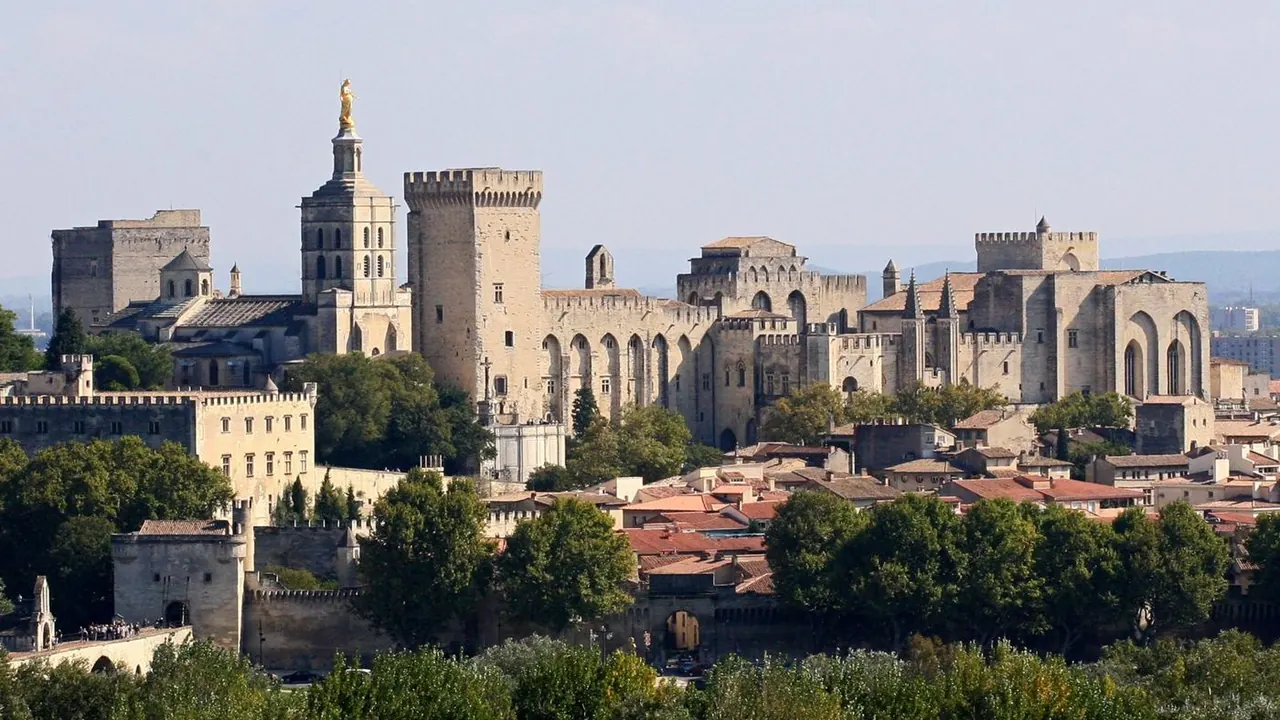
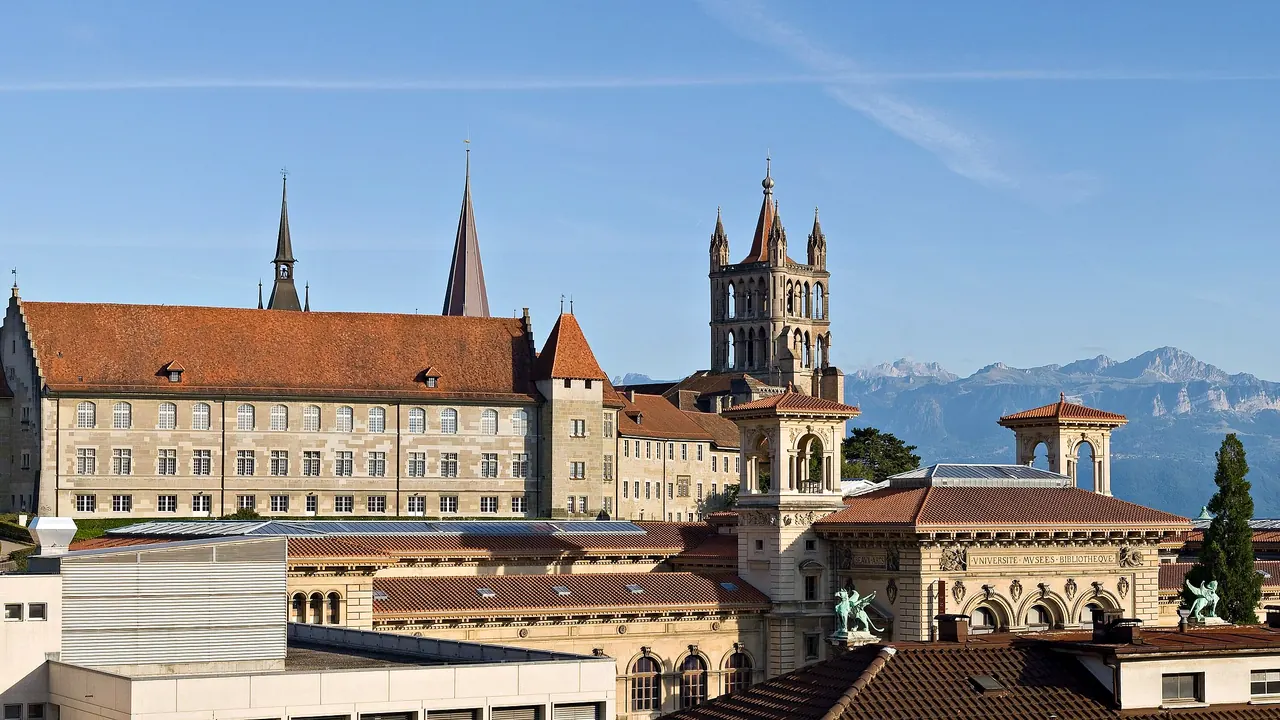
Photos: Avignon by BlueBreezeWiki, CC BY-SA 3.0, cropped; Lausanne by Christian Mehlführer, CC BY-SA 3.0, cropped.
Avignon or Lausanne?
Our verdict in twelve categories, each scored against the same fixed benchmark cities, and the climate month by month, so you can choose for your trip.
Choose Avignon for
- prices
- culture and sights
- day trips
Avignon is the pick for a trip built around history and the south of France. The papal palace and the walled town fill two easy days, and Roman Nîmes, Arles, Orange and the Pont du Gard are all close by. Summers are long and sunny, July brings one of the world's great theatre festivals, and it costs a good deal less to stay in than Lausanne. A hire car gets the most out of it.
Choose Lausanne for
- families
- beaches
- getting around
Lausanne suits travellers who want a lake and mountains on the doorstep and like to leave the car at home. Lake swimming, the Lavaux vineyard walks and the Vaud Alps are all close, trains and a metro take care of the hills, and children are better looked after here than in Avignon. It is a much more expensive place to spend a week.
Scoreboard
Twelve categories on one fixed scale from 0 to 100. The shaded stretch is the gap between the two.
Your match
Pick a travel style or drag the sliders, and both match scores follow your weighting.
Wins on prices and culture and sights with your weighting.
Wins on families and beaches with your weighting.
What matters to you?
Category by category
What the scores mean for a trip.
Beaches & swimming
Neither town has a beach, but Lausanne makes swimming far easier. In summer you can walk or take the metro down to the lake and swim from the lawns and pebble shores at Vidy or Pully, or spend the afternoon at the old Bellerive lido.
Avignon's Rhône is not for swimming. The nearest good swim is in the Gardon pools below the Pont du Gard, about half an hour away by car, and the Camargue sands are over an hour away. In practice most visitors swim in a hotel or rental pool.
Food & drink
The two are evenly matched, and both lean on their local wine. Avignon cooks Provençal: daube, tians, tapenade and fruit from the plain, best seen at the Les Halles market, with Châteauneuf-du-Pape reds poured by the glass in the side-street bistros.
Lausanne serves lake perch, papet vaudois and winter fondue with Chasselas from the Lavaux terraces. Its top-end restaurants are among Switzerland's most celebrated, but cheap, everyday meals are harder to find than in Avignon.
Culture & sights
Avignon has the bigger set of sights. The Palais des Papes, the cathedral, the broken bridge and the ramparts make up a medieval ensemble on a scale few towns can match, and the Petit Palais and Villeneuve's charterhouse add depth.
Lausanne's old town is smaller and steeper, with the cathedral and its night watchman at the top. Its strength is its museums: the Olympic Museum at Ouchy, the cluster at Plateforme 10 and the unusual Collection de l'Art Brut.
Nightlife
Lausanne is the better place for a night out for most of the year. Thanks to its large student population, the Flon fills its old warehouses with clubs and late bars at weekends, and in summer the lakeside at Ouchy stays busy in the evenings. Drinks are expensive, though.
Avignon is the opposite: an aperitif on Place Pie, then quiet streets by midnight and almost no clubs. The exception is July, when the festival keeps the squares full into the small hours.
Nature & outdoors
Lausanne has the more striking setting. The French Alps rise across the lake, the Lavaux terraces make a superb walk, and within an hour you can be skiing or hiking at Villars or Les Diablerets, or out on the Jura ridges. Much of it is reachable by train.
Avignon's countryside is fine in a different way: Mont Ventoux for cyclists, the Luberon's ochre trails, the Alpilles and the Camargue's flamingos and white horses. It is best in spring and autumn, because of the summer heat and the mistral, and most of it needs a car.
Day trips
Both make good bases, but Avignon has the richer choice. Nîmes, Arles, Orange and the Pont du Gard give you some of the best Roman remains outside Italy within half an hour, and the Luberon villages, Les Baux and the Châteauneuf vineyards are close behind, though you need a car for the villages.
Lausanne's outings are more varied and easier to reach without a car. Trains run to the Château de Chillon, Gruyères, Bern and Geneva, and boats cross the lake to the French shore.
Good for families
Lausanne works better with children. They have the interactive Olympic Museum, the aquarium-vivarium, Sauvabelin's animals, pedal boats and lookout tower, and summer afternoons at the lakeside pools, though the steep streets are hard work with a pushchair.
In Avignon the palace's tablet tour and dancing on the bridge from the song make a good morning, but little else in town is aimed at children. The best family days, canoeing at the Pont du Gard or seeing the Camargue horses, all need a drive.
Getting around
Lausanne is easier to get around overall. The city is steep, but the m2 metro climbs from the lake to the upper town, and Swiss trains and lake boats reach almost everywhere you would want to go.
Avignon's walled centre is compact and easy to walk on the flat, if cobbled. Regional trains serve Arles, Nîmes and Orange well, but the hill villages and Mont Ventoux are hard to reach without a hire car.
Shopping & style
Neither is a shopping destination, and Lausanne has only a slight edge. Its Rue de Bourg has Swiss watches, jewellery and chocolatiers, and the Flon adds chains and a few design shops.
Avignon's shops are more homely: Provençal cottons, lavender and soap in the lanes off Rue des Marchands, with tapenade and wine as the best things to take home. Serious antiques hunters drive out to L'Isle-sur-la-Sorgue.
Affordability
There is a big gap here, and it favours Avignon. It is not a bargain, but bistro set lunches and wine bought from the growers are good value, and spring or autumn rooms are reasonable. July rooms are the exception, and the hire car adds to the bill.
Lausanne is very expensive in almost everything, from hotel rooms to a simple lunch. Visitors on a budget picnic by the lake and save restaurants for special occasions.
Live music & performing arts
Avignon comes out ahead, but nearly all of that lead belongs to three weeks in July. The festival turns the papal palace's great courtyard into a stage, and the fringe spreads into almost any room with seats, so you can walk in off the street and see several shows in a day. Visit in another month and the town settles down to opera at the Opéra Grand Avignon, a few small theatres and some jazz.
Lausanne has nothing to match that peak, but its programme runs through the year and has more range. Dance is its speciality, with the Béjart Ballet and the Prix de Lausanne, and the Théâtre de Vidy brings internationally known contemporary work to the lakeshore, alongside a full opera season and a respected chamber orchestra. Outside July, a theatre or concert lover has more to choose from here, and the Montreux Jazz Festival in summer is a short train ride away.
Wellness & relaxation
Lausanne is the better place to unwind. It has lakeside promenades, spas in the grand hotels and the region's wellness retreats, and thermal springs at Yverdon-les-Bains and Lavey-les-Bains are within easy reach by train.
Avignon offers shaded squares and long lunches rather than spas. Visitors after real rest tend to stay outside the walls in vineyard farmhouses with a pool, away from the July crowds and the mistral.
When should you go?
Pick your month. The climate figures are measured averages, not a forecast.
Avignon in July
Lausanne in July
Daytime high, °C
Rainfall in the month, mm
Where the figures come from
Avignon has no rain gauge within 25 km of the centre, so its rainfall comes from a gridded climate dataset read at the city rather than from a gauge further away.
Avignon's sunshine is measured 34 km from the centre, at Nimes / Courbessac.
Lausanne's temperatures are measured 40 km from the centre, at Payerne.
Lausanne has no rain gauge within 25 km of the centre, so its rainfall comes from a gridded climate dataset read at the city rather than from a gauge further away.
Temperature and rainfall are climate normals, averaged over the years shown. Avignon: 2005-2020 (sunshine 1981-2010, rainfall 1991-2020) normals, Avignon / Morières-lès-Avignon (8.6 km from centre). Lausanne: 1991-2020 (sunshine 1961-1990) normals, Payerne (39.7 km from centre).
Avignon is at its best in May, June and September, when it is warm and sunny but not yet scorching. July and August are dry and very sunny, but highs around 32°C make midday walking on the ramparts and cobbles hard going, so sightseeing moves to the mornings and evenings. Autumn turns wet, with October the rainiest month at about 109mm, and winters are cool but still fairly bright.
Lausanne is cooler and greyer all year. Summer is the time to go: highs of about 26°C are pleasant for walking the steep streets and for swimming in the lake. Rain falls through every month, though, and summer is actually the wettest season. From November to February highs drop to around 4°C and the sun is often hidden, so the town is cold and dim unless you head up into the mountains. In short, Avignon gives you the long, dry, hot summer and Lausanne the mild one.
Which traveller are you?
For a trip on a tight budget, Avignon is the realistic choice, especially in spring or autumn when rooms ease off. Regional trains to Arles and Nîmes keep day trips cheap. In Lausanne, a small budget means skipping much of what makes the city enjoyable.
On a family trip with children, Lausanne is the easier base, above all for families who would rather not drive. Outings are short and close together, and the city is safe and clean. Avignon suits older children who cope well with heat and long car journeys.
For a culture and arts trip, Avignon is the stronger choice. It has the largest Gothic palace in Europe, nearly 4km of ramparts and Roman sites within half an hour. In July a theatre festival takes over the whole town.
Before you go
| Measure | Avignon | Lausanne |
|---|---|---|
| Official language | French | French, German, Italian, Romansh |
| Currency | Euro (EUR) | Swiss Franc (CHF) |
| Sockets | CE230 V, 50 Hz | CJ230 V, 50 Hz |
| Driving side | Right | Right |
| Time zone | UTC+1, UTC+2 in summer | UTC+1, UTC+2 in summer |
| Emergency number | 112 | 112 |
| Elevation | 10 m | 495 m |
| Main airport | Marseille Provence Airport (MRS)65 km from centre126 non-stop destinations | Geneva International Airport (GVA)52 km from centre150 non-stop destinations |
| Public holidays this year | 11 days | 9 days |
By the numbers
| Measure | Avignon | Lausanne |
|---|---|---|
| City population | 92,188 | 144,873 |
| People per km² | 1,420 | 3,499 |
| Museums within 10 km | 11 | 31 |
| UNESCO World Heritage sites within 50 km | 6 | 3 |
Where else could you go?
Every comparison below shares a destination with this one, so you can follow Avignon or Lausanne somewhere new.
- Genevavs Lausanne
- Chamonixvs Lausanne
- Bernvs Lausanne
- Annecyvs Lausanne
- Montpelliervs Avignon
- Marseillevs Avignon