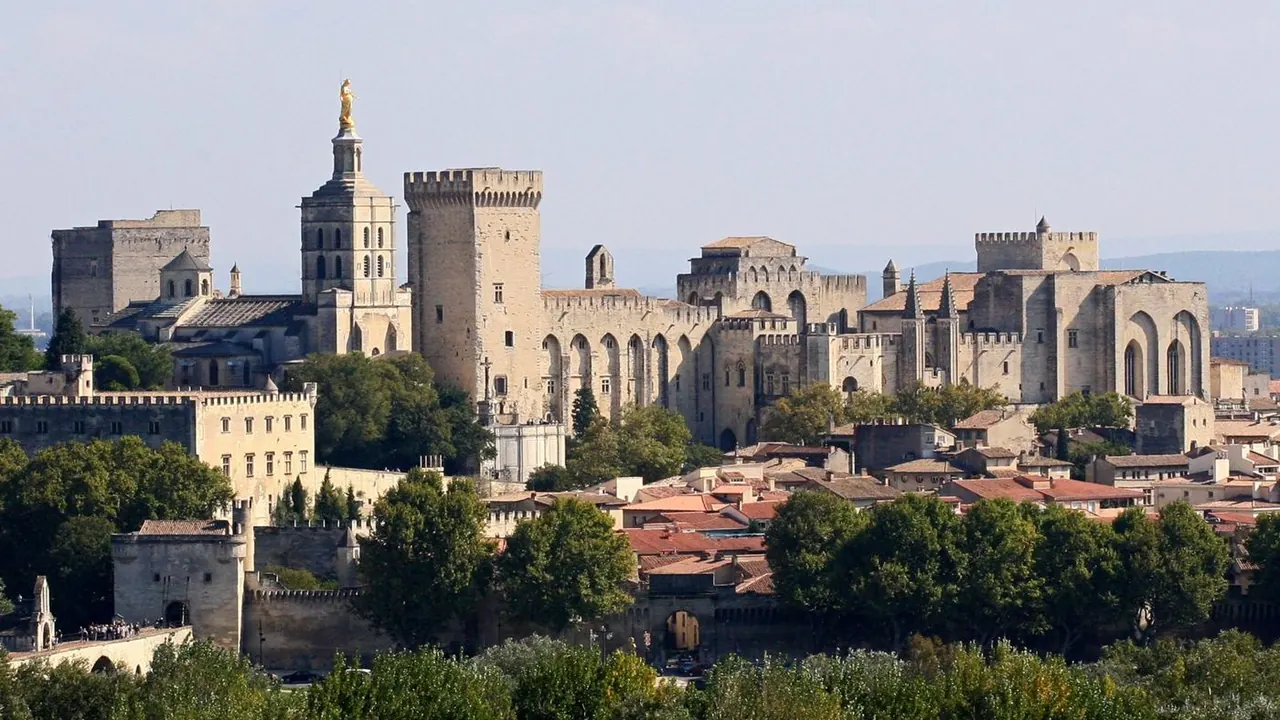
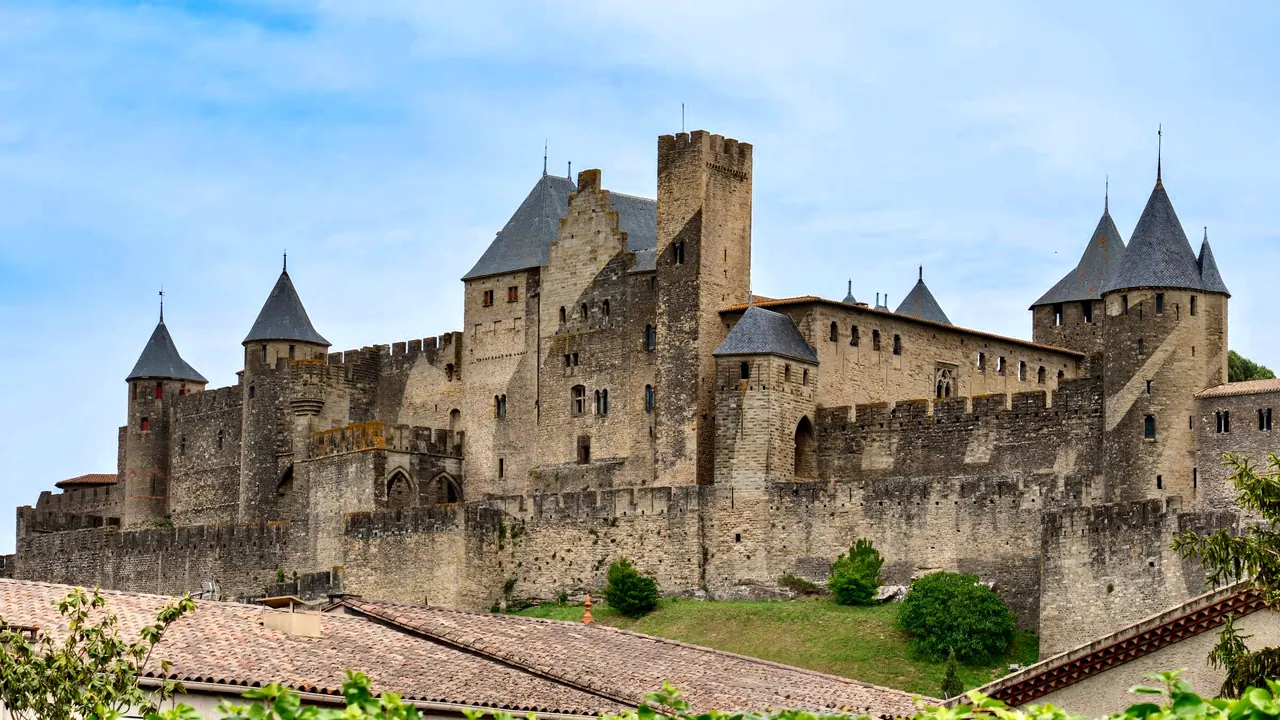
Photos: Avignon by BlueBreezeWiki, CC BY-SA 3.0, cropped; Carcassonne by Susanne Jutzeler, suju-foto, Pexels License.
Avignon or Carcassonne?
Our verdict in twelve categories, each scored against the same fixed benchmark cities, and the climate month by month, so you can choose for your trip.
Choose Avignon for
- live music and the arts
- day trips
- shopping
Avignon suits the traveller who wants a base rather than a single sight. The papal palace and its museums fill two good days, the July theatre festival is in a different league from anything Carcassonne puts on, and Roman Nîmes, Arles, Orange and the Pont du Gard are all close, several of them by train. It also rewards people who travel to eat and drink well, with Châteauneuf-du-Pape on the doorstep.
Choose Carcassonne for
- beaches
- prices
- families
Families and anyone watching their spending will do better in Carcassonne. La Cité works as a ready-made castle adventure for children, the Lac de la Cavayère gives a proper supervised swim close to town, and rooms and meals in the Bastide cost less. It is a smaller, quieter stay built around one extraordinary skyline, with the Cathar castles in the hills to the south.
Scoreboard
Twelve categories on one fixed scale from 0 to 100. The shaded stretch is the gap between the two.
Your match
Pick a travel style or drag the sliders, and both match scores follow your weighting.
Wins on live music and the arts and day trips with your weighting.
Wins on beaches and prices with your weighting.
What matters to you?
Category by category
What the scores mean for a trip.
Beaches & swimming
Neither town is a beach destination, but swimming is easier from Carcassonne. The Lac de la Cavayère is a short drive from the Cité and has sandy shores and lifeguards in summer, so an afternoon swim fits in around sightseeing.
Avignon's best swim is in the Gardon below the Pont du Gard, about half an hour away. It is wilder, with rocky banks rather than a managed beach. The sea is a drive of an hour or more from either town: the Camargue's open sands from Avignon, the shallow beaches of Gruissan from Carcassonne.
Food & drink
Avignon eats better and with more variety. Its Provençal cooking runs from daube and tians to tapenade and fruit from the plain, the counters at Les Halles cook lunch from the market stalls, and Châteauneuf-du-Pape and the Côtes du Rhône villages supply the wine.
Carcassonne's cooking centres on one great dish, cassoulet, with good-value Corbières, Minervois and Limoux wines to go with it. Where you eat matters: the set menus in the Cité are uneven, so the meals worth having are down in the Bastide around Place Carnot.
Culture & sights
Both are two-day towns built around one great medieval site, but Avignon has more beyond its centrepiece. Alongside the Palais des Papes are the cathedral, the broken bridge and three serious museums covering everything from Italian primitives to contemporary art, with Villeneuve-lès-Avignon just across the river.
Carcassonne's draw is La Cité itself: the double walls and towers, the rampart walk of the Château Comtal and the stained glass of Saint-Nazaire. The Bastide and the Canal du Midi add a second layer, but the museums are few and small.
Nightlife
Neither is a town for a big night out, though Avignon stays up later. Its squares, wine terraces and student bars give the evenings some life, and in July the festival keeps the old town busy into the small hours.
Carcassonne goes quiet once the day visitors leave the Cité, so the highlight of the evening is a walk on the floodlit walls. Locals drink in the bars around Place Carnot, and anyone after clubs goes to Toulouse.
Nature & outdoors
Avignon has the more famous landscapes close by: Mont Ventoux, the ochre cliffs of the Luberon, the Dentelles de Montmirail, the Alpilles and the Camargue's flamingos and white horses. Flat cycling on the Île de la Barthelasse starts just over the bridge.
Carcassonne's countryside is wilder and less well known. It has the forests of the Montagne Noire, Corbières ridges topped with castle ruins and rafting in the gorges of the upper Aude. The easiest outing, the shaded towpath of the Canal du Midi, starts in town, but most of the rest needs a car.
Day trips
Avignon is one of the best bases in France for day trips. Nîmes, Arles, Orange and the Pont du Gard put Roman arenas, a theatre and an aqueduct within half an hour, and the Luberon villages, Châteauneuf-du-Pape and L'Isle-sur-la-Sorgue could fill the rest of a week.
Carcassonne's outings are good but more spread out. The Cathar castles of Peyrepertuse and Quéribus are dramatic, and Toulouse and Narbonne are easy by train, but some of the best places, Albi and Collioure among them, are closer to two hours away.
Good for families
Carcassonne has more for children in the town itself. The Cité is a castle they can walk round on the walls, with jousting and falconry in summer, and the lake beach, water park and animal park are all close by.
Avignon has fewer set pieces: the tablet tour of the palace, the bridge from the song and the playground on the Rocher des Doms. Its family days out, such as canoeing at the Pont du Gard or seeing the Camargue's horses, are further away. Both towns are cobbled and hard going with a pushchair, and both are best avoided with children in crowded July.
Getting around
Avignon is the easier town without a car. Its sights are a short walk from the central station, and regional trains run to Arles, Nîmes, Orange and Marseille. The high-speed TGV station is a few kilometres south of the walls, a short shuttle-train ride away.
Carcassonne is split in two: the flat Bastide by the station, and the Cité, twenty-five minutes away on foot up a steady climb. Trains serve Toulouse and Narbonne well, but most other outings depend on a hire car, as the country villages do from both towns.
Shopping & style
Avignon has the better shops to browse. The lanes off Rue Joseph Vernet sell Provençal cottons, lavender and olive-wood, there are a few independent boutiques, and the antiques dealers of L'Isle-sur-la-Sorgue are nearby.
In Carcassonne, the shops in the Cité lanes are mostly toy swords and knight costumes, and the Bastide has a plain provincial high street. In both towns the best things to buy are edible: tapenade and Châteauneuf in Avignon, tinned cassoulet and Limoux blanquette in Carcassonne.
Affordability
Carcassonne is the cheaper stay. Rooms in the Bastide and by the canal are moderately priced, local wine costs little and the compact town keeps transport costs down. Only the hotels and restaurants inside the Cité charge a premium.
Avignon costs a step more, as a provincial town with a big tourist trade, and its rooms inside the walls are steep during the July festival. In both towns spring and autumn are kinder on the budget, and a hire car is the usual extra cost.
Live music & performing arts
This is where the two differ most. In July Avignon is one of the world's leading theatre towns, with the Festival d'Avignon in the Cour d'honneur of the papal palace and an enormous fringe in every cellar and courtyard. For the rest of the year it keeps an opera house, a dozen small theatres and a jazz club busy.
Carcassonne's July festival makes a fine evening out, with headline concerts in the open-air theatre inside the Cité and fireworks over the walls on Bastille Day. Outside summer its programme is thin, and opera means a trip to Toulouse.
Wellness & relaxation
The difference is in the setting, because in both towns relaxing means slow lunches and shade rather than spas. Avignon's version is a farmhouse guesthouse with a pool among the vineyards and lavender, or a late afternoon in the Rocher des Doms garden. When the mistral blows for days, though, it can wear on the nerves.
Carcassonne has the plane-shaded Canal du Midi for gentle walks, and the old, modest spa villages of Rennes-les-Bains and Alet-les-Bains within an hour. Both towns are least restful in high summer.
When should you go?
Pick your month. The climate figures are measured averages, not a forecast.
Avignon in July
Carcassonne in July
Daytime high, °C
Rainfall in the month, mm
Where the figures come from
Avignon has no rain gauge within 25 km of the centre, so its rainfall comes from a gridded climate dataset read at the city rather than from a gauge further away.
Avignon's sunshine is measured 34 km from the centre, at Nimes / Courbessac.
Carcassonne has no rain gauge within 25 km of the centre, so its rainfall comes from a gridded climate dataset read at the city rather than from a gauge further away.
Carcassonne's sunshine is measured 68 km from the centre, at Perpignan.
Temperature and rainfall are climate normals, averaged over the years shown. Avignon: 2005-2020 (sunshine 1981-2010, rainfall 1991-2020) normals, Avignon / Morières-lès-Avignon (8.6 km from centre). Carcassonne: 1999-2020 (sunshine 1991-2020, rainfall 1991-2020) normals, Carcassonne (2.8 km from centre).
Both towns are at their best in May, June and September. The days are then warm enough for long lunches outside and the streets are comfortable to walk. High summer is where they part. Avignon climbs to about 32°C in July and gets more sunshine than Carcassonne, so the heat inside the walls is heavy by mid-afternoon. Carcassonne peaks nearer 29°C, which is still hot on the ramparts but a little easier. July is the driest month in both towns, and that suits a swim in the Gardon or the Lac de la Cavayère.
The autumn rain arrives in both from September but falls harder in Avignon, which gets around 109mm in October against about 76mm in Carcassonne. Winters are similar and cool, with highs around 11°C. That is fine for museums and walks but too cool for sitting outside.
Which traveller are you?
On a culture and arts trip, Avignon is the stronger choice. The Palais des Papes, the Petit Palais and the Collection Lambert give it more depth than Carcassonne's few small museums, and in July the theatre festival and its fringe take over the whole town.
On a family trip with young children, Carcassonne makes the easier week. Days can alternate between the castle and a swim without long drives, and the town is calm. In Avignon, most of what children enjoy beyond the palace means a car journey into the countryside.
For a trip on a tight budget, Carcassonne lets the money last longer. Stay in the lower town rather than inside the walls, live on set lunches and local wine, and take the train to Toulouse or Narbonne. Avignon costs a step more, especially during the festival.
Before you go
| Measure | Avignon | Carcassonne |
|---|---|---|
| Official language | French | French |
| Currency | Euro (EUR) | Euro (EUR) |
| Sockets | CE230 V, 50 Hz | CE230 V, 50 Hz |
| Driving side | Right | Right |
| Time zone | UTC+1, UTC+2 in summer | UTC+1, UTC+2 in summer |
| Emergency number | 112 | 112 |
| Elevation | 10 m | 81 m |
| Main airport | Marseille Provence Airport (MRS)65 km from centre126 non-stop destinations | Carcassonne Salvaza Airport (CCF)4 km from centre10 non-stop destinations |
| Public holidays this year | 11 days | 11 days |
By the numbers
| Measure | Avignon | Carcassonne |
|---|---|---|
| City population | 92,188 | 46,080 |
| People per km² | 1,420 | 708 |
| Museums within 10 km | 11 | 6 |
| UNESCO World Heritage sites within 50 km | 6 | 2 |
Where else could you go?
Every comparison below shares a destination with this one, so you can follow Avignon or Carcassonne somewhere new.
- Aix-en-Provencevs Avignon
- Montpelliervs Avignon
- Toulousevs Carcassonne
- Marseillevs Avignon
- Montpelliervs Carcassonne
- Gironavs Carcassonne