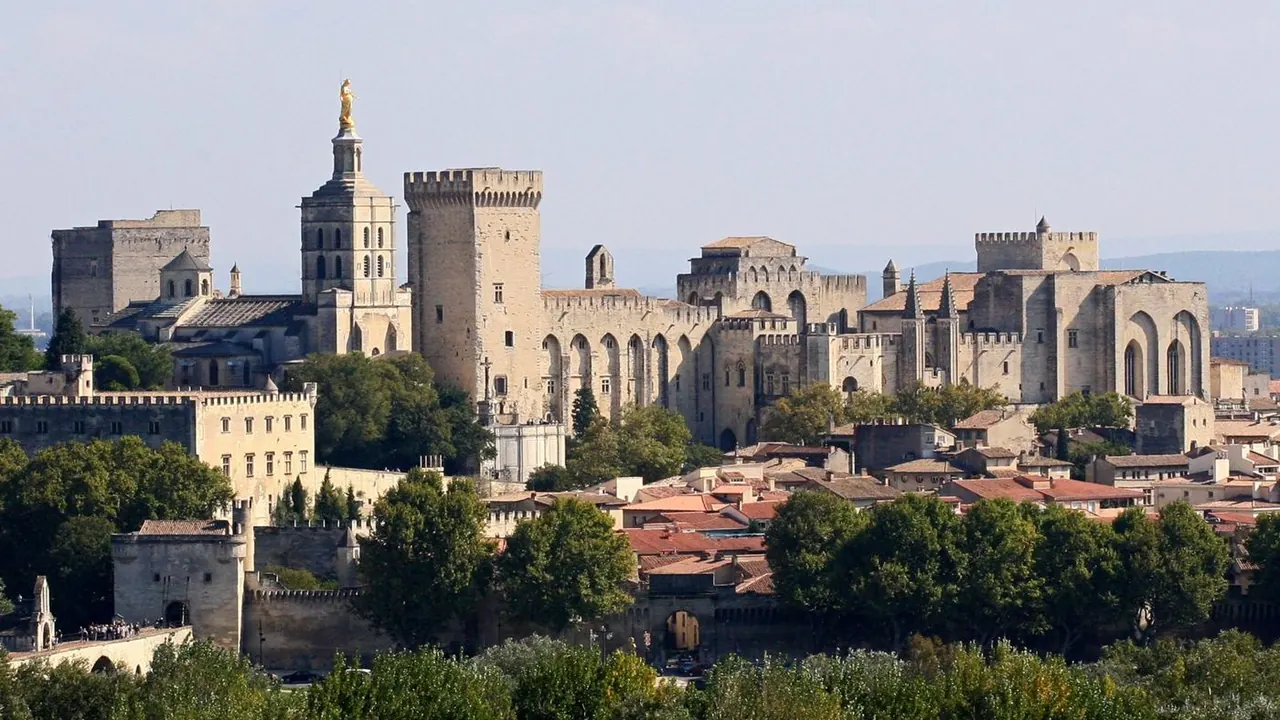
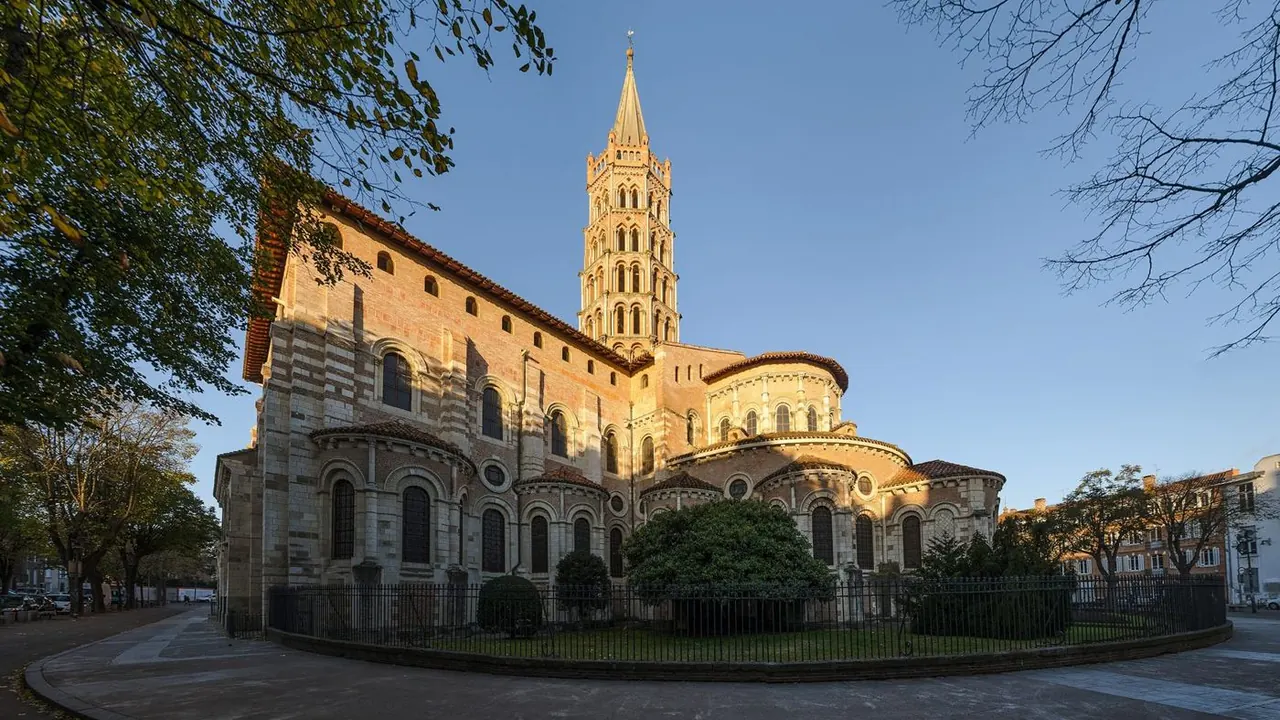
Photos: Avignon by BlueBreezeWiki, CC BY-SA 3.0, cropped; Toulouse by ZbebVial, CC BY-SA 3.0, cropped.
Avignon or Toulouse?
Our verdict in twelve categories, each scored against the same fixed benchmark cities, and the climate month by month, so you can choose for your trip.
Choose Avignon for
- day trips
- beaches
- nature and the outdoors
Avignon suits a traveller who wants a compact base for touring Provence. The papal palace and the ramparts take a couple of days. After that the town works as a hub for Roman Nîmes, Arles, Orange and the Pont du Gard, for the Luberon villages and for Mont Ventoux. It is the better pick for wine country, open landscapes and, in July, theatre. The trade-off is quiet evenings for the rest of the year, and the trip works best with a car.
Choose Toulouse for
- nightlife
- families
- shopping
Toulouse is the stronger choice if you want the city itself to be the trip. Its students keep the bars around Place Saint-Pierre busy, its cassoulet and duck cooking is heartier, and the space centre and aircraft museums make it far easier with children. Metro lines and a flat centre make it simple to get about, Carcassonne and Albi are easy train trips, and the Pyrenees are within reach.
Scoreboard
Twelve categories on one fixed scale from 0 to 100. The shaded stretch is the gap between the two.
Your match
Pick a travel style or drag the sliders, and both match scores follow your weighting.
Too close to call, level with your weighting
Wins on day trips and beaches with your weighting.
Wins on nightlife and families with your weighting.
What matters to you?
Category by category
What the scores mean for a trip.
Beaches & swimming
Neither city is a beach destination, but Avignon is closer to the water. The Gardon's clear pools below the Pont du Gard are half an hour away. The Camargue sands and Le Grau-du-Roi make a day trip of a little over an hour.
From Toulouse, the Mediterranean at Gruissan and Narbonne is about two hours off, so a beach day is a long one. Closer to home, swimming means the supervised leisure lakes on the edge of the city, such as Sesquières. They are pleasant enough, but no match for a river gorge or the sea.
Food & drink
Both cities cook from their own region, but in different styles. Avignon's food is Provençal and lighter: tians, daube, tapenade and summer fruit. Its real strength is wine, with Châteauneuf-du-Pape on the doorstep. Les Halles on Place Pie is a fine market, though the restaurants on the main squares mostly serve tourists.
Toulouse is the better food city. Cassoulet, confit, magret and foie gras are everyday fare, the lunch counters upstairs at the Victor Hugo market are an institution, and the student quarters keep casual eating plentiful. Neither city offers much beyond French cooking.
Culture & sights
Both repay two unhurried days, and the difference lies in period and building material. Avignon is Gothic and papal: the vast Palais des Papes, the broken bridge, the ramparts and the Italian primitives of the Petit Palais. It is all pale stone, packed into a small UNESCO-listed core.
Toulouse is Romanesque and built of rose-red brick. Its highlights are Saint-Sernin, the palm-tree vault of the Jacobins and the Renaissance mansions of the woad merchants. It also has something Avignon cannot offer: the aerospace museums and space centre on the outskirts.
Nightlife
Toulouse is the city for going out. Its large student population fills the terraces of Place Saint-Pierre and the quays, there are wine bars around Carmes for an older crowd, and clubs and an electronic scene carry on later. It does quieten in summer once the students leave.
Avignon works the other way round. For most of the year an evening means an aperitif on Place Pie and an early night. In July, though, the festival keeps the old town up until the small hours.
Nature & outdoors
Avignon has the more dramatic scenery within easy reach. Mont Ventoux, the Luberon cliffs, the Dentelles de Montmirail, the Alpilles and the Gardon gorges are all around an hour away or less, and the Camargue's lagoons and flamingos lie to the south.
The countryside right around Toulouse is gentle farmland, best seen by bike along the towpaths of the Canal du Midi. Its great asset is the Pyrenees, with real mountain hiking and winter skiing, but they are one and a half to two hours away each way.
Day trips
Day trips are where Avignon pulls clearly ahead. Nîmes, Arles, Orange and the Pont du Gard put first-rank Roman sites within half an hour. The Luberon villages, Les Baux, Châteauneuf-du-Pape and Aix can easily fill out a week.
Toulouse has two outstanding outings, the walled Cité of Carcassonne and brick-built Albi, both about an hour away by train. Moissac's cloister and Cordes-sur-Ciel add more, but the distances are longer and the list runs out sooner.
Good for families
Toulouse is the better bet with children, mostly thanks to aerospace. There is the Cité de l'espace with its Ariane rocket and Mir module, a Concorde to walk through, and the giant mechanical creatures in Montaudran. With flat pavements and the Jardin des Plantes as well, days in the city are easy.
In Avignon, the tablet tour of the palace and a dance on the bridge will keep children happy for a morning. Most family days out, such as canoeing at the Pont du Gard or seeing the Camargue horses, need a car, and the cobbles are hard work with a pushchair.
Getting around
Both centres are walkable, but Toulouse also has two automated metro lines, trams and a bike scheme, so the whole city is easy to cover without a car. Its flat streets are also easier on the feet than Avignon's cobbles.
Avignon is smaller, and almost everything inside the walls is within twenty minutes' walk. Regional trains to Arles and Nîmes are handy. However, there is only one tram line, and the cobbles and the mistral make walking more tiring.
Shopping & style
Toulouse has more to shop for. There are chains and a large department store around Rue d'Alsace-Lorraine, independent boutiques and antiques in Saint-Étienne, and the big Sunday market at Saint-Sernin.
Avignon is smaller and more regional, with Provençal prints, lavender, soap and olive wood in the lanes off Rue Joseph Vernet. In both cities the best souvenirs are edible: violet sweets and Armagnac in Toulouse, tapenade and Rhône wine in Avignon. For serious antiques, Avignon visitors drive out to L'Isle-sur-la-Sorgue.
Affordability
Costs are much the same in both. They are provincial French cities, cheaper than Paris or the Riviera, and in each the set lunch is the best-value meal. The differences come down to timing and transport.
Room prices in Avignon swing sharply: steep during the July festival and far gentler in spring and autumn. A hire car is also hard to avoid if you want to see the countryside. Toulouse is steadier, with cheap eating in the student quarters and inexpensive public transport, though trade fairs push up hotel rates.
Live music & performing arts
In July, Avignon has no rival. The Festival d'Avignon fills the Cour d'honneur of the Palais des Papes, and the Off fringe adds well over a thousand shows a day across town. For the rest of the year the opera house and small theatres keep a modest programme going.
Toulouse offers a steadier, more classical programme. Opera and ballet at the Théâtre du Capitole, and the Orchestre National du Capitole in the round Halle aux Grains, make it the better choice for music outside July. Nothing in its calendar matches Avignon's festival.
Wellness & relaxation
Neither city has a bathing culture, so relaxing means hotel spas and the slow southern pace in both. Avignon has the edge in setting: farmhouse guesthouses among the vineyards and lavender, with a pool and little else to do, make an easy retreat, as long as you stay away from town in July.
In Toulouse, relaxing means long lunches and bike rides along the Canal du Midi. For real thermal bathing you need an overnight trip to Luchon or Ax-les-Thermes in the Pyrenees.
When should you go?
Pick your month. The climate figures are measured averages, not a forecast.
Avignon in July
Toulouse in July
Daytime high, °C
Rainfall in the month, mm
Where the figures come from
Avignon has no rain gauge within 25 km of the centre, so its rainfall comes from a gridded climate dataset read at the city rather than from a gauge further away.
Avignon's sunshine is measured 65 km from the centre, at Marseille / Marignane.
Temperature and rainfall are climate normals, averaged over the years shown. Avignon: 2005-2020 (sunshine 1991-2020, rainfall 1991-2020) normals, Avignon / Morières-lès-Avignon (8.6 km from centre). Toulouse: 1991-2020 normals, Toulouse / Blagnac (7 km from centre).
Avignon is the hotter and much sunnier of the two. Highs reach 31°C in July and August, which is too hot for long afternoons on the cobbles but ideal for a swim in the Gardon. Summer there is dry and very bright. The rain comes in autumn: October is the wettest month at 109mm, and September and November stay wet. Late April to June is the best time for walking the town and hiking the hills, followed by the first part of September.
Toulouse is a couple of degrees milder in summer, peaking at 29°C, and it gets noticeably less sunshine all year. Its rain is spread more evenly, with late spring the dampest stretch, so October is drier there than in Avignon. Winters in both cities are cool, with highs around 11°C to 11°C. That is fine for museums but not for lingering outdoors.
Which traveller are you?
For a food and nightlife trip, Toulouse wins clearly. Cassoulet, duck and the Victor Hugo market give it the richer table. The student terraces on Place Saint-Pierre and the wine bars around Carmes keep going long after Avignon's walled streets have gone quiet.
On a family trip with children, Toulouse is the easier choice. The Cité de l'espace and the walk-through Concorde can fill whole days, the flat centre suits pushchairs and the metro reaches most sights. Most of Avignon's best family outings need a car.
For an outdoors trip, Avignon has the better country around it. Mont Ventoux, the Luberon's ochre trails, the Alpilles and canoeing on the Gardon are all within an hour, with the Camargue to the south. From Toulouse, the big landscapes of the Pyrenees mean a much longer drive.
Before you go
| Measure | Avignon | Toulouse |
|---|---|---|
| Official language | French | French |
| Currency | Euro (EUR) | Euro (EUR) |
| Sockets | CE230 V, 50 Hz | CE230 V, 50 Hz |
| Driving side | Right | Right |
| Time zone | UTC+1, UTC+2 in summer | UTC+1, UTC+2 in summer |
| Emergency number | 112 | 112 |
| Elevation | 10 m | 115 m |
| Main airport | Marseille Provence Airport (MRS)65 km from centre126 non-stop destinations | Toulouse-Blagnac Airport (TLS)7 km from centre84 non-stop destinations |
| Public holidays this year | 11 days | 11 days |
By the numbers
| Measure | Avignon | Toulouse |
|---|---|---|
| City population | 92,188 | 514,819 |
| People per km² | 1,420 | 4,352 |
| Museums within 10 km | 11 | 24 |
| UNESCO World Heritage sites within 50 km | 6 | 2 |
Where else could you go?
Every comparison below shares a destination with this one, so you can follow Avignon or Toulouse somewhere new.