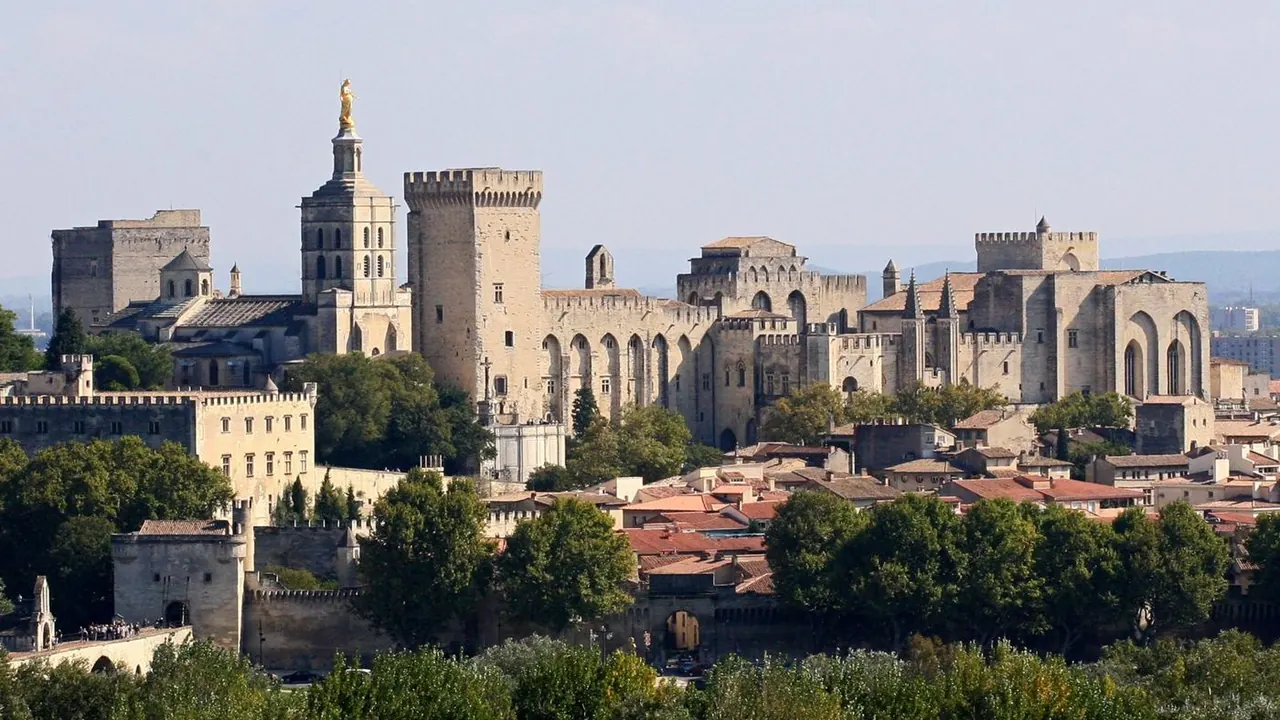
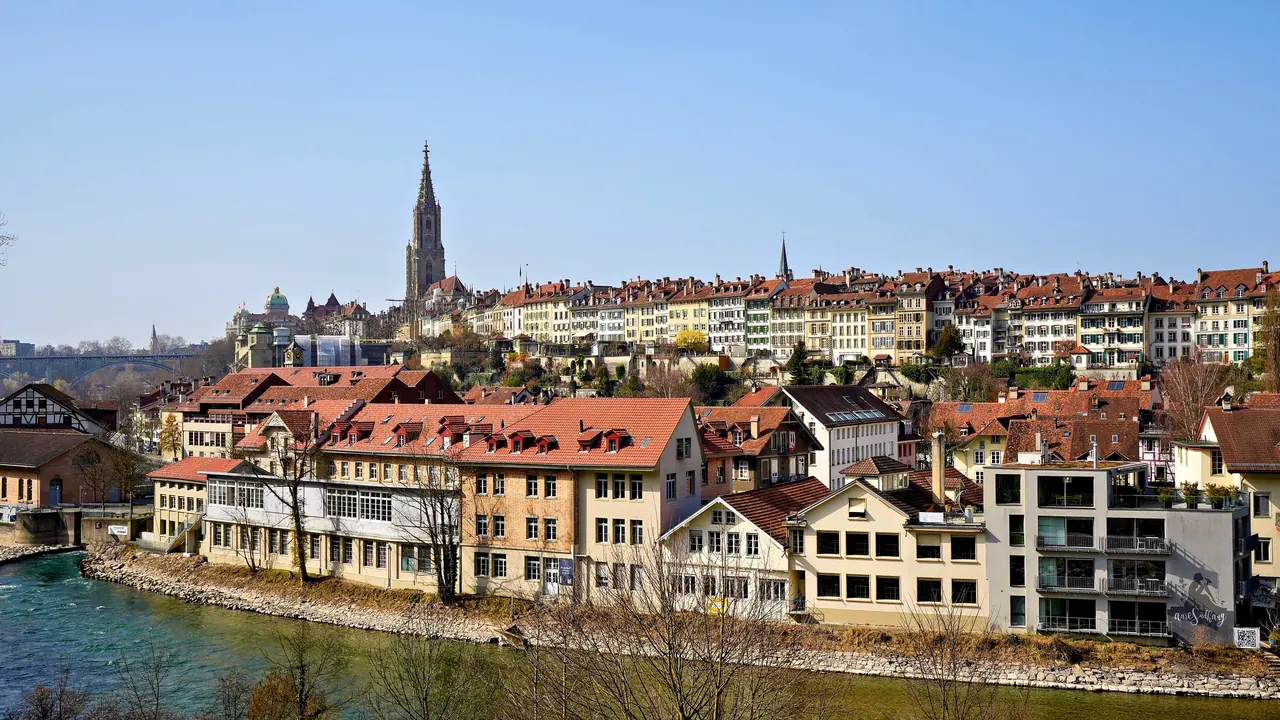
Photos: Avignon by BlueBreezeWiki, CC BY-SA 3.0, cropped; Bern by Beat Bieri, Pexels License.
Avignon or Bern?
Our verdict in twelve categories, each scored against the same fixed benchmark cities, and the climate month by month, so you can choose for your trip.
Choose Avignon for
- prices
- live music and the arts
- food and drink
Avignon suits travellers who want southern warmth, good wine and a base for touring Provence. The walled town is compact, and much of its appeal lies around it: Roman Nîmes, Arles and Orange, the Pont du Gard, the Luberon villages and the vineyards of Châteauneuf-du-Pape. Choose it if you care about eating and drinking well, if you love theatre and can come in July, or if Swiss prices put you off. You will need to be happy hiring a car.
Choose Bern for
- getting around
- families
- beaches
Bern is for travellers who want everything to run smoothly without a car. Trains leave from the top of the old town for Lucerne, Interlaken and Lake Geneva, the Alps are close enough to see from the Minster tower, and the city is calm and easy with children. It costs much more and the food is plainer. For mountain walking, river swimming and easy rail day trips, though, it offers more.
Scoreboard
Twelve categories on one fixed scale from 0 to 100. The shaded stretch is the gap between the two.
Your match
Pick a travel style or drag the sliders, and both match scores follow your weighting.
Too close to call, 2 points apart
Wins on prices and live music and the arts with your weighting.
Wins on getting around and families with your weighting.
What matters to you?
Category by category
What the scores mean for a trip.
Beaches & swimming
Neither city has a beach, but Bern makes more of its water. On summer afternoons people walk upstream and float back down the cold, fast Aare to the Marzili lido, with its lawns and pools. Lake Thun, about twenty minutes away by train, has calmer bathing.
In Avignon the Rhône is not safe for swimming. A swim means driving about half an hour to the Gardon pools below the Pont du Gard, or well over an hour to the sands of the Camargue, so most visitors use the pool where they are staying.
Food & drink
Avignon is the better place to eat. Its Provençal cooking uses produce from the surrounding plain: daube, tians, goat's cheese and apricots. At Les Halles, small counters cook lunch from what the market sells, and bistros in the side streets pour Châteauneuf-du-Pape and Côtes du Rhône by the glass.
Bern's cooking is heavier and Alpine: the Berner Platte, rösti and fondue, served in guildhall dining rooms and vaulted cellars. The chocolate is excellent and Emmental cheese fills the markets, but eating out is expensive and rarely surprising.
Culture & sights
Both are UNESCO-listed old towns that two days will cover, and they are much the same in weight. Avignon's draw is one huge building, the Palais des Papes. Around it are the broken bridge, nearly 4km of ramparts and the Italian primitives of the Petit Palais.
In Bern the whole townscape is the sight rather than a single monument: arcaded sandstone streets, painted fountains and the Zytglogge clock tower. Its museums have a more modern bent, with the Zentrum Paul Klee and Einstein's flat on Kramgasse.
Nightlife
Both cities are quiet at night, in different ways. In Avignon an evening out means an aperitif on Place Pie or a glass of Côtes du Rhône on a terrace. The big exception is July, when the festival keeps the squares full until the small hours.
Bern's nightlife is spread more evenly through the year. There are cellar bars under the arcades, busy weekends on Aarbergergasse and riverside terraces in summer. For late, rough-edged parties there is the Reitschule, which has no equivalent in Avignon.
Nature & outdoors
Bern has the Alps on its horizon, and they are only an hour away by train. Around Interlaken there is high-mountain hiking, cable cars and winter skiing. There are lakeside paths at Thun, and from town a funicular climbs the Gurten hill. Hardly any of it needs a car.
Avignon's countryside is fine in a southern way: Mont Ventoux for road cyclists, the ochre trails of the Luberon, the Alpilles and the flamingos of the Camargue. Most of it is a drive away, though, and the summer heat means it is best in spring and autumn.
Day trips
Both are excellent bases, and Avignon has slightly more around it. There are the Roman arenas of Nîmes and Arles, the theatre at Orange, the Pont du Gard, Les Baux and the Luberon villages, and Marseille and Aix are a short train ride away. The catch is that the villages and vineyards need a car.
Bern makes up for some of that with ease. From the central station you can reach Lucerne, Basel, Zurich, Fribourg, Murten and Thun without planning around connections, so you can see a different town every day for a week by train alone.
Good for families
Bern is the easier city with children. The bear park, the Dählhölzli zoo, the animal dioramas at the Natural History Museum and the Gurten meadows are all easy to reach, and trams and buses are easy with a pushchair. The one caution is the Aare, which is for strong swimmers only.
Avignon has a few things children enjoy: the tablet tour of the Palais des Papes, dancing on the bridge from the song and the playground in the Rocher des Doms. But the cobbled lanes tire small legs, and the bigger days out, such as canoeing at the Pont du Gard, are outside town.
Getting around
You can walk across either old town in about twenty minutes, so the difference is in what lies beyond. Bern's trams, buses and funiculars run on one fare system with Swiss punctuality. The arcades keep you dry, and the station sits at the top of the old town.
Avignon is easy on foot, and regional trains go to Arles and Nîmes. But buses to the hill villages and Mont Ventoux are sparse, and the TGV station is a shuttle ride from the walls.
Shopping & style
Neither city is a shopping destination, but Bern has a little more. Watch and chocolate shops line the arcaded streets, cellar shops on Gerechtigkeitsgasse sell antiques, design and books, and a large shopping centre on the western edge covers the mainstream brands.
Avignon's shops are Provençal: printed cottons, lavender and olive wood in the lanes around Rue des Marchands. The best things to take home are edible ones from Les Halles, and serious antique hunters go out to L'Isle-sur-la-Sorgue.
Affordability
This is the widest gap between the two. Avignon has the prices of a provincial French town. Set lunches are fair and wine from the producers is good value, and only the July festival pushes up the price of rooms inside the walls.
Bern is very expensive across the board, from simple guesthouses to a dinner with wine. Hotels usually give guests a pass for local transport, and the bear park, the river paths and tours of the Federal Palace are free. Even so, a stay in Bern costs far more.
Live music & performing arts
Avignon has the stronger stage, largely because of July. The Festival d'Avignon puts on major productions in the Cour d'honneur of the Palais des Papes, and the Off fringe fills every cellar and courtyard in town. The rest of the year, the Opéra Grand Avignon and a dozen small theatres keep up a regular programme.
Bern has the steady programme of a small capital: opera and drama in German at the Stadttheater, the symphony orchestra at the Casino and new dance at the Dampfzentrale. There is plenty for an evening, but nothing worth planning a trip around.
Wellness & relaxation
Bern is the better place to switch off. A large thermal complex on the western edge has warm pools, saunas and steam rooms, and the old town has a hammam-style spa. Quiet Sundays and long lunches on riverside terraces set an unhurried pace, and the mountain spa hotels of the Bernese Oberland are close by.
Avignon relies on hotel spas and a few day spas, and its rest comes from long lunches under the plane trees. Many visitors who want quiet stay in farmhouses among the vineyards outside the walls, because July in town is anything but calm.
When should you go?
Pick your month. The climate figures are measured averages, not a forecast.
Avignon in July
Bern in July
Daytime high, °C
Rainfall in the month, mm
Where the figures come from
Avignon has no rain gauge within 25 km of the centre, so its rainfall comes from a gridded climate dataset read at the city rather than from a gauge further away.
Avignon's sunshine is measured 65 km from the centre, at Marseille / Marignane.
Bern has no rain gauge within 25 km of the centre, so its rainfall comes from a gridded climate dataset read at the city rather than from a gauge further away.
Bern's sunshine is measured 71 km from the centre, at Herten.
Temperature and rainfall are climate normals, averaged over the years shown. Avignon: 2005-2020 (sunshine 1991-2020, rainfall 1991-2020) normals, Avignon / Morières-lès-Avignon (8.6 km from centre). Bern: 2010-2020 (sunshine 1991-2020, rainfall 1991-2020) normals, Bern / Bern - Belp Airport (5.5 km from centre).
Avignon is at its best in late spring and early summer. May is warm with some showers, and June is the pick of the year: hot enough for the Gardon pools, dry and very sunny. July is even drier and sunnier, but highs reach around 32°C and August is much the same. Afternoon walks on the cobbled lanes are hard going then, so sightseeing is best kept to mornings and evenings. The rain sets in from September and peaks in October at about 109mm. From November to February the days are cool and much less sunny, though still milder than in Bern.
Bern is cooler all year round and wetter for most of it. Only in October and November do Avignon's autumn rains outdo it. July and August reach about 26°C, which is comfortable for walking and is the season for floating down the Aare or swimming in Lake Thun. But May to August are also Bern's rainiest months, each with over 100mm, so summer days come with showers. September is a little drier and still mild enough for walking. Winters are cold at around 5°C and grey, with very little sun. Avignon's best weeks fall in May and June, while Bern is still unsettled. Bern is most pleasant from July to September, when Avignon is either too hot or turning wet.
Which traveller are you?
On a trip on a tight budget, Avignon is much easier. It is not a bargain, but set lunches in the bistros, wine bought from producers and an old town you can explore on foot keep costs sensible. In Bern, even a plain guesthouse or a beer on a terrace stretches the budget.
On a family trip with children, Bern is the better base. The bear park, the Dählhölzli zoo, the Gurten playground and the shallow pools at the Marzili are all close by tram. Avignon has little in town for children, and most family outings there need a car.
For an outdoors trip, Bern offers more. Trains reach Interlaken and hiking in the Jungfrau region in about an hour, and Lake Thun and the Gurten are closer still. Avignon has Mont Ventoux, the Luberon and the Camargue, but you need a car, and it is best in spring or autumn.
Before you go
| Measure | Avignon | Bern |
|---|---|---|
| Official language | French | French, German, Italian, Romansh |
| Currency | Euro (EUR) | Swiss Franc (CHF) |
| Sockets | CE230 V, 50 Hz | CJ230 V, 50 Hz |
| Driving side | Right | Right |
| Time zone | UTC+1, UTC+2 in summer | UTC+1, UTC+2 in summer |
| Emergency number | 112 | 112 |
| Elevation | 10 m | 542 m |
| Main airport | Marseille Provence Airport (MRS)65 km from centre126 non-stop destinations | Zürich Airport (ZRH)101 km from centre226 non-stop destinations |
| Public holidays this year | 11 days | 10 days |
By the numbers
| Measure | Avignon | Bern |
|---|---|---|
| City population | 92,188 | 136,988 |
| People per km² | 1,420 | 2,655 |
| Museums within 10 km | 11 | 30 |
| UNESCO World Heritage sites within 50 km | 6 | 2 |
Where else could you go?
Every comparison below shares a destination with this one, so you can follow Avignon or Bern somewhere new.