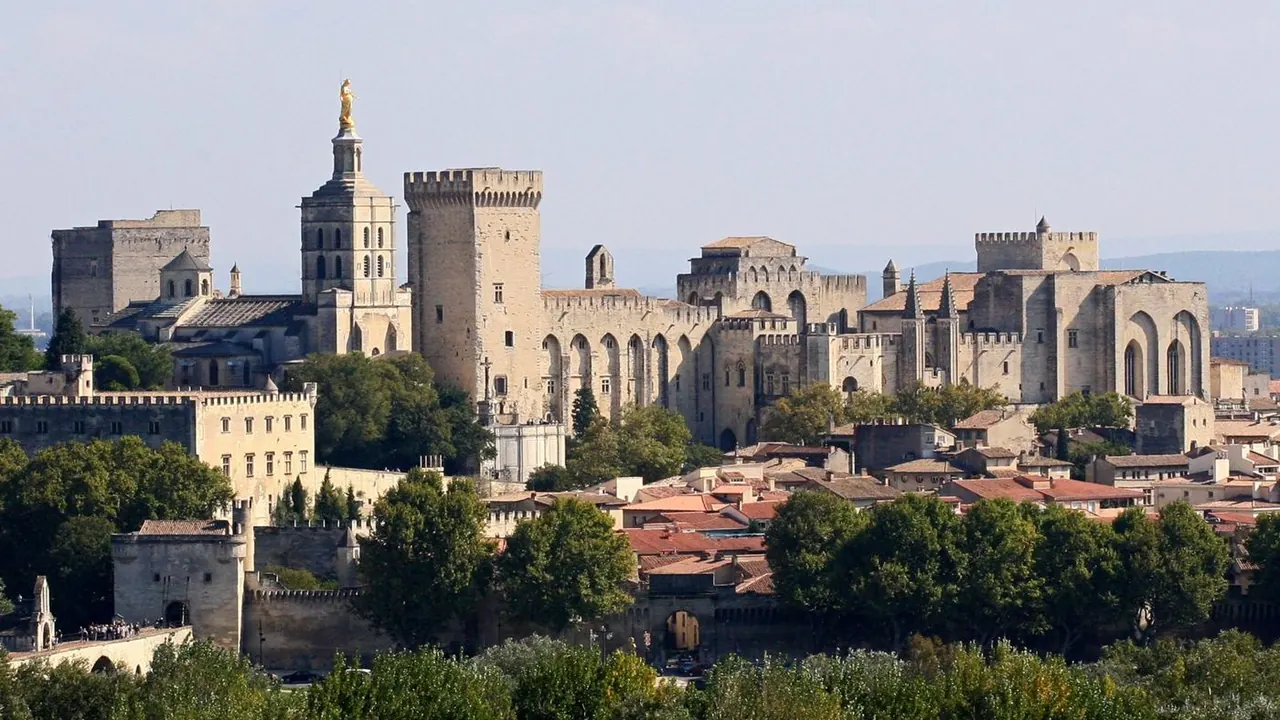
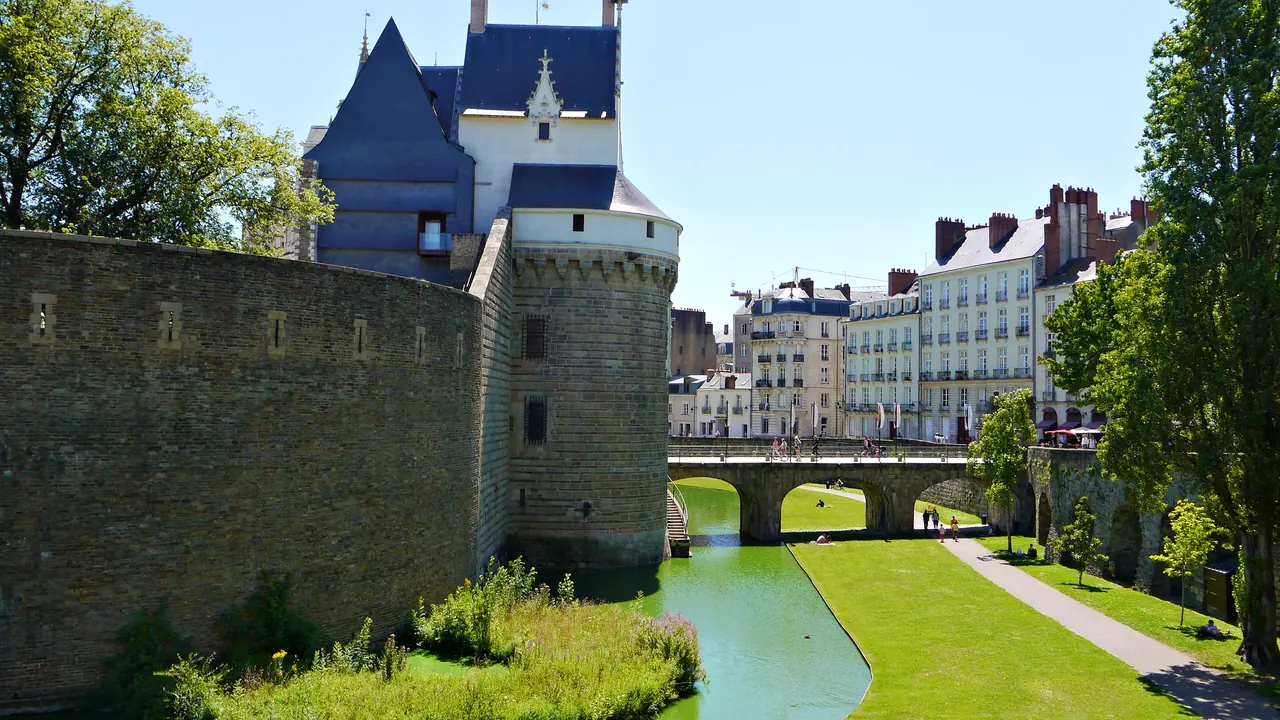
Photos: Avignon by BlueBreezeWiki, CC BY-SA 3.0, cropped; Nantes by Carole44, CC BY-SA 3.0, cropped.
Avignon or Nantes?
Our verdict in twelve categories, each scored against the same fixed benchmark cities, and the climate month by month, so you can choose for your trip.
Choose Avignon for
- day trips
- nature and the outdoors
- live music and the arts
Avignon suits travellers who want history and countryside more than city life. The papal palace and the walled town take a couple of unhurried days. After that the town works as a base for Roman Provence, the Luberon villages, Mont Ventoux and the Camargue. It is at its most remarkable in July, when the theatre festival takes over every courtyard, but evenings are quiet for the rest of the year and you will want a car for the hills.
Choose Nantes for
- families
- beaches
- nightlife
Nantes is the easier city to simply live in for a few days. Trams and a flat centre make it effortless to get around, the Machines de l'Ile and Puy du Fou make it a strong choice for children, and the student bars of Bouffay keep evenings going. It has fewer great monuments and gentler landscapes than Avignon, but the Atlantic beaches are a train ride away and summers are mild rather than scorching.
Scoreboard
Twelve categories on one fixed scale from 0 to 100. The shaded stretch is the gap between the two.
Your match
Pick a travel style or drag the sliders, and both match scores follow your weighting.
Too close to call, 2 points apart
Wins on day trips and nature and the outdoors with your weighting.
Wins on families and beaches with your weighting.
What matters to you?
Category by category
What the scores mean for a trip.
Beaches & swimming
Neither city is on the coast, but Nantes makes the beach easier to reach. Regional trains get to the wide, sheltered sand of La Baule and the coves of Pornic in about an hour, so you can manage a beach day without a car. The trade-off is the Atlantic: the water stays cool and the season is short.
From Avignon the Mediterranean is warmer, but it is a drive of over an hour to the Camargue sands or Le Grau-du-Roi. The more typical summer swim is in the green river pools of the Gardon below the Pont du Gard, or in your hotel pool.
Food & drink
The two eat equally well, but in different directions. Avignon cooks the food of the sunny south: daube, tians, tapenade and herbed lamb, with Châteauneuf-du-Pape and Côtes du Rhône reds from vineyards close by. Les Halles is the place for a market lunch, and the side streets beat the tourist terraces on Place de l'Horloge.
Nantes looks to the river and the sea. Here you eat beurre blanc on Loire fish, oysters from the nearby coast and Breton galettes, and drink crisp Muscadet from just outside town. Its bistros, from Bouffay to the Ile de Nantes, also offer a little more variety than Avignon's narrow choice of food from elsewhere.
Culture & sights
Avignon has the greater set of monuments. The largest Gothic palace in Europe, the cathedral, the Pont Saint-Bénezet and almost 4km of intact ramparts give it a medieval presence few towns can match. The Petit Palais, the Musée Calvet and the Collection Lambert add serious art.
Nantes has fewer landmarks, but it rewards a thoughtful visit. The moated ducal château holds a frank museum of the city's slave-trading past, and the riverside abolition memorial carries the same theme. The leaning merchant houses of the Ile Feydeau and the Jules Verne museum fill out a different, more mercantile story.
Nightlife
Nantes is the better choice for going out. Students fill the pubs and wine bars of the Bouffay lanes, and later the crowd moves to the clubs and riverside bars in the old warehouses on the Ile de Nantes, which stay open until the early hours.
Avignon's evenings are an aperitif on Place Pie and a glass of Côtes du Rhône, and the walled town is quiet by midnight. July is the exception, when festival crowds keep the squares busy all night. The rest of the year, people looking for clubs head to Marseille or Montpellier.
Nature & outdoors
Avignon is surrounded by far more dramatic country. You can cycle or hike the bare summit of Mont Ventoux, walk the ochre trails of the Luberon and the crags of the Dentelles and Alpilles, and canoe the Gardon gorges. The Camargue lagoons, with their flamingos and white horses, add a wilder, flatter landscape to the south.
Nantes offers gentle, watery scenery with no hills at all. You can drift along the wooded Erdre by canoe, follow the Loire à Vélo route through vineyards to the estuary, punt through the Brière marshes, or walk the cliffs of the Côte Sauvage.
Day trips
This is where Avignon pulls furthest ahead. Within half an hour by train or car you can reach the arenas of Nîmes and Arles, the Roman theatre at Orange with its stage wall still standing, and the Pont du Gard. A little further are Saint-Rémy, the hilltop fortress of Les Baux, the wine villages of Châteauneuf-du-Pape and Gigondas, and Gordes and Roussillon in the Luberon, though the villages are easiest with a car.
Nantes still makes a good base, just a less concentrated one. Clisson and the Muscadet estates are close by. Angers and its Apocalypse Tapestry are under an hour by fast train, and Guérande above its salt marshes is about an hour away. Vannes and Rennes take about an hour and a quarter by train, and Saumur and the Loire châteaux are a longer outing of up to two hours.
Good for families
Nantes is much the better city for children. The mechanical elephant and the sea-creature carousel at the Machines de l'Ile are made for them, the Jardin des Plantes has playgrounds, and the trams take a buggy without fuss. Puy du Fou and a drive-through safari park are within easy reach.
In Avignon, the tablet tour of the papal palace and dancing on the bridge from the song fill a morning, but little else in town is aimed at children. The best family days, at the Gardon or in the Camargue, all need a car, and the cobbled lanes are hard work with a pushchair.
Getting around
Both centres are walkable, but Nantes gives you more help beyond your own feet. Three tram lines and a busway make a simple network, river shuttles cross the Loire, and the flat streets suit a bike. The central station has fast trains to Paris in about two hours.
Inside its walls Avignon is small enough to cross in twenty minutes, so you will rarely use its single tram line. Arles, Nîmes and Orange are easy by regional train, but the vineyards, the Luberon and Ventoux realistically mean hiring a car or joining a tour.
Shopping & style
Nantes offers a bit more to browse. The three-level Passage Pommeraye is a pleasure in itself, Rue Crébillon has a department store and better boutiques, and the streets around Bouffay and Decré have independent designers and second-hand shops.
Avignon's shopping is smaller and leans towards Provençal souvenirs: printed cottons, lavender, olive wood and soap in the lanes off Rue des Marchands. The best things to take home are tapenade and wine from Les Halles, and serious antiques hunters drive out to L'Isle-sur-la-Sorgue.
Affordability
Overall the two cost about the same, but the costs fall in different places. In Avignon, rooms inside the walls are hard to find and expensive during the July festival and much kinder in spring and autumn, and seeing the countryside usually adds a hire car.
Nantes has easier hotel availability, and cheap trams keep getting around inexpensive. The extra costs come at dinner and on the coast in high summer, where beach towns charge more.
Live music & performing arts
Avignon has the more famous stage, though it is concentrated into one month. During the July festival there are major productions in the Cour d'honneur of the papal palace, and the Off fringe runs over a thousand shows a day across town. The rest of the year the opera house and a dozen small theatres keep a modest programme going.
Nantes spreads its programme more evenly across the year. La Folle Journée packs short classical concerts into a few winter days. The Théâtre Graslin hosts the regional opera, the Lieu Unique stages contemporary work in the old biscuit factory, and the giant street puppets reflect the city's taste for spectacle in public spaces.
Wellness & relaxation
Neither city is a place you would go just to rest, and both rely on hotel and day spas. The difference lies outside town. Around Avignon, the restful option is a farmhouse guesthouse among the vineyards and lavender, with a pool, long lunches and nothing to do. Do bear in mind that the town is hectic in July and the mistral can wear on the nerves.
From Nantes, the classic option is a seawater thalassotherapy cure at the long-established centres in La Baule or Pornic. Closer to home, there are quiet afternoons by the Erdre.
When should you go?
Pick your month. The climate figures are measured averages, not a forecast.
Avignon in July
Nantes in July
Daytime high, °C
Rainfall in the month, mm
Where the figures come from
Avignon has no rain gauge within 25 km of the centre, so its rainfall comes from a gridded climate dataset read at the city rather than from a gauge further away.
Avignon's sunshine is measured 34 km from the centre, at Nimes / Courbessac.
Temperature and rainfall are climate normals, averaged over the years shown. Avignon: 2005-2020 (sunshine 1981-2010, rainfall 1991-2020) normals, Avignon / Morières-lès-Avignon (8.6 km from centre). Nantes: 1991-2020 normals, Nantes (6.6 km from centre).
Avignon has a properly southern summer. July reaches about 32°C and August is almost as hot, with long hours of sunshine and little rain. That is fine for a pool but hard work on the cobbled streets at midday. May, June and September are the comfortable months for walking and for the hills. The autumn rains arrive in September and peak in October at around 109mm, and winters are cool but often bright.
Nantes stays mild all year. Summer highs sit around 25°C, so July and August are pleasant for sightseeing all day, and the Atlantic warms to about 19°C in August, just about warm enough for a swim. It is cloudier than Avignon in every month. From October to December it turns wet, with around 101mm in December, so late spring to early autumn is the time to go. If you want heat and sun, choose Avignon. If you want to avoid it, choose Nantes.
Which traveller are you?
For a culture and arts trip, Avignon is the stronger pick. The Palais des Papes, the broken bridge and the ramparts make a UNESCO-listed ensemble. Nîmes, Arles and Orange are close by for Roman sites, and in July the theatre festival fills the whole town.
On a family trip with children, Nantes is clearly easier. Children can ride the giant mechanical elephant, trams handle pushchairs, and Puy du Fou and the safari park are near. Avignon's narrow cobbled lanes and car-dependent days out are harder going.
For an outdoors trip, Avignon wins. Mont Ventoux, the Luberon cliffs, the Alpilles and canoeing on the Gardon offer real climbs and gorges. Around Nantes you get flat riverside cycling, marshes and coastal paths instead.
Before you go
| Measure | Avignon | Nantes |
|---|---|---|
| Official language | French | French |
| Currency | Euro (EUR) | Euro (EUR) |
| Sockets | CE230 V, 50 Hz | CE230 V, 50 Hz |
| Driving side | Right | Right |
| Time zone | UTC+1, UTC+2 in summer | UTC+1, UTC+2 in summer |
| Emergency number | 112 | 112 |
| Elevation | 10 m | 2 m |
| Main airport | Marseille Provence Airport (MRS)65 km from centre126 non-stop destinations | Nantes Atlantique Airport (NTE)8 km from centre97 non-stop destinations |
| Public holidays this year | 11 days | 11 days |
By the numbers
| Measure | Avignon | Nantes |
|---|---|---|
| City population | 92,188 | 327,734 |
| People per km² | 1,420 | 5,027 |
| Museums within 10 km | 11 | 11 |
| UNESCO World Heritage sites within 50 km | 6 | 0 |
| Swim season, months above 21 °C | - | None |
Where else could you go?
Every comparison below shares a destination with this one, so you can follow Avignon or Nantes somewhere new.
- Montpelliervs Avignon
- Marseillevs Avignon
- Saint-Tropezvs Avignon
- Cannesvs Avignon
- Antibesvs Avignon
- Nicevs Avignon