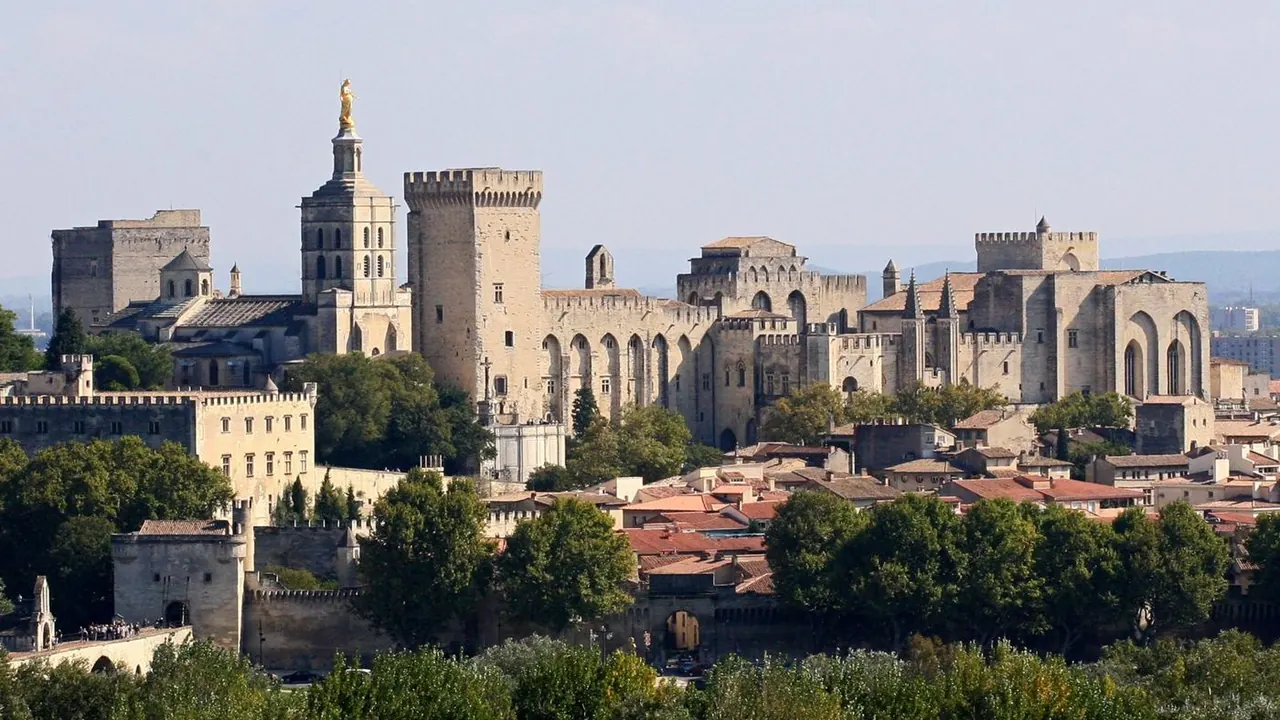
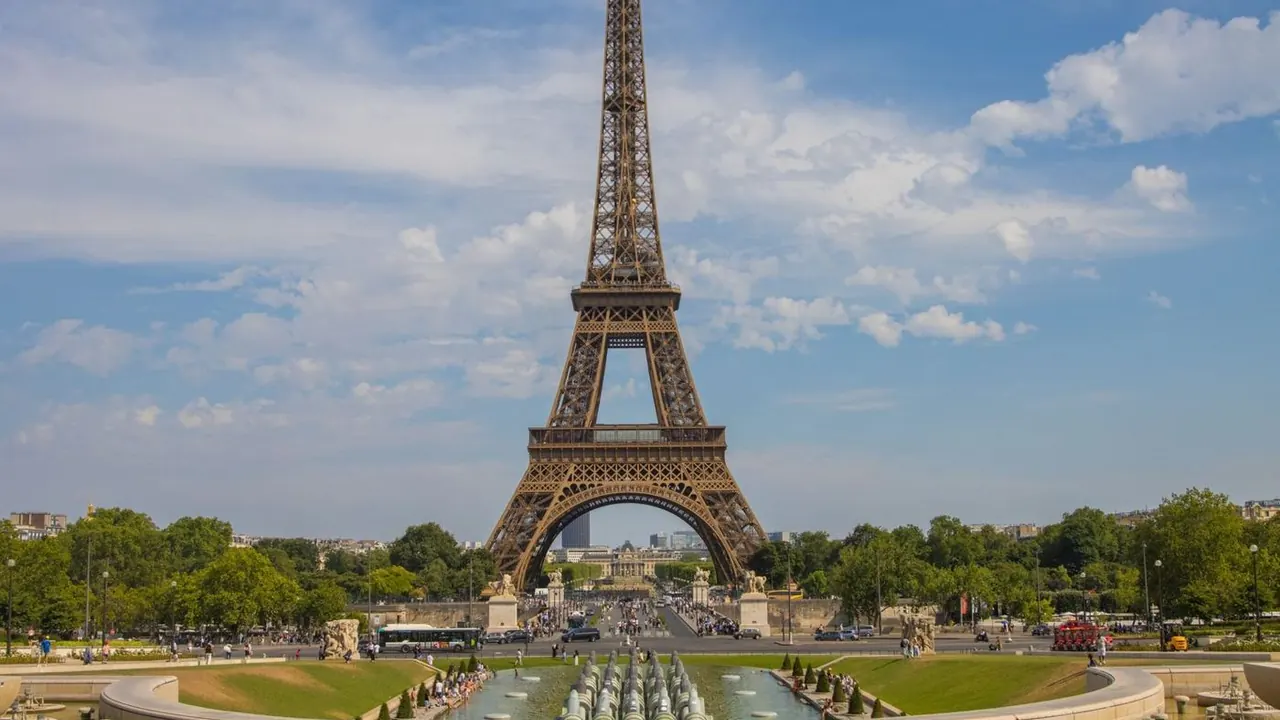
Photos: Avignon by BlueBreezeWiki, CC BY-SA 3.0, cropped; Paris by Efrem Efre, Pexels License.
Avignon or Paris?
Our verdict in twelve categories, each scored against the same fixed benchmark cities, and the climate month by month, so you can choose for your trip.
Choose Avignon for
- prices
- nature and the outdoors
- beaches
Avignon suits a slower trip through Provence, where the town is a base rather than the whole point. Two unhurried days cover the papal palace and the ramparts. The rest of the stay goes on Roman Nîmes and Arles, the Luberon villages, Mont Ventoux and the Camargue. It costs less than Paris and is quiet in the evenings. It is best for travellers who are happy to hire a car and end the day with a glass of Côtes du Rhône.
Choose Paris for
- shopping
- nightlife
- food and drink
Choose Paris when the city itself is the destination. Its museums, restaurants, shops, concert halls and late bars offer far more than a small walled town can. A dense metro and a centre made for walking mean you can fill a week without a car. Families also do better here, with Disneyland, the science museum at La Villette and park carousels close by, as long as they accept higher prices and bigger crowds.
Scoreboard
Twelve categories on one fixed scale from 0 to 100. The shaded stretch is the gap between the two.
Your match
Pick a travel style or drag the sliders, and both match scores follow your weighting.
Wins on prices and nature and the outdoors with your weighting.
Wins on shopping and nightlife with your weighting.
What matters to you?
Category by category
What the scores mean for a trip.
Beaches & swimming
Neither city is a beach destination, but Avignon gets you closer to a real swim. The clear green pools of the Gardon below the Pont du Gard are half an hour away by car. The wild Camargue sands at Saintes-Maries-de-la-Mer and the resorts around Le Grau-du-Roi make a full day out on the Mediterranean.
Paris has summer sand on its riverbanks, outdoor swimming in the Bassin de la Villette and the Seine, and some handsome Art Deco pools. Its nearest coast is the cool Channel at Deauville and Trouville, about two hours away, so a sea swim really means another trip.
Food & drink
Avignon eats well within one tradition: daube, tians, lamb with herbs and fruit from the surrounding plain. You see it best at Les Halles on Place Pie, and bistros pour Châteauneuf-du-Pape and Côtes du Rhône by the glass. The weakness is range. There is little cooking from elsewhere, and the cafés on the main squares mostly serve tourists.
Paris works on another scale. Every neighbourhood has its bakery, cheese shop and market. The choice runs from zinc-counter bistros and haute cuisine to inventive neo-bistros in the eastern arrondissements, couscous in Belleville and pho in the 13th. A food lover could eat here for a fortnight without having the same kind of meal twice.
Culture & sights
Avignon's heritage is concentrated and exceptional. It has the Palais des Papes, the cathedral, the broken arches of the Pont Saint-Bénezet and almost 4km of ramparts, plus the Petit Palais and the Collection Lambert for art. Two unhurried days see most of it.
Paris has more of everything. The Louvre, the Orsay, the Pompidou and the Orangerie could each fill a day, and then there are Notre-Dame, the Sainte-Chapelle and Haussmann's boulevards. You can see Avignon properly on a short visit, but you will leave Paris with half its museums unseen, and the big names come with queues.
Nightlife
An evening in Avignon means an aperitif on Place Pie or Place des Corps Saints, then a quiet walk home, and the walled streets are mostly silent after midnight. Only in July, during the festival, does the old town stay up late.
In Paris there is a real night out every week of the year. Bars spill onto the streets of Oberkampf, Belleville and the Canal Saint-Martin. South Pigalle has the cocktail bars and the Marais has its gay scene. When the bars close, the clubs play house and techno until dawn.
Nature & outdoors
This is where Avignon pulls clearly ahead. Mont Ventoux at 1,910m, the Luberon's ochre trails, the Dentelles de Montmirail and the white crags of the Alpilles are all within about an hour. The Gardon gorges offer canoeing, and in the Camargue you can see flamingos and white horses from the saddle.
Paris offers gentler pleasures: formal gardens, the cliffs of the Buttes-Chaumont, the Bois de Boulogne and Vincennes for running and rowing, and the boulders and trails of Fontainebleau a short train ride out. It is good for a walk or a bike ride, but there are no mountains and no coast.
Day trips
Both cities are superb bases, and the difference lies in what you go out to see and how you get there. From Avignon the main draw is Roman: the arenas of Nîmes and Arles, the theatre at Orange and the Pont du Gard. Beyond those are the wine villages and the Luberon hilltops, which really need a car.
From Paris it is royal France and the great cathedrals: Versailles, Fontainebleau, Chantilly, Chartres and Monet's Giverny. Fast trains reach Reims for Champagne, Rouen and the Loire. Almost all of it is easy to reach without a car.
Good for families
Avignon is calm and small enough for children to walk around. The augmented-reality tablets in the Palais des Papes and the bridge from the song both go down well. Beyond the Rocher des Doms playground, though, the good family days are out of town at the Pont du Gard or in the Camargue, and you need a car for them.
Paris has far more that is made for children. There are Disneyland and Parc Astérix, the Cité des Sciences, the Jardin d'Acclimatation, the skeletons at the Jardin des Plantes and toy boats on the Luxembourg pond. The downside is metro stairs, cramped hotel rooms and long queues.
Getting around
Avignon is easy inside the walls, where almost everything is within twenty minutes' walk of the station, and regional trains reach Arles, Nîmes and Orange. Its limit is the countryside, where buses are sparse and a hire car is the realistic choice.
Paris combines a centre you can walk with a dense metro, RER lines to Versailles and the airports, and a bike-share scheme, so nothing in the region needs a car. Expect stairs, packed trains at rush hour and pickpockets on the tourist lines.
Shopping & style
Shopping in Avignon is small-scale and regional. There are printed Provençal cottons, lavender and olive-wood in the lanes around Rue des Marchands, and chain stores on Rue de la République. The best things to take home are edible, from tapenade to wine bought at Les Halles. Serious antiques hunters drive out to L'Isle-sur-la-Sorgue.
Paris is one of the world's great shopping cities. It has the couture houses on Avenue Montaigne, Galeries Lafayette and Le Bon Marché, independent designers and vintage in the Marais, the old covered passages, the Saint-Ouen flea market and the bouquinistes by the Seine.
Affordability
Avignon is easier on the wallet. Set lunches in the side-street bistros are fair value and wine from the producers costs little for its quality. Rooms in spring and autumn are reasonable, although July festival rates are steep and exploring the countryside means paying for a car.
Paris is costly from the hotel room up: small, expensive rooms, pricey drinks on terraces and full admission at the big museums. You can save by walking, using the reasonably priced public transport, eating bakery lunches and visiting the free permanent collections of the city's own museums.
Live music & performing arts
Avignon has one extraordinary season. In July the Festival d'Avignon stages productions in the Cour d'honneur of the Palais des Papes, and the Off fills every cellar and courtyard in town with shows. The rest of the year is quieter but still well stocked for a town of its size. The Opéra Grand Avignon puts on opera, ballet and concerts, around a dozen small permanent theatres run regular programmes, and a respected jazz club plays most weeks.
Paris offers far greater depth all year round: ballet at the Palais Garnier, opera at the Bastille, concerts at the Philharmonie, Molière at the Comédie-Française, jazz cellars on the rue des Lombards and cabaret in Pigalle. Most of its theatre is in French, so many visitors will find the music and dance easier to enjoy.
Wellness & relaxation
Neither city is a wellness destination, and both rely on hotel spas and day spas. The difference is in the kind of rest on offer. In Avignon it means long lunches under plane trees, and for many visitors a farmhouse guesthouse with a pool among the vineyards outside town. The mistral and the July crowds can still spoil the peace.
Paris has the steam rooms and mint tea of the Grande Mosquée hammam and smaller neighbourhood hammams. The city moves fast, though, so rest comes in short breaks on a café terrace or a chair in the Luxembourg gardens.
When should you go?
Pick your month. The climate figures are measured averages, not a forecast.
Avignon in July
Paris in July
Daytime high, °C
Rainfall in the month, mm
Where the figures come from
Avignon has no rain gauge within 25 km of the centre, so its rainfall comes from a gridded climate dataset read at the city rather than from a gauge further away.
Avignon's sunshine is measured 65 km from the centre, at Marseille / Marignane.
Temperature and rainfall are climate normals, averaged over the years shown. Avignon: 2005-2020 (sunshine 1991-2020, rainfall 1991-2020) normals, Avignon / Morières-lès-Avignon (8.6 km from centre). Paris: 1991-2020 normals, Paris-Montsouris (4.6 km from centre).
Avignon is warmer than Paris in every month, and its summers are long and very sunny. Late spring is the best time for the town and the countryside: from May the days are warm and bright without being oppressive. July and August reach about 31°C, which makes afternoon walks in the stone streets hard work but is ideal for a swim in the Gardon. The rain comes in autumn and is heaviest in September, at around 111mm. October and November stay showery, though mild, and winters are cool but bright for the season.
Paris is cooler all year, with gentler summers. Highs of about 26°C in July and August keep long days on foot comfortable, and May, June and September are pleasant too. Rain is spread fairly evenly through the year, with no real dry season. From November to February the days stay around 8°C, a few degrees below Avignon, which suits the museums better than the parks.
Which traveller are you?
On an outdoors trip, Avignon is the stronger base. Mont Ventoux, the Luberon cliffs, the Alpilles and the Gardon gorges are all within an hour, with canoeing down to the Pont du Gard. Paris has fine parks and Fontainebleau forest, but no big landscapes.
For a food and nightlife trip, Paris is the clear choice. You can go from market mornings and neo-bistros to couscous in Belleville, then on to bars along Oberkampf and clubs until dawn. Avignon has good Rhône wine and Provençal cooking, but its streets go quiet by midnight.
On a family trip with children, Paris has far more to fill the days: Disneyland, Parc Astérix, the hands-on Cité des Sciences and puppet shows in the Luxembourg. Children in Avignon enjoy the palace tablet tour and the bridge from the song, but most other outings need a car.
Before you go
| Measure | Avignon | Paris |
|---|---|---|
| Official language | French | French |
| Currency | Euro (EUR) | Euro (EUR) |
| Sockets | CE230 V, 50 Hz | CE230 V, 50 Hz |
| Driving side | Right | Right |
| Time zone | UTC+1, UTC+2 in summer | UTC+1, UTC+2 in summer |
| Emergency number | 112 | 112 |
| Elevation | 10 m | 27 m |
| Main airport | Marseille Provence Airport (MRS)65 km from centre126 non-stop destinations | Charles de Gaulle International Airport (CDG)22 km from centre277 non-stop destinations |
| Public holidays this year | 11 days | 11 days |
By the numbers
| Measure | Avignon | Paris |
|---|---|---|
| City population | 92,188 | 2,103,778 |
| People per km² | 1,420 | 19,960 |
| Museums within 10 km | 11 | 251 |
| UNESCO World Heritage sites within 50 km | 6 | 4 |
Where else could you go?
Every comparison below shares a destination with this one, so you can follow Avignon or Paris somewhere new.