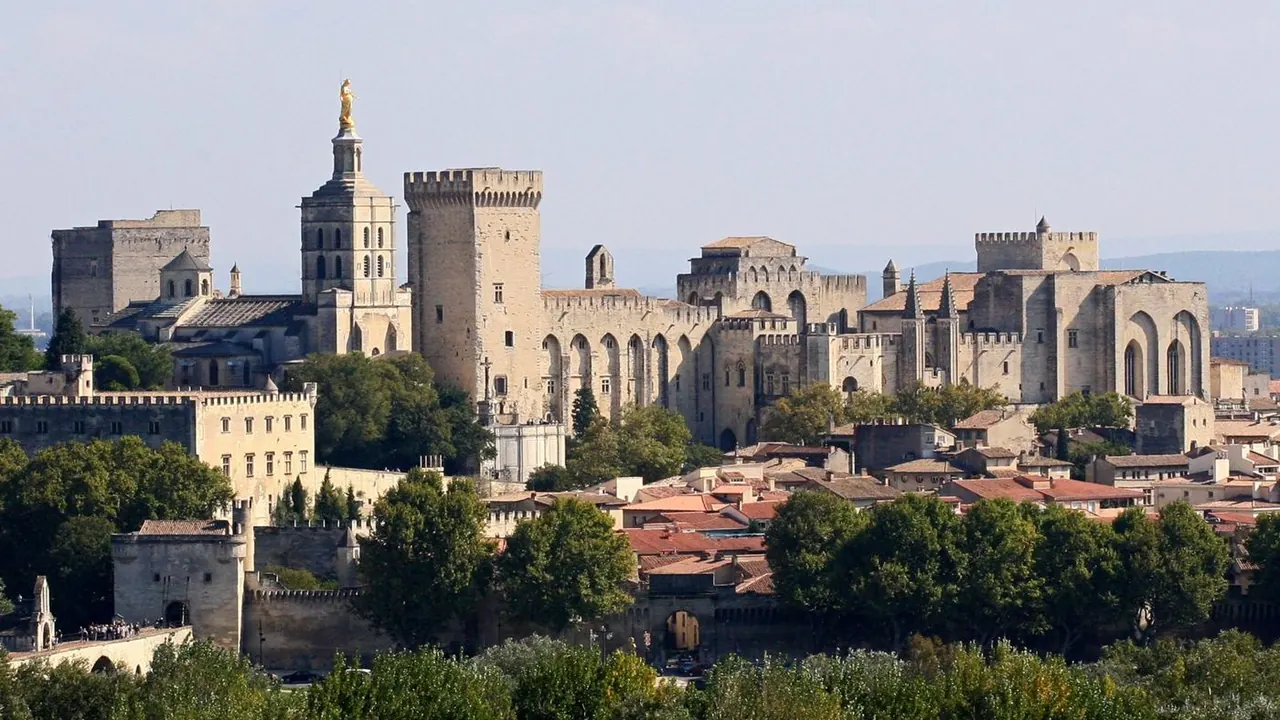
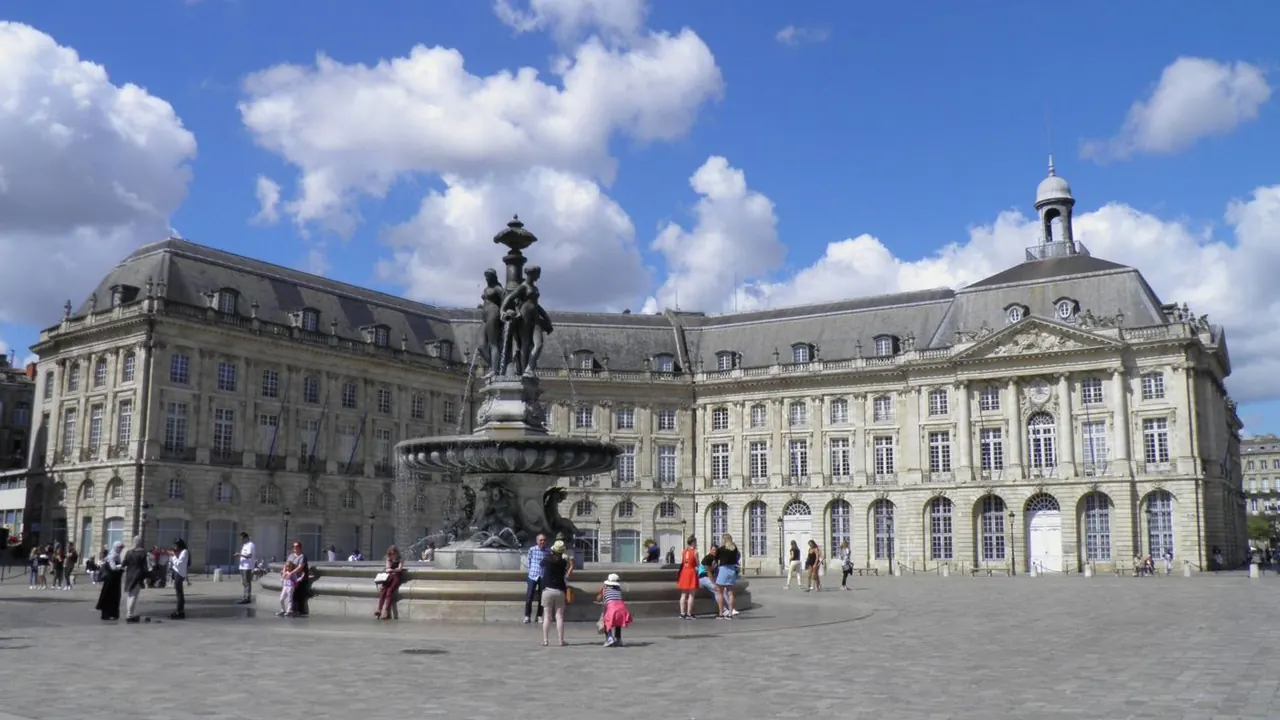
Photos: Avignon by BlueBreezeWiki, CC BY-SA 3.0, cropped; Bordeaux by Gzen92, CC BY-SA 4.0, cropped.
Avignon or Bordeaux?
Our verdict in twelve categories, each scored against the same fixed benchmark cities, and the climate month by month, so you can choose for your trip.
Choose Avignon for
- day trips
- live music and the arts
- nature and the outdoors
Avignon suits travellers who want a base for touring Provence. The Roman arenas of Nîmes and Arles, the Pont du Gard, the Luberon hill villages and Mont Ventoux are all close by, and the walled town with its papal palace takes only a couple of unhurried days. Theatre lovers have an extra reason to come in July, when the festival fills every courtyard. It is hotter and sunnier, and quieter after dark.
Choose Bordeaux for
- beaches
- food and drink
- nightlife
Bordeaux is the better choice for a longer city stay built around wine and eating. Its flat, tram-served centre is easier to live in for a week. It has more going on at night, smarter shopping, and Atlantic beaches and the Dune du Pilat about an hour away. The vineyards of Saint-Émilion and the Médoc make the day trips, and the city stays green and mild while Provence bakes.
Scoreboard
Twelve categories on one fixed scale from 0 to 100. The shaded stretch is the gap between the two.
Your match
Pick a travel style or drag the sliders, and both match scores follow your weighting.
Wins on day trips and live music and the arts with your weighting.
Wins on beaches and food and drink with your weighting.
What matters to you?
Category by category
What the scores mean for a trip.
Beaches & swimming
Neither city is on the coast, but Bordeaux makes a beach day much easier. Trains run to Arcachon in about an hour, and its sheltered basin is calm enough for small children. The long surf beaches of Lacanau and the Médoc, and the sands below the Dune du Pilat, are close by.
From Avignon the Mediterranean is a longer drive, to the wild Camargue sands or the resorts around Le Grau-du-Roi. The sea there is a little warmer. The swim most visitors actually take is in the river pools of the Gardon below the Pont du Gard, or in their own pool.
Food & drink
Bordeaux is the better city for eating and drinking. Wine runs through the whole place: bars pour Médoc, Saint-Émilion and Sauternes by the glass, and the Cité du Vin is on the riverfront. There are also oysters from Arcachon, entrecôte grilled over vine cuttings and canelés in every bakery, and good brasseries and modern bistros in several districts.
Avignon's cooking is Provençal and built on its produce: daube, tians, tapenade and fruit from the plain, best seen at Les Halles. Châteauneuf-du-Pape is close by, but the main squares cater mostly to visitors. The good tables are fewer and tucked into side streets like Rue des Teinturiers.
Culture & sights
The two are broadly level here, but they offer different kinds of past. Avignon is a medieval set piece: the vast Gothic Palais des Papes, the broken bridge and nearly 4km of ramparts. The Petit Palais's Italian primitives and the charterhouse across the river round it off, and two days covers it.
Bordeaux's sight is a whole 18th-century city of pale limestone, from the Place de la Bourse and its water mirror to street after street of carved façades. It needs three or four days of slow walking. Its museums, such as the Musée d'Aquitaine and the CAPC, are wider in scope than they are famous.
Nightlife
Bordeaux has much more to offer after dinner. Saint-Pierre's squares fill with wine-bar crowds, Place de la Victoire is the cheap student end, and the clubs on the Quai de Paludate run until morning, especially on term-time weekends.
Avignon is an aperitif town. Evenings are spent on Place Pie or Place des Corps Saints, and the streets are mostly quiet by midnight. The great exception is July, when the festival keeps the old town awake into the small hours.
Nature & outdoors
Avignon has far more dramatic country around it. Mont Ventoux rises to 1,910m to the north-east, and the ochre trails of the Luberon, the Dentelles de Montmirail and the Alpilles give real hiking and climbing. The Camargue's flamingos and white horses lie to the south.
Bordeaux's surroundings are gentle and flat, with vineyards and the Landes pine forest. Its outdoor highlights are on the coast: the Dune du Pilat, kayaking and birdwatching on the Arcachon basin, and surfing at Lacanau. Long cycle greenways are the easy pleasure here, but there is no hill walking nearby.
Day trips
Both are excellent bases, but Avignon has the wider reach. Within half an hour are some of the finest Roman remains outside Italy: Nîmes, Arles, Orange's theatre and the Pont du Gard. Beyond them lie the Luberon hill villages, Châteauneuf-du-Pape, and Aix and Marseille by fast train.
Bordeaux's excursions are more focused on wine. Saint-Émilion is an easy train ride, and the Médoc châteaux and Sauternes are best done by car or on a tour. Arcachon's oyster ports and Blaye's citadel add some variety. Cognac and Biarritz are possible but stretch the day.
Good for families
With a pushchair, the difference shows on the first morning. Avignon's narrow cobbled lanes inside the walls are hard work to push along, and apart from the tablet tour of the papal palace, dancing on the bridge from the song and the playground on the Rocher des Doms, little in town is aimed at children. Family days out, such as the Pont du Gard or the Camargue's flamingos and horses, mostly need a car.
Bordeaux makes everyday life with children simpler. Its centre is flat, largely car-free and served by trams, so pushchairs are easy to manage. On hot days the Miroir d'eau turns into a paddling pool, the Jardin Public has a carousel and puppet theatre, and Cap Sciences runs hands-on exhibitions. Climbing the Dune du Pilat makes a memorable day out.
Getting around
Bordeaux is the more comfortable city to get around. It is flat, many streets are pedestrianised, the trams link the Cité du Vin, the right bank and the station, and bike lanes run along the river. You will not need a car until you head for the Médoc estates.
Avignon's walled centre is compact enough to cross on foot in twenty minutes, though the cobbles and the mistral can tire you. Regional trains reach Arles, Nîmes and Orange well. For the hill villages and Ventoux, a hire car is the realistic choice.
Shopping & style
Avignon's shops are small and mostly Provençal. The lanes off Rue Joseph Vernet sell printed cottons, lavender, olive-wood and soap, while Rue de la République has the usual chains. The best things to take home are edible, from Les Halles, and serious antiques hunters drive out to L'Isle-sur-la-Sorgue.
Bordeaux has far more range in town. Rue Sainte-Catherine runs for over a kilometre with the chains and a department store, the Triangle d'Or gathers the luxury labels, and Rue Notre-Dame in Chartrons is lined with antique dealers and independent boutiques. Its wine cellars, which will ship abroad, are a reason to shop here in their own right.
Affordability
Costs are much the same in both, and neither is cheap. What changes the bill is when you go and how you get around. In Avignon, rooms inside the walls become scarce and expensive in festival July and much easier in spring and autumn, and seeing the countryside usually means paying for a hire car.
Bordeaux's central hotels are mid-to-high priced and rise in summer and during big wine events. Inexpensive trams mean you can manage without a car in the city. In both, set lunch menus are the way to eat well for less, and wine tastings and good bottles are where the money goes.
Live music & performing arts
Avignon comes out ahead because of July. The Festival d'Avignon puts major productions in the Cour d'honneur of the papal palace, and the Off fringe adds well over a thousand shows a day across the town. The rest of the year there is still the opera house on Place de l'Horloge and a dozen or so small theatres.
Bordeaux has the steadier season. Opera and ballet play in the gilded 1780 Grand Théâtre, the national orchestra performs nearby, and there are jazz and touring concerts. However, its stages pause in high summer, just when Avignon's festival is at its height.
Wellness & relaxation
Neither city has a bathing culture, so in both you relax by slowing down. Avignon's version is a farmhouse guesthouse among the lavender and vineyards, with a pool and long lunches. In town, July's crowds and the days-long mistral make it less restful.
Bordeaux offers vinotherapy, treatments using grape seeds and vine extracts, at spa hotels among the vineyards just outside town. Evenings on the quays are calm. For real thermal waters, Dax is about an hour and a half away.
When should you go?
Pick your month. The climate figures are measured averages, not a forecast.
Avignon in July
Bordeaux in July
Daytime high, °C
Rainfall in the month, mm
Where the figures come from
Avignon has no rain gauge within 25 km of the centre, so its rainfall comes from a gridded climate dataset read at the city rather than from a gauge further away.
Avignon's sunshine is measured 65 km from the centre, at Marseille / Marignane.
Temperature and rainfall are climate normals, averaged over the years shown. Avignon: 2005-2020 (sunshine 1991-2020, rainfall 1991-2020) normals, Avignon / Morières-lès-Avignon (8.6 km from centre). Bordeaux: 1991-2020 normals, Bordeaux / Merignac (9.5 km from centre).
Avignon is the hotter and brighter of the two. July and August reach about 31°C, which is too hot for comfortable sightseeing in the middle of the day, and summer is also the sunniest and driest part of its year. The rain comes in autumn, from September to November, when Avignon is wetter than at almost any other time. That makes May, June and early September its sweet spot for walking and touring the countryside.
Bordeaux stays milder in summer, peaking at about 28°C in August, so July and August are its best months for the Atlantic beaches and the city both. It has noticeably less sunshine than Avignon all year round. Its wet season is longer and heavier, with November and December the dampest at over 100mm. Spring and early autumn are pleasant in both cities, but in winter Avignon is the drier and brighter of the two.
Which traveller are you?
On an outdoors trip, Avignon is the stronger base. Mont Ventoux, the Luberon cliffs, the Alpilles, canoeing down the Gardon and the Camargue's lagoons are all within reach. Around Bordeaux the land is mostly flat, and the coast is its main outdoor draw.
For a food and nightlife trip, choose Bordeaux. It has wine bars pouring the great appellations by the glass, oysters at the Capucins market and serious bistros in Chartrons. Later on there are student bars and the clubs of the Quai de Paludate. Avignon is mostly quiet by midnight outside July.
On a culture and arts trip, Avignon is the more rewarding choice, especially in July. The festival and its huge fringe fill the town, and the papal palace sits within easy reach of Roman Nîmes, Arles and Orange. Bordeaux's classical cityscape is just as fine, but its stages go quiet in summer.
Before you go
| Measure | Avignon | Bordeaux |
|---|---|---|
| Official language | French | French |
| Currency | Euro (EUR) | Euro (EUR) |
| Sockets | CE230 V, 50 Hz | CE230 V, 50 Hz |
| Driving side | Right | Right |
| Time zone | UTC+1, UTC+2 in summer | UTC+1, UTC+2 in summer |
| Emergency number | 112 | 112 |
| Elevation | 10 m | 1 m |
| Main airport | Marseille Provence Airport (MRS)65 km from centre126 non-stop destinations | Bordeaux–Mérignac Airport (BOD)11 km from centre95 non-stop destinations |
| Public holidays this year | 11 days | 11 days |
By the numbers
| Measure | Avignon | Bordeaux |
|---|---|---|
| City population | 92,188 | 267,991 |
| People per km² | 1,420 | 5,425 |
| Museums within 10 km | 11 | 18 |
| UNESCO World Heritage sites within 50 km | 6 | 4 |
Where else could you go?
Every comparison below shares a destination with this one, so you can follow Avignon or Bordeaux somewhere new.