Photos: Avignon by BlueBreezeWiki, CC BY-SA 3.0, cropped; Geneva by Diviosen, CC BY-SA 3.0, cropped.
Avignon or Geneva?
Our verdict in twelve categories, each scored against the same fixed benchmark cities, and the climate month by month, so you can choose for your trip.
Choose Avignon for
- prices
- day trips
- culture and sights
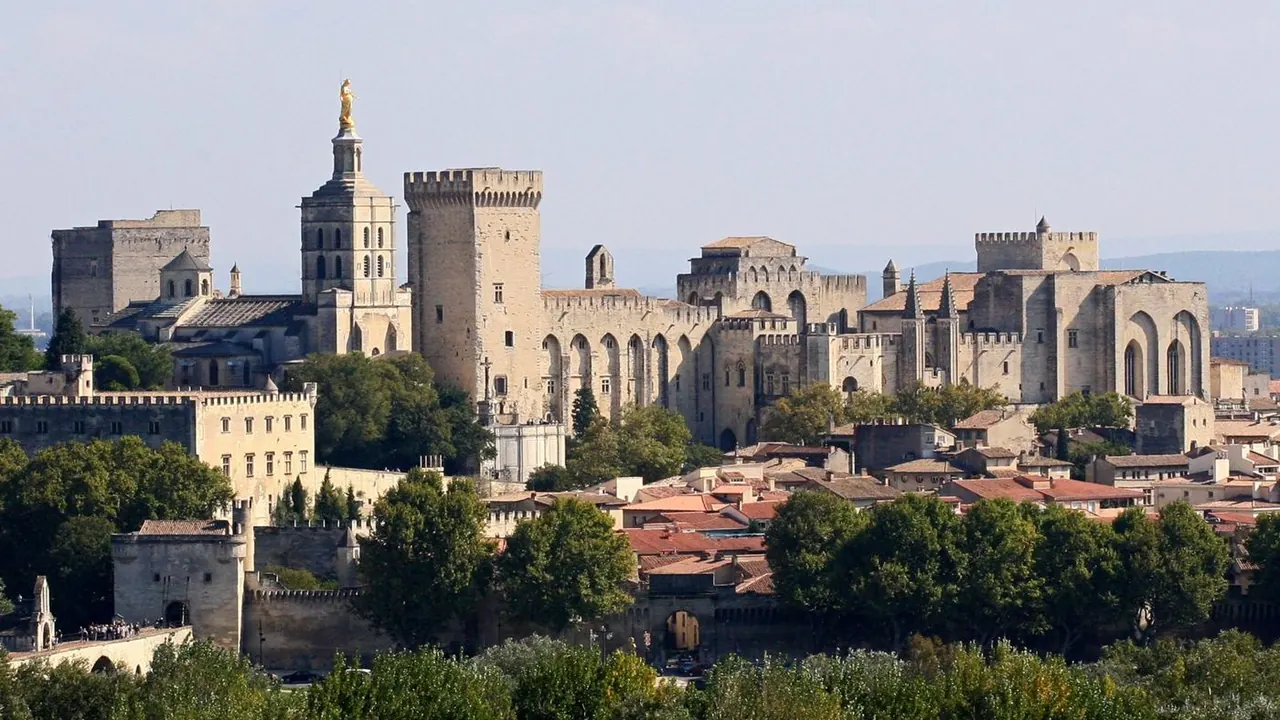
Avignon suits a traveller who wants history close at hand and a car for the open road. The papal palace and the ramparts take up a couple of slow days. After that the real draw is the country around the town: Roman Nîmes, Arles and Orange, the Pont du Gard, and the Luberon villages. It also costs far less, and in July its theatre festival takes over every street and courtyard.
Choose Geneva for
- shopping
- getting around
- beaches
Geneva is the better pick for anyone who wants things to run smoothly and wants mountains on the horizon. Trams, trains and lake boats make it easy to get around without a car, the Salève, the Jura and Chamonix are close by, and the lake gives a real summer swim plus a sauna habit in winter. The price of all that is one of the most expensive city stays in Europe, and a calm city where people go to bed early.
Scoreboard
Twelve categories on one fixed scale from 0 to 100. The shaded stretch is the gap between the two.
Your match
Pick a travel style or drag the sliders, and both match scores follow your weighting.
Wins on prices and day trips with your weighting.
Wins on shopping and getting around with your weighting.
What matters to you?
Category by category
What the scores mean for a trip.
Beaches & swimming
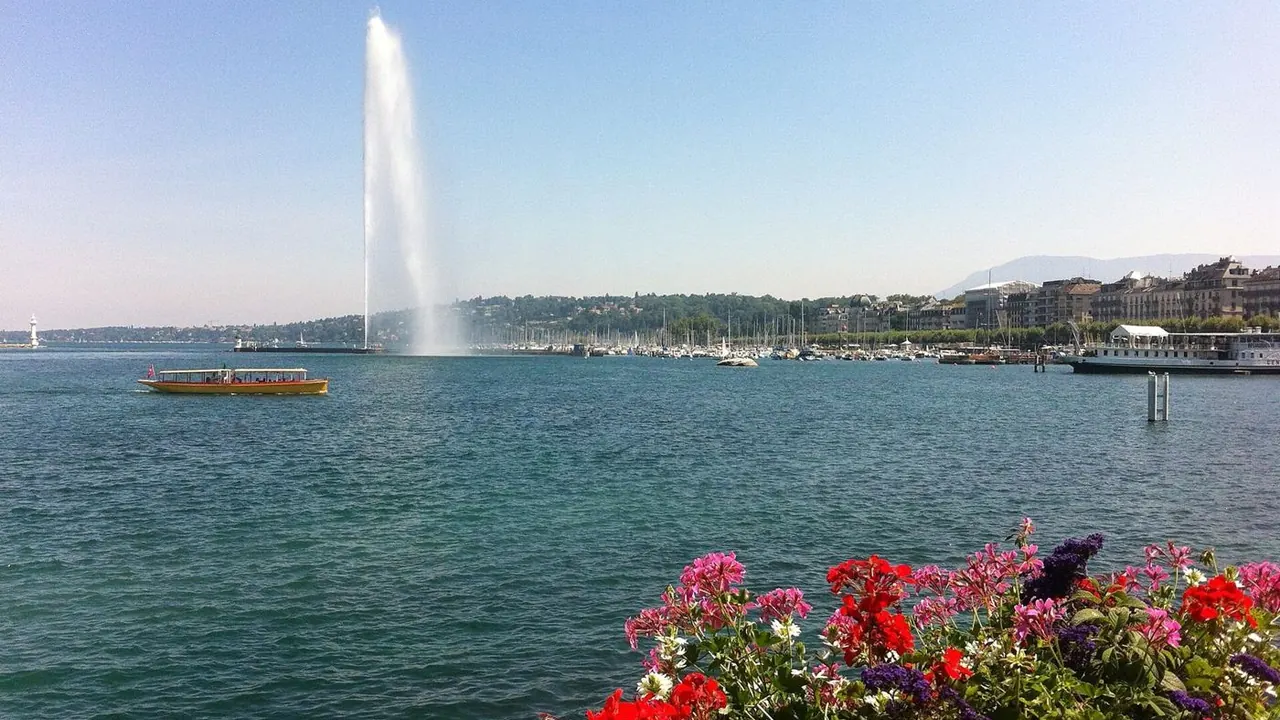
Neither city is on the sea, but Geneva is the one where you actually swim. In summer the whole city takes to the lake, at the Bains des Pâquis jetty, on the Eaux-Vives lawns and along the quieter village shores, all within a tram or boat ride.
In Avignon the Rhône is not for swimming, so a cool dip means driving out to the green pools of the Gardon below the Pont du Gard, or a full day trip to the Camargue sands. Most days it comes down to the pool at your hotel or rental.
Food & drink
The two eat at roughly the same level but in different styles. Avignon is about Provençal market cooking: daube, tians and tapenade, the stalls of Les Halles, and Châteauneuf-du-Pape poured by the glass in the side streets off the tourist squares.
Geneva serves lake perch, fondue and Chasselas from its own vineyards, and the international organisations support a far wider range of foreign cuisines and polished fine dining. What it lacks is the cheap, casual meal that Avignon does well at lunchtime.
Culture & sights
Avignon has the stronger heritage, and it comes all in one piece. The Palais des Papes, the cathedral, the broken bridge and almost 4km of ramparts form a single medieval townscape, with the Petit Palais and the Collection Lambert inside the walls.
Geneva's story is the Reformation and diplomacy, so its sights are more separate: St Pierre Cathedral, the Reformation Wall, the Palais des Nations, the Red Cross museum and CERN. They are interesting, but the city does not have Avignon's sense of walking through one great period.
Nightlife
Both are quiet after dark, but Geneva has a bit more going on in an ordinary week. The Pâquis bars stay busy late, Carouge has wine terraces, and the alternative centres around Plainpalais and Jonction run club nights.
Avignon goes no further than an aperitif on Place Pie and a few student bars for most of the year, and it is quiet by midnight. The exception is July, when festival crowds keep the squares full until the small hours.
Nature & outdoors
Avignon's country is warm, dry and full of famous landscapes: the bare limestone summit of Mont Ventoux, the Luberon's ochre trails, the Dentelles de Montmirail and the Alpilles crags, with canoeing down the Gardon gorges and the flamingos and white horses of the Camargue lagoons. Spring and autumn are the seasons for it, because summer heat makes walking hard, and the mistral can blow hard for days.
Geneva still has the bigger outdoors. Mountains rise on every side, with Mont Blanc at the end of the lake, the Salève cable car and the Jura ridge just outside town, and Chamonix and the ski resorts about an hour away. The lake adds sailing, rowing and paddleboarding, so you can spend the whole stay outdoors in summer and winter alike.
Day trips
Both are excellent bases, but Avignon has more within easy reach. Within half an hour are the arenas of Nîmes and Arles, the theatre at Orange and the Pont du Gard, and beyond them the Luberon villages, Châteauneuf-du-Pape and Les Baux. For the villages you really need a car.
Geneva's outings are spread more widely and are easier without a car. Lake steamers and trains go to Lausanne, the Lavaux terraces and the Château de Chillon, and Annecy and Yvoire are just over the French border.
Good for families
Geneva is easier with children. The streets are flat and orderly, trams take pushchairs, the Natural History Museum's dioramas hold young children for hours, and the yellow harbour boats are a treat in themselves.
Avignon offers a tablet tour of the palace, a dance on the bridge from the song and the Rocher des Doms playground. After that, the family days out mean driving to the Pont du Gard or the Camargue, and the cobbles are hard going with a pushchair.
Getting around
Avignon works on foot and by rail, but only up to a point. The walled centre is small enough that buses hardly matter, though the cobbles and the mistral make walking it more tiring than it looks, and Arles, Nîmes and Orange are short hops by regional train from the station by the walls. Arriving by high-speed train means one extra step, because the TGV stops outside town and a shuttle brings you in. Once the plan turns to the Luberon villages, the vineyards or Ventoux, public transport mostly runs out and you need a hire car or a tour.
Geneva has far fewer gaps. The airport is only a short train ride from the centre, and a single network takes you by tram out to the Palais des Nations and CERN and by boat across the harbour. The lake towns on the Swiss shore and the French districts over the border are all reachable by rail, so a car usually stays parked unless you're going up into the high mountains.
Shopping & style
Geneva is a serious shopping city, mainly at the luxury end. The Rue du Rhône is lined with the big Swiss watch houses and jewellers, and Carouge's craft workshops and the Plainpalais flea market add something less polished.
Avignon is modest and local by comparison: Provençal prints, lavender and olive wood in the lanes off Rue des Marchands, and olive oil and wine from Les Halles. Serious antiques hunters drive out to L'Isle-sur-la-Sorgue.
Affordability
This is where the two differ most. Avignon is not a bargain, but its lunch menus, local wine and free old town are fair value, and outside the July festival rooms are reasonable. The main extra cost is a hire car.
Geneva is among the most expensive cities in the world, with costly rooms all year and high prices for even a simple meal or a glass of wine. Free museums, the transport pass hotel guests receive and cheap lake lidos help a little, and many visitors cross into France to eat or sleep.
Live music & performing arts
Avignon has the stronger stage overall. In July the Festival d'Avignon puts major productions in the Cour d'honneur of the palace, and the Off fringe fills every hall, cellar and courtyard with well over a thousand shows a day. The rest of the year is calmer, but the Opéra Grand Avignon, a dozen or so small permanent theatres and a jazz club give it more than most towns its size.
Geneva's offer is more formal and evenly spread. The Grand Théâtre runs a season of opera and ballet, the Orchestre de la Suisse Romande plays in Victoria Hall, and the Bâtiment des Forces Motrices in the middle of the Rhône hosts concerts and dance. It is solid, but nothing there draws an audience the way Avignon's July does.
Wellness & relaxation
Geneva has a real bathing habit. In winter the Bains des Pâquis runs a sauna and hammam, and regulars plunge straight into the lake. Évian and Divonne are close, and the calm Sundays help too.
Avignon's idea of rest is a long lunch under the plane trees, or a farmhouse guesthouse with a pool among the vineyards outside the walls. Beyond hotel spas there is little dedicated wellness, and July in town is anything but restful.
When should you go?
Pick your month. The climate figures are measured averages, not a forecast.
Avignon in July
Geneva in July
Daytime high, °C
Rainfall in the month, mm
Where the figures come from
Avignon has no rain gauge within 25 km of the centre, so its rainfall comes from a gridded climate dataset read at the city rather than from a gauge further away.
Avignon's sunshine is measured 65 km from the centre, at Marseille / Marignane.
Temperature and rainfall are climate normals, averaged over the years shown. Avignon: 2005-2020 (sunshine 1991-2020, rainfall 1991-2020) normals, Avignon / Morières-lès-Avignon (8.6 km from centre). Geneva: 1991-2020 normals, Geneve-Cointrin (5.7 km from centre).
Avignon is the warmer and much sunnier of the two. It is at its best from April to early June and again in late September and October, when the streets are comfortable for walking and the hills are good for hiking. July and August reach about 31°C, which is hard work on the cobbles in the middle of the day but fine for pools and river swims. The rain comes in autumn, with October the wettest month at around 109mm, often in short heavy bursts. Winters are mild and clear rather than cold.
Geneva runs several degrees cooler all year. Summer highs of about 27°C make June to September the season for lake swimming and mountain walks, and the city never really gets too hot to explore. Rain is spread evenly through the year rather than coming in one season. Winter is the hard part: highs near 5°C and short, grey days, with December getting about a third of Avignon's sunshine. That suits skiers better than people who want to wander the city.
Which traveller are you?
For a trip on a tight budget, Avignon is far kinder. Set lunches in the side-street bistros, wine bought from the growers and a free old town to walk are a long way from Geneva's prices, where even a simple meal costs a lot.
On a shopping trip, Geneva wins. The Rue du Rhône has the flagship watch and jewellery houses, Carouge has craft workshops, and the Plainpalais flea market is good for browsing. Avignon has Provençal cottons, soaps and food to take home, and little beyond that.
For a culture and arts trip, Avignon goes deeper. You get Europe's largest Gothic palace inside medieval walls, Roman monuments within half an hour, and a July festival that fills courtyards and cellars with theatre. Geneva's Reformation and diplomatic sights make a shorter, quieter list.
Before you go
| Measure | Avignon | Geneva |
|---|---|---|
| Official language | French | French, German, Italian, Romansh |
| Currency | Euro (EUR) | Swiss Franc (CHF) |
| Sockets | CE230 V, 50 Hz | CJ230 V, 50 Hz |
| Driving side | Right | Right |
| Time zone | UTC+1, UTC+2 in summer | UTC+1, UTC+2 in summer |
| Emergency number | 112 | 112 |
| Elevation | 10 m | 403 m |
| Main airport | Marseille Provence Airport (MRS)65 km from centre126 non-stop destinations | Geneva International Airport (GVA)5 km from centre150 non-stop destinations |
| Public holidays this year | 11 days | 9 days |
By the numbers
| Measure | Avignon | Geneva |
|---|---|---|
| City population | 92,188 | 211,152 |
| People per km² | 1,420 | 13,280 |
| Museums within 10 km | 11 | 34 |
| UNESCO World Heritage sites within 50 km | 6 | 2 |
Where else could you go?
Every comparison below shares a destination with this one, so you can follow Avignon or Geneva somewhere new.