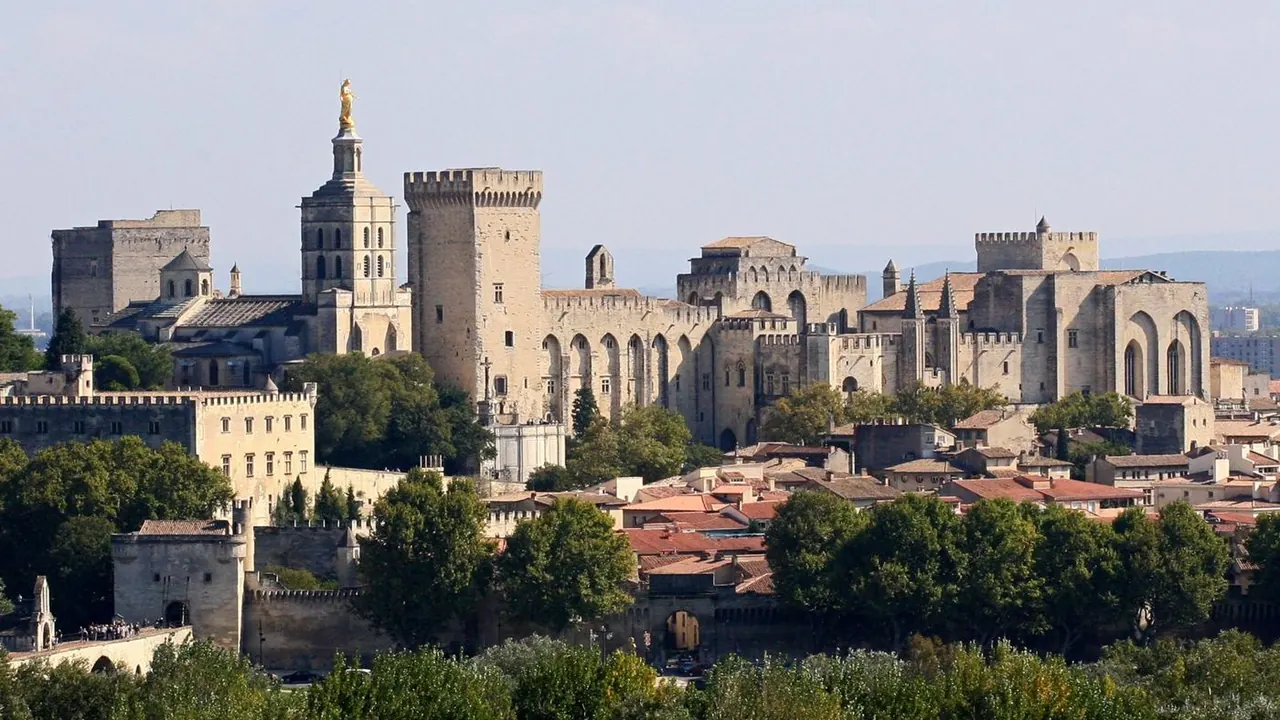
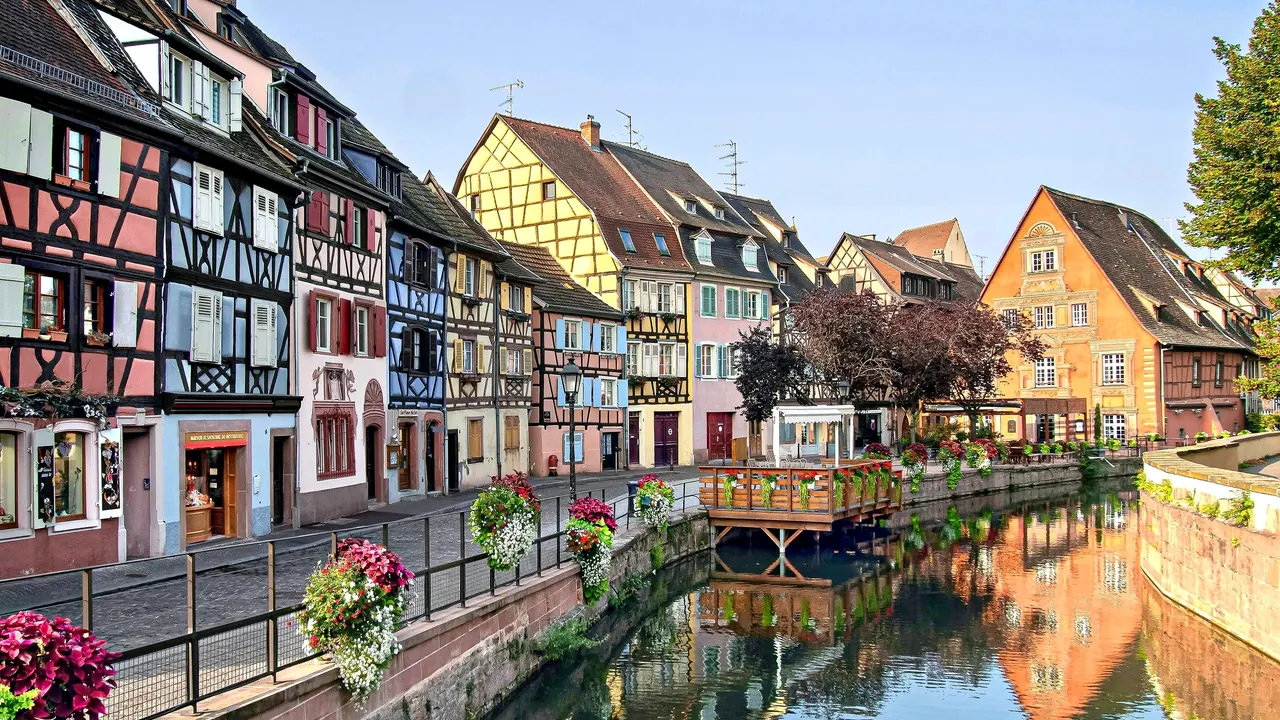
Photos: Avignon by BlueBreezeWiki, CC BY-SA 3.0, cropped; Colmar by Rolf Kranz, CC BY-SA 4.0, cropped.
Avignon or Colmar?
Our verdict in twelve categories, each scored against the same fixed benchmark cities, and the climate month by month, so you can choose for your trip.
Choose Avignon for
- live music and the arts
- beaches
- nightlife
Avignon is for travellers who want a sun-baked southern base with the deepest well of day trips in this pair. Roman Nîmes, Arles, Orange and the Pont du Gard are all close by. It suits anyone drawn to theatre, above all in July when the festival takes over the town, and anyone who wants a river swim or a day on the Mediterranean sands within reach. Evenings stay livelier than in Alsace, though nobody would call them wild.
Choose Colmar for
- families
- food and drink
- prices
Families and food lovers may be happier in Colmar. Its painted, half-timbered old town is flat, calm and easy with children, and the countryside around it is full of stork parks, castles and an hour's drive to a major theme park. Alsatian cooking and white wines are poured in every winstub, and the Christmas markets give it a winter season Avignon has no answer to. Choose it for a gentle, picture-book stay rather than for nightlife or a stage.
Scoreboard
Twelve categories on one fixed scale from 0 to 100. The shaded stretch is the gap between the two.
Your match
Pick a travel style or drag the sliders, and both match scores follow your weighting.
Wins on live music and the arts and beaches with your weighting.
Wins on families and food and drink with your weighting.
What matters to you?
Category by category
What the scores mean for a trip.
Beaches & swimming
Neither town has a beach, but Avignon at least puts water within reach. The green pools of the Gardon below the Pont du Gard make a proper summer swim half an hour away, and the Camargue sands at Saintes-Maries-de-la-Mer are a worthwhile day trip.
Colmar sits about as far from the sea as anywhere in France. Swimming there means a municipal pool or a small lake up in the Vosges, and few would plan a trip around either.
Food & drink
Colmar has the stronger table, with a cuisine that is unmistakably its own. Wood-panelled winstubs serve choucroute, baeckeoffe and tarte flambée, and a small fine-dining tier sits in town and along the wine route. Avignon's Provençal cooking is lighter and sunnier, built on tians, daube, olives and summer fruit, with Les Halles as its showcase.
Both are wine towns first. The difference is red against white: Châteauneuf-du-Pape and Côtes du Rhône in Provence, Riesling and Gewurztraminer in Alsace. In both, the busiest squares are where the weaker menus cluster.
Culture & sights
These two are closely matched for sightseeing, and each takes about two days, but the character is different. Avignon is about monumental power: the vast Gothic Palais des Papes, the broken Pont Saint-Bénezet and almost 4km of ramparts, with museums running from Italian primitives to contemporary art.
Colmar is about a whole townscape, painted half-timbered streets and canals that survived largely intact. It also has one single masterpiece worth the journey on its own, Grünewald's Isenheim Altarpiece in the Unterlinden Museum.
Nightlife
Avignon is the livelier of two quiet towns. Aperitifs on Place Pie, student bars and café terraces give it more evening life than Colmar, and in July the festival keeps the squares full until the small hours.
Colmar goes to bed after a long dinner and a glass of wine by the canals. Even its big moments, the Christmas markets and the wine fair, draw crowds without creating a late scene. For a real night out you go to Strasbourg, much as you would go to Marseille from Avignon.
Nature & outdoors
Both sit at the edge of famous country, and the gap between them is one of landscape rather than quality. Around Avignon it is dry and southern: the bare summit of Mont Ventoux, Luberon ochre cliffs, the Alpilles and the lagoons and flamingos of the Camargue. Spring and autumn are best, because summer is fierce.
Colmar looks up to the rounded, forested Vosges. There are waymarked trails, glacial lakes and the Route des Crêtes, vineyard walks between villages, and modest winter skiing. Its high summer is mild enough for long hikes.
Day trips
Both make superb bases, but Avignon's range is exceptional. Within half an hour lie Roman arenas at Nîmes and Arles, the theatre at Orange and the Pont du Gard, with Van Gogh's Arles and Les Baux, Luberon hill villages and Aix or Marseille by fast train beyond.
Colmar's strength is the chain of wine villages a few kilometres apart, Eguisheim, Riquewihr and Kaysersberg, plus Strasbourg nearby. Crossing borders easily is its own advantage, with Basel and Freiburg each about an hour away. In both, a car makes the villages far easier.
Good for families
Colmar is clearly kinder to children. The centre is flat and calm, with boat rides through Petite Venise and storks on the rooftops. Around it are dedicated attractions: the stork and otter park at Hunawihr, the monkeys and eagles at Kintzheim, Mulhouse's train and car museums and Europa-Park across the Rhine.
Avignon offers a fun tablet tour of the palace, the song bridge and a playground on the Rocher des Doms. Beyond that, family days mean driving to the Gardon or the Camargue. Its cobbles are hard on pushchairs, and July heat and festival crowds work against young children.
Getting around
There is nothing to choose between them here: both are walkable towns with good rail links and poor buses to the countryside. Avignon's centre is a little larger and enclosed by walls. A separate TGV station south of town is linked by shuttle train, and regional trains reach Arles, Nîmes and Marseille.
Colmar is more compact still, with the station a short walk from the old town. Its flat vineyard roads make a hired bicycle a real alternative to a car, which the hills around Ventoux and the Luberon do not.
Shopping & style
Neither is a shopping destination, and what you bring home is mainly regional. In Avignon that means Provençal printed cottons, lavender, olive-wood, tapenade and wine, with high-street chains on Rue de la République. For antiques, people head out to L'Isle-sur-la-Sorgue.
Colmar's take-home goods are Alsatian: Soufflenheim pottery, kougelhopf moulds, table linen and gingerbread. Its Christmas markets give it a winter shopping season that Avignon lacks.
Affordability
Costs are much the same, typical of a well-known French provincial town. Set lunches and wine from producers are fair value in both, and free tastings in the Alsace villages are a small bonus. The real swing is rooms.
Avignon's rates rise steeply in July with the festival. Colmar's peak comes with summer demand and especially the Christmas market weeks. Travel outside those times, or stay in a nearby village, and either becomes easier on the budget.
Live music & performing arts
Here Avignon is in another league. Each July the festival founded in 1947 fills the Cour d'honneur of the Palais des Papes, and the fringe Off puts on well over a thousand shows a day in every cellar and courtyard. Outside the festival, an opera house, a dozen small theatres and a jazz club keep a programme going all year.
Colmar has a small Italian-style theatre, visits from the Opéra national du Rhin and festivals of classical music and jazz. Between those dates you would go to Strasbourg or Basel for serious performance.
Wellness & relaxation
Neither town has a spa culture. Both rely on hotel spas, and their real offer is a slow pace. Avignon's version is shaded squares under plane trees and farmhouse stays with a pool among the vineyards, though July crowds and a long mistral can wear on you.
Colmar gives you quiet canal-side evenings once the day-trippers leave and unhurried walks through the vines, in a cooler climate that makes summer rest easier.
When should you go?
Pick your month. The climate figures are measured averages, not a forecast.
Avignon in July
Colmar in July
Daytime high, °C
Rainfall in the month, mm
Where the figures come from
Avignon has no rain gauge within 25 km of the centre, so its rainfall comes from a gridded climate dataset read at the city rather than from a gauge further away.
Avignon's sunshine is measured 34 km from the centre, at Nimes / Courbessac.
Temperature and rainfall are climate normals, averaged over the years shown. Avignon: 2005-2020 (sunshine 1981-2010, rainfall 1991-2020) normals, Avignon / Morières-lès-Avignon (8.6 km from centre). Colmar: 1991-2020 normals, Ihringen (21.1 km from centre).
Avignon is the warmer and sunnier of the two all year. April, May and June are its best months for walking the ramparts and the hill villages. They are warm and very bright, and June in particular is fairly dry. July and August are properly hot, with highs around 32°C. That suits a river swim in the Gardon or an afternoon by the pool, but makes sightseeing at midday hard going. In September the heat eases, but the rain sets in at about 85mm, and October and November are wetter still. Winters are mild and fairly bright, though the mistral can make them feel colder.
Colmar has a cooler, more continental climate. Winter days hover around 6°C with little sunshine. Its summer peaks near 27°C, which is comfortable for walking the vineyards and the Vosges trails. Summer is also the wetter half of its year, though, and the rain is heaviest in May at about 87mm. September stays mild and turns a little drier. In short, April to June favour Avignon, and July to September favour Colmar for days on foot. In those months, though, only Avignon is hot enough for a proper outdoor swim.
Which traveller are you?
For a culture and arts trip, Avignon has the edge. It has the Palais des Papes and its museums, and a performing arts life Colmar cannot match, from the July festival and its enormous fringe to the opera and small theatres the rest of the year.
On a family trip with children, Colmar is the easier choice. The flat, quiet centre, boat rides through Petite Venise and rooftop storks keep children happy in town, and the stork park, monkey park and Europa-Park beyond it give you far more for the young than Avignon offers.
On a beach and sun trip, neither is a resort, but Avignon is the only realistic option. It has long, reliable hot summers, clear swimming pools in the Gardon half an hour away and Camargue sands within driving distance. Colmar offers municipal pools and the odd mountain lake.
Before you go
| Measure | Avignon | Colmar |
|---|---|---|
| Official language | French | French |
| Currency | Euro (EUR) | Euro (EUR) |
| Sockets | CE230 V, 50 Hz | CE230 V, 50 Hz |
| Driving side | Right | Right |
| Time zone | UTC+1, UTC+2 in summer | UTC+1, UTC+2 in summer |
| Emergency number | 112 | 112 |
| Elevation | 10 m | 185 m |
| Main airport | Marseille Provence Airport (MRS)65 km from centre126 non-stop destinations | EuroAirport Basel–Mulhouse–Freiburg (BSL)55 km from centre112 non-stop destinations |
| Public holidays this year | 11 days | 11 days |
By the numbers
| Measure | Avignon | Colmar |
|---|---|---|
| City population | 92,188 | 66,970 |
| People per km² | 1,420 | 1,006 |
| Museums within 10 km | 11 | 9 |
| UNESCO World Heritage sites within 50 km | 6 | 3 |
Where else could you go?
Every comparison below shares a destination with this one, so you can follow Avignon or Colmar somewhere new.
- Baselvs Colmar
- Strasbourgvs Colmar
- Montpelliervs Avignon
- Marseillevs Avignon
- Baden-Badenvs Colmar
- Zurichvs Colmar