France
Marseille
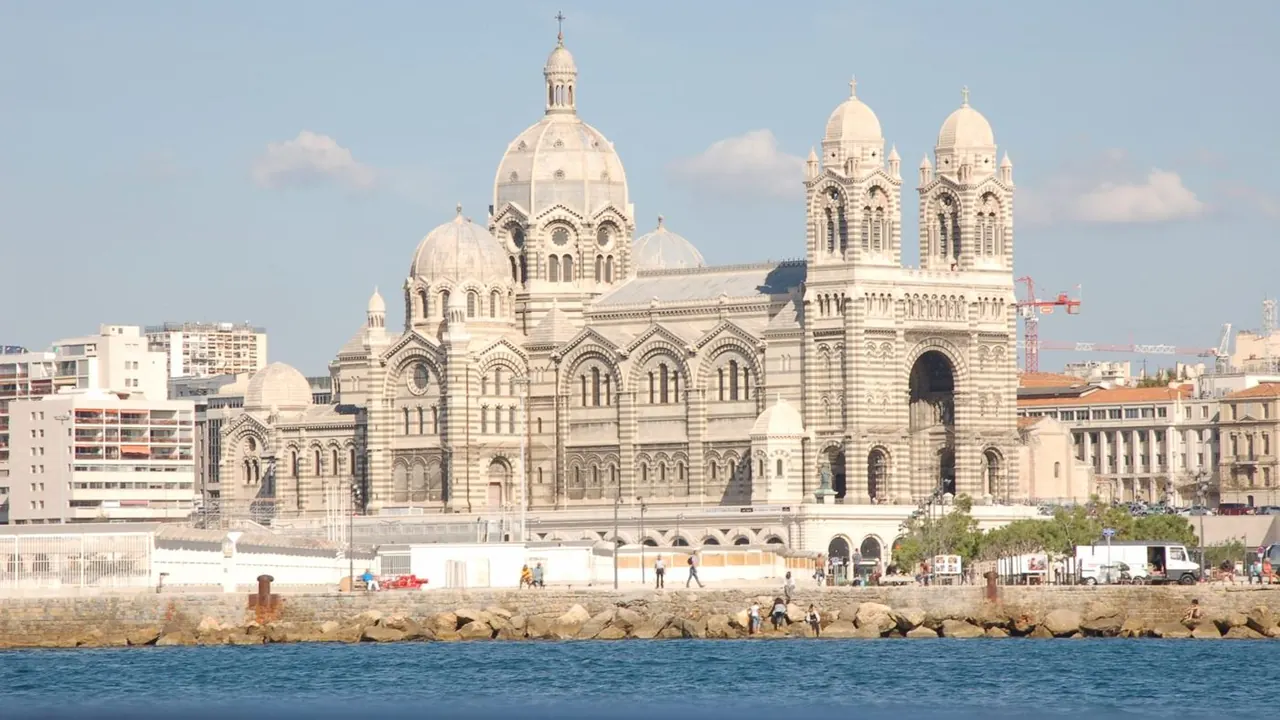
La Major cathedral from the harbour
- Day trips86
- Nature & outdoors83
- Beaches72
Photo: Charlotte Noblet, CC BY-SA 3.0, cropped
Match
60
Every category weighted equally
- Beach & sun61
- Culture & arts60
- Food & nightlife59
- Family trip61
- Outdoors66
- Relax & unwind60
- Shopping & style58
- On a budget58
Marseille in twelve categories
Our verdict on each, scored 0 to 100 against the same fixed benchmark cities, so a score means the same thing on every page.
Beaches & swimming. Scores 72 out of 100.
Food & drink. Scores 67 out of 100.
Culture & sights. Scores 63 out of 100.
Nightlife. Scores 57 out of 100.
Nature & outdoors. Scores 83 out of 100.
Day trips. Scores 86 out of 100.
Good for families. Scores 50 out of 100.
Getting around. Scores 57 out of 100.
Shopping & style. Scores 47 out of 100.
Affordability. Scores 45 out of 100.
Live music & performing arts. Scores 56 out of 100.
Wellness & relaxation. Scores 37 out of 100.
Marseille category by category
Beaches & swimming
72Marseille has a long seafront and the sea is warm enough to swim in from June to September, typically around 22-24°C in high summer. The Plages du Prado are a broad stretch of man-made beaches of shingle and imported sand south of the centre, with lawns behind them, popular with local families. Closer in, the little Plage des Catalans and the rocky inlets of the Corniche, such as the Vallon des Auffes, are where people swim before work.
The real draw is the Calanques, the white limestone inlets with clear turquoise water south-east of the city. Most are reached on foot or by boat, so a swim there takes up half a day. The Frioul islands, a short ferry ride away, have small coves. The mistral can cool the water sharply from one day to the next, and after heavy rain the city beaches are sometimes closed for water quality.
Food & drink
67Marseille eats like a port that has taken people in from all over the Mediterranean. Bouillabaisse is the classic, a long fish stew served in two courses with rouille and croutons. It is at its best in the small fishing harbours along the Corniche and is always a serious, sit-down meal. The everyday food is cheaper and more varied: chickpea panisses, pizza from wood-fired ovens, and orange-blossom navette biscuits from the bakery by Saint-Victor.
Noailles, just off the Canebière, is the city's larder, with spice shops, North African bakeries, Comorian and Armenian grocers and a daily produce market. Fishermen sell their catch every morning on the Vieux-Port quay. Pastis is the drink of a long afternoon, and the rosés of Cassis and Bandol come from nearby. There is a serious high-end tier, with chefs cooking around the sea and its fish, but the old port also has many tired set menus aimed at passing crowds.
Culture & sights
63Marseille was founded by Greek sailors around 600 BC, making it France's oldest city. Its heritage is real, though it is scattered through a working, often rough-edged city rather than held in a preserved old centre. Notre-Dame de la Garde, the striped neo-Byzantine basilica on its hilltop, watches over everything. Below it, the Vieux-Port is lined with forts: Saint-Jean, linked by footbridges to the lattice-clad MuCEM, the museum of Mediterranean civilisations, and Saint-Nicolas across the water.
Le Panier, the old quarter climbing behind the port, has stepped lanes and the Vieille Charité, a baroque almshouse that now holds museums. Nearby are the vast Cathédrale de la Major and the fortress-like Abbaye Saint-Victor with its early Christian crypts. Further out are the Château d'If on its island, the fountains of the Palais Longchamp, and Le Corbusier's Cité Radieuse, a UNESCO-listed housing block you can visit.
Nightlife
57Going out in Marseille is informal and loud, more terrace and street than velvet rope. Cours Julien and the streets around La Plaine and Notre-Dame-du-Mont are the heart of it. Bars painted with graffiti, small music bars and pavement tables fill with students and locals until late, especially on warm nights. The Vieux-Port has larger bars and terraces where people drink pastis in the evening sun, and some quays carry on into the night.
Clubbing is smaller and more scattered: electronic nights in converted industrial spaces and warehouses, and summer parties by the sea or on rooftops. The scene is lively in summer and thins in winter. Some streets around the centre feel edgy late at night, so many locals take a taxi home.
Nature & outdoors
83Marseille has a national park inside its city limits. The Calanques massif runs from the southern suburbs towards Cassis: bare white limestone ridges, pine-scented gullies and narrow inlets of deep blue water. Paths lead to Sormiou, Morgiou, Sugiton and En-Vau, and the long coastal route is one of the great walks of the Mediterranean. The cliffs are a famous sport-climbing area, and sea kayaking and diving around the inlets and the Riou archipelago are excellent.
The Frioul islands are bare and windswept, with good walking. Within an hour by road are the ridge of Montagne Sainte-Victoire, the beech forest of the Sainte-Baume and the cliffs of Cap Canaille. Spring and autumn are the best seasons. In summer the heat is intense, and on days of high fire risk the massifs can close to walkers.
Day trips
86Marseille makes an excellent base for Provence. Aix-en-Provence, with its fountains, plane-tree avenues and Cézanne's studio, is about half an hour away by bus or train. Cassis, a fishing harbour under the cliffs with its own white wines, is closer still. Arles, with its Roman arena and Van Gogh associations, is about an hour by train, and Avignon's Palais des Papes and bridge are under an hour on the fast line.
Nîmes and the Pont du Gard fit in a long day, as do the hilltop villages of the Luberon, Les Baux and Saint-Rémy by car. Along the coast are the Bandol wine estates, La Ciotat and the naval port of Toulon. The Côte Bleue villages west of the city have little harbours with fishing boats. Most of the towns are on the regional railway, but the villages are much easier with a car.
Good for families
50Marseille is a reasonable but not easy choice with children. In summer the Prado beaches are the obvious draw, with lawns and gentle water, and Parc Borély behind them has a lake, open lawns and a botanical garden. Boat trips to the Frioul islands and the Château d'If, or along the Calanques, go down well. The little tourist train up to Notre-Dame de la Garde saves a steep climb.
There is no large zoo, aquarium or theme park in the city, and the MuCEM and other museums are aimed at adults. Heavy traffic, narrow pavements, steep streets and summer heat make pushing a buggy hard work. Some central streets are dirty and noisy, so families tend to stay near the southern beaches.
Getting around
57The heart of Marseille, from the Vieux-Port through Le Panier to the Canebière and Cours Julien, is walkable, though steep in places. Two metro lines and a few tram lines run from the main station and the port into the centre and the northern districts. One card covers metro, tram and bus. Small ferries cross the Vieux-Port and run in summer to the Pointe Rouge beaches and L'Estaque, a pleasant way to avoid the roads.
Beyond the core, the city sprawls across hills and bays. The beaches and the Calanques trailheads are reached by buses that get stuck in traffic, and some coves take a long walk from the last stop. Driving in the centre is stressful and parking is scarce, but a car is useful for the Provence villages.
Shopping & style
47Shopping in Marseille is more about local things than fashion. The traditional buys are olive-oil Marseille soap in plain green cubes and santon crib figures, the small painted clay figures of Provençal village life, made in workshops in and around Le Panier. The Noailles quarter off the Canebière is the liveliest place to browse, with fabrics, teas, kitchenware and North African goods packed into narrow streets.
Rue Paradis and Rue de Rome have the department stores, chains and a few luxury names, and there is a large shopping centre in the port district at La Joliette. Cours Julien and Le Panier have independent design shops and small fashion boutiques. The fashion and luxury offer is thin, though. A visitor who wants designer flagships or a long afternoon of boutique hunting will run out of streets quickly.
Affordability
45Marseille sits in the middle of the price range for a large Western European city. It is not a budget destination, but it is far from the most expensive end of France either. Central hotels are reasonable outside summer, while rooms near the Vieux-Port and the beaches cost much more in July and August. Everyday eating can be cheap, with pizza, North African snacks and market food. Sit-down restaurant meals cost what they usually do in a French city. Public transport is inexpensive, walking in the Calanques is free, and several of the city's museums charge little to get in.
Live music & performing arts
56Marseille's performing arts are solid and lean towards the popular and the Mediterranean. The Opéra, an art deco house behind the Vieux-Port, stages a full season of opera and recitals. The Théâtre de la Criée, a national theatre in the old fish market, presents serious drama. The Friche la Belle de Mai, a converted tobacco factory, mixes contemporary theatre, dance, concerts and exhibitions.
The city has a strong place in French hip-hop and in world and Mediterranean music, and larger halls bring touring rock and pop acts. The Festival de Marseille in summer brings dance and performance, and the long-running Fiesta des Suds in autumn brings music from around the world. Outside these, most nights offer a decent choice rather than a must-see.
Wellness & relaxation
37Marseille has no real spa or bathing tradition. There are a few hammams, run by the city's North African community and mostly used by locals, and some hotels have spas, but there is nothing worth building a trip around. The city itself is loud, dense and intense, with traffic and street noise in most central quarters. The slow moments are elsewhere: a long lunch by a small harbour on the Corniche, or an afternoon on a terrace. Visitors who want rest tend to stay in Cassis or a country house inland and come into the city for the day.
When should you go?
Pick a month to see what it is like. The climate figures are measured averages, not a forecast.
Marseille in July
Daytime high, °C
Rainfall in the month, mm
The whole year
Shaded against this city’s own year: the deepest cell is its best month for that figure and the palest its weakest.
Temperature and rainfall are climate normals, averaged over the years shown. Marseille: 1991-2020 normals, Marseille / Marignane (20.6 km from centre).
Before you go
| Measure | Marseille |
|---|---|
| Official language | French |
| Currency | Euro (EUR) |
| Sockets | CE230 V, 50 Hz |
| Driving side | Right |
| Time zone | UTC+1, UTC+2 in summer |
| Emergency number | 112 |
| Elevation | 0 m |
| Main airport | Marseille Provence Airport (MRS)21 km from centre126 non-stop destinations |
| Public holidays this year | 11 days |
By the numbers
| Measure | Marseille |
|---|---|
| City population | 886,040 |
| People per km² | 3,683 |
| Museums within 10 km | 27 |
| UNESCO World Heritage sites within 50 km | 1 |
| Swim season, months above 21 °C | 2 months |
Compare Marseille with
Every comparison with a written verdict behind it.