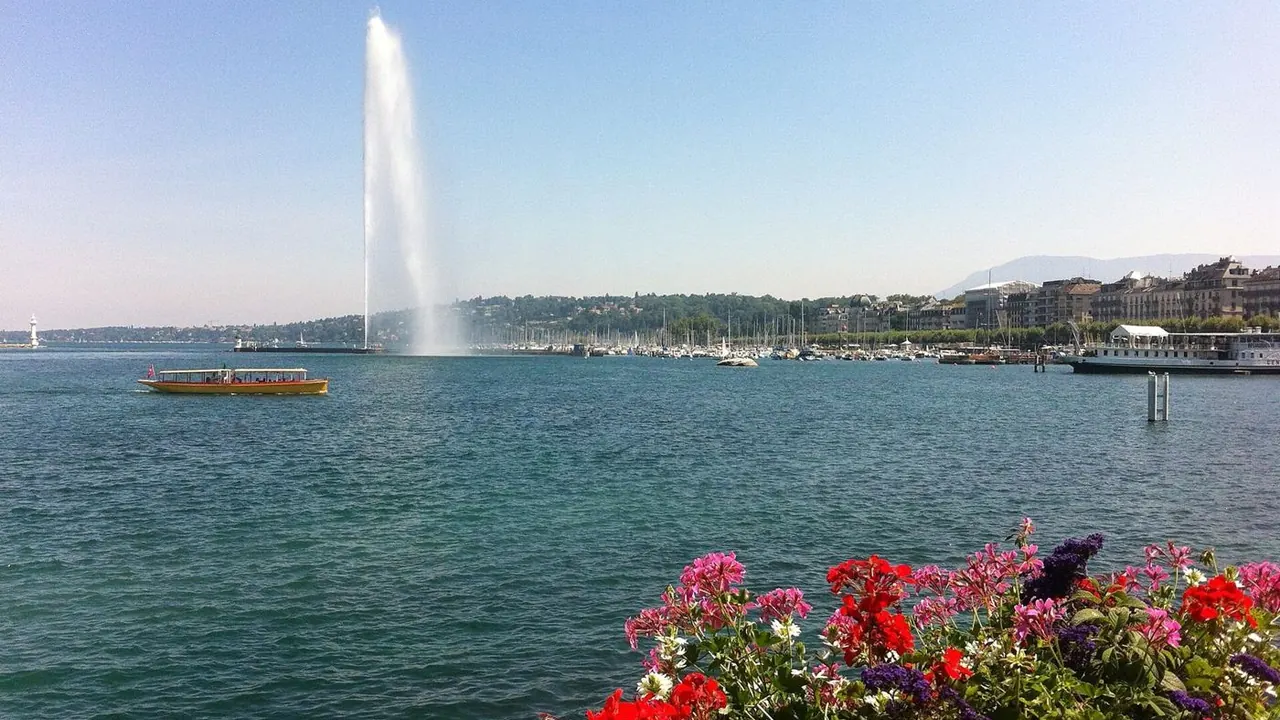
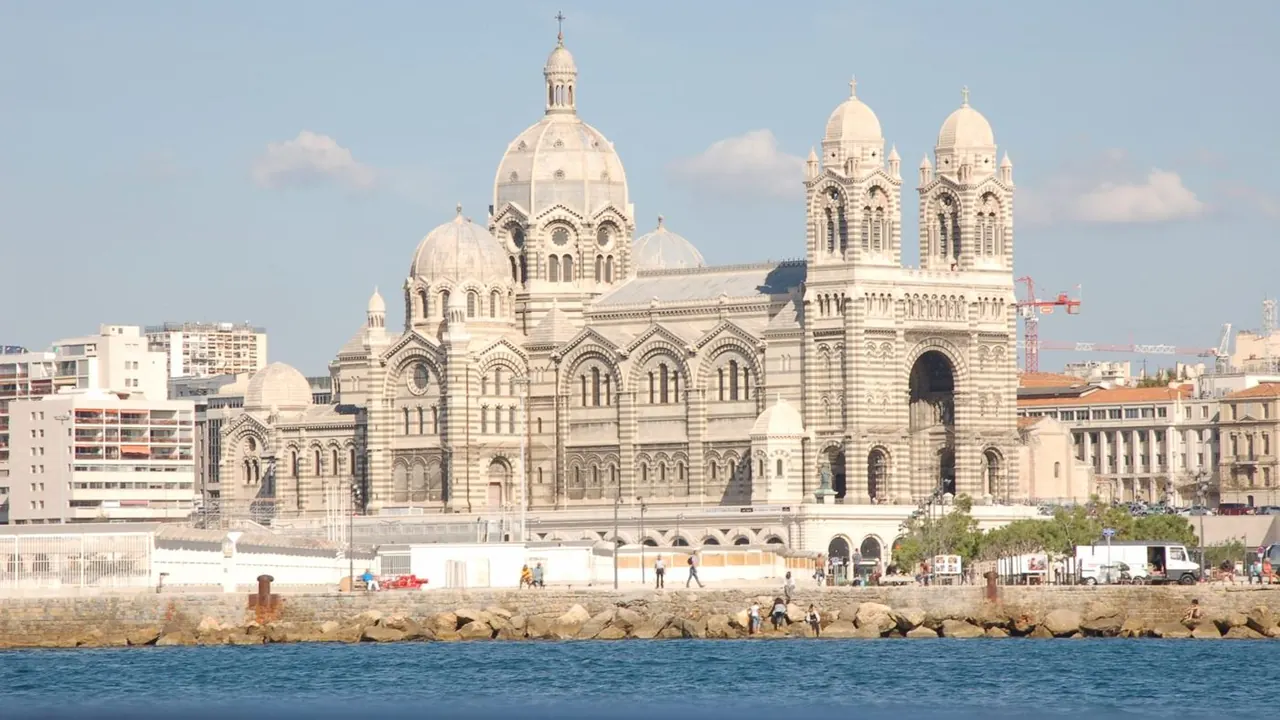
Photos: Geneva by Diviosen, CC BY-SA 3.0, cropped; Marseille by Charlotte Noblet, CC BY-SA 3.0, cropped.
Geneva or Marseille?
Our verdict in twelve categories, each scored against the same fixed benchmark cities, and the climate month by month, so you can choose for your trip.
Choose Geneva for
- getting around
- shopping
- wellness
Geneva suits travellers who want an orderly, quiet city that runs like clockwork, with the Alps and the lake right outside it. It is easy with children, simple to get around on foot and by tram, strong for watches and fine jewellery, and a good base for mountain walks or a winter day on skis. The catch is cost, which is steep at every turn, so it works best for those who are not counting.
Choose Marseille for
- prices
- beaches
- nightlife
Marseille is the pick for anyone who wants the Mediterranean itself: sea swimming, the Calanques on the city's edge, Provence towns within easy reach and food that runs from market snacks in Noailles to a long bouillabaisse lunch. Evenings out are livelier and the whole trip costs far less. In return it is louder, grittier and harder work to get around, and it rewards travellers who like a city with rough edges.
Scoreboard
Twelve categories on one fixed scale from 0 to 100. The shaded stretch is the gap between the two.
Your match
Pick a travel style or drag the sliders, and both match scores follow your weighting.
Wins on getting around and shopping with your weighting.
Wins on prices and beaches with your weighting.
What matters to you?
Category by category
What the scores mean for a trip.
Beaches & swimming
In Geneva you swim in the lake: off the concrete at the Bains des Pâquis, or on the lawns and pebbles of Genève-Plage and the Eaux-Vives shore. It is pleasant, but the water stays cold until June and the summer is short.
Marseille has the actual Mediterranean, from the Prado beaches and Plage des Catalans to early-morning dips at the Vallon des Auffes. Beyond those lie the Calanques inlets, reached on foot or by boat. The mistral and the occasional closure after rain are the drawbacks, but for a vacation planned around swimming this is the city to choose.
Food & drink
Geneva cooks French with a Swiss accent: lake perch fillets, fondue in panelled brasseries, local Chasselas and a polished fine-dining tier in Carouge and the Old Town. What it lacks is cheap, casual eating, and every meal costs a lot.
Marseille has more range and more life. Bouillabaisse in the little Corniche harbours is a set-piece meal, but the everyday pleasures are panisses, wood-fired pizza and the spice shops and North African bakeries of Noailles, with fish sold straight off the boats on the Vieux-Port quay. The one thing to watch is the tired set menus around the old port.
Culture & sights
The two cities are close here, but their heritage is very different. Geneva tells one tidy story of Calvin and diplomacy: St Pierre Cathedral and its excavations, the Reformation Wall, the Palais des Nations, the Red Cross museum and CERN. It is compact and done in two or three days.
Marseille's history goes back to the Greek sailors who founded it, and it is spread across a working city. You climb to Notre-Dame de la Garde, cross from Fort Saint-Jean to the MuCEM, wander Le Panier to the Vieille Charité and take a boat to the Château d'If. It asks for more legwork and gives back more variety.
Nightlife
Marseille is the better night out. Cours Julien and La Plaine fill with students and locals at graffiti-covered bars and pavement tables, the Vieux-Port terraces carry on late, and summer brings warehouse electronic nights and rooftop parties. Some central streets feel edgy late at night, so locals tend to take a taxi home.
In Geneva the evening centres on the bars of the Pâquis, Carouge's wine terraces and the alternative venues of Plainpalais and Jonction. It is pleasant at weekends and by the lake in summer, but expensive, and quiet early on weeknights.
Nature & outdoors
Both are excellent bases for the outdoors, one in the mountains and one by the sea. From Geneva you can take the cable car up the Salève, walk the Jura forests, sail on the lake and reach Chamonix in about an hour, with ski slopes close by in winter.
Marseille has a national park inside its city limits. The Calanques coastal path, the sea cliffs for climbing, and kayaking and diving around the Riou islands are the attractions, with Sainte-Victoire within an hour. The best months there are spring and autumn, because summer heat and fire risk can close the massifs.
Day trips
Geneva's outings follow the lake and cross the border. Steamers and trains run to Lausanne, Montreux and the Château de Chillon past the Lavaux terraces, Yvoire is a boat ride away, and Annecy, Gruyères and Bern each make a day out.
Marseille has the edge because so much of Provence is close. Aix is about half an hour away and Cassis nearer still, while Arles and Avignon are about an hour or less by train, with Nîmes, the Pont du Gard and the Luberon villages for longer days. The hill villages are much easier with a car, which in Geneva you rarely need.
Good for families
Geneva is the easier choice with children. Its streets are safe and mostly flat, trams take pushchairs without fuss, and the Natural History Museum's dioramas, the animal enclosures at the Bois de la Bâtie and the yellow harbour boats fill several days well.
Marseille works best in summer, when families can stay by the Prado beaches and Parc Borély and take boats to the Frioul islands. In the centre, though, traffic, steep streets, narrow pavements and the heat make pushing a buggy hard work. Neither city has a zoo or a theme park.
Getting around
Geneva is much simpler. You can walk from the station over the bridges to the Old Town and on to Carouge, the trams are punctual, the harbour boats are part of the same network, and the airport is a few minutes away by train.
Marseille's core around the Vieux-Port, Le Panier and the Canebière can be walked, and it has two metro lines, trams and handy port ferries. Beyond that the city sprawls over hills and bays, so buses to the beaches and Calanques trailheads get stuck in traffic, and driving in the centre is a strain.
Shopping & style
Geneva is one of the world's great addresses for watches and jewellery, with the Swiss houses' flagships lining the Rue du Rhône. For something less polished there are Carouge's craft workshops and the Plainpalais flea market, though everyday high-street shopping is ordinary.
Marseille is better for souvenirs with a story than for fashion. Look for green cubes of olive-oil soap, santon figures from the Le Panier workshops, and fabrics and teas in Noailles. Luxury there is thin, and serious boutique hunters will run out of streets quickly.
Affordability
There is no contest. Geneva is among the most expensive cities in the world for visitors. Free museums, the transport pass that hotel guests receive and cheap lake lidos soften it a little, and many visitors save by sleeping or eating in France.
Marseille is mid-priced for Western Europe. Street snacks and market food are cheap, transport costs little and the Calanques walks are free. The main thing to plan around is the higher hotel prices near the port and beaches in July and August.
Live music & performing arts
The two are broadly level, but Geneva leans formal and Marseille leans popular. Geneva's strengths are opera and ballet at the Grand Théâtre, the Orchestre de la Suisse Romande in Victoria Hall and dance in the Bâtiment des Forces Motrices on the Rhône.
Marseille has its own art deco Opéra and serious drama at La Criée, but its character comes from the Friche la Belle de Mai, a deep French hip-hop tradition and world music at the autumn Fiesta des Suds.
Wellness & relaxation
Geneva is the calmer place to unwind. In winter the Bains des Pâquis becomes a sauna and hammam where regulars plunge straight into the cold lake, the lakefront hotels have proper spas, and Évian and Divonne are close by. Quiet Sundays add to the effect.
Marseille is loud and dense and has no bathing tradition beyond a few local hammams. Rest there means a long lunch in a Corniche harbour, and visitors who want real calm often stay in Cassis and come into the city for the day.
When should you go?
Pick your month. The climate figures are measured averages, not a forecast.
Geneva in July
Marseille in July
Daytime high, °C
Rainfall in the month, mm
Temperature and rainfall are climate normals, averaged over the years shown. Geneva: 1991-2020 normals, Geneve-Cointrin (5.7 km from centre). Marseille: 1991-2020 normals, Marseille / Marignane (20.6 km from centre).
Geneva is a summer and early autumn city. Highs climb from about 5°C in January to 27°C in July, and June to August bring the most sunshine and the only weeks when lake swimming is pleasant. Rain is spread through the year with no dry season, and from November to February the days are cold, grey and short on sun, better for museums and the nearby ski slopes than for strolling.
Marseille is warmer and sunnier in every month. The sea is good for swimming from June to September, reaching about 22°C in August, while July is very dry at around 11mm of rain but hot at 31°C, too hot for long walks or the Calanques trails. Spring and early autumn are the best all-round seasons, and the rain arrives in September to November. Even in winter the days stay mild and fairly bright, which Geneva cannot match.
Which traveller are you?
For a beach and sun trip, Marseille is the clear answer. It has warm sea from June to September, the Prado beaches close to town and the turquoise Calanques inlets, while Geneva can only offer a short summer of lake bathing from jetties and lawns.
On a trip on a tight budget, Marseille again. Cheap street food, low-cost transport, free walks in the Calanques and museums that charge little make it manageable, whereas Geneva ranks among the costliest cities anywhere, and budget visitors there often end up sleeping in France.
On a shopping trip, Geneva wins comfortably. The Rue du Rhône holds the flagships of the great Swiss watch houses and luxury jewellers, and Carouge and the Plainpalais flea market add character. Marseille's soap, santons and Noailles fabrics are charming but soon exhausted.
Before you go
| Measure | Geneva | Marseille |
|---|---|---|
| Official language | French, German, Italian, Romansh | French |
| Currency | Swiss Franc (CHF) | Euro (EUR) |
| Sockets | CJ230 V, 50 Hz | CE230 V, 50 Hz |
| Driving side | Right | Right |
| Time zone | UTC+1, UTC+2 in summer | UTC+1, UTC+2 in summer |
| Emergency number | 112 | 112 |
| Elevation | 403 m | 0 m |
| Main airport | Geneva International Airport (GVA)5 km from centre150 non-stop destinations | Marseille Provence Airport (MRS)21 km from centre126 non-stop destinations |
| Public holidays this year | 9 days | 11 days |
By the numbers
| Measure | Geneva | Marseille |
|---|---|---|
| City population | 211,152 | 886,040 |
| People per km² | 13,280 | 3,683 |
| Museums within 10 km | 34 | 27 |
| UNESCO World Heritage sites within 50 km | 2 | 1 |
| Swim season, months above 21 °C | - | 2 months |
Where else could you go?
Every comparison below shares a destination with this one, so you can follow Geneva or Marseille somewhere new.