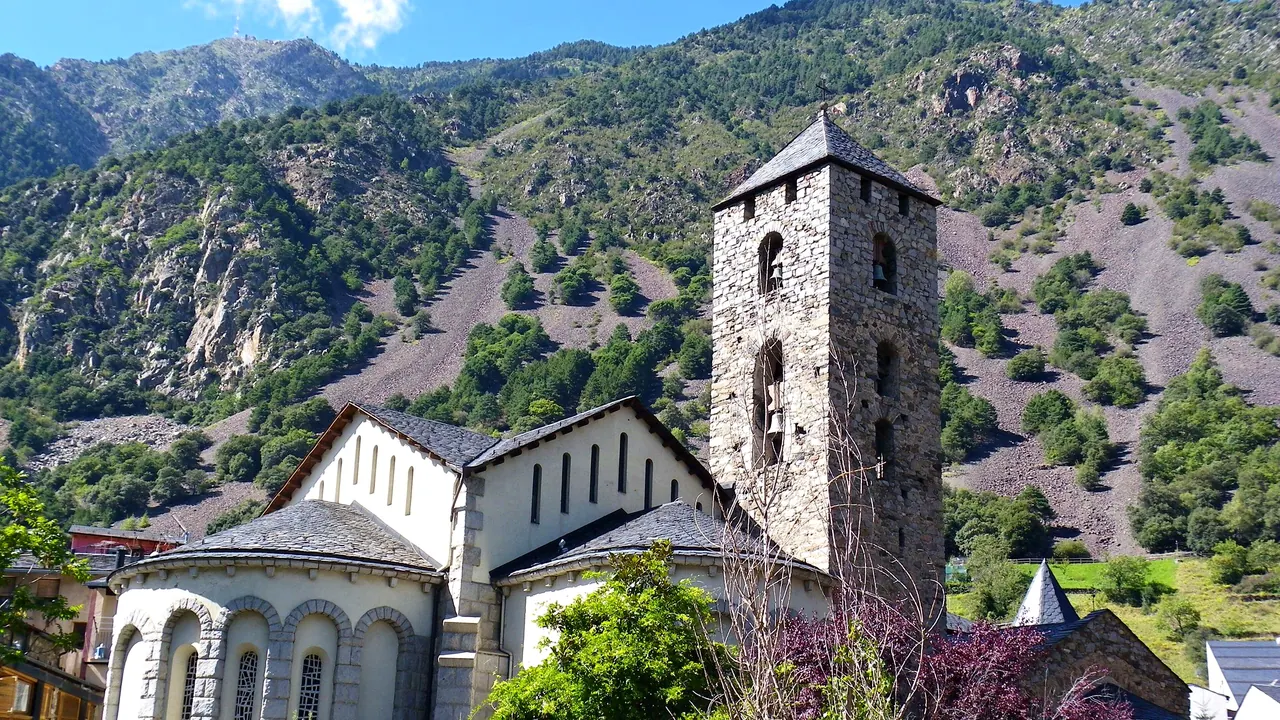
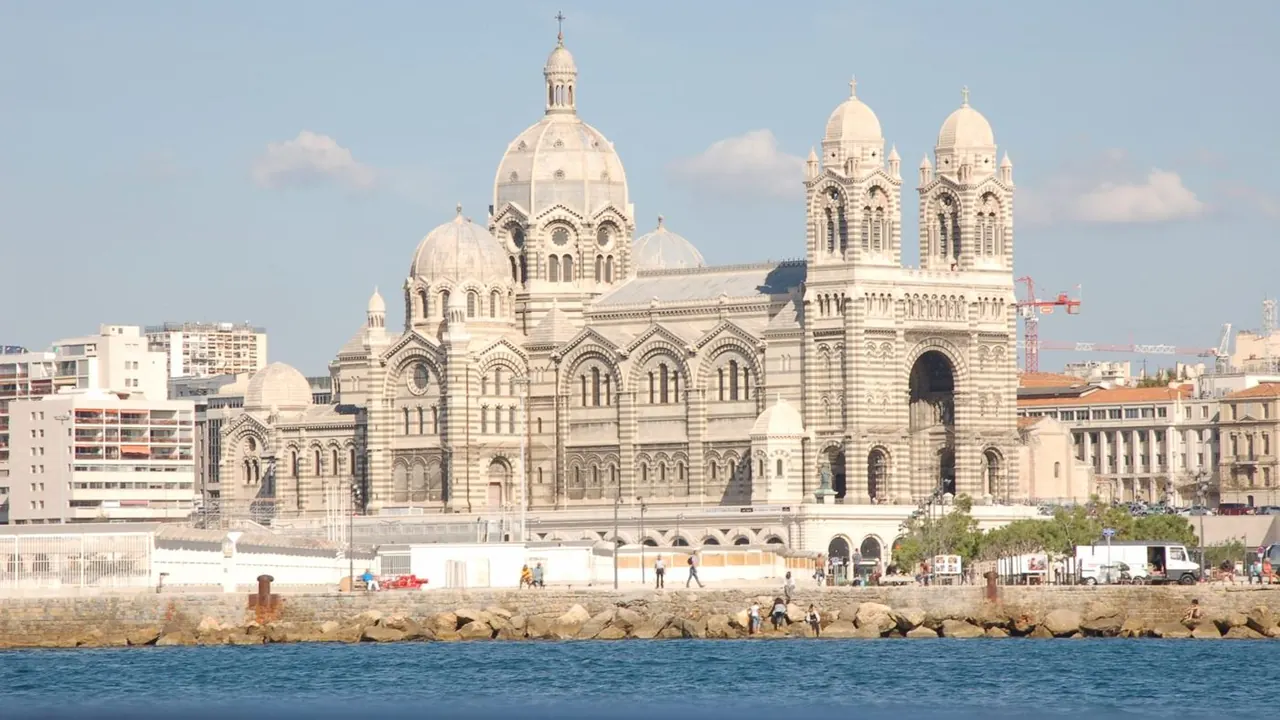
Photos: Andorra la Vella by KRLS, CC BY-SA 3.0, cropped; Marseille by Charlotte Noblet, CC BY-SA 3.0, cropped.
Andorra la Vella or Marseille?
Our verdict in twelve categories, each scored against the same fixed benchmark cities, and the climate month by month, so you can choose for your trip.
Choose Andorra la Vella for
- wellness
- shopping
- prices
Andorra la Vella is for a vacation spent in the mountains. Skiers get large lift-linked areas a short ride away in winter, and walkers and cyclists get glacial lakes, high refuges and long Pyrenean climbs in summer. The day ends in the thermal lagoons of Caldea, and the low-tax avenues are a good place to stock up on gear. Expect quiet evenings, a small old quarter and a short list of outings.
Choose Marseille for
- beaches
- day trips
- live music and the arts
Marseille suits a traveller who wants a real city on the sea: swimming in the Calanques, bouillabaisse by a small harbour, the MuCEM and Le Panier, and late nights around Cours Julien. It is also the far better base for exploring, with Aix, Arles, Avignon and Cassis all within easy reach. Go there for variety and energy, not for rest.
Scoreboard
Twelve categories on one fixed scale from 0 to 100. The shaded stretch is the gap between the two.
Your match
Pick a travel style or drag the sliders, and both match scores follow your weighting.
Wins on wellness and shopping with your weighting.
Wins on beaches and day trips with your weighting.
What matters to you?
Category by category
What the scores mean for a trip.
Beaches & swimming
Andorra la Vella has no beach to offer. The Mediterranean is about three hours away by road, and its glacial lakes are for looking at rather than swimming in, so warm water means a pool or the Caldea lagoons.
Marseille has a real seafront. The Prado beaches of shingle and sand are good for families, small coves like the Vallon des Auffes are popular for a swim before work, and the clear inlets of the Calanques and the Frioul islands are a half-day trip. The mistral can chill the water overnight, but from June to September swimming is an everyday pleasure.
Food & drink
Marseille is the place to travel for the food. Bouillabaisse eaten slowly in a Corniche harbour, chickpea panisses, navette biscuits, and the spice shops and grocers of Noailles give it a range a mountain capital cannot match, though the set menus around the Vieux-Port are best avoided.
Andorra la Vella feeds you well after a day outdoors rather than giving you a reason to come. The meals worth remembering are found in the bordas of the side valleys: escudella, trinxat and lamb grilled over wood fires. Back in town, the restaurants along the shopping avenues vary a great deal.
Culture & sights
Andorra la Vella's heritage takes about a day. It covers the stone lanes of the Barri Antic, the fortified Casa de la Vall where the parliament sat for centuries, and Romanesque churches such as Santa Coloma just outside town.
Marseille has more than two and a half thousand years of history, although it is spread through a working city rather than kept in a preserved core. Notre-Dame de la Garde looks down on the forts of the Vieux-Port and the MuCEM. Le Panier holds the Vieille Charité, and further out are Saint-Victor's crypts, the Château d'If and Le Corbusier's Cité Radieuse. Even a long weekend leaves plenty unseen.
Nightlife
In Andorra la Vella, evenings mean a pub or a wine bar and an early night. The capital's bars liven up a little on winter weekends, but the real après-ski happens up in the resort villages.
Marseille goes out properly and informally. Graffiti-covered bars and pavement tables around Cours Julien and La Plaine stay full until late, people drink pastis on terraces along the Vieux-Port, and summer brings warehouse electronic nights and rooftop parties. Some central streets feel edgy late at night, so a taxi home is sensible.
Nature & outdoors
Both cities have outstanding landscapes on the doorstep, but of very different kinds. Andorra la Vella is a high Pyrenean world of peaks near 3,000m. It offers skiing in winter and, from late spring, trails to glacial lakes and refuges, with the UNESCO-listed Madriu-Perafita-Claror valley starting at the edge of town.
Marseille's wild country is coastal and sun-baked. The Calanques national park offers white limestone ridges, a celebrated coastal path, sport climbing on the cliffs, and kayaking and diving among the inlets, with Sainte-Victoire and the Sainte-Baume forest within an hour. In summer, heat and fire risk can close Marseille's massifs, while Andorra's high passes keep their snow late into spring.
Day trips
Marseille is a much better base for day trips. Aix-en-Provence and Cassis are close, Arles and Avignon are each about an hour by train, and Nîmes, the Pont du Gard, the Luberon villages and the Bandol vineyards all fit into a day.
From Andorra la Vella the choice is pleasant but limited. La Seu d'Urgell's cathedral and market are about half an hour away, Puigcerdà and the enclave of Llívia take about an hour, and Foix's castle is a two-hour drive over the pass into France.
Good for families
Each city works for children only in a particular way. Andorra la Vella is safe and clean, with ski schools, gentle beginner slopes, summer toboggan runs, rope courses, an animal park and Caldea's family pools for a wet day. Away from the mountains, though, the long, traffic-heavy shopping street soon bores older children.
Marseille's appeal for families is the summer seaside: the Prado beaches, the lake and lawns of Parc Borély, and boat trips to the Château d'If. Steep streets, heat and narrow pavements make a buggy hard work. Neither city has a zoo, aquarium or theme park.
Getting around
Both have walkable centres with steep stretches, but transport works differently in each. Andorra la Vella relies on buses up the valleys and ski buses in winter, and with no railway in the country, getting there means a long road journey from airports in Spain or France. A car helps for the trailheads.
Marseille has a main railway station, two metro lines, trams and small ferries across the Vieux-Port and out to the beaches. The beaches and Calanques trailheads are spread out, though, and the buses that serve them get caught in traffic.
Shopping & style
For buying things, Andorra la Vella comes out ahead. Its low-tax avenues run unbroken into Escaldes-Engordany, lined with department stores and shops selling ski gear, outdoor equipment, perfume, electronics and spirits. It is a place to stock up, not to discover anything, as there are few independents and almost no local crafts.
Marseille is better for character. You can pick up green cubes of olive-oil soap and santon figures from workshops around Le Panier, or browse the fabrics and kitchenware of Noailles. Its fashion offer runs out quickly beyond Rue Paradis and the centre at La Joliette.
Affordability
Andorra la Vella is a little easier on the budget. Rooms are good value outside the peak ski weeks, the set lunches are fair, and low taxes keep drinks and shopping cheap, although ski passes, equipment hire and Caldea cost what mountain resorts usually charge.
Marseille's savings lie in its street food, cheap transport and free walks in the Calanques. Rooms near the Vieux-Port and the beaches go up sharply in July and August.
Live music & performing arts
Marseille offers a real choice of evenings: the art deco Opéra, serious drama at La Criée in the old fish market, and contemporary work at the Friche la Belle de Mai. It also has deep roots in French hip-hop and Mediterranean music, celebrated each autumn at the Fiesta des Suds.
Andorra la Vella mostly comes alive for music in summer, with the jazz festival in Escaldes-Engordany and the classical festival in Ordino. For the rest of the year, there is little more than the occasional concert in the town's halls.
Wellness & relaxation
Andorra la Vella has the stronger offer here, thanks to one place: Caldea. Hot springs feed its lagoons, pools and saunas, and there is a quieter adults-only section, just along the river from the centre. For real quiet, though, head to the stone villages of the side valleys rather than the busy avenues.
Marseille has no bathing culture beyond a few local hammams, and its centre is noisy. The calm moments here are a long harbour lunch on the Corniche or a night in Cassis.
When should you go?
Pick your month. The climate figures are measured averages, not a forecast.
Andorra la Vella in July
Marseille in July
Daytime high, °C
Rainfall in the month, mm
Where the figures come from
Andorra la Vella has no weather station within reach, so its figures come from a gridded climate model rather than a measured record, and read a broad area rather than the city itself.
Temperature and rainfall are climate normals, averaged over the years shown. Andorra la Vella: 1991-2020 normals, TerraClimate 4 km grid at the town, no weather station within 90 km. Marseille: 1991-2020 normals, Marseille / Marignane (20.6 km from centre).
The two climates are almost opposite. Andorra la Vella sits high in the Pyrenees, so winter days are cold and snowy, which suits skiers but not anyone hoping to stroll. The town is at its best for walking and hiking from June to September, when afternoons reach about 23°C, although summer storms do build over the peaks. May and November are the wettest months, at around 115mm in November.
Marseille is much warmer and sunnier all year. By July, afternoons reach about 31°C, hot for sightseeing on foot but right for the beach, and the sea is warm enough for a swim from June to September, peaking near 22°C in August. Spring and early autumn are the most comfortable months for the city and the Calanques paths, though September brings the first heavy rains, at about 82mm. The winters are mild enough for walking around the city, at a time of year when Andorra belongs to skiers.
Which traveller are you?
For a beach and sun trip, Marseille is the only real choice. It has the Prado beaches, swimming spots along the Corniche and the turquoise inlets of the Calanques, along with long, dry summers. Andorra la Vella is three hours from any shore, and its mountain lakes are too cold to swim in.
On a relaxing and wellness trip, Andorra la Vella has the advantage thanks to Caldea, the thermal complex fed by the Escaldes hot springs, with its lagoons, saunas and adults-only section. Marseille has no real bathing tradition, and its loud, dense centre is hard to unwind in.
For skiers, Andorra la Vella wins easily. Large lift-linked ski areas with good ski schools are a short bus ride from town, and there is ski touring and snowshoeing too. Marseille's mountains are dry limestone ridges for walking and climbing, with no snow sports at all.
Before you go
| Measure | Andorra la Vella | Marseille |
|---|---|---|
| Official language | Catalan | French |
| Currency | Euro (EUR) | Euro (EUR) |
| Sockets | CF220 V, 50 Hz | CE230 V, 50 Hz |
| Driving side | Right | Right |
| Time zone | UTC+1, UTC+2 in summer | UTC+1, UTC+2 in summer |
| Emergency number | 112 or 118 | 112 |
| Elevation | 1,022 m | 0 m |
| Main airport | Josep Tarradellas Barcelona-El Prat Airport (BCN)142 km from centre235 non-stop destinations | Marseille Provence Airport (MRS)21 km from centre126 non-stop destinations |
| Public holidays this year | 14 days | 11 days |
By the numbers
| Measure | Andorra la Vella | Marseille |
|---|---|---|
| City population | 24,042 | 886,040 |
| People per km² | 801 | 3,683 |
| Museums within 10 km | 13 | 27 |
| UNESCO World Heritage sites within 50 km | 4 | 1 |
| Swim season, months above 21 °C | - | 2 months |
Where else could you go?
Every comparison below shares a destination with this one, so you can follow Andorra la Vella or Marseille somewhere new.
- Aix-en-Provencevs Marseille
- Arlesvs Marseille
- Avignonvs Marseille
- Saint-Tropezvs Marseille
- Carcassonnevs Andorra la Vella
- Gironavs Andorra la Vella