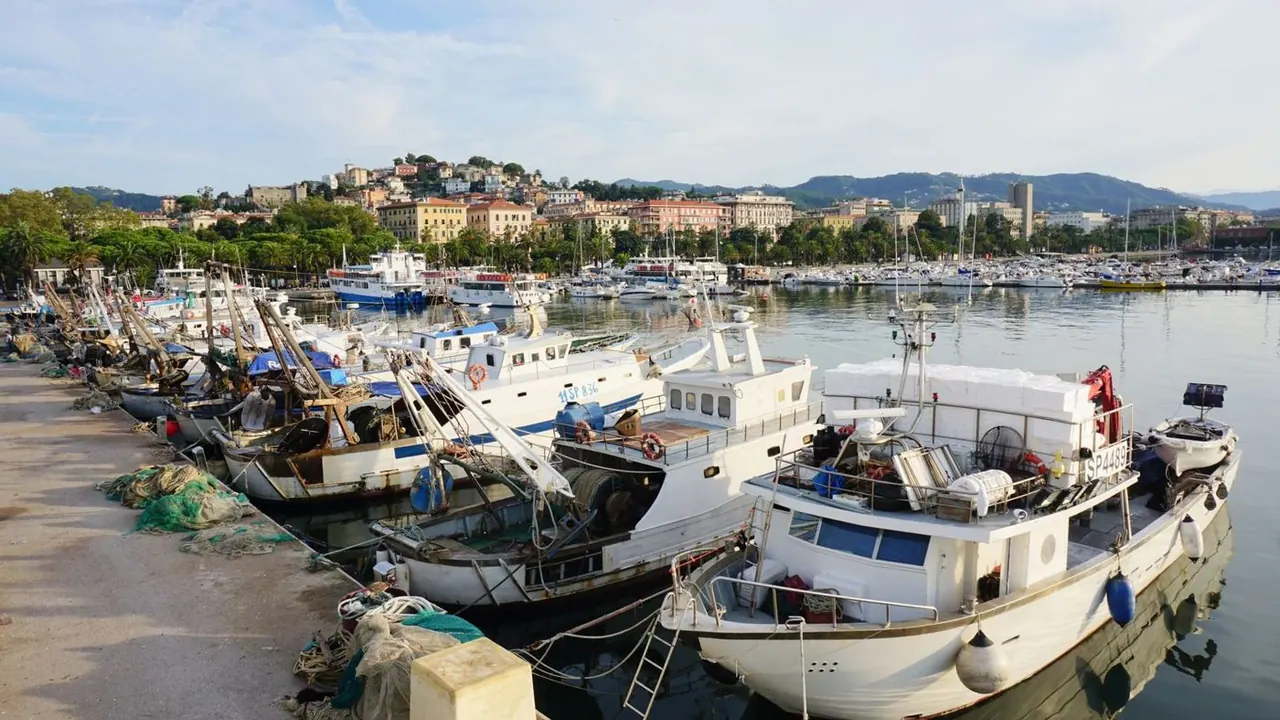
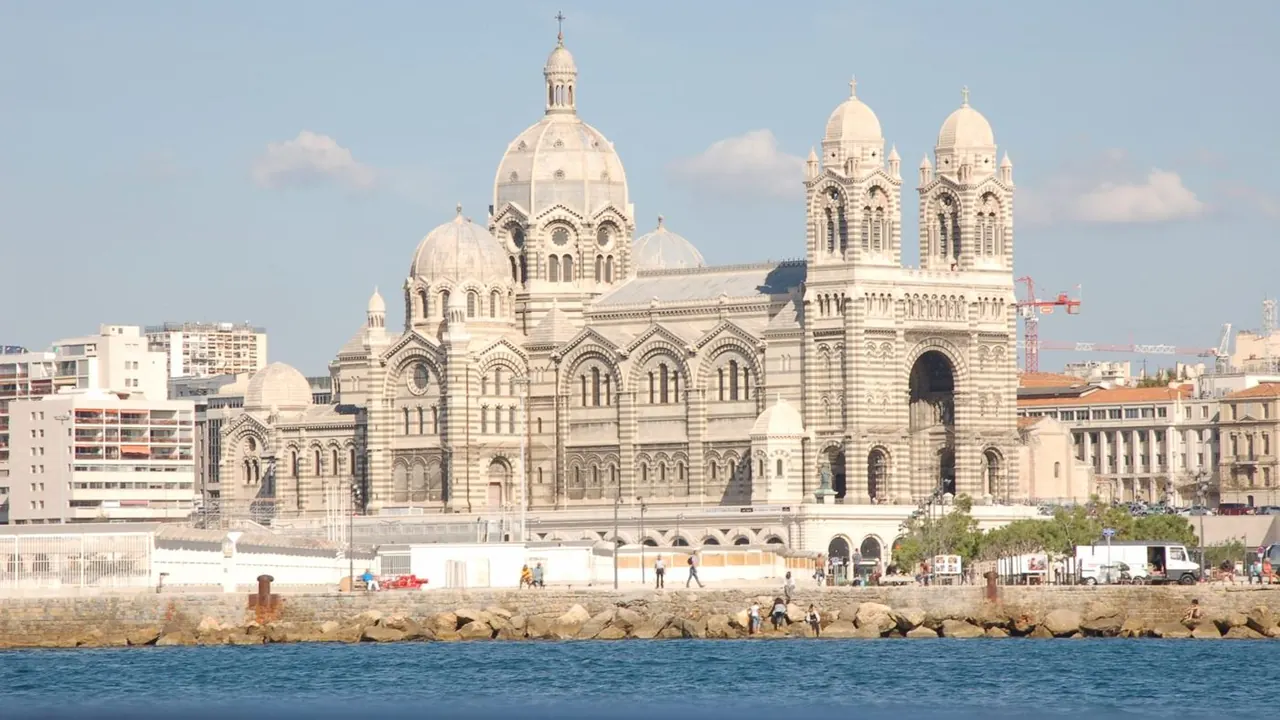
Photos: La Spezia by Irina Balashova, Pexels License; Marseille by Charlotte Noblet, CC BY-SA 3.0, cropped.
La Spezia or Marseille?
Our verdict in twelve categories, each scored against the same fixed benchmark cities, and the climate month by month, so you can choose for your trip.
Choose La Spezia for
- getting around
- prices
- day trips
La Spezia suits walkers and slow-coast travellers who want the Cinque Terre on their doorstep without paying village prices for a room. The town itself is a quiet naval port with a flat, easy centre, and its real value is the train line that puts terraced cliffs, painted harbours and Portovenere minutes away. Choose it if your days are spent on footpaths and boats and your evenings end after an aperitivo.
Choose Marseille for
- nightlife
- live music and the arts
- culture and sights
Marseille is the better pick for anyone who wants a real city around the coast. Greek foundations, the MuCEM and Le Panier give it far more to see, the Noailles markets and bouillabaisse harbours give it a wider table, and Cours Julien keeps going long after La Spezia has gone to bed. The Calanques sit inside the city limits and Provence opens up beyond, so it rewards travellers who can cope with noise, sprawl and a few rough edges.
Scoreboard
Twelve categories on one fixed scale from 0 to 100. The shaded stretch is the gap between the two.
Your match
Pick a travel style or drag the sliders, and both match scores follow your weighting.
Wins on getting around and prices with your weighting.
Wins on nightlife and live music and the arts with your weighting.
What matters to you?
Category by category
What the scores mean for a trip.
Beaches & swimming
Marseille has the better swimming, partly because the beaches are part of the city itself. The Prado beaches have lawns behind them, there are rocky inlets along the Corniche for a quick dip, and the turquoise coves of the Calanques and the Frioul islands are within reach, even if those take half a day.
La Spezia's own waterfront is a working port, so every swim is an outing to Lerici, San Terenzo, Palmaria or up the line to Monterosso. The water there is very clear and a little warmer, but the coves are small, mostly pebbly and largely taken up by paid bathing establishments.
Food & drink
Both cities snack on chickpeas, farinata from a wood oven in La Spezia and fried panisses in Marseille, but there the likeness stops. La Spezia cooks a focused Ligurian repertoire of pesto, mesciua and stuffed gulf mussels, fairly priced and dependable, with little fine dining or food from elsewhere.
Marseille's table is wider. Bouillabaisse in the Corniche fishing harbours is a proper occasion, Noailles mixes North African, Comorian and Armenian food shops, and there is a serious high-end tier. The catch is choosing well, since the Vieux-Port has its share of tired set menus.
Culture & sights
Marseille has much more to see. Its history runs back to Greek sailors, and it has the hilltop basilica of Notre-Dame de la Garde, the forts and MuCEM at the harbour mouth, the stepped lanes of Le Panier, the crypts of Saint-Victor and the Château d'If offshore. The sights are scattered through a working city rather than a polished old town, but there are several days' worth.
La Spezia is a nineteenth-century naval town of arcades and straight avenues. The Museo Amedeo Lia's early Italian paintings and the stele statues in Castello San Giorgio are worth a morning each, but the region's heritage lies out in Portovenere and the coastal villages.
Nightlife
La Spezia's evening is the aperitivo: spritz or Vermentino on Via del Prione or the seafront, then an early night before the trails. In summer the waterfront bars at Lerici add a little life, but late nights are rare.
Marseille actually goes out. Cours Julien and La Plaine fill with students and locals at graffiti-covered bars and small music venues until late, and there are warehouse electronic nights and summer parties by the sea. Some central streets feel edgy late on, so a taxi home is sensible.
Nature & outdoors
Both cities sit beside some of the finest coast on the Mediterranean, and the difference is in character. Around La Spezia it is a cultivated landscape: vine and olive terraces falling to the sea, paths linking villages so a walk ends with lunch in a harbour, and the marble peaks of the Apuan Alps an hour inland.
Marseille's Calanques are bare white limestone and pine, wilder and emptier, with world-class sport climbing and diving around the Riou islands. Sainte-Victoire and the Sainte-Baume forest are close by. In both, summer heat makes the paths hard going, and in Marseille fire risk can close the massifs altogether.
Day trips
La Spezia's outings are short hops along one stretch of coast. The Cinque Terre villages are a few minutes up the train line, Portovenere is a boat or bus ride away, Sarzana's walls and the Roman ruins at Luni lie just inland, and Pisa and Lucca are about an hour off. You can fit several into a week and spend very little of it in transit.
From Marseille the reach is wider and more varied: a whole region rather than one shoreline. Cassis and Aix are close by, Arles and the papal palace at Avignon are about an hour by train, and Nîmes with the Pont du Gard makes a long day. The towns are easy by rail, but the Luberon hilltop villages and Les Baux really need a car.
Good for families
Neither city has a zoo, aquarium or theme park, and both are fine rather than ideal with children. La Spezia's flat centre is easier with a pushchair, and the sheltered, shallow beaches at San Terenzo and Lerici suit small swimmers, though the crowded trains and steep villages wear toddlers out.
Marseille has the better beach day in the Prado lawns and Parc Borély, plus boat trips to the Château d'If, but traffic, steep streets and dirty pavements in the centre push families towards the southern districts.
Getting around
La Spezia is the simpler place to get about. The station, market, museums and seafront are a short, flat walk apart, and trains, buses and summer ferries fan out to the coast, so a car is a nuisance rather than a help. The only real strain is packed summer trains.
Marseille has a metro, trams and handy little ferries, but the city is large and hilly. The beaches and Calanques trailheads depend on buses that crawl in traffic, and exploring the Provence villages properly means driving.
Shopping & style
Marseille gives a shopper more to do. Green cubes of Marseille soap and painted santon figures from the Le Panier workshops are proper local buys, Noailles is a lively place to browse fabrics and spices, and Rue Paradis and La Joliette cover department stores and chains, even if luxury fashion is thin.
La Spezia's Via del Prione is a provincial high street of chains and shoe shops. The best things to take home are edible: pesto, Sciacchetrà and Monterosso anchovies.
Affordability
The two cost roughly the same, with La Spezia slightly easier on the wallet. Its main saving is relative: staying in town rather than in the Cinque Terre villages, though trail passes, boat trips and bathing establishments mount up.
In Marseille the free walking in the Calanques, cheap museums and North African street food help, while summer rooms near the Vieux-Port and the beaches are the expensive part. In both, spring and autumn are the better-value seasons.
Live music & performing arts
Marseille has a real year-round stage: a full opera season in the art deco Opéra, serious drama at La Criée in the old fish market, and contemporary work at the Friche la Belle de Mai. It also has deep roots in French hip-hop and Mediterranean music, with the Fiesta des Suds each autumn.
La Spezia has the Teatro Civico and a summer jazz festival with concerts in piazzas and castle courtyards, but outside summer there is little on, and opera means travelling to Genoa or Pisa.
Wellness & relaxation
Neither is a spa destination. La Spezia's nearest thermal water is the small baths at Equi Terme, an hour inland, while Marseille has a few local hammams and hotel spas. The bigger difference is pace. La Spezia is calm out of season, with Palmaria and a long lunch in Tellaro on hand, whereas Marseille is loud and dense, and people who want rest usually sleep in Cassis and come in for the day.
When should you go?
Pick your month. The climate figures are measured averages, not a forecast.
La Spezia in July
Marseille in July
Daytime high, °C
Rainfall in the month, mm
Where the figures come from
La Spezia's temperatures are measured 65 km from the centre, at Pisa / S. Giusto.
La Spezia has no rain gauge within 25 km of the centre, so its rainfall comes from a gridded climate dataset read at the city rather than from a gauge further away.
Temperature and rainfall are climate normals, averaged over the years shown. La Spezia: 1991-2020 normals, Pisa / S. Giusto (64.8 km from centre). Marseille: 1991-2020 normals, Marseille / Marignane (20.6 km from centre).
Summer heat is almost the same in the two, with highs near 30°C in July and August. That is too hot for long walks on open paths or steep streets in the middle of the day. In La Spezia the gulf is the warmer sea, reaching about 25°C in August, and it stays pleasant for swimming from June into early October. The catch is the rain. It sets in from September, and by November about 151mm falls, so late autumn is a gamble on the Cinque Terre trails. For walking, April, May and early June are the best months.
Marseille has more sun than La Spezia in every month of the year, and July is almost dry. The sea is cooler, around 22°C at its warmest, and the mistral can chill it overnight, so swimming is mainly a June to September affair. For walking, spring is the most settled time, from March through May and into early June, with mild days and little rain. Autumn is more changeable. September is Marseille's wettest month at about 82mm, but there is still plenty of sunshine between the downpours.
Which traveller are you?
On a culture and arts trip, Marseille is the clear choice. It has France's oldest city history, the MuCEM, the Vieille Charité and Le Corbusier's Cité Radieuse, plus an opera house and a national theatre, where La Spezia offers a day or two of museums.
For a food and nightlife trip, Marseille again wins. Noailles and the Corniche harbours give a broader, more mixed table than La Spezia's Ligurian staples, and the bars of Cours Julien and La Plaine run late while La Spezia winds down after the aperitivo.
On an outdoors trip without a car, La Spezia is the easier base. Coastal trains drop walkers at the start of the Cinque Terre paths within minutes. Marseille's Calanques are wilder and better for climbers and divers, but the trailheads mean slow buses and long approaches.
Before you go
| Measure | La Spezia | Marseille |
|---|---|---|
| Official language | Italian | French |
| Currency | Euro (EUR) | Euro (EUR) |
| Sockets | CFL230 V, 50 Hz | CE230 V, 50 Hz |
| Driving side | Right | Right |
| Time zone | UTC+1, UTC+2 in summer | UTC+1, UTC+2 in summer |
| Emergency number | 112 | 112 |
| Elevation | 3 m | 0 m |
| Main airport | Pisa International Airport (PSA)65 km from centre82 non-stop destinations | Marseille Provence Airport (MRS)21 km from centre126 non-stop destinations |
| Public holidays this year | 13 days | 11 days |
By the numbers
| Measure | La Spezia | Marseille |
|---|---|---|
| City population | 92,119 | 886,040 |
| People per km² | 1,792 | 3,683 |
| Museums within 10 km | 12 | 27 |
| UNESCO World Heritage sites within 50 km | 2 | 1 |
| Swim season, months above 21 °C | 4 months | 2 months |
Where else could you go?
Every comparison below shares a destination with this one, so you can follow La Spezia or Marseille somewhere new.