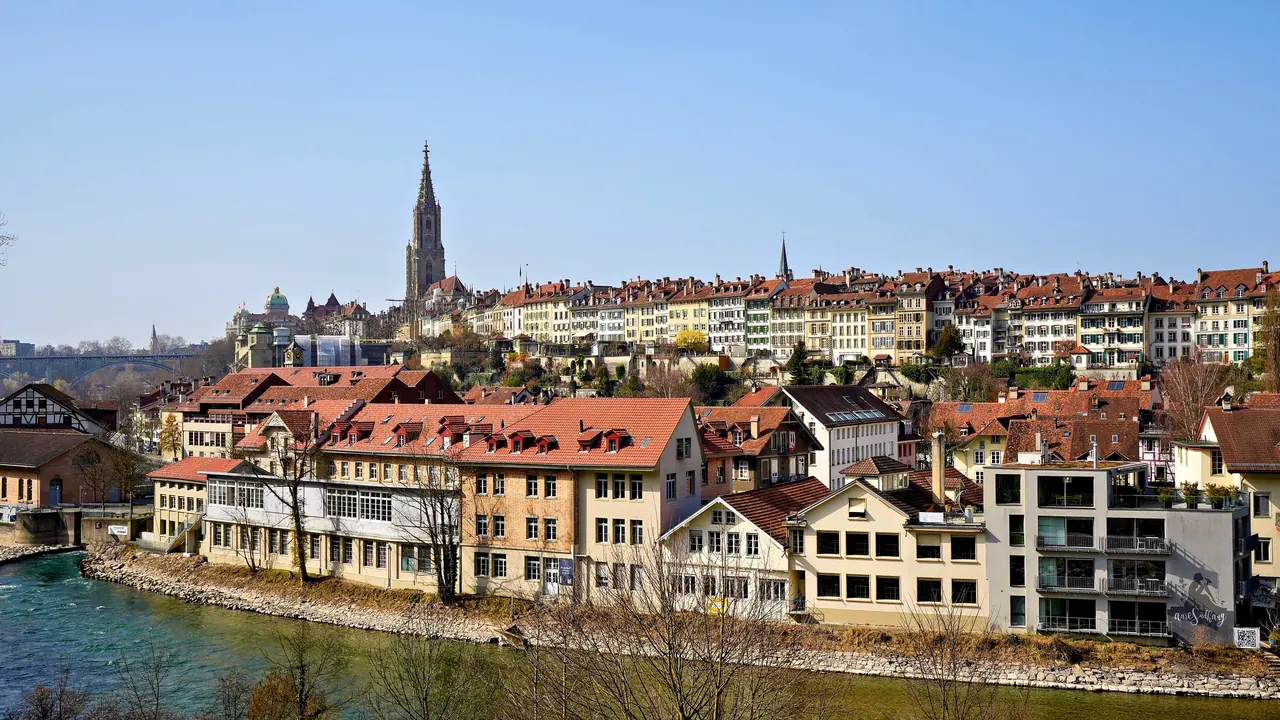
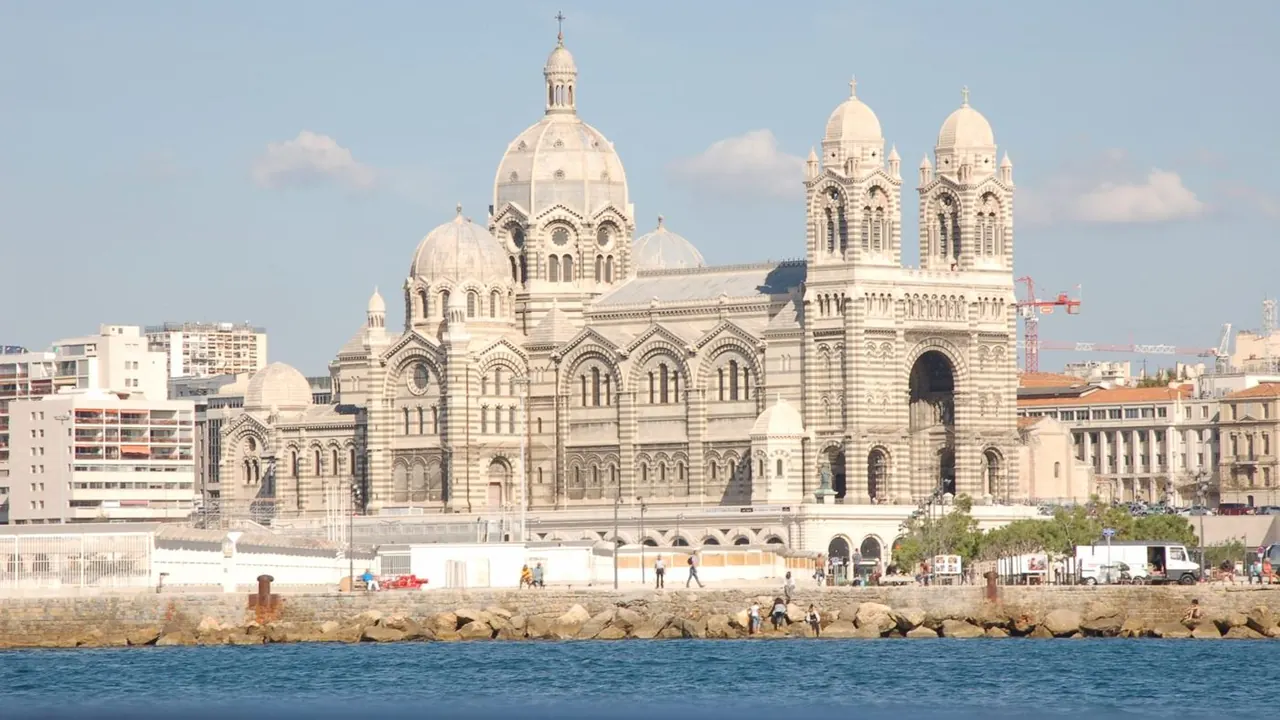
Photos: Bern by Beat Bieri, Pexels License; Marseille by Charlotte Noblet, CC BY-SA 3.0, cropped.
Bern or Marseille?
Our verdict in twelve categories, each scored against the same fixed benchmark cities, and the climate month by month, so you can choose for your trip.
Choose Bern for
- getting around
- families
- wellness
Bern suits travellers who want an orderly, easy few days: a compact UNESCO-listed old town walked under its arcades, a station at the top of the hill and trains to the Alps, the lakes and half of Switzerland. It works well for families and for anyone who wants a quiet place to slow down. Choose it if you can accept very high prices and early evenings.
Choose Marseille for
- prices
- beaches
- food and drink
Marseille is the better pick for heat, sea and appetite. It offers real beaches and the Calanques on the doorstep, a port kitchen with flavours from all around the Mediterranean, late terraces around Cours Julien and costs that stay within normal French levels. It is louder, rougher and harder work to get around, so it rewards travellers who like a city with some grit to it.
Scoreboard
Twelve categories on one fixed scale from 0 to 100. The shaded stretch is the gap between the two.
Your match
Pick a travel style or drag the sliders, and both match scores follow your weighting.
Wins on getting around and families with your weighting.
Wins on prices and beaches with your weighting.
What matters to you?
Category by category
What the scores mean for a trip.
Beaches & swimming
In Bern, swimming means the Aare. You walk upstream from the Marzili, jump in and let the cold green current carry you back past the Federal Palace. It is a memorable thing to do, but only for confident swimmers and only in high summer. Lake Thun offers calmer bathing about twenty minutes away by train.
Marseille has an actual coastline. The Prado beaches have shingle, sand and lawns, and locals swim off the rocks at the Catalans and the Vallon des Auffes. The best swimming is in the clear inlets of the Calanques, which take half a day to reach on foot or by boat. A mistral can chill the water overnight, but the sea is clearly warmer and the season longer than anything Bern offers.
Food & drink
Bern cooks hearty Alpine classics: the Berner Platte of smoked meats, rösti and fondue, served in guildhall dining rooms and vaulted cellars. The chocolate is excellent, but the range is narrow and every meal out costs a lot.
Marseille is the more rewarding place to eat. Bouillabaisse is served properly in the small harbours of the Corniche, and the everyday food is cheap and varied, from chickpea panisses and wood-fired pizza to the North African, Comorian and Armenian shops of Noailles. Add fish sold straight off the boats at the Vieux-Port, pastis and the rosés of Cassis and Bandol. Just avoid the tired set menus around the old port.
Culture & sights
These two are about equal for sightseeing, but the experience is very different. Bern's heritage is one preserved set piece: the UNESCO old town on its river loop, with the Zytglogge, the painted fountains and the Minster, plus the Zentrum Paul Klee and Einstein's flat. It all fits into two unhurried days on foot.
Marseille's history goes back much further, to its Greek founding, but it is spread through a working port city. You climb to Notre-Dame de la Garde, cross from Fort Saint-Jean to the MuCEM, wander Le Panier to the Vieille Charité, and then travel out to the Château d'If or Le Corbusier's Cité Radieuse. Expect more legwork and more contrast.
Nightlife
Bern goes out quietly. People drink in cellar bars under the arcades and along Aarbergergasse, the Reitschule hosts rougher late parties, and the city goes quiet early on weeknights.
Marseille has a much livelier night. The graffiti-covered bars and pavement tables of Cours Julien and La Plaine stay full until late, the Vieux-Port terraces carry on into the night, and electronic events take over old warehouses. It is busiest in summer and quieter in winter. Some central streets feel edgy late at night, which is why locals often take a taxi home.
Nature & outdoors
Both cities are excellent bases for the outdoors, in very different scenery. From Bern you can see the Eiger, Mönch and Jungfrau, and an hour on the train takes you to high-mountain hiking, cable cars and winter skiing. Lake Thun, the Gurten and the wooded Aare paths are closer to hand.
Marseille's wild country starts at the edge of the suburbs. The Calanques national park offers white limestone ridges, the coastal path to Sugiton and En-Vau, sport climbing, sea kayaking and diving. It is best in spring and autumn, because summer heat and fire closures can shut the massifs. Bern's mountains, by contrast, are at their best in summer and winter.
Day trips
Both cities make first-rate bases, but the days out feel quite different. From Bern, every trip is a train ride, and usually a short one. Lucerne, Basel and Zurich are each about an hour away, and medieval Fribourg is twenty minutes down the line, with Gruyères and its cheese dairies just beyond. Walled Murten, Thun with its castle, baroque Solothurn and Neuchâtel on its lake are all easy trips of around half an hour. You can pick a different town each morning without planning around connections.
Marseille opens up Provence, but only part of it is on the rails. Aix and Cassis are both within about half an hour. Arles is about an hour by train, Avignon's Palais des Papes is under an hour on the fast line, and Nîmes and the Pont du Gard fill a longer day. The hilltop villages of the Luberon, Les Baux and Saint-Rémy are a different matter. You really need a car for those, so it is worth hiring one for a day or two.
Good for families
Bern is the more relaxed city with children. The bear park, the wooded Dählhölzli zoo, the animal dioramas at the Natural History Museum and the meadows at the top of the Gurten funicular are all close together. Calm, clean streets help too. The one firm rule is to keep small children out of the river.
Marseille works best in summer, when families settle near the Prado beaches and Parc Borély and take boat trips to the Château d'If. Away from the south, heavy traffic, narrow pavements, heat and dirty central streets make days with a buggy tiring.
Getting around
Bern is effortless. You can walk the old town from the station to the bear park in about twenty minutes, staying dry under the arcades. Funiculars and a lift drop down to the river, and punctual trams and buses do the rest, so you never need a car.
In Marseille, only the core from the Vieux-Port to Cours Julien is walkable, and it is hilly. Two metro lines and the trams cover the centre, and the summer ferries across the bay are a pleasant way to travel. However, the beaches and Calanques trailheads depend on buses that get stuck in traffic, and driving in the centre is stressful.
Shopping & style
Neither city is made for fashion or luxury, but what you bring home is quite different. Bern's shopping runs in one arcaded line along Spitalgasse, Marktgasse and Kramgasse, with Swiss watches and chocolate. Down steep steps beneath the pavement, cellar shops sell antiques, books and crafts.
Marseille is better for browsing local goods. Look for green cubes of Marseille soap, painted santon figures from the Le Panier workshops, and the fabrics, teas and kitchenware crammed into Noailles.
Affordability
Bern is among the most expensive cities in Europe. Hotels, dinners and drinks all cost far more than visitors expect, and budget travellers rely on the free tram pass from their hotel, supermarket lunches and free sights like the bear park and the river paths.
Marseille costs roughly what any large French city does, and the everyday eating is cheap: pizza, North African snacks and market food. Transport costs little, the Calanques are free and several museums are inexpensive. Rooms near the port and the beaches do climb sharply in July and August.
Live music & performing arts
Bern offers what you would expect of a small capital. There is opera and drama in German at the Stadttheater, the symphony orchestra in the Casino hall, and new dance at the Dampfzentrale. The spring jazz festival and the Gurtenfestival in July are the highlights.
Marseille has more character on stage. It has the art deco Opéra, serious theatre at La Criée in the old fish market and a mixed programme at the Friche la Belle de Mai. It also has a real place in French hip-hop and Mediterranean music, and the Fiesta des Suds brings musicians from around the world each autumn.
Wellness & relaxation
Bern is the calmer place to unwind. There are quiet Sundays, long riverside lunches, and a large thermal bath complex with saunas on the western edge of the city, and serious mountain spa hotels in the Bernese Oberland are within reach.
Marseille is loud and intense, and its few hammams mostly serve locals. Rest there means a slow lunch by a little Corniche harbour, or staying out in Cassis and visiting the city by day.
When should you go?
Pick your month. The climate figures are measured averages, not a forecast.
Bern in July
Marseille in July
Daytime high, °C
Rainfall in the month, mm
Where the figures come from
Bern has no rain gauge within 25 km of the centre, so its rainfall comes from a gridded climate dataset read at the city rather than from a gauge further away.
Bern's sunshine is measured 71 km from the centre, at Herten.
Temperature and rainfall are climate normals, averaged over the years shown. Bern: 2010-2020 (sunshine 1991-2020, rainfall 1991-2020) normals, Bern / Bern - Belp Airport (5.5 km from centre). Marseille: 1991-2020 normals, Marseille / Marignane (20.6 km from centre).
Bern is a summer city. From June to August afternoons reach about 26°C, which is warm enough for the Aare and the lidos and still comfortable for walking. Those are also the wettest months, with showers peaking at around 118mm in May, so pack for rain. Winters are cold, grey and short on sunshine, pleasant enough under the arcades but too chilly for lingering outdoors, while the mountains nearby are often brighter.
Marseille runs several degrees warmer all year and has far more sun. July is close to dry and reaches about 31°C, too hot for long walks in the middle of the day or on the Calanques paths. The sea is at its best in August at around 22°C and is still swimmable in September. The rain comes in autumn, from about 82mm in September onwards. May, June and October are the sweet spot for walking the streets and the coast, and even in winter Marseille is milder and sunnier than Bern.
Which traveller are you?
On a family trip with young children, Bern is the easier choice. The bear park, the Dählhölzli zoo and the Gurten playground are all a short tram or funicular ride away, and the streets are calm and safe. In Marseille, buggies have to contend with traffic and steep pavements.
For a beach and sun trip, choose Marseille. It has a warm sea from June to September, the family beaches of the Prado and turquoise coves in the Calanques. In Bern, swimming means a cold, fast river and a short summer season.
On a tight budget, Marseille stretches your money much further. It has cheap panisses, pizza and market food, inexpensive public transport and free walking in the Calanques. In Bern, even simple guesthouses and a terrace beer are a real expense.
Before you go
| Measure | Bern | Marseille |
|---|---|---|
| Official language | French, German, Italian, Romansh | French |
| Currency | Swiss Franc (CHF) | Euro (EUR) |
| Sockets | CJ230 V, 50 Hz | CE230 V, 50 Hz |
| Driving side | Right | Right |
| Time zone | UTC+1, UTC+2 in summer | UTC+1, UTC+2 in summer |
| Emergency number | 112 | 112 |
| Elevation | 542 m | 0 m |
| Main airport | Zürich Airport (ZRH)101 km from centre226 non-stop destinations | Marseille Provence Airport (MRS)21 km from centre126 non-stop destinations |
| Public holidays this year | 10 days | 11 days |
By the numbers
| Measure | Bern | Marseille |
|---|---|---|
| City population | 136,988 | 886,040 |
| People per km² | 2,655 | 3,683 |
| Museums within 10 km | 30 | 27 |
| UNESCO World Heritage sites within 50 km | 2 | 1 |
| Swim season, months above 21 °C | - | 2 months |
Where else could you go?
Every comparison below shares a destination with this one, so you can follow Bern or Marseille somewhere new.