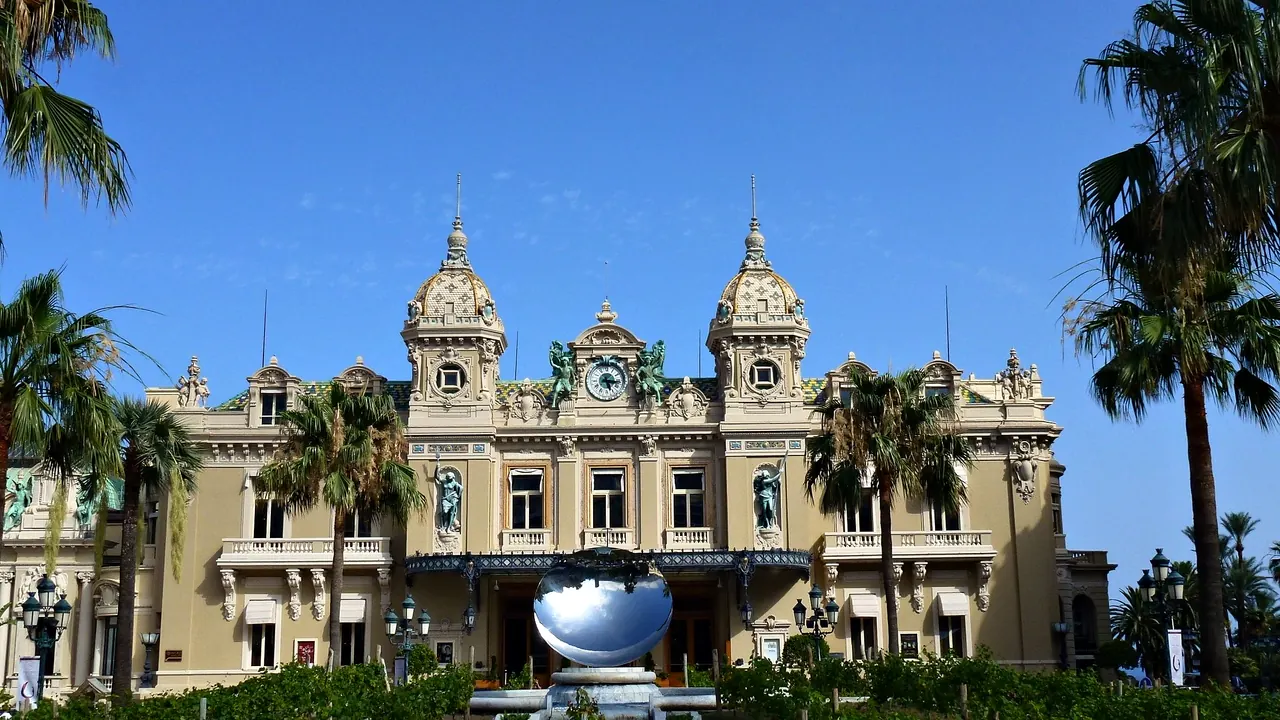
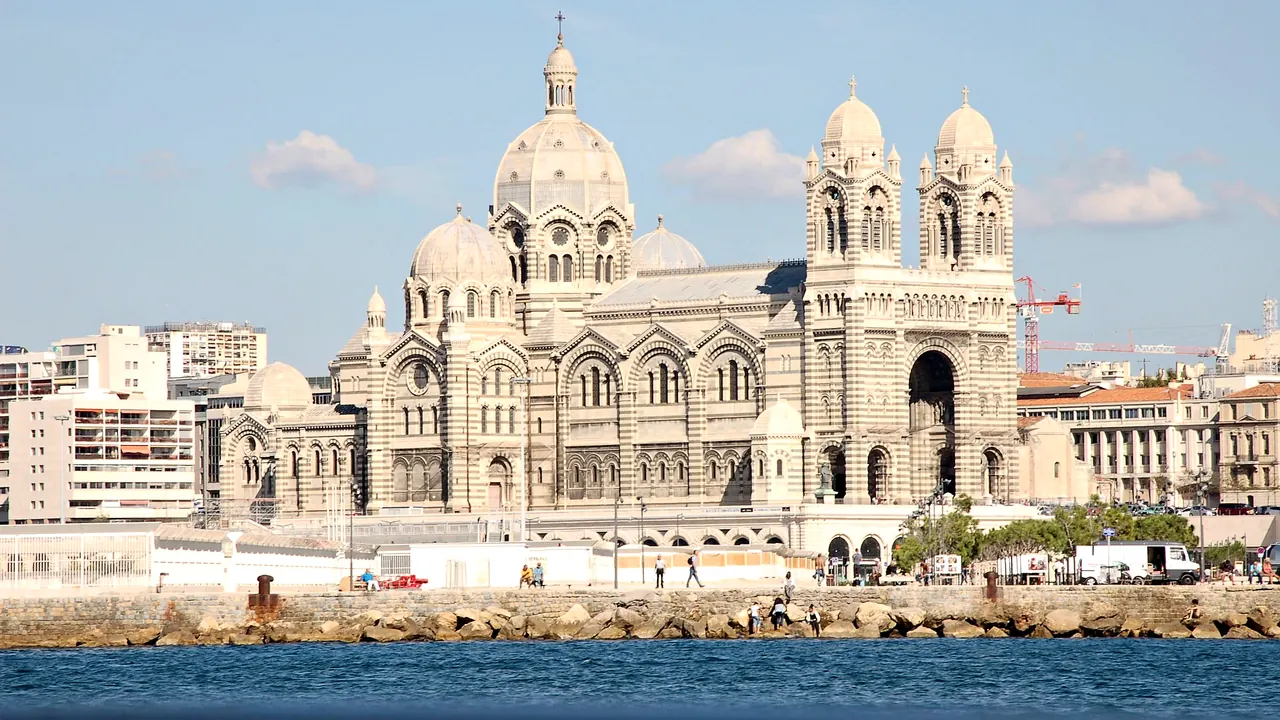
Photos: Monaco by otterboris, CC BY 3.0, cropped; Marseille by Charlotte Noblet, CC BY-SA 3.0, cropped.
Monaco or Marseille?
Our verdict in twelve categories, each scored against the same fixed benchmark cities, and the climate month by month, so you can choose for your trip.
Choose Monaco for
- getting around
- wellness
- shopping
Monaco is the better pick for a short, polished stay where everything is close together and nothing feels rough. Public lifts carry you between the port, the Rock and Monte-Carlo, there is a world-class opera and ballet tradition and a seawater spa beside the casino, and the luxury shopping circuit is right on hand. Expect very high prices and almost no open countryside. Many visitors spend a day or two here as part of a wider Riviera trip.
Choose Marseille for
- nature and the outdoors
- prices
- beaches
Marseille suits travellers who want a big, unpolished port city with wild country on its doorstep. The Calanques national park starts at the edge of the suburbs, the food draws on the whole Mediterranean, evenings in Cours Julien are loose and cheap, and Aix, Arles and Avignon are all easy by train. It costs far less than Monaco, and it rewards visitors who don't mind some grit, traffic and steep streets.
Scoreboard
Twelve categories on one fixed scale from 0 to 100. The shaded stretch is the gap between the two.
Your match
Pick a travel style or drag the sliders, and both match scores follow your weighting.
Wins on getting around and wellness with your weighting.
Wins on nature and the outdoors and prices with your weighting.
What matters to you?
Category by category
What the scores mean for a trip.
Beaches & swimming
Marseille has far more coast to swim from. You can choose the broad Prado beaches with lawns behind them, early swims off the rocks of the Corniche, or the turquoise inlets of the Calanques, which take half a day to reach on foot or by boat. Ferries to the Frioul islands add more coves.
Monaco has a single public beach, Larvotto. The water there is clear and calm, slightly warmer in late summer, and it gets crowded on summer weekends. A swim in Monaco is a break between other plans. In Marseille it can easily be the reason for the day.
Food & drink
Marseille eats more widely and more cheaply. A sit-down bouillabaisse in a Corniche harbour sits alongside the spice shops and North African bakeries of Noailles, the morning fish sale on the Vieux-Port quay, and wood-fired pizza. The main trap is the tired set menus around the old port.
Monaco's food leans to starred dining rooms and polished Italian places along the port. The Condamine market is the place for barbajuans and socca, but casual options are scarce and the range is narrow, so a long stay can start to feel repetitive.
Culture & sights
Marseille has a slight edge, mostly because there is more of it and it goes back much further. Its 2,600 years of history are scattered across a working city: the forts and the MuCEM at the harbour mouth, the Vieille Charité in Le Panier, the crypts of Saint-Victor and Le Corbusier's Cité Radieuse.
Monaco packs its sights into a small, tidy area. The Prince's Palace, the Grimaldi tombs and the Oceanographic Museum are all on the Rock, with the Belle Époque casino square across the harbour. It fills a day or two comfortably, where Marseille's sights take longer to work through.
Nightlife
Marseille offers the looser and more varied night out. Graffiti-covered bars and pavement tables around Cours Julien and La Plaine fill with students and locals, and in summer there are warehouse electronic nights and rooftop parties. Some central streets feel edgy late, so a taxi home is sensible.
Monaco's evenings revolve around the casino square, hotel bars and a few famous clubs on Avenue Princesse Grace, with strict doors and very expensive drinks. It is glamorous in summer and on Grand Prix weekend, and it goes quiet the rest of the year.
Nature & outdoors
There is barely a contest here. Marseille has a national park inside its own boundaries. Paths lead over white limestone ridges to Sormiou, Morgiou and En-Vau, the cliffs are a renowned climbing area, and diving around the Riou archipelago is excellent. Further afield, Sainte-Victoire and the Sainte-Baume forest are within an hour by road.
Monaco's green spaces are designed gardens, such as the cliff-top Exotic Garden and the Princess Grace rose garden. The sea is its outdoor asset, with snorkelling in the protected area off Larvotto. For real hiking you have to cross into the French hills behind.
Day trips
Both are excellent bases, and the difference lies in the kind of trips on offer. From Marseille you reach Roman and papal Provence: Aix in about half an hour, Arles and Avignon in about an hour by train, and the Luberon villages if you have a car.
Monaco looks along the coast instead. The railway runs to Nice, Menton and Villefranche within minutes, Èze sits on the cliffs above, and Sanremo and Dolceacqua are just across the Italian border. Marseille offers a little more range inland, while Monaco makes it very easy to hop between seaside towns without a car.
Good for families
Neither city is ideal with children, and they fall short in different ways. Marseille offers beach days at the Prado and boating on the lake in Parc Borély, but there is no zoo or aquarium, and heavy traffic and narrow pavements make pushing a buggy hard work.
Monaco is safe, clean and easy to keep track of children in. The Oceanographic Museum's sharks and touch pool are the highlight, and the public lifts soften the slopes. The drawbacks are the cost and the fact that there is little to fill more than a couple of days.
Getting around
Monaco is far easier to move around. Almost everything is within walking distance, and dozens of free lifts, escalators and tunnels take the work out of the steep terraces. A few bus lines and a small electric boat across the port cover the rest.
Marseille's centre is walkable, and two metro lines and the trams handle the core. But the city sprawls across hills and bays, the buses to the beaches and Calanques trailheads get stuck in traffic, and some coves are still a long walk from the last stop.
Shopping & style
Monaco is the stronger shopping destination, though only for luxury. The streets and arcades around the casino hold the big fashion houses, jewellers and watchmakers in one compact, polished circuit. Beyond that there is little independent design or craft.
Marseille is the better choice for things with local character: green cubes of olive-oil soap, santon figures from the Le Panier workshops, and fabrics and teas from the narrow streets of Noailles. Anyone after designer flagships will run out of options quickly.
Affordability
Marseille costs far less. It is mid-range for a large Western European city, with cheap street and market food, inexpensive transport and museums that charge little. Hotel rooms near the beaches only become expensive in high summer.
Monaco is among the most expensive places in the world to stay, and even a casual café meal costs well above the Riviera norm. Many visitors on a budget sleep in nearby French towns and come in for the day.
Live music & performing arts
Monaco has a slight edge on prestige. The gilded Salle Garnier, where the Ballets Russes once worked, the Monte-Carlo Philharmonic and Les Ballets de Monte-Carlo carry international weight, although the season is concentrated in winter and spring.
Marseille is broader and more popular in taste. It has its own art deco opera house and the national theatre at La Criée, contemporary work at the Friche la Belle de Mai, and a strong place in French hip-hop and world music, with the Fiesta des Suds in autumn.
Wellness & relaxation
Monaco is the easier place to slow down, as long as you can pay for it. Its spa offer is upscale, and outside the treatment rooms you find calm in small doses: the gardens on the Rock, the Larvotto promenade at dusk, or a terrace looking down over the port. What it lacks is any everyday bathing habit shared with the people who live there.
Marseille's few hammams have exactly that local character. They are run by the city's North African community and used mostly by neighbourhood regulars, but there are too few of them to build a trip around. Rest here mostly means a long lunch beside a little harbour on the Corniche or an afternoon on a terrace, not a day of treatments.
When should you go?
Pick your month. The climate figures are measured averages, not a forecast.
Monaco in July
Marseille in July
Daytime high, °C
Rainfall in the month, mm
Temperature and rainfall are climate normals, averaged over the years shown. Monaco: 1991-2020 normals, Nice (19.9 km from centre). Marseille: 1991-2020 normals, Marseille / Marignane (20.6 km from centre).
Marseille has the hotter summer. July afternoons reach about 31°C, which makes the climb to Notre-Dame de la Garde or a walk in the Calanques hard work in the middle of the day. It also gets a little more sunshine from spring through summer. The sea is warm enough to swim in from June to September, but it stays slightly cooler than Monaco's and can turn cold overnight when the mistral blows. From April to early June the weather is warm without being harsh, which is the best time for the trails. The autumn rain starts in September and stays moderate through November.
Monaco is a few degrees milder in high summer. Its sea is the warmer of the two, at about 25°C in August, so swimming carries on comfortably into early October. Its autumn is much wetter than Marseille's: October and November together are its wet peak, each with well over 100mm. Winters are cool and much alike in both places, with highs in the low to mid teens. That is pleasant for walking the streets, though not for the beach.
Which traveller are you?
On an outdoors trip, Marseille is the clear choice. The Calanques massif lies inside the city limits, with a famous coastal path, sport climbing and sea kayaking, and Sainte-Victoire is within an hour. Monaco is almost entirely built up and has gardens, not hiking country.
For a trip on a tight budget, choose Marseille. Market food, panisses and North African snacks keep meals cheap, transport costs little and walking in the Calanques is free. Monaco is priced for the wealthy all year, so budget travellers there usually sleep across the border.
On a relaxing and wellness trip, Monaco serves you far better. Its thalassotherapy centre has heated seawater pools and hammams overlooking the sea, and the grand hotels have their own spas. Marseille is loud and intense, and people who want rest tend to stay out in Cassis.
Before you go
| Measure | Monaco | Marseille |
|---|---|---|
| Official language | French | French |
| Currency | Euro (EUR) | Euro (EUR) |
| Sockets | CEF230 V, 50 Hz | CE230 V, 50 Hz |
| Driving side | Right | Right |
| Time zone | UTC+1, UTC+2 in summer | UTC+1, UTC+2 in summer |
| Emergency number | 112 | 112 |
| Elevation | 68 m | 0 m |
| Main airport | Nice-Côte d'Azur Airport (NCE)18 km from centre130 non-stop destinations | Marseille Provence Airport (MRS)21 km from centre126 non-stop destinations |
| Public holidays this year | 12 days | 11 days |
By the numbers
| Measure | Monaco | Marseille |
|---|---|---|
| Population | 38,857 | 886,040 |
| People per km² | 18,503 | 3,683 |
| Museums within 10 km | 14 | 27 |
| UNESCO World Heritage sites within 50 km | 2 | 1 |
| Swim season, months above 21 °C | 4 months | 2 months |
Where else could you go?
Every comparison below shares a destination with this one, so you can follow Monaco or Marseille somewhere new.
- Nicevs Monaco
- Aix-en-Provencevs Marseille
- Antibesvs Monaco
- Cannesvs Monaco
- Arlesvs Marseille
- Saint-Tropezvs Monaco