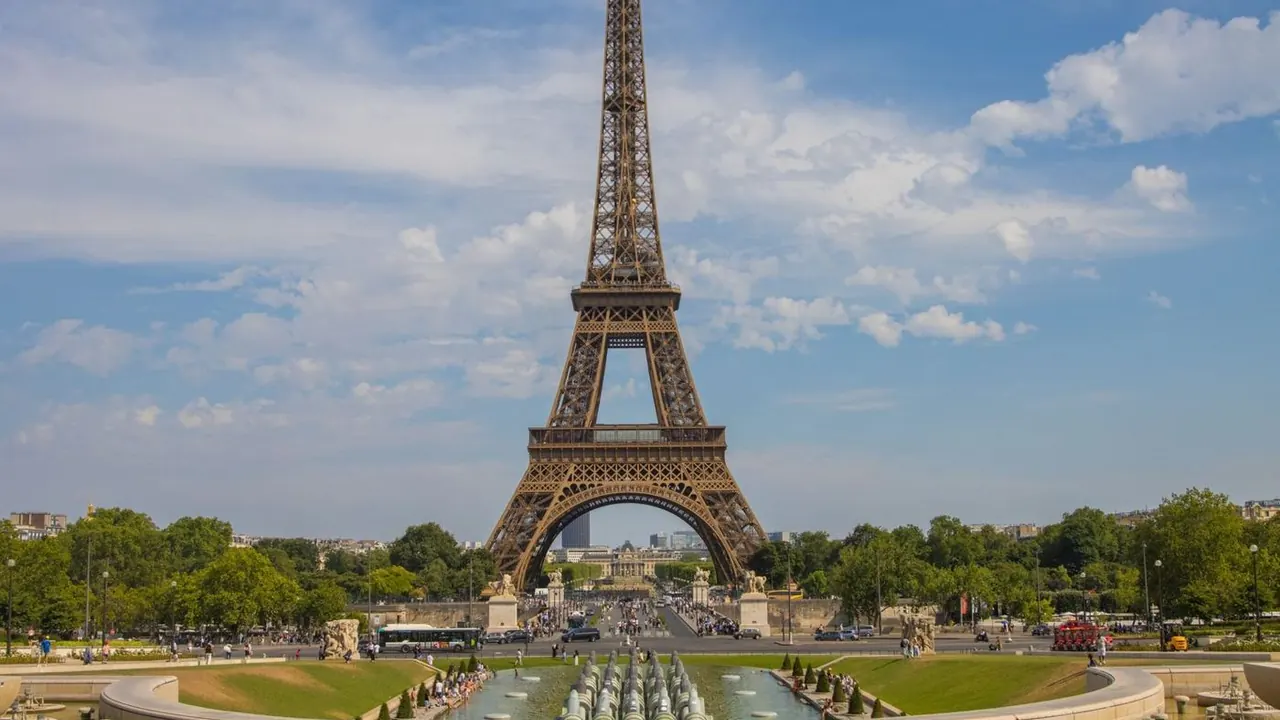
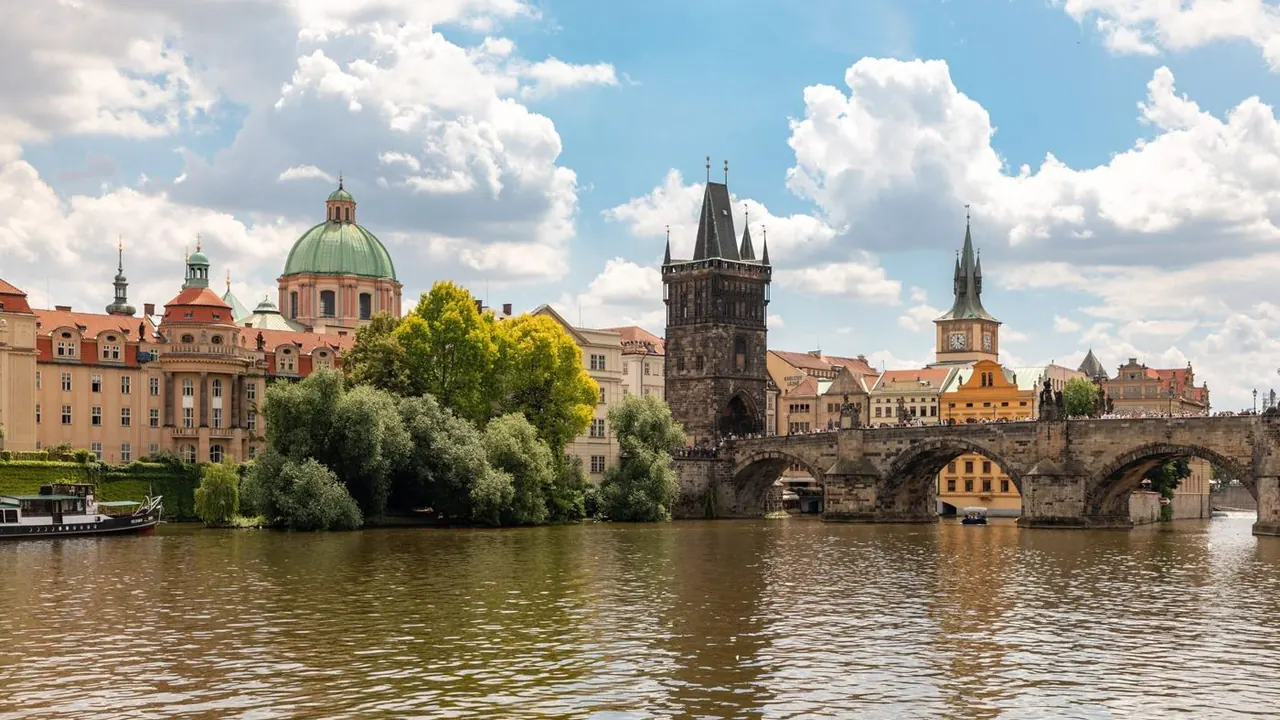
Photos: Paris by Efrem Efre, Pexels License; Prague by Dietmar Rabich, CC BY-SA 4.0, cropped.
Paris or Prague?
Our verdict in twelve categories, each scored against the same fixed benchmark cities, and the climate month by month, so you can choose for your trip.
Choose Paris for
- shopping
- food and drink
- families
Paris is the better choice for a traveller who wants depth in almost everything a city can offer. It has one of the world's great kitchens, from market stalls to haute cuisine, the Louvre and the Orsay at the head of a long list of first-rank museums, shopping from the couture houses to the Saint-Ouen flea market, and a ring of châteaux and cathedral towns within easy reach. It rewards a longer stay and a bigger budget, and families will find more to fill the days.
Choose Prague for
- prices
- nature and the outdoors
- beaches
Prague suits someone who wants a beautifully preserved old centre on a smaller scale and at a gentler cost. The castle, Mala Strana and the Charles Bridge fit into a few days, beer and pub food stay cheap, and the green hills and sandstone country beyond the city give walkers a little more than the Île-de-France does. It is a natural pick for a long weekend, a beer lover or anyone keeping a close eye on spending.
Scoreboard
Twelve categories on one fixed scale from 0 to 100. The shaded stretch is the gap between the two.
Your match
Pick a travel style or drag the sliders, and both match scores follow your weighting.
Wins on shopping and food and drink with your weighting.
Wins on prices and nature and the outdoors with your weighting.
What matters to you?
Category by category
What the scores mean for a trip.
Beaches & swimming
Neither city is a beach destination, and they are about equal here. They differ in what they offer instead. Paris dresses its riverbanks with sand and deckchairs in summer, opens swimming spots on the Bassin de la Villette, and has handsome Art Deco pools. The cool Channel coast at Deauville is about two hours away by train.
Prague has no coast within reach at all. In return it has lake-style swimming at the Dzban reservoir on the city's edge, and further out at Slapy on the Vltava, among wooded banks and cabin settlements.
Food & drink
This is one of the widest gaps between the two. In Paris, eating well is part of daily life. There are bakeries and cheese shops on every street, morning markets such as Aligre, zinc-counter bistros, small inventive kitchens run by young cooks in the east of the city, and immigrant cooking from Belleville couscous to Vietnamese pho in the south-east. Food alone can justify the trip.
Prague's table is built around beer. Carefully poured unpasteurised lager comes with roast pork, dumplings and svickova. It is satisfying comfort food and the open sandwiches make cheap lunches, but there is little variety. Anyone who travels mainly to eat will run through it in a few days.
Culture & sights
Both are among Europe's great historic cities, but Paris goes deeper. The Louvre, the Orsay, the Pompidou, the Orangerie and the Cluny are each world-class, and Notre-Dame and the Sainte-Chapelle sit within the planned unity of Haussmann's boulevards. The museums alone could fill a week.
Prague's strength is its intact townscape. The Castle and St Vitus, Baroque Mala Strana, the Charles Bridge, Josefov's synagogues and rare Cubist buildings make the whole centre a UNESCO site. Its museums are good rather than great, though, and three or four days covers the essentials.
Nightlife
Paris offers the fuller night out. Evenings start in wine bars and on terraces, move through the crowded bars of Oberkampf, the Canal Saint-Martin and Belleville, take in cocktail bars in South Pigalle and the Marais gay scene, and end in house and techno clubs or on moored barges in summer. It is chic, though, and the doors can be selective.
Prague's nights centre on the pub. There are long wooden tables, cheap beer and plain local bars in Zizkov, plus summer beer gardens on Letna. Its big clubs near the Charles Bridge cater to stag parties, so the better clubbing is in the techno venues of Holesovice.
Nature & outdoors
Prague has a modest edge outdoors. The city itself is hilly and green: Petrin Hill has orchards, Stromovka was once a royal hunting park, and the rocky Divoka Sarka gorge feels far from town. Within about two hours are the sandstone towers of Bohemian Switzerland and the Bohemian Paradise, which offer proper hiking.
Paris has formal gardens, the cliffs and lake of the Buttes-Chaumont, and the big woods of Boulogne and Vincennes. Its best outing is Fontainebleau, about forty minutes away, whose boulders draw climbers. Neither city has mountains nearby.
Day trips
Paris has the longer and richer list. Versailles, Fontainebleau and Chantilly are each under an hour away, and Chartres, Giverny and Auvers-sur-Oise are easy outings. Fast trains reach the Champagne houses of Reims, Rouen's old town and the Loire châteaux, enough to fill a second week.
Prague's outings centre on Bohemian castles and towns: Kutna Hora and its ossuary, Karlstejn, Konopiste and the sobering visit to Terezin. Dresden and Karlovy Vary each take about two hours. Cesky Krumlov, the best known, is really an overnight trip.
Good for families
Paris gives children far more to do. Disneyland and Parc Astérix are both short trips out, and in the city there are the hands-on Cité des Sciences, the rides at the Jardin d'Acclimatation, the skeletons at the Jardin des Plantes, and carousels and toy sailboats in the Luxembourg.
Prague charms children with its castle, armour and astronomical clock, and the Troja zoo, with its chairlift, is among Europe's best. Beyond those the choice is thin. Both cities are hard with a pushchair, Paris because of metro stairs and Prague because of cobbles and steep lanes.
Getting around
Both centres are made for walking. In Paris the walk along the Seine from the Louvre to the Eiffel Tower is often the best part of the day. For longer hops, the dense metro and the RER suburban lines, which run out to the airports and Versailles, put a station within a few minutes of almost anywhere. The cost is long corridors, stairs with no lift and packed trains at rush hour.
Prague's centre is smaller still. Old Town Square to Mala Strana over the Charles Bridge is about a quarter of an hour on foot. Trams do more of the work than the three metro lines, reaching nearly every neighbourhood, running through the night and carrying you up to the castle, all on one ticket. The main nuisance is the cobbles, which are hard on the feet and on wheeled luggage.
Shopping & style
Paris is a shopping destination in its own right. It has the fashion houses on the Faubourg Saint-Honoré, Galeries Lafayette and Le Bon Marché, Marais designers and vintage shops, the old covered passages, the Saint-Ouen flea market, the bouquinistes, and chocolate and cheese from long-established specialist shops.
Prague is a city for browsing. Its best buys are Bohemian crystal, garnet jewellery and wooden marionettes, and Parizska Street has the luxury labels. Much of the old centre sells the same souvenirs, though, and the more interesting design shops are out in Vinohrady and Holesovice.
Affordability
Prague is clearly the cheaper stay. Beer, pub meals and trams cost little, and if you sleep a few stops out and eat in Vinohrady or Zizkov, a trip stays good value. The traps are central hotels, riverside restaurants and the exchange booths around the old squares.
Paris is expensive in almost every way, from small hotel rooms to museum tickets and terrace drinks. You can save with bakery lunches, riverside picnics and the city's free museum collections, but it remains the bigger spend.
Live music & performing arts
Paris covers far more of the stage, from grand opera and ballet to late-night jazz and cabaret. The Palais Garnier, the Opéra Bastille and the Philharmonie anchor the classical side. Around them are the jazz cellars of the rue des Lombards, cabaret in Pigalle and concerts in the old music halls.
Prague is above all a classical city. It has three opera stages, including the Estates Theatre where Don Giovanni had its premiere, the Czech Philharmonic at the Rudolfinum, and church concerts almost every evening. Its black-light theatre and marionette shows need no language, which helps because most spoken theatre in both cities is in the local tongue.
Wellness & relaxation
Neither city has a bathing tradition of its own, so neither suits a real wellness break. In Paris the best option is the tiled hammam of the Grande Mosquée with mint tea afterwards, and otherwise calm comes from a chair in the Luxembourg gardens. In Prague, the beer spas are more novelty than rest, and the better choices are an old coffee house, the Baroque gardens below the castle or a bench on Kampa island.
When should you go?
Pick your month. The climate figures are measured averages, not a forecast.
Paris in July
Prague in July
Daytime high, °C
Rainfall in the month, mm
Temperature and rainfall are climate normals, averaged over the years shown. Paris: 1991-2020 (sunshine 1961-1990) normals, Paris-Montsouris (4.6 km from centre). Prague: 1991-2020 normals, Praha-Libus (8.1 km from centre).
Both cities have their warmest weather from June to August, with Paris at about 26°C and Prague only a degree behind. That is the season for the riverbank beaches and outdoor swimming in Paris and for the reservoirs around Prague. The real difference is winter. Paris stays mild enough for long walks, at around 8°C in January, while Prague drops to about 2°C and its sunshine all but disappears from November to January, so the streets feel cold and grey.
Rain falls quite evenly in Paris through the year, with May the wettest month. Prague has the opposite pattern: dry winters, but its summer months are the wettest, at about 80mm in June and August, even though they are also the sunniest. Paris is pleasant for sightseeing from April to October. Prague is at its best in May and September, which are warm and bright with less rain than midsummer.
Which traveller are you?
For a trip on a tight budget, Prague goes much further. The ordinary pleasures of a day out stay cheap there, so a modest sum lasts without much thought. Paris can be done cheaply too, but only by planning every meal and ticket around the cost.
On a shopping trip, Paris is the obvious pick. People travel there just to shop, and the range runs from couture to antiques to food worth packing for home. Prague is pleasant for an afternoon's browsing but rarely a reason to go.
For a food and nightlife trip, Paris gives the better evenings. Dinner can be anything from a corner bistro to a young chef's tasting menu, and the night carries on well past midnight. Prague is cheerful and cheap after dark, but its kitchen soon runs out of surprises.
Before you go
| Measure | Paris | Prague |
|---|---|---|
| Official language | French | Czech |
| Currency | Euro (EUR) | Czech Koruna (CZK) |
| Sockets | CE230 V, 50 Hz | CE230 V, 50 Hz |
| Driving side | Right | Right |
| Time zone | UTC+1, UTC+2 in summer | UTC+1, UTC+2 in summer |
| Emergency number | 112 | 112 |
| Elevation | 27 m | 235 m |
| Main airport | Charles de Gaulle International Airport (CDG)22 km from centre277 non-stop destinations | Václav Havel Airport Prague (PRG)12 km from centre178 non-stop destinations |
| Public holidays this year | 11 days | 13 days |
By the numbers
| Measure | Paris | Prague |
|---|---|---|
| Population | 2,103,778 | 1,397,880 |
| People per km² | 19,960 | 2,817 |
| Museums within 10 km | 251 | 88 |
| UNESCO World Heritage sites within 50 km | 5 | 1 |
Where else could you go?
Every comparison below shares a destination with this one, so you can follow Paris or Prague somewhere new.
- Karlovy Varyvs Prague
- Dresdenvs Prague
- Cesky Krumlovvs Prague
- Brnovs Prague
- Leipzigvs Prague
- Lillevs Paris