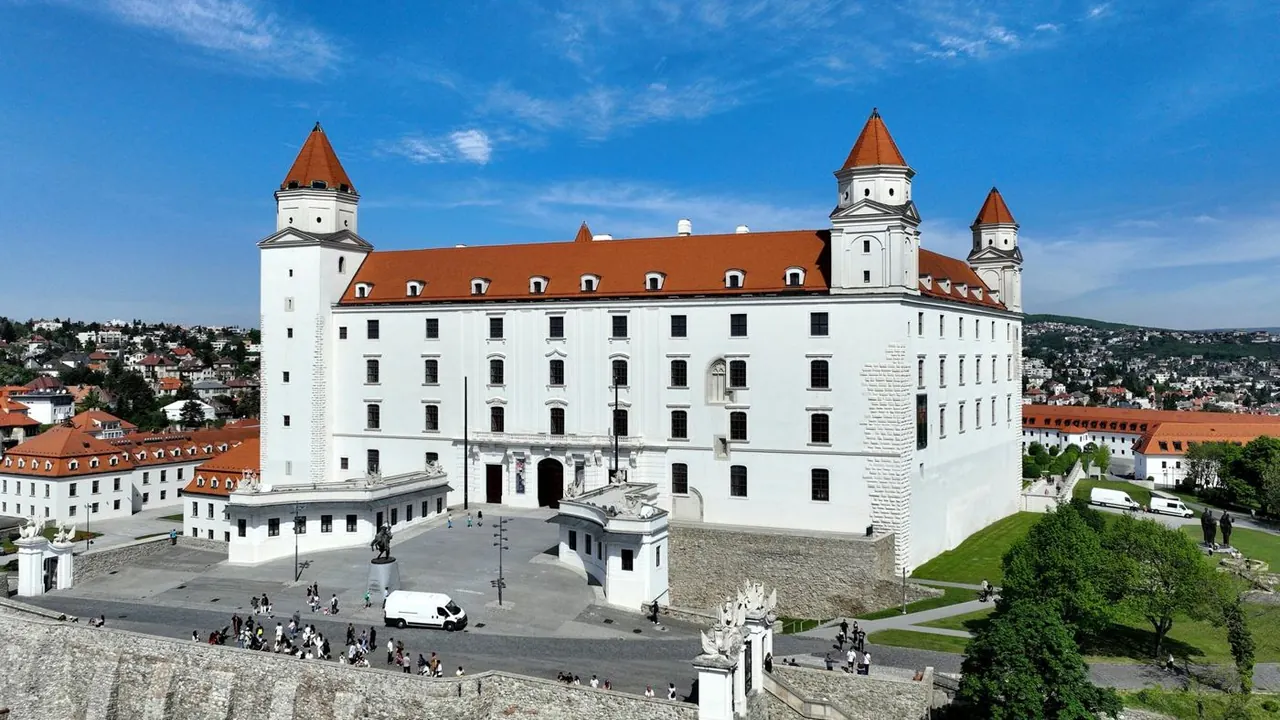
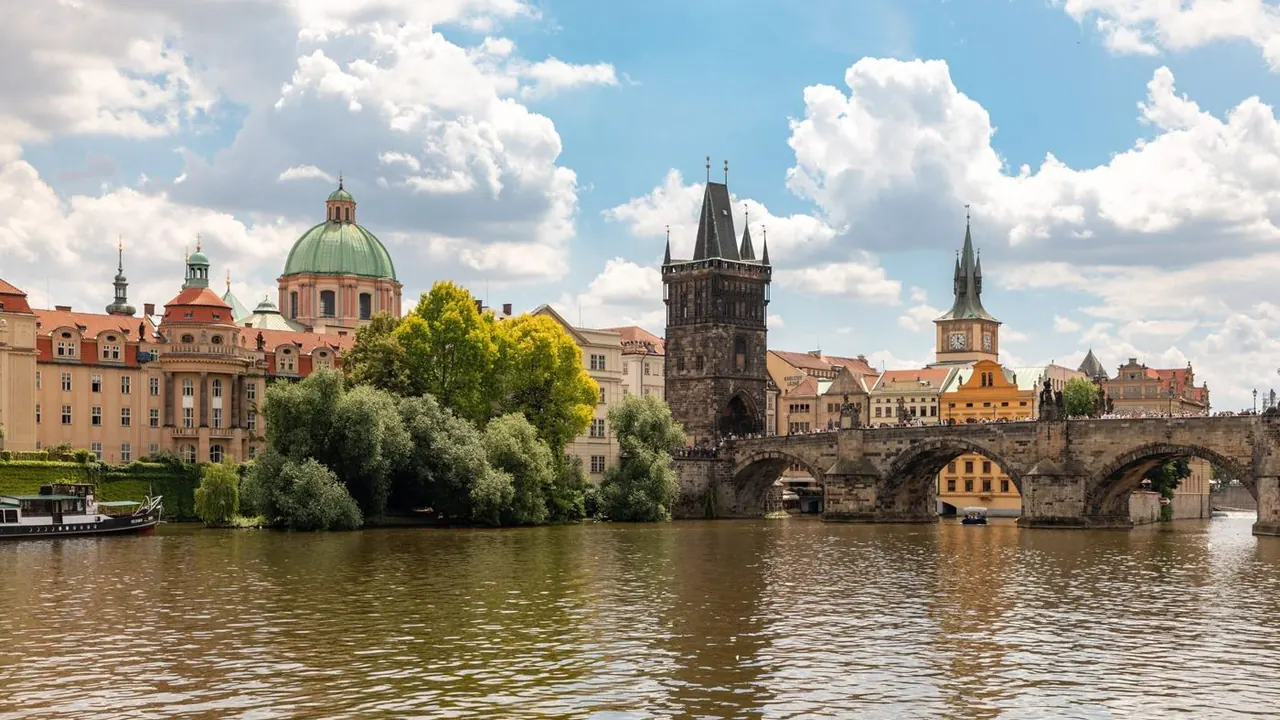
Photos: Bratislava by C.Stadler/Bwag, CC BY-SA 4.0, cropped; Prague by Dietmar Rabich, CC BY-SA 4.0, cropped.
Bratislava or Prague?
Our verdict in twelve categories, each scored against the same fixed benchmark cities, and the climate month by month, so you can choose for your trip.
Choose Bratislava for
- beaches
- day trips
Bratislava suits a traveller who wants a calm, compact capital for two or three days, with vineyards at the edge of the city and Vienna an hour away by train. The Old Town can be seen in a day, forest trails begin where the suburbs end, and outside the weekend rush the evenings are relaxed. It works best as a quiet base or as one stop on a longer Central European route.
Choose Prague for
- culture and sights
- live music and the arts
- nightlife
Anyone travelling mainly for the city itself will get more from Prague. The castle, Mala Strana, the Charles Bridge and Josefov form a historic centre that needs several days. Opera and orchestral music fill the evenings, and the pubs and clubs reach well beyond the old core. The cost is heavy crowds at the main sights, but trams and the metro make them easy to escape.
Scoreboard
Twelve categories on one fixed scale from 0 to 100. The shaded stretch is the gap between the two.
Your match
Pick a travel style or drag the sliders, and both match scores follow your weighting.
Wins on beaches and day trips with your weighting.
Wins on culture and sights and live music and the arts with your weighting.
What matters to you?
Category by category
What the scores mean for a trip.
Beaches & swimming
Neither city is a place to plan swimming around, and in both the summer bathing is in fresh water. Bratislava's Zlate piesky has a sandy lakeshore you can reach by tram, and the larger Senec lakes are half an hour out. Prague's equivalents are the Dzban reservoir in the Sarka valley and the wooded Slapy reservoir about an hour south, which feels more like cabin country than a city beach.
Food & drink
Both cities cook hearty Central European food built around beer, but Prague has more to explore. Its pubs pour Pilsner-style lager straight from tanks. Away from the tourist menus of the centre, Vinohrady, Karlin, Letna and Holesovice have good cafés, Moravian wine bars and a modest modern restaurant scene.
Bratislava's range is narrower: bryndzove halusky, duck with lokse and poppy-seed rolls in Old Town pubs. Its strength is wine. Veltliner, Riesling and Frankovka from vineyards at the city's edge rarely leave the country, so the wine bars here pour something you will not easily find at home.
Culture & sights
The gap is wide here. Prague's whole centre is a UNESCO site. It takes in the castle and St Vitus, Baroque Mala Strana, the statue-lined Charles Bridge, the Gothic lanes of the Old Town and the synagogues of Josefov, with Art Nouveau and rare Cubist buildings on top, and it needs three or four days.
Bratislava's Old Town is handsome but small. St Martin's coronation cathedral, the Primate's Palace, Michael's Gate and the Blue Church are minutes apart, with the castle above and the ruins of Devin on the edge of town. It fills a day or two and makes a pleasant contrast with Prague rather than a rival.
Nightlife
Nights out in Bratislava are a compact pub crawl along a handful of Old Town streets. They are loud on Fridays and Saturdays and quiet in the week, with only a few clubs and some summer terraces by the river.
Prague's Old Town gets just as rowdy at weekends, but the city has much more beyond it. There are plain local pubs in Zizkov, cocktail and wine bars in Vinohrady, and summer beer gardens on Letna and Riegrovy sady. Holesovice and the converted industrial spaces further out have a circuit of techno and alternative venues that Bratislava cannot match.
Nature & outdoors
Both have gentle green country close by rather than mountains. Bratislava has it right on the doorstep: the Little Carpathian forest trails begin at the city's edge, the Danube floodplain forests and the flat cycle route into Austria are close by, and Cunovo adds whitewater rafting.
Prague is greener inside the city, with Petrin Hill, the old royal park of Stromovka and the rocky Divoka Sarka gorge. Its best walking, among the sandstone towers of Bohemian Switzerland and the Bohemian Paradise, is up to two hours away.
Day trips
Both are excellent bases, but the outings differ in kind. From Bratislava the draw is crossing borders. Vienna is an hour away by train or a longer trip by boat, and there are Roman Carnuntum and Lake Neusiedl in Austria, Lednice-Valtice in Czechia and Pannonhalma in Hungary, with the Small Carpathian wine villages and Cerveny Kamen closer to home.
Prague's day trips stay mostly within Bohemia and focus on castles and history. There are Kutna Hora's cathedral and bone-decorated ossuary, Karlstejn and Konopiste, and the sobering visit to Terezin. Dresden is two hours down the Elbe, and Cesky Krumlov is better kept for an overnight stay.
Good for families
Prague gives children more to look forward to. There are the astronomical clock's moving apostles, the knights and armour of the castle, the Petrin funicular and mirror maze, the National Technical Museum and the hillside zoo at Troja, one of the finest in Europe. The downsides are cobbles, long castle stairs and summer crowds.
Bratislava is easier to manage, with a mostly pedestrian Old Town, bronze statues to spot, the Kamzik forest park with its chairlift, and the Senec water park as a treat. After two or three days, though, it runs out of things to do with children.
Getting around
Both centres are easy to walk, so the difference shows once you leave them. In Prague, the stroll from Old Town Square to Mala Strana is backed by three metro lines and a dense tram network that runs through the night, all on one ticket. The cobbles tire the feet, though, and pickpockets work the busiest tram lines.
Bratislava has trams, trolleybuses and buses but no metro, so trips across the river or out to the suburbs take longer than the distances suggest. The wine villages beyond the train lines are easier to reach by car.
Shopping & style
Prague has more to shop for. Parizska has the luxury labels, and Na Prikope and Wenceslas Square have the chains. Bohemian crystal, garnet jewellery and marionettes are the Czech buys, and there are design and vintage shops in Vinohrady and Holesovice and Christmas markets on the old squares.
Shopping in Bratislava is modest. The folk-craft centre sells Modra majolica and blue-print cloth, the malls carry international chains, and a bottle of Small Carpathian wine is the best thing to take home. For serious boutiques, people take the train to Vienna.
Affordability
Costs come out much the same. Beer, pub lunches and public transport are cheap in both, and both are dearer in the obvious places. In Bratislava those are the main Old Town squares and the glass-fronted complexes along the Danube. In Prague they are the streets around Old Town Square, restaurants with river views, hotels in the historic core and the currency exchange booths, so staying a few tram stops out saves more there.
Live music & performing arts
Classical music is where Prague pulls far ahead. It has three opera stages, including the Estates Theatre where Mozart conducted the premiere of Don Giovanni, the Czech Philharmonic at the Rudolfinum, Smetana Hall in the Municipal House and the Prague Spring festival. Black-light theatre and marionette shows need no Czech.
Bratislava offers a solid evening at the Slovak National Theatre on Hviezdoslav Square or a Slovak Philharmonic concert in the Reduta, with tickets easy to get, plus an autumn music festival. Its programme is smaller, and visitors who want more go to Vienna.
Wellness & relaxation
Neither city has thermal baths of its own, so wellness in town means hotel spas, massage studios and slow afternoons in cafés. The real difference is how far you travel for the baths. From Bratislava, the Senec water park is half an hour away and the historic spa town of Piestany about an hour by train. Prague's famous spa towns lie much further off in western Bohemia.
Prague makes up for this with quiet places in town: its grand old coffee houses, the terraced Baroque gardens below the castle, and calm corners on Kampa island and at Vysehrad.
When should you go?
Pick your month. The climate figures are measured averages, not a forecast.
Bratislava in July
Prague in July
Daytime high, °C
Rainfall in the month, mm
Where the figures come from
Bratislava has no rain gauge within 25 km of the centre, so its rainfall comes from a gridded climate dataset read at the destination rather than from a gauge further away.
Bratislava's sunshine is measured 56 km from the centre, at Wien / Hohe Warte.
Temperature and rainfall are climate normals, averaged over the years shown. Bratislava: 1991-2020 normals, Bratislava Ivanka (8.6 km from centre). Prague: 1991-2020 normals, Praha-Libus (8.1 km from centre).
Bratislava is a little warmer than Prague and clearly sunnier from spring to autumn. In July and August its afternoons reach about 27°C, against 25°C in Prague. That is warm enough for an afternoon at a lake or reservoir in either city, though the swimming season is short in both. Summer is also the wettest part of the year in both, with roughly 65mm to 80mm of rain a month from May to August.
May, June and September are the best months for walking the streets in either city: mild, with plenty of sunshine, and Bratislava gets more of it. March and November are cool rather than cold. December and January bring daytime highs of only a few degrees and little sun in both cities. Prague is noticeably drier through autumn and winter, but neither city is at its best in the cold months.
Which traveller are you?
On a culture and arts trip, Prague is the clear choice. Its UNESCO-listed centre runs from the castle and St Vitus through Mala Strana to Josefov. In the evenings there is opera on three stages, the Czech Philharmonic at the Rudolfinum and black-light theatre.
For a food and nightlife trip, Prague again comes out ahead. It has beer poured from tanks, local pubs in Zizkov, wine bars in Vinohrady and techno venues in Holesovice, far more than Bratislava's few Old Town streets. Bratislava's Small Carpathian wines are still worth tasting.
For a short city break, Bratislava fits the time well. You can see the Old Town, castle and riverfront on foot in a day or two at a calmer pace. A spare day can go to the wine villages or to Vienna.
Before you go
| Measure | Bratislava | Prague |
|---|---|---|
| Official language | Slovak | Czech |
| Currency | Euro (EUR) | Czech Koruna (CZK) |
| Sockets | CE230 V, 50 Hz | CE230 V, 50 Hz |
| Driving side | Right | Right |
| Time zone | UTC+1, UTC+2 in summer | UTC+1, UTC+2 in summer |
| Emergency number | 112 | 112 |
| Elevation | 152 m | 235 m |
| Main airport | M. R. Štefánik Airport (BTS)8 km from centre70 non-stop destinations | Václav Havel Airport Prague (PRG)12 km from centre178 non-stop destinations |
| Public holidays this year | 15 days | 13 days |
By the numbers
| Measure | Bratislava | Prague |
|---|---|---|
| Population | 480,902 | 1,397,880 |
| People per km² | 1,308 | 2,817 |
| Museums within 10 km | 22 | 88 |
| UNESCO World Heritage sites within 50 km | 2 | 1 |
Where else could you go?
Every comparison below shares a destination with this one, so you can follow Bratislava or Prague somewhere new.
- Viennavs Bratislava
- Karlovy Varyvs Prague
- Dresdenvs Prague
- Brnovs Bratislava
- Cesky Krumlovvs Prague
- Budapestvs Bratislava