Budapest or Bratislava?
Two destinations compared on nine measures of openly sourced data. Weight what matters to you and the verdict follows.
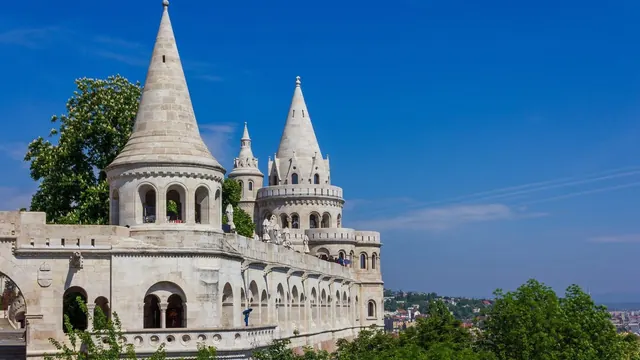
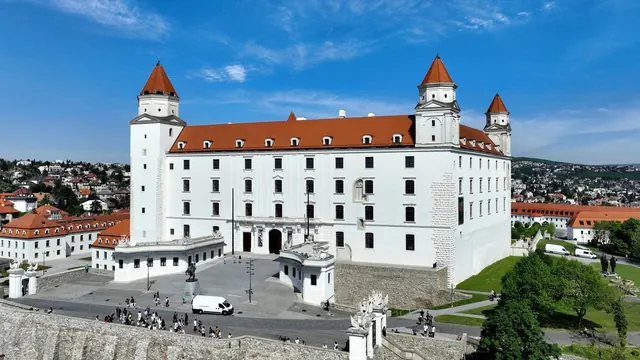
Photo: C.Stadler/Bwag, CC BY-SA 4.0, cropped
Your match
Wins on good for families and places to eat with your weighting.
Has no clear advantage with the weighting you have chosen.
What matters to you?
Pick a travel style or drag the sliders. The match scores above update as you do.
The verdict
Choose Bratislava if you want a compact capital where the notable places and museums sit tightly around the centre, with more protected countryside around it, 36 places to swim nearby and 2 UNESCO-listed places within day-trip reach.
Choose Budapest if you want the wider choice of restaurants, bars and clubs, far more to occupy children, and slightly warmer, drier months across the year.
Scoreboard
Each measure scored 0 to 100. Open a row for the figures behind the score.
Beaches & swimming. Budapest and Bratislava are level on 0.
| Budapest | Bratislava | |
|---|---|---|
| Score | 0 | 0 |
| Swim season months | 0 | 0 |
| Beaches 10 km | 6 | 36 |
| Coast distance | 10,000 km | 10,000 km |
| Water distance | — | — |
Places to eat. Budapest leads by 20 points.20
| Budapest | Bratislava | |
|---|---|---|
| Score | 77 | 57 |
| Restaurants within 2 km of centre | 1,699 | 540 |
| Effective number of cuisines within 2 km | 35 | 26 |
Museums & heritage. Budapest leads by 3 points.3
| Budapest | Bratislava | |
|---|---|---|
| Score | 64 | 61 |
| Museums within 10 km | 144 | 53 |
| Museums within 2 km of centre | 64 | 35 |
| Share of museums within 2 km % | 44 | 66 |
| Unesco sites within 50 km | 1 | 2 |
Nightlife. Budapest leads by 19 points.19
| Budapest | Bratislava | |
|---|---|---|
| Score | 72 | 53 |
| Drinking venues within 4 km | 1,765 | 697 |
| Drinking venues within 2 km of centre | 1,168 | 530 |
| Share of drinking venues within 2 km % | 66 | 76 |
| Nightclubs within 4 km | 97 | 34 |
Nature & day trips. Budapest leads by 1 points.1
| Budapest | Bratislava | |
|---|---|---|
| Score | 40 | 39 |
| Protected land share 50 km % | 8 | 14 |
| Landscape blanket share 50 km % | 0 | 10 |
| Land share of disc % | 100 | 100 |
| Park area within 2 km | 111 hectares | 85 hectares |
Good for families. Budapest leads by 23 points.23
| Budapest | Bratislava | |
|---|---|---|
| Score | 71 | 48 |
| Tourist attractions within 2 km | 75 | 16 |
| Park area within 2 km | 111 hectares | 85 hectares |
| Theme parks within 30 km | 1 | 1 |
Sights concentration. Budapest leads by 6 points.6
| Budapest | Bratislava | |
|---|---|---|
| Score | 69 | 63 |
| Notable places within 2 km | 206 | 146 |
| Min wikipedia languages | 5 | 5 |
Value for money. Budapest leads by 4 points.4
| Budapest | Bratislava | |
|---|---|---|
| Score | 80 | 76 |
| Price level global | 48 | 54.3 |
| Daily budget | €104 | €132 |
Year-round weather. Budapest leads by 3 points.3
| Budapest | Bratislava | |
|---|---|---|
| Score | 64 | 61 |
| Monthly daytime high | 3.6 °C to 27.9 °C | 2.9 °C to 27.4 °C |
| Monthly rainfall | 27 mm to 75 mm | 38 mm to 80 mm |
| Dry months | 5 | 1 |
Where they differ
Bratislava keeps things close: its museums cluster tightly around the centre, and it has 2 UNESCO-listed places within day-trip reach against Budapest's 1. The surrounding land is more protected, 14% against 8%, and there are 36 places to swim nearby against 6.
Budapest has about three times as many restaurants near the centre and a wider range of kitchens, about three times as many bars and clubs, and many times as many attractions for families, with more park space near the centre.
Where they are alike
Neither is a nature destination: both are cities where the countryside is a day out rather than the reason to come, with protected land near Bratislava and park space near Budapest's centre.
They are close on climate and heritage: both run daytime highs of about 3-27°C across the year, and in both the museums sit within walking distance of the centre. Neither offers sea swimming. National price estimates for the two countries are not far apart.
Which traveller are you?
If you travel to eat and go out, Budapest is the clearer choice: about three times as many restaurants near the centre, a wider spread of kitchens, and about three times as many bars and clubs, mostly walkable.
Families will find more to do in Budapest, with many times as many attractions near the centre and more park space, though both cities have 1 theme park within reach.
For a walking weekend of museums and old streets with countryside close by, Bratislava works: tightly clustered museums, 2 UNESCO-listed places within day-trip reach and 14% of the surrounding land protected.
What the numbers don't tell you
The daily budget figures, €132 and €104, are national estimates of restaurant and hotel price levels for the two countries, not measurements of Bratislava or Budapest. A capital can sit further from its own country's average than these two averages sit from each other, so the gap says nothing about which city costs more.
The swimming figure needs reading with the calendar. Neither city has sea, and swimming is realistic only in the warmest months, which in Bratislava are also the wettest. Budapest's food, nightlife and family strengths are counts of what exists near the centre, not of how busy it gets in peak summer.
When should you go?
The figures behind each month. Each row is shaded against that destination's own year, so the deepest cell is its best month for that measure and the palest its weakest. Shades are not comparable between the two rows.
Temperature and rainfall are thirty-year climate normals, averaged over the years shown. Budapest: 1991-2020 normals, Budapest Met Center (2.1 km from centre). Bratislava: 1991-2020 normals, Bratislava Ivanka (8.6 km from centre).
Bratislava suits June to September, with highs of 25-27°C in high summer and 22°C still in September, though 70-80mm of rain falls in most months from May to August, so plan for showers.
Budapest runs a little warmer and noticeably drier: 28°C in August, and 27-37mm a month from January to April, when Bratislava is wetter. Its September is drier too, which makes early autumn the safer bet. Both are cold in midwinter.
Getting there
| Flying from | Budapest | Bratislava |
|---|---|---|
| FrankfurtFRA, HHN | 1 h 40 m €123-153 1 stop BUD · 18 km | 1 h 25 m €143-152 VIE · 40 km |
| LondonLHR, LGW, STN, LTN +2 | 2 h 25 m €63-91 BUD · 18 km | 2 h 15 m €55-96 BTS · 8 km |
| ParisCDG, ORY, BVA | 2 h 10 m €97-114 BUD · 18 km | 1 h 55 m €112-162 VIE · 40 km |
| AmsterdamAMS | 2 h 5 m €175-230 1 stop BUD · 18 km | 1 h 50 m €180-245 1 stop VIE · 40 km |
| BarcelonaBCN | 2 h 25 m €93-118 1 stop BUD · 18 km | 2 h 15 m €117-169 VIE · 40 km |
| BerlinBER | 1 h 30 m €53-90 BUD · 18 km | 1 h 15 m €171-190 1 stop VIE · 40 km |
| ZurichZRH | 1 h 35 m no fares BUD · 18 km | 1 h 25 m €170-237 1 stop VIE · 40 km |
| Tel Aviv YafoTLV | 3 h 15 m €122-156 BUD · 18 km | 3 h 25 m €283-311 1 stop VIE · 40 km |
| SeoulICN, GMP | 10 h 15 m no fares BUD · 18 km | 10 h 20 m no fares VIE · 40 km |
| TorontoYYZ, YHM, YTZ | 9 h 5 m no fares BUD · 18 km | 8 h 50 m no fares VIE · 40 km |
The busiest departure cities for these two, with a place kept for each other part of the world. Busiest means arriving passengers where an official count exists, and where none does, the number of non-stop services flown: official route statistics are published by the European reporting countries and by nobody else, so a table ranked on them alone would offer a reader in New York or Tokyo ten European cities. Flying times are estimated from the distance between airports, and every row is a city flown non-stop to both. Where the typical offer connects anyway, the stops are shown. Under each figure is the airport the flight lands at and how far that is from the centre, because the nearest airport is not always the one a route is flown to. Where both columns name the same airport it is one flight, and the difference between the two is the distance printed beside it. Typical return fares for 2026-09 to 2026-10, cached market data up to 7 days old. The figure is the middle half of the offers found, so a single price means they agreed and a range means they did not; for a typical route that middle half spans about a quarter of the median, and for the least settled routes rather more than the median itself.
Before you go
| Measure | Budapest | Bratislava |
|---|---|---|
| Official language | Hungarian | Slovak |
| Currency | Forint (HUF) | Euro (EUR) |
| Sockets | CF230 V, 50 Hz | CE230 V, 50 Hz |
| Driving side | Right | Right |
| Time zone | UTC+1, UTC+2 in summer | UTC+1, UTC+2 in summer |
| Emergency number | 112 | 112 |
| Elevation | 117 m | 152 m |
| Main airport | Budapest Liszt Ferenc International Airport (BUD)18 km from centre155 non-stop destinations | M. R. Štefánik Airport (BTS)8 km from centre70 non-stop destinations |
| Public holidays this year | 13 days | 15 days |
By the numbers
| Measure | Budapest | Bratislava |
|---|---|---|
| City population | 1,685,209 | 480,902 |
| People per km² | 3,209 | 1,308 |
| Museums within 10 km | 81 | 22 |
| UNESCO World Heritage sites within 50 km | 1 | 2 |
| Distinct cuisines in the centre | 86 | 61 |
Where else could you go?
Every comparison below shares a destination with this one, so you can follow Budapest or Bratislava somewhere new.