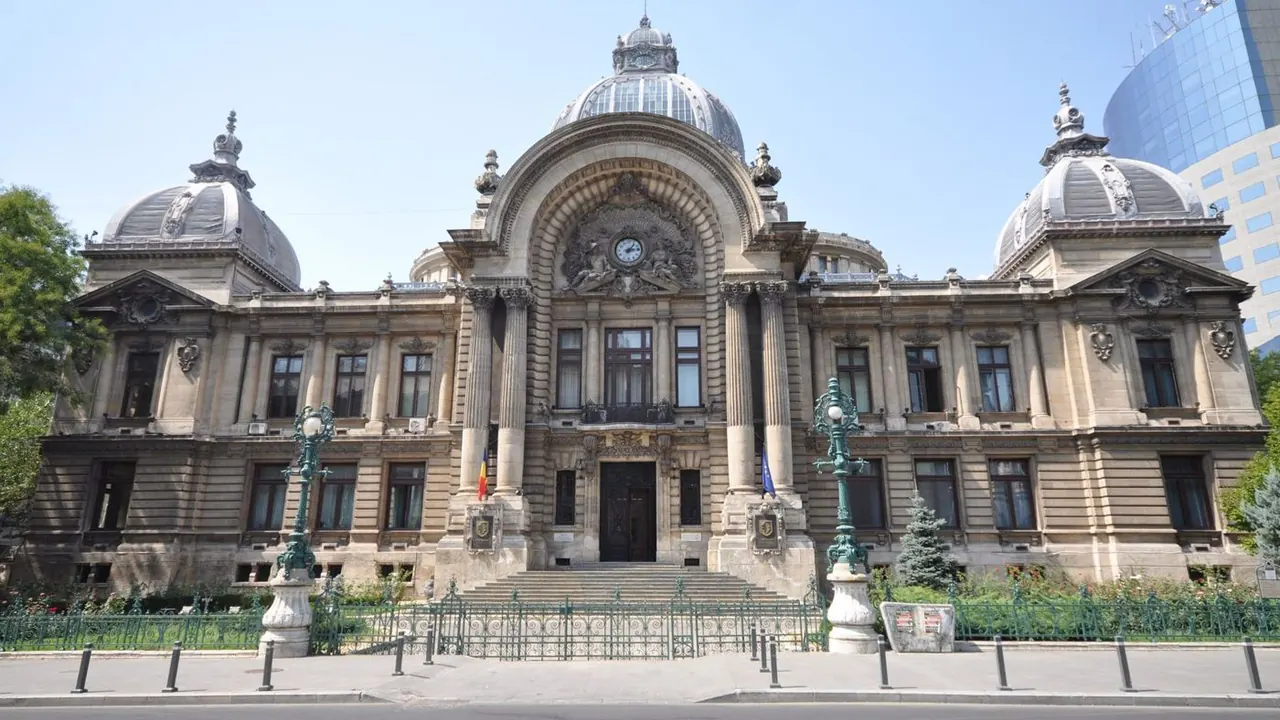
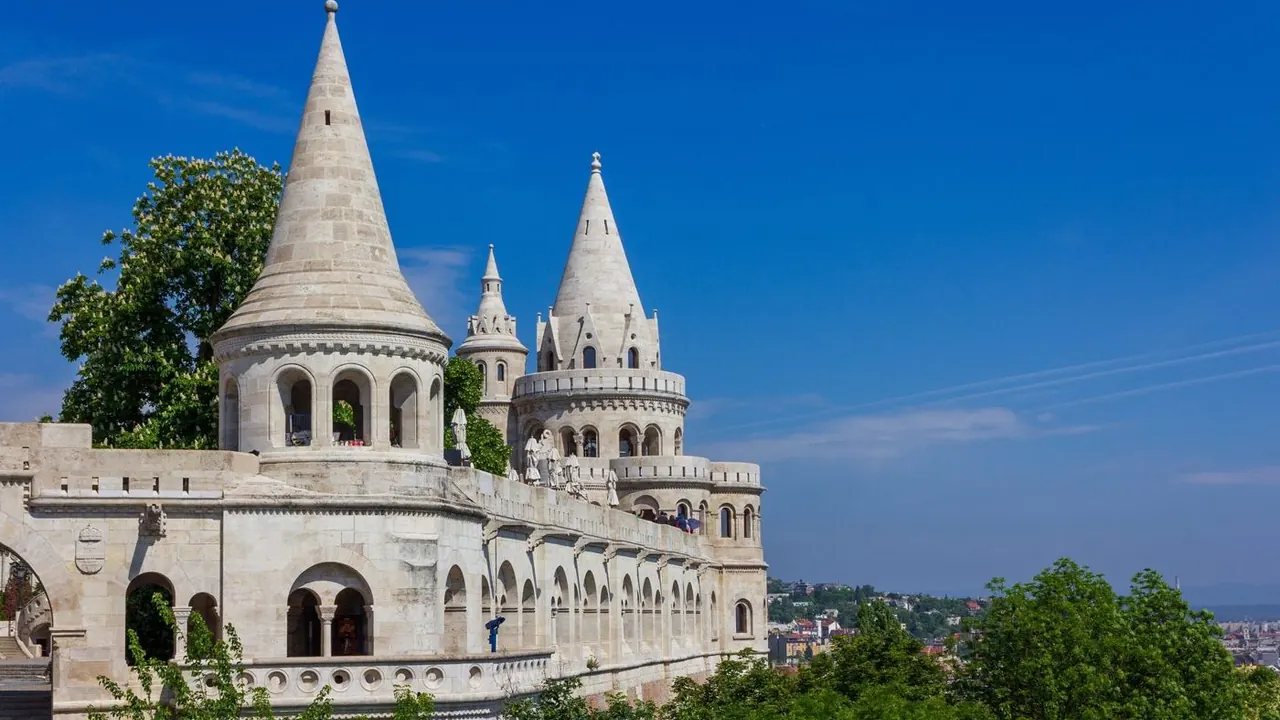
Photos: Bucharest by Jorge Láscar, CC BY 2.0, cropped; Budapest by Perituss, CC0.
Bucharest or Budapest?
Our verdict in twelve categories, each scored against the same fixed benchmark cities, and the climate month by month, so you can choose for your trip.
Choose Bucharest for
- prices
Bucharest suits travellers who want a capital where money goes a long way and who enjoy a city of sharp contrasts. It runs from the Belle Epoque mansions of Calea Victoriei to the huge Palace of the Parliament, and its techno clubs keep going until after sunrise. It also works as a base for Peles Castle and the Carpathians, though two or three days covers the city itself.
Choose Budapest for
- wellness
- getting around
- culture and sights
For most trips, Budapest is the stronger all-round choice. Its river front, museums and opera give it far more to see, its thermal baths are unmatched, and the trams make it easy to get about. The Danube Bend and the Buda Hills add easy outings. Expect to pay somewhat more, especially in the tourist core.
Scoreboard
Twelve categories on one fixed scale from 0 to 100. The shaded stretch is the gap between the two.
Your match
Pick a travel style or drag the sliders, and both match scores follow your weighting.
Wins on prices with your weighting.
Wins on wellness and getting around with your weighting.
What matters to you?
Category by category
What the scores mean for a trip.
Beaches & swimming
Neither city is a beach destination, but Budapest copes with summer heat far better. Its strands, the big open-air lidos such as Palatinus on Margaret Island, make a full day out. Lake Velence, under an hour by train, has warm, shallow water and small beaches, and Balaton is further off.
Bucharest offers much less. Its city lakes are not for swimming, Snagov is mainly a local option, and the Black Sea is a separate journey. Most visitors end up at a hotel pool or one of the pool complexes on the edge of town.
Food & drink
Both cuisines are hearty and rooted in the countryside, but Budapest has the edge for a visitor who likes food. Its grand coffee houses serve Dobos and Esterházy cakes, and the Great Market Hall is worth a visit. Above all, the wine bars of Districts V and VII pour Tokaji and Eger reds, which gives eating and drinking there more occasions.
Bucharest answers with ciorba, mici and papanasi, the stalls of Piata Obor, and a solid layer of modern bistros around Dorobanti and Piata Romana pouring Dealu Mare wines. Its Old Town terraces are best skipped for a proper meal.
Culture & sights
Budapest is the richer city for sightseeing by a wide margin. The Danube panorama, with Parliament facing the Royal Palace and the Fishermen's Bastion, is one of Europe's great city views. Behind it come Andrássy Avenue, the Museum of Fine Arts, the Dohány Street Synagogue, and layers that run from Ottoman tombs to Memento Park. It needs several days.
Bucharest is more about contrast than beauty. There are the Belle Epoque mansions of Calea Victoriei, Stavropoleos church in Lipscani, the vast Palace of the Parliament and the open-air Village Museum. It is absorbing, but two or three days covers it.
Nightlife
Bucharest's late nights belong to its techno and minimal clubs, which play until well after sunrise, and to the garden bars hidden in the courtyards of old villas. The cobbled Old Town fills every evening with terraces, cocktail bars and loud groups, so light sleepers should stay elsewhere.
Budapest has the more rounded scene and the more memorable settings. The ruin bars of District VII fill crumbling courtyard tenements with several rooms of music and are worth seeing even without a drink, and Kazinczy and Király streets pack in bars around them. In summer the night moves onto Danube terraces and party boats, and the wine bars of District V make a calmer evening easy to find.
Nature & outdoors
Budapest has real walking on its doorstep. The forested Buda Hills, with lookout towers, a chairlift and a cogwheel railway, rise within half an hour of the centre, and cave tours run beneath them. The Danube Bend, about an hour north, adds hiking and a riverside cycle path.
Bucharest is flat, so day to day it offers parks and lakes such as Herastrau, plus the reed wetland of Vacaresti for birdwatching. Its trump card is further off. The Bucegi mountains have proper peaks and winter skiing, which Budapest lacks, but at about two hours away they suit an overnight more than a day.
Day trips
Budapest has a longer list of outings within easy reach. Szentendre, Visegrád and Esztergom line the Danube Bend about an hour away, Gödöllő's palace makes a half-day, and Eger, Hollókő and Pannonhalma are possible at around two hours.
From Bucharest the standout is Sinaia and Peles Castle, a fine mountain day, with Mogosoaia and Snagov closer in. After that the choice thins out, and Brasov and Bran really need a night.
Good for families
Budapest is easier with children. The old zoo in City Park, the Children's Railway staffed by schoolchildren, the Palace of Wonders science centre and the bike carts on Margaret Island fill several days. The trams make moving about with a pushchair straightforward.
Bucharest has good moments: the Antipa natural history museum, the Village Museum and a large thermal water park with slides. But broken pavements, cars parked on footpaths and heavy traffic make the city itself more tiring for families.
Getting around
Bucharest's walkable core runs along Calea Victoriei from Piata Victoriei to the Old Town, but pavements are uneven and crossings are wide. The metro is reliable yet misses parts of the centre, and buses and trams slow down in some of Europe's worst rush-hour traffic. Most visitors end up relying on ride-hailing, which is at least easy and cheap.
Budapest is far simpler to move around. Flat central Pest holds most of the sights between the river and the Grand Boulevard, and the trams do most of the work. Tram 2 along the embankment past Parliament doubles as a sightseeing ride, the boulevard trams run round the clock, and ferries and the funicular reach the rest. The little yellow carriages of continental Europe's oldest underground still run beneath Andrássy Avenue.
Shopping & style
Budapest keeps its better buys in the streets of the centre, while Bucharest sends most of its shoppers out to the malls. In Bucharest, a search for international brands means a trip to the edge of town or the north, with only a short stretch of luxury names along Calea Victoriei. The most characterful things to take home are embroidered blouses, ceramics and painted eggs from the Village Museum shop and the craft fairs set up in the parks.
Budapest rewards a slow browse on foot. Herend and Zsolnay porcelain each have a shop of their own, small boutiques in Districts V and VII sell Hungarian-made clothing, ceramics and leather, and the Great Market Hall is the place for paprika, salami and Tokaji. Ecseri flea market adds communist-era objects and old textiles. It still makes a good afternoon rather than the purpose of a trip.
Affordability
Bucharest is the cheaper of the two. The metro and ride-hailing cost very little, tavern meals and lunch menus are good value, and most museums are inexpensive, though the smarter restaurants in the north approach Western prices.
Budapest is still easier on the wallet than Western capitals, with cheap trams and wine and reasonably priced baths. Costs build up quickly in the tourist core around Váci utca and the Basilica, so eating in residential districts makes a real difference there.
Live music & performing arts
Classical music leads in both cities, but Budapest offers far more evenings to choose from. In Bucharest, the night to aim for is a concert under the frescoed dome of the Romanian Athenaeum, where the George Enescu Philharmonic plays, or an opera or ballet at the National Opera. Every other year, the Enescu Festival brings visiting orchestras and soloists for several weeks in late summer and early autumn, and it is worth timing a trip around.
Budapest has many more stages. They include the State Opera House on Andrássy Avenue, the Art Nouveau great hall of the Liszt Academy, Müpa by the Danube and a steady run of church concerts, so something is on most nights and tickets are easy to come by. Operetta and the Hungarian dance of the national folk ensembles add evenings Bucharest has no answer to. In both cities spoken theatre is in the local language, so a visitor's evenings come down to music and dance.
Wellness & relaxation
Wellness is where Budapest stands furthest apart. Thermal baths are part of everyday life there, from the Gellért's mosaics to the light falling through the Ottoman domes of Rudas and Király. An afternoon moving between pools, saunas and cold plunges sets the pace of a stay.
Bucharest has one large thermal complex about half an hour north, a good full day under its glass dome. The centre has no bath culture, though, and little calm beyond the lakeside paths of Herastrau.
When should you go?
Pick your month. The climate figures are measured averages, not a forecast.
Bucharest in July
Budapest in July
Daytime high, °C
Rainfall in the month, mm
Temperature and rainfall are climate normals, averaged over the years shown. Bucharest: 1991-2020 normals, Bucuresti / Imh (10 km from centre). Budapest: 1991-2020 (sunshine 1981-2010, rainfall 1981-2010) normals, Budapest Met Center (2.1 km from centre).
Both cities have cold winters and hot summers, but Bucharest goes to greater extremes. Its highs in July and August reach about 31°C, which is tiring on its wide, shadeless boulevards, while Budapest peaks nearer 28°C. Bucharest's wettest month is June, with around 82mm, and Budapest's rain falls more in July. Sunshine is almost the same in both: long, bright days from May to August, and short, grey ones from November to January.
May and September are the best months for walking the streets in either city. Outdoor swimming is really a June to August affair, at Budapest's lidos and lakes or at Bucharest's pool complexes. Winter highs of around 3°C make the cold months a dull time in Bucharest. In Budapest, the steaming outdoor baths give a January visit a real purpose.
Which traveller are you?
For a relaxing and wellness trip, Budapest wins easily. Its thermal baths, from the Széchenyi's outdoor pools to the Ottoman domes of Rudas, are part of daily life. Bucharest has one large thermal complex outside town and a loud, busy centre.
For a culture and arts trip, Budapest gives much more. There are the Parliament and Castle Hill facing each other across the Danube, the Museum of Fine Arts, and concerts at the Opera House and Liszt Academy most nights. Bucharest's Athenaeum and art museum fill fewer days.
On a trip on a tight budget, Bucharest makes money go further. Tavern meals, lunch menus, the metro and cheap ride-hailing keep daily costs low. Budapest is cheaper than Western capitals, but it charges noticeably more around Váci utca and the Basilica.
Before you go
| Measure | Bucharest | Budapest |
|---|---|---|
| Official language | Romanian | Hungarian |
| Currency | Romanian Leu (RON) | Forint (HUF) |
| Sockets | CF230 V, 50 Hz | CF230 V, 50 Hz |
| Driving side | Right | Right |
| Time zone | UTC+2, UTC+3 in summer | UTC+1, UTC+2 in summer |
| Emergency number | 112 | 112 |
| Elevation | 70 m | 117 m |
| Main airport | Bucharest Henri Coandă International Airport (OTP)18 km from centre128 non-stop destinations | Budapest Liszt Ferenc International Airport (BUD)18 km from centre157 non-stop destinations |
| Public holidays this year | 17 days | 13 days |
By the numbers
| Measure | Bucharest | Budapest |
|---|---|---|
| Population | 1,716,961 | 1,675,777 |
| People per km² | 7,597 | 3,191 |
| Museums within 10 km | 41 | 81 |
| UNESCO World Heritage sites within 50 km | 0 | 1 |
Where else could you go?
Every comparison below shares a destination with this one, so you can follow Bucharest or Budapest somewhere new.
- Brasovvs Bucharest
- Bratislavavs Budapest
- Varnavs Bucharest
- Zakopanevs Budapest
- Viennavs Budapest
- Sibiuvs Bucharest