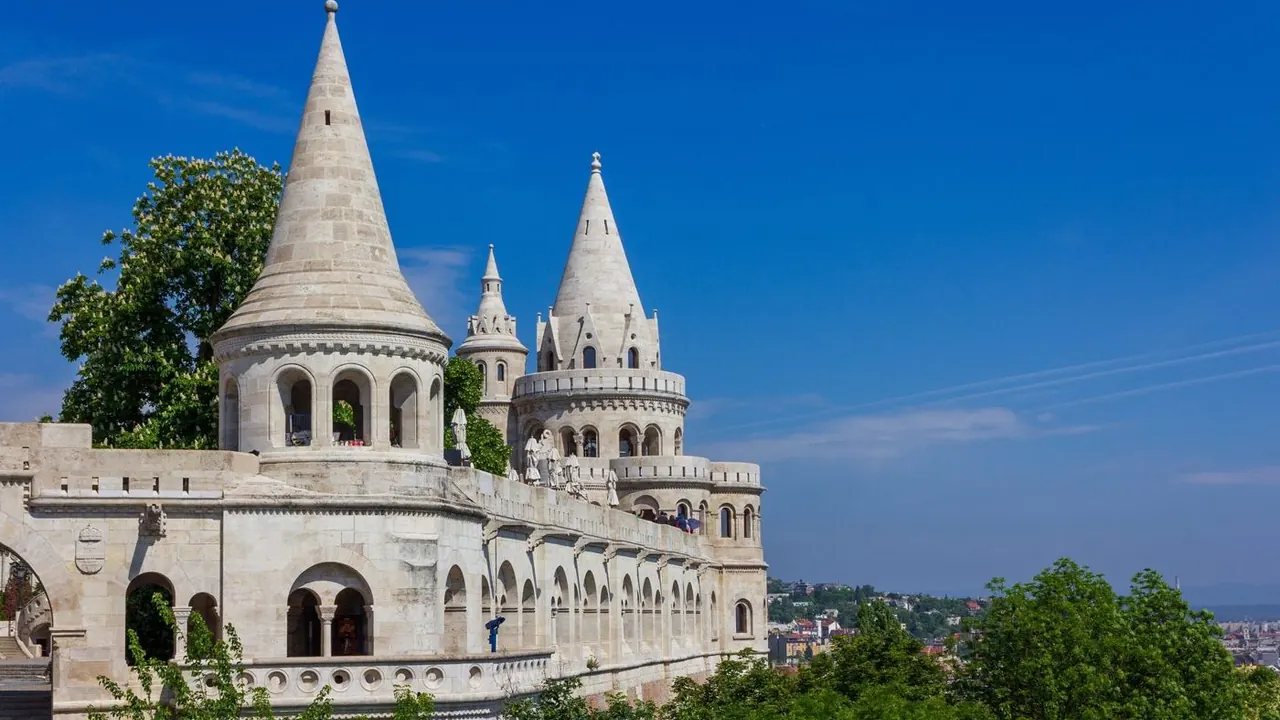
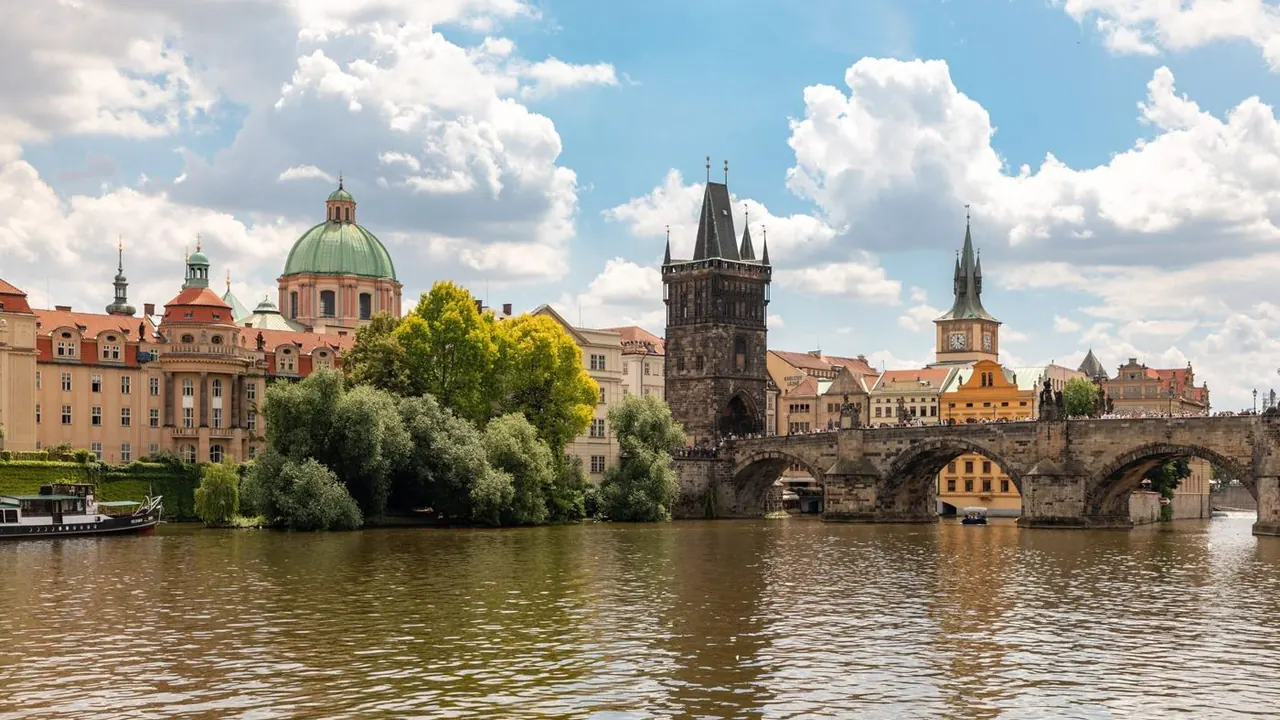
Photos: Budapest by Perituss, CC0; Prague by Dietmar Rabich, CC BY-SA 4.0, cropped.
Budapest or Prague?
Our verdict in twelve categories, each scored against the same fixed benchmark cities, and the climate month by month, so you can choose for your trip.
Choose Budapest for
- wellness
- beaches
- food and drink
Budapest suits travellers who want sightseeing mixed with long, slow afternoons. Prague has nothing to match its thermal baths, from the Ottoman domes of Rudas to the steaming outdoor pools of the Széchenyi. On top of the baths it offers a livelier night out in the ruin bars of District VII, a wider choice of food backed by serious Hungarian wine, and summer lidos that keep children busy. Choose it for a stay that combines sights with soaking, eating and late evenings.
Choose Prague for
- day trips
- getting around
- culture and sights
Prague is the better pick if you want to walk through a historic centre that has survived almost whole, and to explore the country around it. The Castle, Mala Strana, the Charles Bridge and the Old Town are all a short walk apart. Kutna Hora, Karlstejn, Terezin and even Dresden are easy to reach by train. It rewards beer lovers, castle hunters and anyone willing to get up early and beat the crowds on the bridge.
Scoreboard
Twelve categories on one fixed scale from 0 to 100. The shaded stretch is the gap between the two.
Your match
Pick a travel style or drag the sliders, and both match scores follow your weighting.
Wins on wellness and beaches with your weighting.
Wins on day trips and getting around with your weighting.
What matters to you?
Category by category
What the scores mean for a trip.
Beaches & swimming
Neither city has a sea, but Budapest does summer swimming far better. Its strand lidos, led by Palatinus on Margaret Island, are full-day outings with lawns and several pools. The shallow, warm water of Lake Velence is under an hour away by train, and Balaton is further out for an overnight stay.
Prague has less to offer. There is the Dzban reservoir in the Sarka valley, a few outdoor pools, and the wooded banks of Slapy about an hour south. These are fine for cooling off on a hot afternoon, but not something to plan days around.
Food & drink
Budapest has the richer table. Paprika-red cooking from goulash to chicken paprikash, the stalls of the Great Market Hall, layered cakes in the old coffee houses and a serious modern restaurant tier give it more range. The wines of Tokaj, Eger and Balaton are worth the trip on their own.
In Prague the glass matters more than the plate. Carefully poured lager, often straight from the tank, comes with roast pork, dumplings and svickova, which is satisfying but narrow, and the good eating is in Vinohrady, Karlin and Letna rather than around Old Town Square. A beer lover may prefer Prague, but anyone travelling to eat will do better in Budapest.
Culture & sights
Both are among Central Europe's great sightseeing cities, but in different ways. Budapest's set piece is the Danube itself, with Parliament on one bank facing the Castle District and Fishermen's Bastion on the other. Its museums go deeper, from the old masters at the Museum of Fine Arts to the National Gallery in the palace, and Ottoman tombs and the communist statues of Memento Park add layers that Prague lacks.
Prague's strength is how complete its old centre is. The Castle, Mala Strana, the Charles Bridge and the Old Town form one continuous medieval and Baroque quarter, with Cubist buildings found almost nowhere else. Its museums are good rather than great, and the main sights draw heavy crowds, so early starts pay off.
Nightlife
Budapest offers the bigger night out. The ruin bars of District VII spread several rooms of music through crumbling courtyards. Around them, the bars and late clubs of Kazinczy and Király streets keep going well past 2am at weekends, and in summer the party boats and Danube terraces join in.
In Prague the evening revolves around the pub: long wooden tables in Zizkov, beer gardens on Letna and wine bars in Vinohrady. Its more interesting clubs are the techno venues of Holesovice. Both cities draw stag groups to their centres at weekends.
Nature & outdoors
Both cities sit in gentle country with no mountains, so the difference is in the kind of walk. The Buda Hills are real oak and beech forest, reached by chairlift and cogwheel railway, with thermal caves underneath for guided crawls. The ridges and riverside cycle path of the Danube Bend are an hour north.
Prague's green spaces are closer to its sights: Petrin Hill behind Mala Strana, the old royal park of Stromovka and the rocky gorge of Divoka Sarka. Further out, the sandstone towers of Bohemian Switzerland and the Bohemian Paradise give rock scenery with no counterpart near Budapest.
Day trips
Prague is the better base for day trips. Kutna Hora's cathedral and bone ossuary, Karlstejn above its wooded valley and the memorial at Terezin are each about an hour away. Dresden and Karlovy Vary are around two hours, and Cesky Krumlov makes a good overnight trip.
Budapest's best outing is the Danube Bend, with Szentendre's painters' lanes, the citadel at Visegrád and Esztergom's basilica, plus Gödöllő's palace for a half-day. Beyond those, Eger, Hollókő and Pannonhalma are about two hours each way, so the list of easy trips is shorter.
Good for families
Budapest gives children more to do. Besides the old zoo in City Park, there is the Children's Railway through the Buda Hills run by schoolchildren, the Palace of Wonders science centre, bike carts on Margaret Island and summer lidos with wave pools and slides.
Prague has a superb zoo at Troja and a storybook old town with knights in armour and the moving apostles of the clock, but beyond that there is less. Cobbles, long castle stairs and summer crowds also make pushchairs harder work than on Budapest's trams.
Getting around
Both are easy without a car, and both have trams running through the night. Prague's historic centre is smaller and can be walked end to end in about fifteen minutes, though the cobbles tire the feet and catch wheeled luggage. Budapest's sights are spread across flat Pest and steeper Buda.
Budapest has the more scenic rides: tram 2 along the Danube past Parliament, the little yellow carriages of Line 1 under Andrássy Avenue, and the river ferries. Prague's denser tram network and shared tickets reach almost every neighbourhood, but watch for pickpockets on the lines through Mala Strana.
Shopping & style
Neither is a shopping destination, and the souvenir runs of Váci utca and Old Town Square are much alike. The difference is in what to bring home. Budapest has Herend and Zsolnay porcelain, paprika and Tokaji from the Great Market Hall, and communist-era finds at the Ecseri flea market.
Prague has Bohemian crystal, garnet jewellery and marionettes. Parizska Street also has a fuller line-up of luxury labels than the short stretch on Andrássy Avenue.
Affordability
Costs are much the same. Both are cheaper than Western European capitals without being budget cities, and both charge visitors more in the tourist core. In Budapest you save with lunch menus in residential districts, cheap wine and coffee houses away from the grand addresses. In Prague the savings come from pub meals and beer in Zizkov or Karlin, and it pays to avoid the exchange booths in the centre.
Live music & performing arts
Classical music leads in both cities, and neither disappoints. Budapest has the Opera House on Andrássy Avenue, the Art Nouveau hall of the Liszt Academy, Müpa on the Danube, a theatre of its own for operetta, and the national folk dance ensembles.
Prague answers with three opera stages, including the Estates Theatre where Mozart conducted the premiere of Don Giovanni, as well as the Czech Philharmonic at the Rudolfinum and the Prague Spring festival. Its black-light theatre and marionette shows are a bonus that needs no Czech.
Wellness & relaxation
This is where the two cities differ most. Budapest sits on more than a hundred thermal springs, and its baths are part of daily life: the outdoor pools of the Széchenyi, the mosaics of the Gellért, the Ottoman domes of Rudas and Király, and the Lukács, where locals go for their regular soak.
Prague has no bathing tradition of its own, and the country's spa towns are far away in western Bohemia. In the city, wellness means hotel spas, massage studios and beer baths that are more novelty than rest. Calm comes instead from the Baroque gardens below the castle, Kampa island or Vysehrad.
When should you go?
Pick your month. The climate figures are measured averages, not a forecast.
Budapest in July
Prague in July
Daytime high, °C
Rainfall in the month, mm
Temperature and rainfall are climate normals, averaged over the years shown. Budapest: 1991-2020 (sunshine 1981-2010, rainfall 1981-2010) normals, Budapest Met Center (2.1 km from centre). Prague: 1991-2020 normals, Praha-Libus (8.1 km from centre).
Both cities have cold, grey winters and warm summers, but Budapest is a few degrees warmer and sunnier in every month. It reaches about 28°C in August, warm enough for the open-air lidos from June into early September. Prague peaks at around 25°C, which is pleasant for walking but only just warm enough for swimming outdoors. Summer is the wettest season in both cities. Prague's June and August bring around 80mm, more than any month in Budapest, and its summer days get noticeably less sun.
May and September are the best months for walking the streets in either city, with highs in the low twenties. September is also drier, while May brings some of the year's heavier rain in both. Winter is cold in both cities, and Prague's January highs of 2°C are barely above freezing. Budapest's outdoor thermal pools make the cold months easier to enjoy there than in Prague.
Which traveller are you?
For a relaxing and wellness trip, Budapest is the clear choice. Its thermal baths, from the Széchenyi's outdoor pools to the domed Ottoman halls of Rudas and Király, shape the whole day. Prague offers only hotel spas, massage studios and quiet gardens.
On a family trip with children, Budapest suits a longer stay. Spend the mornings on sights and the afternoons at a lido or a family thermal pool, and stay somewhere away from District VII. Prague is best kept to a few days.
For a short city break, Prague fits better. Its compact historic centre, from the Castle across the Charles Bridge to the Old Town, can be walked in minutes, and three or four days cover the essentials. Budapest's sights are spread more widely and need longer.
Before you go
| Measure | Budapest | Prague |
|---|---|---|
| Official language | Hungarian | Czech |
| Currency | Forint (HUF) | Czech Koruna (CZK) |
| Sockets | CF230 V, 50 Hz | CE230 V, 50 Hz |
| Driving side | Right | Right |
| Time zone | UTC+1, UTC+2 in summer | UTC+1, UTC+2 in summer |
| Emergency number | 112 | 112 |
| Elevation | 117 m | 235 m |
| Main airport | Budapest Liszt Ferenc International Airport (BUD)18 km from centre157 non-stop destinations | Václav Havel Airport Prague (PRG)12 km from centre178 non-stop destinations |
| Public holidays this year | 13 days | 13 days |
By the numbers
| Measure | Budapest | Prague |
|---|---|---|
| City population | 1,675,777 | 1,397,880 |
| People per km² | 3,191 | 2,817 |
| Museums within 10 km | 81 | 88 |
| UNESCO World Heritage sites within 50 km | 1 | 1 |
Where else could you go?
Every comparison below shares a destination with this one, so you can follow Budapest or Prague somewhere new.
- Karlovy Varyvs Prague
- Dresdenvs Prague
- Cesky Krumlovvs Prague
- Bratislavavs Budapest
- Brnovs Prague
- Leipzigvs Prague