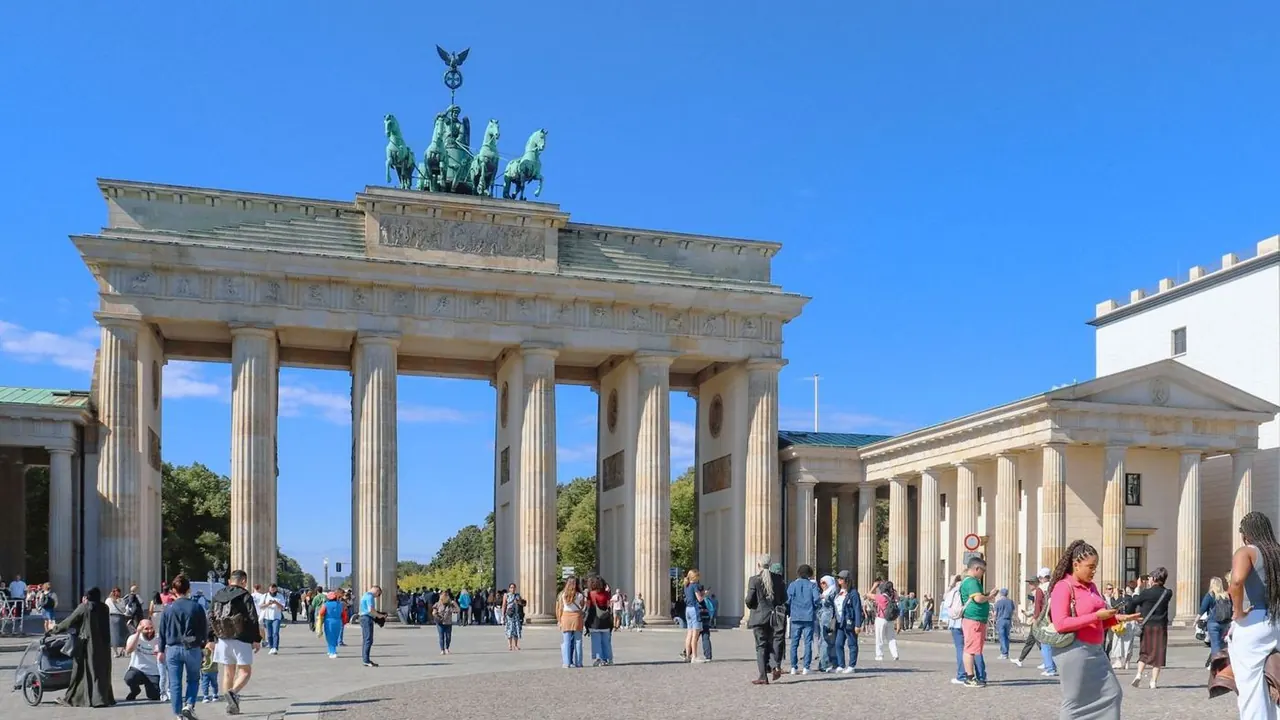
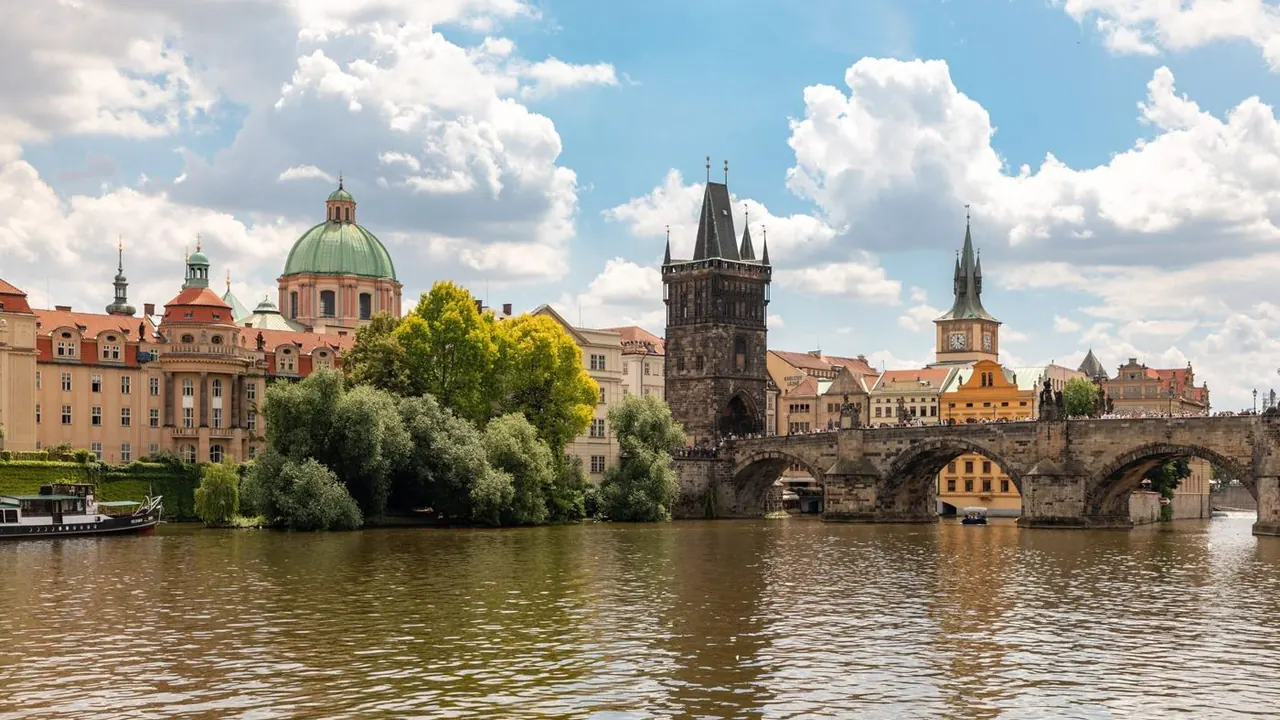
Photos: Berlin by Claudia Solano, Pexels License; Prague by Dietmar Rabich, CC BY-SA 4.0, cropped.
Berlin or Prague?
Our verdict in twelve categories, each scored against the same fixed benchmark cities, and the climate month by month, so you can choose for your trip.
Choose Berlin for
- nightlife
- beaches
- families
Berlin suits travellers who want their evenings to be the main event and their days spent in great museums and at the sites of twentieth-century history. Its clubs, opera houses and orchestras are on another level. With flat streets and two big zoos, it is the easier city with children, and in summer its lakes offer a swim that Prague cannot match.
Choose Prague for
- prices
- day trips
- nature and the outdoors
Choose Prague if you want a beautiful old city to explore on foot and a base for castle country. The intact centre runs from the Castle down through Mala Strana and over the Charles Bridge, and you can walk it in an afternoon. Kutna Hora and Karlstejn are easy train rides away. Your money also goes further, as long as you eat and sleep a few tram stops out from the old centre.
Scoreboard
Twelve categories on one fixed scale from 0 to 100. The shaded stretch is the gap between the two.
Your match
Pick a travel style or drag the sliders, and both match scores follow your weighting.
Wins on nightlife and beaches with your weighting.
Wins on prices and day trips with your weighting.
What matters to you?
Category by category
What the scores mean for a trip.
Beaches & swimming
Neither city has a coast, but Berlin makes far more of its fresh water. Strandbad Wannsee, with its sandy shore and wicker beach chairs, the Müggelsee and forest lakes such as Schlachtensee are a short S-Bahn ride away, and in high summer locals use them as the city's beaches.
Nobody swims in the Vltava through Prague's centre, so your choices are outdoor pools, the Dzban reservoir in the Sarka valley, or a trip to Slapy about an hour south. If you want a swim most summer afternoons, Berlin is much the better bet.
Food & drink
Berlin wins on range. Decades of Turkish migration have filled Kreuzberg and Neukölln with grill houses and bakeries, Vietnamese and Levantine kitchens are everywhere, and there is a serious fine-dining tier on top of the street-food evenings at Markthalle Neun.
Prague's food is narrower and built around beer: carefully poured, often unpasteurised pilsner with roast pork and dumplings, svickova and chlebicky. It is very satisfying in a neighbourhood pub in Vinohrady or Letna, but avoid the tourist menus around Old Town Square.
Culture & sights
Both cities make a strong culture trip, but in opposite ways. In Berlin the sights are the collections and the recent past: Nefertiti and the Pergamon collections on Museum Island, the old masters of the Gemäldegalerie, and the Wall Memorial, the Reichstag and the Holocaust memorial at the places where that history happened.
In Prague the attraction is the city itself. Its centre survived almost intact, so the Castle, the Baroque churches of Mala Strana, the Charles Bridge and the synagogues of Josefov make one continuous walk, with Cubist and Art Nouveau buildings as well. Prague's museums are good rather than great, while Berlin's townscape is patchy, so choose between galleries and streets.
Nightlife
After dark, Berlin is in a different league. People travel from around the world for its techno clubs in former power stations and warehouses, with no closing hours and strict doors. Friedrichshain and Kreuzberg add corner Kneipen, cocktail bars and summer drinking along the canal.
A night out in Prague means the pub: cheap, excellent beer at long tables in Zizkov, wine bars in Vinohrady and beer gardens on Letna. Its clubs are either large tourist venues near the Charles Bridge or a smaller techno circuit in Holesovice, good for a night but not a reason to travel.
Nature & outdoors
Prague has the more interesting green spaces close at hand. Petrin Hill rises straight behind Mala Strana, the rocky gorge of Divoka Sarka feels wild for the edge of a city, and the sandstone towers of Bohemian Switzerland are within about two hours for real hiking.
Berlin is flat, and its outdoors is about water and open space: the old Tempelhof runways, the Grunewald forest, sailing on the Havel and paddling on the Müggelsee. It is pleasant for cycling but has none of Prague's hills and rock.
Day trips
Prague is the stronger base. Kutna Hora, with its Gothic cathedral and bone-decorated ossuary, Karlstejn castle and the Terezin memorial are each about an hour away or less, and Melnik, Konopiste and Krivoklat add more castles and wine country.
From Berlin, Potsdam's Sanssouci palaces make a superb outing, and Wittenberg, Leipzig and the Spreewald are good too, but the choice soon runs out. Dresden is about two hours from either city, so it works from both.
Good for families
Berlin is the easier city with children. The Zoologischer Garten and its aquarium, the huge Tierpark in the east, the dinosaur at the Natural History Museum and the German Museum of Technology fill several days. Flat streets, trains and playgrounds everywhere make life with a pram simple.
Children love Prague's castle, suits of armour and astronomical clock, and the zoo at Troja, on a hillside above the river, is excellent, but after that the list is short. Cobbles, steep lanes and the long castle stairs make pushchairs hard work.
Getting around
You don't need a car in either city. The difference is scale. Berlin is spread across separate centres, Mitte, Kreuzberg, Prenzlauer Berg and Charlottenburg, so you take the U-Bahn, the S-Bahn or a bike between them, helped by flat streets and plenty of bike lanes.
You can cross Prague's historic core on foot in about fifteen minutes, and trams take you up the Castle hill and run through the night. The drawbacks are cobbles, which tire your feet and are awkward with wheeled luggage, and pickpockets on the busiest tram lines.
Shopping & style
Berlin has more to shop for, though not in luxury. The Sunday flea markets at Mauerpark and Boxhagener Platz turn up East German curios, vinyl and old furniture. KaDeWe's food hall is a sight in itself, and Mitte, Prenzlauer Berg and Kreuzberg are full of concept stores, record shops and vintage clothing.
Prague's strength is Czech souvenirs worth carrying home: Bohemian crystal, garnet jewellery, marionettes and wooden toys. Apart from these and the labels on Parizska Street, the old centre is mostly the same souvenir shops over and over, and the better browsing is in Vinohrady and Holesovice.
Affordability
Prague is the cheaper of the two, as long as you keep away from the tourist core. Beer, pub lunches and trams cost little, and staying in Vinohrady or Karlin rather than near Old Town Square keeps a stay good value. Avoid the exchange booths in the centre.
Berlin is reasonable for a Western capital. Döner stands, Vietnamese canteens and a day ticket that covers the whole city help, but hotel rates rise on summer weekends and a museum-heavy trip adds up.
Live music & performing arts
Berlin has more on stage on any night of the week. Alongside the Berlin Philharmonic in Scharoun's Philharmonie, there are three opera houses, the Konzerthaus and the Friedrichstadt-Palast revue, plus jazz cellars and experimental music spaces. Its theatre companies are famous, though the plays are mostly in German.
Prague is a fine classical city on a smaller scale. It has the Estates Theatre, where Mozart conducted, the gilded National Theatre, the Czech Philharmonic at the Rudolfinum, and Dvorak and Smetana in the repertoire. Black-light theatre and marionette shows need no Czech, but the church concerts for visitors vary in quality.
Wellness & relaxation
Berlin is better for real rest, thanks to German sauna culture. Its large sauna complexes have Finnish saunas, infusion rituals and quiet rooms, usually clothes-free, and the Stadtbad Neukölln has columned halls. Brandenburg's thermal resorts are about an hour away.
Prague's spa towns are far off in western Bohemia, and in the city wellness mostly means hotel spas, massage studios and novelty beer baths. You find calm instead in the grand coffee houses, the terraced gardens below the Castle and on a bench on Kampa island.
When should you go?
Pick your month. The climate figures are measured averages, not a forecast.
Berlin in July
Prague in July
Daytime high, °C
Rainfall in the month, mm
Temperature and rainfall are climate normals, averaged over the years shown. Berlin: 1991-2020 normals, Berlin / Alexanderplatz (0.9 km from centre). Prague: 1991-2020 normals, Praha-Libus (8.1 km from centre).
The two cities share almost the same calendar. Both warm up from April and reach about 25°C in July and August, with long sunny days from May to August. That makes May to September the time for beer gardens, river and canal walks and evenings outdoors. In Berlin, only July and August are warm enough for swimming in the lakes. Winters are dark and cold in both, and Prague is slightly colder, with daytime highs of about 2°C in January.
The real difference is rain. Most of Prague's rain falls in summer, about 80mm in June and again in August, so expect showers and thunderstorms in high season, while its winters are fairly dry. Berlin's rain is spread more evenly through the year, with July the wettest month. Both are most comfortable for walking in May and September. For a dry, crisp winter visit, Prague has the edge.
Which traveller are you?
For a food and nightlife trip, Berlin gives every evening more directions to go. Supper can come from a different part of the world each night, and nobody calls time on the dancing. Prague's nights mostly follow one pattern, the pub.
On a family trip with young children, Berlin is the gentler choice. Locals are relaxed about children, and parks and summer lakes give them room to run. Prague enchants for a day, but its packed summer streets soon wear small children out.
On a tight budget, Prague is the better pick, because its best sight is the old city itself, which costs nothing to walk, and an evening in the pub costs little. In Berlin the highlights mostly lie behind museum and club doors, and those soon add up.
Before you go
| Measure | Berlin | Prague |
|---|---|---|
| Official language | German | Czech |
| Currency | Euro (EUR) | Czech Koruna (CZK) |
| Sockets | CF230 V, 50 Hz | CE230 V, 50 Hz |
| Driving side | Right | Right |
| Time zone | UTC+1, UTC+2 in summer | UTC+1, UTC+2 in summer |
| Emergency number | 112 | 112 |
| Elevation | 34 m | 235 m |
| Main airport | Berlin Brandenburg Airport (BER)19 km from centre161 non-stop destinations | Václav Havel Airport Prague (PRG)12 km from centre178 non-stop destinations |
| Public holidays this year | 10 days | 13 days |
By the numbers
| Measure | Berlin | Prague |
|---|---|---|
| Population | 3,700,577 | 1,397,880 |
| People per km² | 4,153 | 2,817 |
| Museums within 10 km | 157 | 88 |
| UNESCO World Heritage sites within 50 km | 4 | 1 |
Where else could you go?
Every comparison below shares a destination with this one, so you can follow Berlin or Prague somewhere new.
- Karlovy Varyvs Prague
- Dresdenvs Prague
- Cesky Krumlovvs Prague
- Leipzigvs Berlin
- Dresdenvs Berlin
- Brnovs Prague