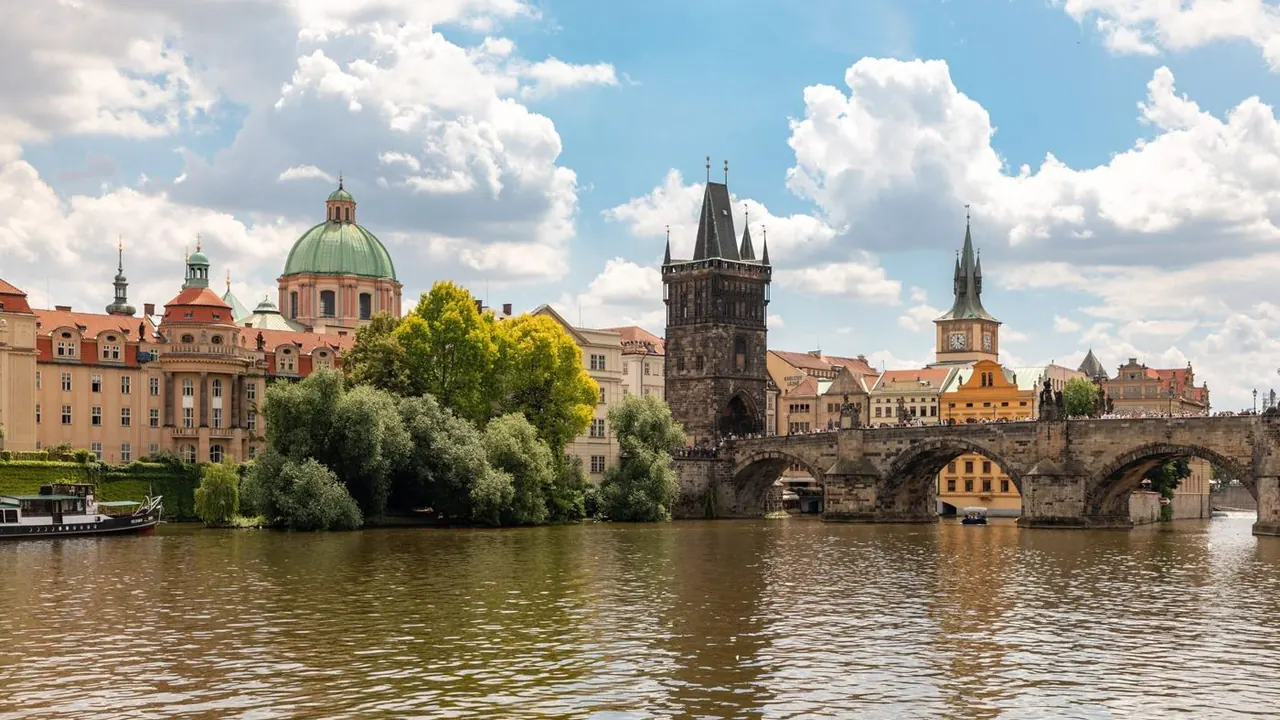
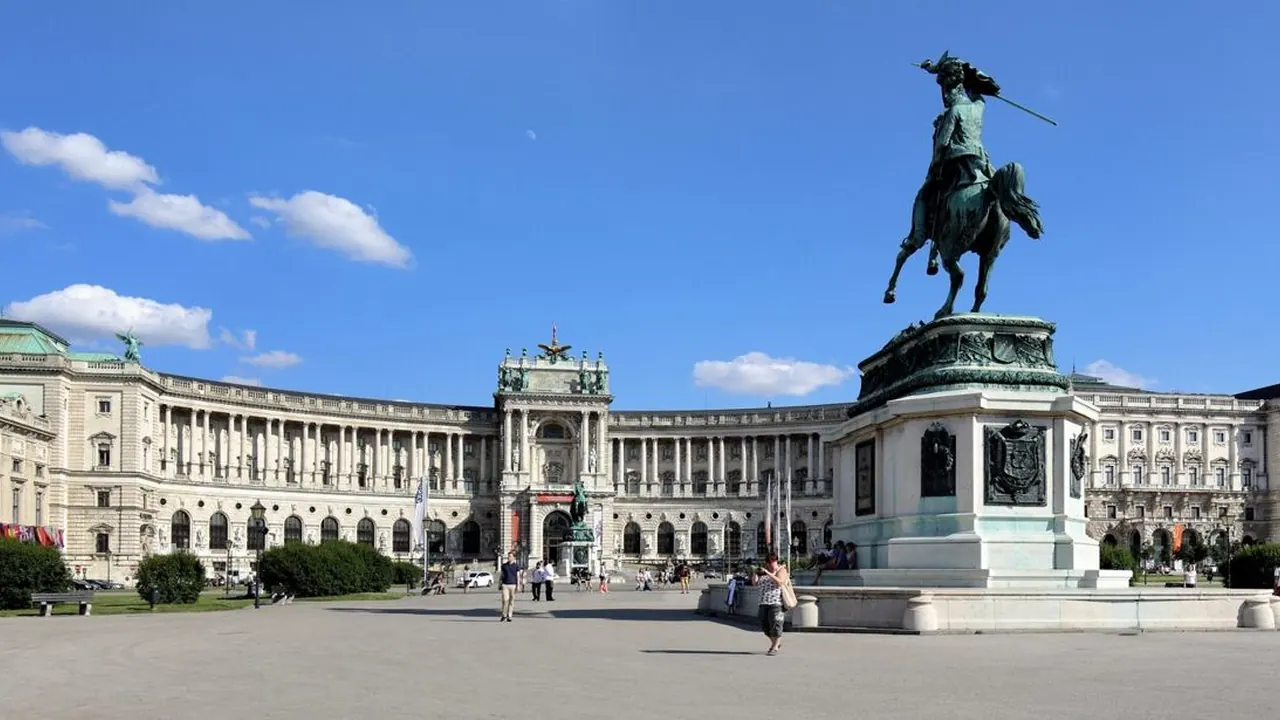
Photos: Prague by Dietmar Rabich, CC BY-SA 4.0, cropped; Vienna by C.Stadler/Bwag, CC BY-SA 3.0 AT, cropped.
Prague or Vienna?
Our verdict in twelve categories, each scored against the same fixed benchmark cities, and the climate month by month, so you can choose for your trip.
Choose Prague for
- prices
- nightlife
- day trips
Prague suits travellers who want a medieval and Baroque city to wander through, with long evenings in beer halls and a budget that stretches further. The castle quarter, the Charles Bridge and the Gothic lanes of the Old Town make a full three or four days. Bohemia's castles and silver towns are close by, and the best pub nights are in neighbourhoods like Zizkov, a tram ride from the crowds.
Choose Vienna for
- families
- live music and the arts
- food and drink
Vienna is the better pick for a trip built around music, great paintings and an unhurried pace. The opera house and concert halls are the main reason to go, the museums are among Europe's best, and families, summer swimmers and anyone wanting a thermal bath will find more here. It costs more and its evenings are quieter, but it is the easier city to spend a relaxed week in.
Scoreboard
Twelve categories on one fixed scale from 0 to 100. The shaded stretch is the gap between the two.
Your match
Pick a travel style or drag the sliders, and both match scores follow your weighting.
Wins on prices and nightlife with your weighting.
Wins on families and live music and the arts with your weighting.
What matters to you?
Category by category
What the scores mean for a trip.
Beaches & swimming
Neither city has a coast, but Vienna has proper summer bathing within the city. The Danube Island offers about 20km of free gravel and grassy banks, and the warmer Alte Donau is lined with old lidos that locals reach by U-Bahn after work.
Prague has less to offer. You can swim at the Dzban reservoir in the Sarka valley, at outdoor pools, or at Slapy, an hour south on the Vltava, while the river in the centre is for boats only.
Food & drink
Vienna eats better. It has a true cuisine of its own, from schnitzel and Tafelspitz to Sachertorte and strudel, along with the coffee house ritual and Heuriger taverns pouring wine from vineyards inside the city limits.
Prague's table is built around its beer. Carefully poured lager comes with roast pork, svickova and fried cheese: satisfying, but a narrow range, and the centre around Old Town Square is mostly to be avoided at mealtimes. Both share goulash and dumplings, and neither offers much international variety.
Culture & sights
Both have UNESCO-listed historic centres, but the appeal differs. Prague is the more complete medieval and Baroque townscape: the castle and St Vitus above Mala Strana, the statues of the Charles Bridge, the synagogues of Josefov and Cubist buildings found almost nowhere else. Its museums are good rather than great, and three or four days covers it.
Vienna comes out a little ahead because of what is inside its buildings. The Hofburg and Schönbrunn show imperial grandeur on a larger scale, the Kunsthistorisches Museum, Belvedere and Leopold hold Bruegel, Klimt and Schiele, and Otto Wagner's Jugendstil adds a second great era. It easily fills a week.
Nightlife
Prague is the livelier night out. Cheap, excellent beer keeps pub tables full late, Zizkov's plain local bars are packed with students, and Holesovice and the converted industrial spaces have a real techno and alternative circuit. The only drawback is the loud, stag-party side of the Old Town.
Vienna's evenings are gentler: the bars under the Gürtel railway arches, the Bermuda Triangle, deckchairs on the Danube Canal, or wine at a Heuriger. Its standout is the winter ball season in the palaces, which Prague has nothing to match.
Nature & outdoors
There is little between them overall, but the landscapes are different. Prague's best green spaces are inside the city, with Petrin's orchards, Stromovka and the rocky Divoka Sarka gorge. Its standout outing is the sandstone towers of Bohemian Switzerland, about two hours away, though there are no mountains nearby.
Vienna has vineyard trails up the Kahlenberg, the beech-covered Vienna Woods, the wild floodplain forest of the Donau-Auen and flat Danube cycle paths. The Alpine plateaus of the Rax and Schneeberg are about 90 minutes away, which gives it real high ground for a day out.
Day trips
Both make excellent bases, with different flavours. From Prague, the outings are about castles and history: Karlstejn, Konopiste, the silver town of Kutna Hora with its bone ossuary, the sobering visit to Terezin, and Dresden two hours down the Elbe.
From Vienna, the river sets the tone. You can take the boat to Bratislava, cycle or cruise through the Wachau to Melk Abbey, visit Haydn's Eisenstadt, or spend an easy day in the wine villages of the Neusiedler See. Brno, across the Czech border, is about an hour and a half by train.
Good for families
Vienna is clearly the better city for children. Schönbrunn Zoo sits beside a maze and a children's museum, the Prater has the giant wheel and open meadows, and rainy days are covered by dinosaurs at the Natural History Museum and the ZOOM play areas. Summer swimming on the Danube Island rounds it off.
Prague has one of Europe's best zoos in Troja, and children love the castle and the astronomical clock. Beyond that the list is short, and the cobbles, steep lanes and summer crowds wear families out faster.
Getting around
Both are easy to get around, and Vienna is a little easier. Its old town inside the Ring is flat and largely pedestrian, five U-Bahn lines link up with the trams, and even the palace, the Prater and the vineyard villages are a simple ride away.
Prague's centre is walkable from Old Town Square to Mala Strana in a quarter of an hour, and its trams run all night. The hill up to the castle and the endless cobbles are tiring, though, and pickpockets work the busy tram lines.
Shopping & style
Vienna has the stronger shopping. Luxury houses line the Kohlmarkt and Graben, Mariahilfer Strasse handles everyday fashion, and Neubau's side streets hold independent designers. Augarten porcelain, Loden coats and sweets in elegant tins make gifts of real quality.
Prague's best buys are Bohemian crystal, garnets and marionettes, and Parizska Street has the labels. Much of its centre, though, is souvenir shops, and the good design and vintage finds are out in Holesovice and Karlin. Both cities have handsome Christmas markets on their old squares.
Affordability
Prague is easier on the wallet. Beer, pub lunches and trams stay cheap, and staying a few stops out in Vinohrady or Zizkov keeps costs well down. Restaurants with river views and the central exchange booths are the traps to avoid.
Vienna sits in the upper middle range for Western Europe, and palaces and museums charge full admission. Set lunches, sausage stands, free palace gardens and standing places at the State Opera help keep a stay manageable.
Live music & performing arts
Music is a real strength in both cities, but Vienna is in a league of its own. The State Opera stages a different work on most nights, the Vienna Philharmonic plays in the Musikverein's Golden Hall, and the Burgtheater, the Volksoper and the Boys' Choir fill the rest of the week. Cheap standing places put all this within anyone's reach.
Prague still offers a lot: three opera houses, including the Estates Theatre where Don Giovanni had its premiere, the Czech Philharmonic at the Rudolfinum, and black-light and marionette theatre that need no Czech. The many church concerts aimed at visitors are uneven in quality.
Wellness & relaxation
Vienna is the better place to unwind. Therme Wien's thermal pools and the Art Deco Amalienbad are inside the city, and Baden's sulphur springs are half an hour away. The coffee houses and palace gardens make slowing down feel natural.
Prague has no bathing tradition, its spa towns lie far to the west, and its beer spas are more of a joke than a rest. The quiet moments are on Kampa island, in Vysehrad or in the Baroque gardens below the castle.
When should you go?
Pick your month. The climate figures are measured averages, not a forecast.
Prague in July
Vienna in July
Daytime high, °C
Rainfall in the month, mm
Temperature and rainfall are climate normals, averaged over the years shown. Prague: 1991-2020 normals, Praha-Libus (8.1 km from centre). Vienna: 1991-2020 normals, Wien / Hohe Warte (4.7 km from centre).
The two cities follow almost the same calendar, and Vienna is always a degree or two warmer. Summer peaks around 25°C in Prague and 27°C in Vienna. That is pleasant for walking the streets and warm enough for a swim from June to early September, at a reservoir outside Prague or in the Danube in Vienna. Summer is also the wettest season in both, with showers from May to August. Vienna gets more sunshine in every month, and the gap is widest in high summer.
Late April to early June and September into early October are the best months for sightseeing in either city, when it is mild without being hot. From November to February daytime highs stay only a few degrees above freezing and the days are short and grey. That season is better spent in coffee houses, concert halls and Christmas markets than on long walks. Prague is the drier of the two in winter, with about 26mm in January.
Which traveller are you?
On a family trip with young children, Vienna is the easier choice. Schönbrunn Zoo, the Prater rides, an aquarium in a flak tower and hands-on museums cover all weather, and trams take prams. Prague's cobbles and castle stairs are much harder going.
On a tight budget, Prague goes further. Beer, pub lunches, chlebicky sandwiches and transport all stay cheap, especially in Vinohrady, Zizkov or Karlin. Vienna's palaces and museums charge full entry, and eating out costs noticeably more.
For a culture and arts trip, Vienna has the edge. It has nightly opera, the Musikverein and the Burgtheater, plus first-rank collections of Bruegel, Klimt and Schiele. Prague's medieval streets are unforgettable, but its museums and concert life do not go as deep.
Before you go
| Measure | Prague | Vienna |
|---|---|---|
| Official language | Czech | German, Austrian Sign Language |
| Currency | Czech Koruna (CZK) | Euro (EUR) |
| Sockets | CE230 V, 50 Hz | CF230 V, 50 Hz |
| Driving side | Right | Right |
| Time zone | UTC+1, UTC+2 in summer | UTC+1, UTC+2 in summer |
| Emergency number | 112 | 112 |
| Elevation | 235 m | 151 m |
| Main airport | Václav Havel Airport Prague (PRG)12 km from centre178 non-stop destinations | Vienna International Airport (VIE)18 km from centre202 non-stop destinations |
| Public holidays this year | 13 days | 16 days |
By the numbers
| Measure | Prague | Vienna |
|---|---|---|
| City population | 1,397,880 | 2,028,289 |
| People per km² | 2,817 | 4,890 |
| Museums within 10 km | 88 | 152 |
| UNESCO World Heritage sites within 50 km | 1 | 4 |
Where else could you go?
Every comparison below shares a destination with this one, so you can follow Prague or Vienna somewhere new.
- Bratislavavs Vienna
- Brnovs Vienna
- Karlovy Varyvs Prague
- Dresdenvs Prague
- Cesky Krumlovvs Prague
- Grazvs Vienna